JOURNEY TO PLANET WRITE: Schizo (See Also: Writer)

by Sheldon Lee Compton

The writer and editor Kirby Gann once told me I was schizophrenic. He was a teacher at the grad school I attended at the time and, for what it’s worth, he was pretty much right.

He was referring to the different voices I used from a first draft to a second draft of a story in workshop. Meant as a compliment, I think, it’s the first thing I thought of when Gay Degani mentioned me doing a piece for her Journey to Planet Write series. I’ve been a basket case in this way for nearly as long as I can remember and, although numerous other events led to me nurturing a talent for writing, it was this idea of splitting into other personalities that seemed most influential in my development.
Before the real splits began, I lived inside a three-foot by three-foot space under my covers every night until morning when I first started making things up. That was 1982 and I was six years old. Under the covers, I held my hands up and made them talk, sort of like sock puppets without the socks. The three of us talked for hours about the kinds of things a six-year-old talks about, I guess. It made me less afraid of my stepfather, that much I remember well.
My stepfather was a lifelong alcoholic and would stumble in late nearly every night of during that year and sit on the side of my bed and slobber onto the sheets and apologize for drinking and for arguing and for things I also can’t remember and am glad I can’t remember. It was sometime during the summer after lying still in the bed for several hours sweating, listening to him mumble and cry, that I decided to more or less move my existence to that small space under the covers.

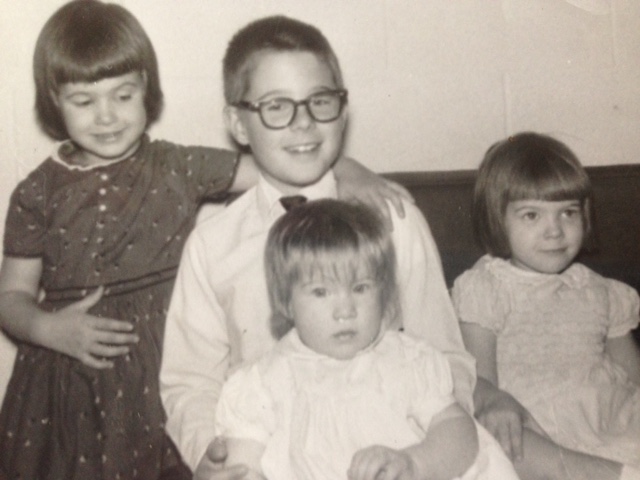
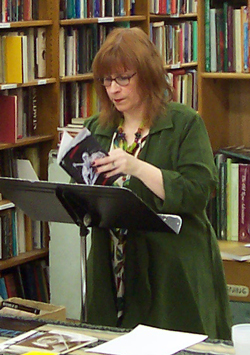
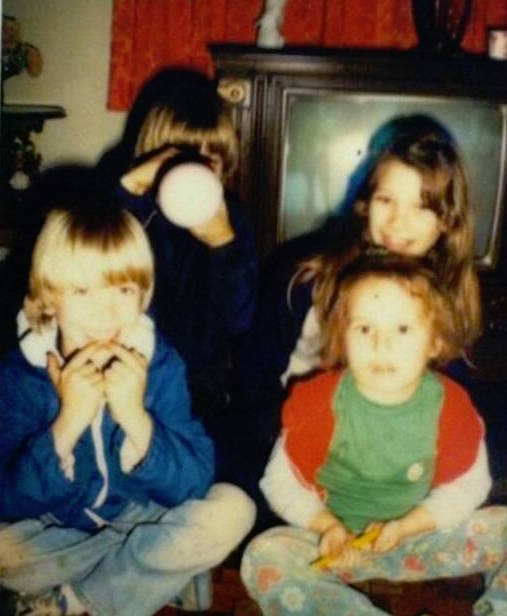
Sheldon, lower left.

I’m not sure what my stepfather thought when he flopped into my bedroom the next night and saw only a lump in the middle of the bed, no head on the pillow, no stepson de facto priest waiting to absolve his dark sins. Only a lump. I heard him come in and then things went quiet for nearly a full minute. He let out a long, hard sigh and walked back out. I had found my safe place, and it had nothing at all to do with reality. Not the most mentally healthy approach to trauma, but it was the one I had.

About everything I’ve tried to do with fiction since has been an attempt to rediscover that otherworldliness, to revisit those two old friends who came to life through an array of different characters and tiny narratives. I’ve been on a search for what I created hour after hour doing nothing more than talking to myself to calm down or become tired enough to sleep. In short, I’ve been nourishing my inner schizophrenic and calling it literature ever since.
I’ve talked before in lectures and interviews about the years following that summer, how I read dozens and dozens of childhood biographies until finally graduating to Stephen King, how the year I discovered King I asked for a Brother GX-6750 typewriter for Christmas and used my grandmother’s Singer sewing machine as a desk. All of this was an extension of that summer. It still is.
To this day, I can tell within two or three paragraphs of anything I’m writing whether or not that otherworldliness I discovered in 1982 is present. Sometimes I plow ahead even if it’s not present and finish only because I started, and all the stories and novels written in that way are now resting peacefully on various flash drives and boxes somewhere in dark corners of my house. On the other hand, when a story sort of appearson the page, one word after another, sentence after sentence, and is completed with a kind of natural energy, it’s always because, above everything else, I’m writing in a kind of trance inside a world that exists only to me, three feet by three feet of headspace draped with a wedding ring quilt without a sock in sight.
Yes, Kirby only scratched the surface. I’ve got boxes full of crazy. I’m all full up. And I’m fine with that. I’ll take it and make something from it. I’ll tell a story or put a handful of words together in just the right way or transform the world as I have known it into a newly imagined reality. I’ll do this because my journey to becoming a writer has been less a journey and more an escape, a way out and a means of survival for all my unique voices.

Mating Ritual
by Sheldon Lee Compton
We tore them to make rings. We found if you shook them more than three times to get them drunk they would die.


Once when I was old enough to buy from a bootlegger without much problem, I smeared the ass end of one across my teeth and smiled in the darkness.

They were kept in jars. They could not be seen during the day. Even then they only had about fifteen years left to live.

Artificial light was the problem, the thing that kept the male from finding the female, a lighthouse of bug love overwhelmed by a lamp post.

I told her this, watching for a smile. I looked for light between her lips and counted days.

(Originally published at Dogzplot)

____________________________________


Sheldon Lee Compton is the author of three 
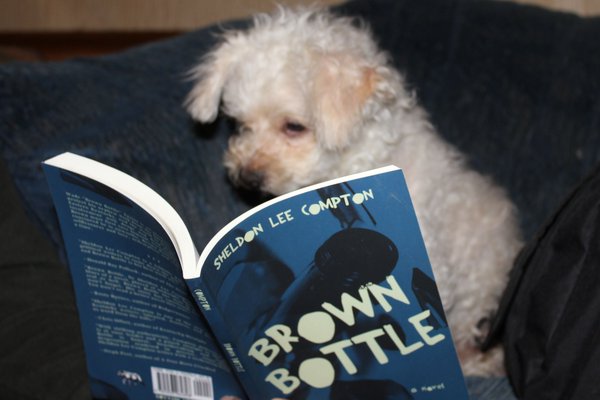
books, most recently the novel Brown Bottle
(Bottom Dog Press, 2016). His stories can be found in WhiskeyPaper, New World Writing, PANK, decomP, Monkeybicycle, DOGZPLOT, and elsewhere. He was a finalist for Best Small Fictions 2015 and Best Small Fictions 2016

JOURNEY TO PLANET WRITE: Crucial Early Conversations on the Road to Writing

by Teri L. Kline


It is interesting, to me, thinking about those first nuggets of encouragement or discouragement on the path to identifying as a writer. I spent some time today going back to those earliest days. These conversations stand out in my mind.


ONE
1962

MOM: You are sitting too close to the stove with that book, Terry! How many times do I have to tell you?

ME: One more chapter, ok?


Two
1963

LIBRARIAN: Teri, I was just about to lock the door! I didn’t see you behind that counter! What are you reading? Let’s go!

ME: Nancy Drew. Five more minutes?

LIBRARIAN: I loved Nancy Drew, too. OK five more minutes.


THREE
1964

MRS SEE: Hello, Mrs. Lee? This is Theresa’s teacher, Mrs. See.

MOM: Yes? Is there a problem?

MRS SEE: Oh no, not at all. We at St. Patrick’s are noticing that Theresa is very quiet at school. She asked to stay in at recess and read. She is always writing stories and daydreaming. Don’t worry, she seems happy, not lonely, but we would like to have a discussion with you and Mr. Lee about starting to think about the convent for her eventually. What do you think?

MOM: My Theresa? A nun? I have never thought about it.

MRS SEE: Well, let’s just keep it in mind as the year progresses.  


FOUR
Christmas Day 1965

ME: (crying) THANK YOU THANK YOU THANK YOU THANK YOU! MOM, DAD, THANK YOU! I never thought I would have my own desk! I love the lamp attached! Can we set it up right now? Where can we put it? I love it. I love it. I love it. THANK YOU!


FIVE
Christmas Day 1966

ME: (crying) This is the book bag I wanted! Red plaid! Filled with books and paper and pens and pencils! I love you Mom and Dad! I love it. I love it. I love it.


SIX
1967

MOM: Where have you been, it is getting dark?

ME: Walking.

MOM: Where?

ME: Trout Brook.

MOM: Why?

ME: Why?

MOM: Yes, why?

ME: I like it there. It is quiet. I sit on the bridge and write poems.

MOM: I’ll never understand you.

ME: I’m sorry.


SEVEN
1967

MRS DELPHINE JOHNSON: Teri, would you and Debi help me with writing a skit for the Family Night Program? I know you are a very good writer. It only needs to be five minutes long? Would you like to do that?

ME: Yes. Yes. I would. I would like it very much. Thank you. Really? Thank you!


EIGHT
1968

MRS WUBBELS: Did you write this story?

ME: Yes. Of course, I did. My name is on it.

MRS WUBBELS: You didn’t copy it from somewhere?

ME: No. I wrote it.

MRS WUBBELS: Is the story true?

ME: No. It is a story. It is fiction.

MRS. WUBBELS. I don’t believe you.

ME: I’m sorry. I wrote the story.


NINE
1969

“We are pleased to announce the winners for Wisconsin’s Statewide Eighth Grade Creative Writing Competition:  First Place: …… Second Place:  ….…. Third Place: …… Honorable Mention: Teri Lee from Hudson, Wisconsin.”


TEN
1972

“The Co-Editors for the 1972 and 1973 True Blue Yearbook will be Teri Lee and Debi Iverson! Congratulations!


ELEVEN
1980

University of Minnesota: “The winner of the Marjorie H. Thurston Scholarship for Outstanding Writing by a freshman goes to Theresa Lee Kline.”

PROFESSOR HORBERG: Please stay after class, Teri. I need to speak with you.

ME: Is everything all right?

PROFESSOR HORBERG: Yes.

Later

PROFESSOR HORBERG: Teri, our committee has decided that you will be awarded the Marjorie Thurston Award for best freshman writing in the Creative Writing division.

ME: Are you sure?

PROFESSOR HORBERG: (laughing) Yes, I’m sure. Congratulations. You deserve it. The vote was unanimous.


TWELVE
Onward

As the years went by, I continued writing and studying and taking classes at the Loft Literary Center in Minneapolis.

Moving to the Bay Area in 2009 was a huge turning point in my life. The lit community in San Francisco and Oakland is very active. I learned about all the places one could submit work and was supported by this lively group of writers. Attending my first AWP, after having a several pieces published, gave me an opportunity to make more contacts. I am now on the Masthead at Literary Orphans out of Chicago as Interviewer and Reader. I’ve read my work at several locations around the Bay and at AWP HEAT. I have a short story forthcoming in Connotations Press.

I still get nervous when saying the words, “I AM A WRITER,” but there you have it!


______________________________________


Teri Lee Kline, though currently residing in Berkeley California, left her heart on the banks of the St. Croix River in Wisconsin. She studied at the University of Minnesota and the Loft Literary Center in Minneapolis. Her short fiction has been published in Chicago’s Literary Orphans,Sein und Werdenout of the UK, and in the “Utter Nonsense” Issue of the illustrious Black Scat Review, an international journal specializing in absurdist literature and art, and in Connotation Press. Her literary interview and profile series has highlighted Meg Pokrass, Tantra Bensko and, most recently, Portland’s Dena Rash Guzman. 


JOURNEY TO PLANET WRITE: Cashmere & Pearls

by W.F. Lantry

 The Terraced Mountain. Available at Amazon.
So there I was, minding my own business, counting ceiling tiles. Not much else to do really; they’d laid us in these lidless clear plastic boxes, face up, and it was a bit of a struggle to turn over. Hardly worth the effort. None of us were very articulate that day. So like I said, most of us were just lying there, maybe giggling a little, looking for patterns in the ceiling. At least the climate control was working.

Then I heard something coming. I hadn’t seen the floor, but I assumed it was tile, based on the echoes. Clack clack clack. I must have recognized the rhythm from some forgotten experience – when they offer you river water to drink, don’t take it! I knew it was her heels making that noise, and they were getting closer. The door opened, and she swept into the room.

She had two attendants with her, looking young and efficient. Both held clipboards. And she – oh my goodness! Dark hair. Pearls. Long flowing gown, sewn with some kind of jewels, catching the light, sapphires, maybe, or amethysts? I was like two days old, how was I supposed to tell the difference? There was a shawl over her shoulders, silk or pashmina, woven with gold thread.

My lost homeland: San Diego Bay, California
The clacking got closer. Suddenly she was standing right next to me, with her attendants scribbling furiously. I could sense her perfume, and a change in the light. She leaned over, close to me, with that intense gaze of hers. “This one,” she said,  and she pressed her thumbnail between my eyebrows. Deep, maybe deeper than she intended. I’m not sure she wanted the mark quite that noticeable. 

Even now, everyone talks about it. It’s in all the pictures. Someone tried to photoshop it out once, for a book jacket. Didn’t work.

Then out the room she went, and I haven’t seen her since. Nor her attendants, which is sad, because one of them was pretty cute. I liked her skirt. After that, it was pretty much a normal life. I played in the waves, not because I liked to surf, but I enjoyed listening to the sirens and watching the mermaids. They never tried to tempt me, although some of my friends vanished inexplicably.

Another shore: Côte d’Azur, Provence, France
Books appeared, and I read them. Nothing was quite what I wanted, but that just kept me looking for more. In the summers, I’d wander the redwood forests, you could still do it then, and gaze into the canopies three hundred feet up. I thought the whole world was like that, mermaids and sirens and redwoods, maybe some blossoming ocotillos out in the desert, bright scarlet after the winter rains.

All this time I’d been writing poems. Love poems. Landscape poems. Spiritual-pastoral-courtly-botanical-erotic poems. So when someone invited me to another shore, saying, “Oh, you should write some poems about where I’m from,” I didn’t think much about it. More of the same, I said to myself. Oh, boy.

I woke up on the train, as it headed into the provinces. I saw my first vineyards, rows of vines stretched tautly over the red hills. There was a sea, bluer than I remembered the ocean. Azure, really. And the sea was to my South, so I couldn’t get my bearings. No waves, beaches covered with round stones, Aleppo pines gathering along the shore.

Stained glass: Musée National Marc Chagall-Nice France
We need the landscape to repeat us, but this landscape changed me, although I tried to resist. And I tried to resist the dancing women. Picture the scene: I’d just done an evening poetry reading at the Musée Chagall: murals and fountains and stained glass near the stage. Now it was the after-party in the terraced hills. I could see the moon reflecting on the waters of the midland sea. Music came from somewhere, and everyone was dancing on the ochre tiled esplanade. And there she was, suddenly, swirling, spinning, a vision of wind and silk, carelessly in my arms. Could you have resisted?

So many dalliances, all distractions from destiny. It gets worse. One time, I was drinking wine with a distraction at a café on the central square. People were dancing around a statue. And there she was, in a long skirt, twirling. She raised her arms over her head as she moved, the black cashmere shawl in her hands fluttering like a small bird’s wings.

Another time, I was doing a reading at the Centre Pompidou. Bounding up the stairs, late, people were waiting. So when I glimpsed her, examining the statues, I couldn’t stop, and by the time the reading was over, she was gone.
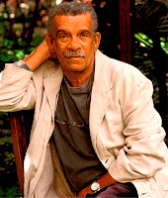
 Exiled Caribbean: Derek Walcott.


From there to other shores: snow and an exiled Caribbean taught me the lessons I needed. I fled the blizzards for the Gulf. There was a reception, and someone got his antlers stuck in a chandelier. As I helped him disentangle, he said “You look like a man who enjoys Scotch.” I was. We killed an entire Famous Grouse together, and by the time the bottle was empty, he’d turned me from poetry to fiction.

So many stories since then, so many poems. Mozart said, “I write music the way cows piss.” Typical Mozart. I’m not like that. I’m more like a fig tree, endlessly making leaves and fruit. Leaf after leaf after leaf, and the birds come and sample my offerings. Sometimes they get drunk on the fermentation, and then they sing from the branches like mermaids. It’s what I was made for, perhaps it’s even why I was born. Who can say?
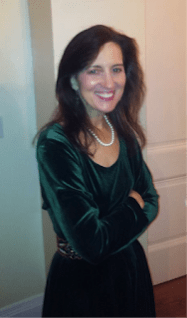
She said, “William, start writing!”: 
Kathleen Fitzpatrick.
But remember that woman dancing in the central square? One day, I was sitting in my office, holding court. And she came clattering down the hallway, back into my life. When she waved her hands above her head, everything previous disappeared: the distractions, impedimenta, the fittings and fixtures. Nothing previous mattered. She sat in a chair, crossed her knees, and kicked her sandaled foot. She laughed at the mark on my forehead. But she knew what it was. And she said “William, start writing!”


A Season’s Requiem

by W.F. Lantry

She says, “An autumn feeling now descends
on June.” It’s true. A yellowed cherry leaf
spins down to a mown lawn. The darkened air
turns afternoon to evening, and rain

accumulates in half-scythed roadside ponds.
Along the Anacostia, downed trees
thrust their last barren limbs, almost in prayer,
towards those rocks where our lost pathway ends.

But this is no December, when I first
heard her sing “Ave”, answering my grief,
grafting her harmonies across my pain,
changing my loosened tethers into bonds,

her voice, like shifted days, answers my thirst
with early rain, and brings to mourning, ease.


_______________________________________


W.F. Lantry’s poetry collections are The Terraced Mountain 
(Little Red Tree 2015), The Structure of Desire (Little Red Tree 2012), winner of a 2013 Nautilus Award in Poetry, and a chapbook, The Language of Birds (2011). He received his PhD in Creative Writing from the University of Houston. Honors include the National Hackney Literary Award in Poetry, Patricia Goedicke Prize, Crucible Editors’ Prize, Lindberg Foundation International Poetry for Peace Prize (Israel), the Paris Lake Poetry Prize and Potomac Review Prize. His work appears widely online and in print. He currently works in Washington, DC. and is editor of Peacock Journal.

JOURNEY TO PLANET WRITE: Late in the Game

by Nina Rota


Today we have a special treat. Here is the YouTube video Nina Rota created for Words in Place‘s “Journey to Planet Write!”


Excerpt from THE SHADOW TEMPLE
by
Nina Rota
            something outside intrudes. rolling sound and flashing light arrive together soaking a pair of thin curtains. streetlight and electric hum. a second layer of thick curtain reduces the constant sound of tires cornering to a crackly hush, like walking on gravel in the countryside. streaking headlights, now muted, crawl slowly across the room.
            inside, one cone of light from a swivel wall sconce. i barely see his dark eyes. sitting on the bed, i take his slender hips and pull him to me, between my open legs. i bury my head in his middle and wrap myself tightly around him, taking full possession. he surrenders.
            my hand trails across his buttock and down the back of his thigh. my shoulders lift and my middle expands. reaching for a breath that was easy moments ago.
            i undo his low hanging pants and rub my face across his belly, his soft skin. i move down and reach for him, then take him into my mouth. building fire with each stroke, i am completely sated till the next level of desire. he stays hard, pliable.
            i stand up and move behind him, i reach around him. my hand still holds him. i push my face into his long hair and lean in. push into him. my entire body lights up. my arms are weightless, lifted. every cell rises, lighter than itself, and separates, till i am totally transparent. thoughtless. unaware except for his body. ecstatic.
            slowly, my heartbeat grows louder. feelings rush back in, pleasure, longing. i untangle myself and move him to the bed, on his stomach. take off my pants and crawl over his back. slide a pillow under his belly, and enter him. my cheek in the curve of his neck, i spread my legs and go deeper. sink into him. i slide my arms under his shoulders, glue myself to his body, and thrust.
            my core muscles pull in and up, arching my back, pulling my head down. my forehead digs into his spine as breath sharpens and turns in on itself. shoulders roll forward and constrict my chest further. thighs grab, every nerve online, till i reach the edge and, finally, lift off. flying on uncontrollable pulses passing through me nonstop. release and escape.
            Note on Personals Wall in The Shadow Temple
fag identified dyke looking for someone to play out a scene between an older man and a much younger man,
please find me if interested, Nina

            Andrew and I crossed paths on our way to The Shadow Temple. This was our second try at doing the scene. Andrew missed the first one choosing to take a workshop instead. Now we had less than an hour before the closing ceremony began. We exchanged embarrassed smiles.
            Dust kicked up over the back of my sandals and bugs crawled everywhere. Andrew walked ahead moving effortlessly in his small dancers body.
            We opened the screen door and walked into the living room. It was full of mismatched chairs and a few sofas. There was a ratty shag carpet in the middle of the room. Andrew looked around then looked shyly at me, “Lets go upstairs.” 
            The upstairs room was empty except for three equally spaced beds. It was dead quiet in a way that was almost loud. I wanted to drown the quiet with music, but there wasnt any. Bright sunlight pierced the room from windows at each end. Outside, sparse New Mexico ranch land stretched out until interrupted by mountains in the distance. I couldnt stand it. I had to close the walls and bring in some night. “I need to shut the blinds.”
            “Okay,” Andrew said with a slight question mark. It felt like early evening in the shadow of the blinds. In the close darkness of my fantasy, I was protected by traffic noise and thick curtains. Here, I was exposed.
            Andrew walked over to the center bed and climbed up until he was kneeling in the middle of the bed, facing away from me. As I walked towards him, I stumbled over my sandals. I sat down on the edge of the bed and removed them.
            I turned and watched him. His breathing was even but very deep, his body still. I was jumpy and chaotic. Cells pinged off the inner walls of my body and smashed into each other nonstop. I dropped my head into my hands and looked at my naked feet. You’re the one who set this scene up. You wanted to seduce a younger man. Now do something! I lifted my shoulders and took a deep breath, then turned around. I crawled up behind him and opened my knees until my chest was just a few inches from his back. “May I touch you?”
            He lifted his chin slightly in assent. I placed a shaky hand on the middle of his back. I moved it along his spine up to the nape of his neck. “Your hair is so beautiful.” I brushed my hand up the back of his head, lifting the short blonde hairs, feeling every bone and bump. His head moved forward and away slowly, passively.
            When I reached the crown of his head, I held my hand there to calm myself. His head felt so small. Wed started to breathe together.
            I moved my other arm around his body and stroked his cheek with the back of my hand. “Your skin is soft, smooth. May I hold you?” His body moved up and back. I took that as a yes and moved forward putting both arms around his chest. My thighs opened further and hugged the flesh at his hips.
            In my fantasy I always felt raw sexual desire, I could do whatever I wanted with him. He was anonymous. Now there was a breathing body next to mine, I found myself asking permission for the smallest move.
            A loud crashing sound startled me and made him jump. He looked in the direction of the noise then turned to me and lowered his head, smiling demurely. “Maybe someone is spying on us.”
            A cascade of shame lit my face and burned down the front of my chest. Was a disapproving stranger looking on? Shame gave way to a flush of warmth that confused me. The possibility of prying eyes was turning me on. I smiled to myself. Instead of paralyzing me, my deepest fears were now feeding my desire. Finally, I was beginning to settle into my body. I could continue. “Probably a branch falling off a dead tree.”
            I laid my head on Andrew’s shoulder and breathed out through pursed lips. He turned his head towards mine, so I took the opportunity to put my hands on his hips and move him around.
            Now he was facing me, and I placed both hands on his white t-shirt. As I ran them across his chest, his body moved into me. I continued down to his belly and across the fly on his jeans. He flinched and pulled his stomach in. His breath shortened.
            He was still kneeling and his hands were resting on his legs. I separated my hands and pulled them across his thighs, brushing the top ofhis hands. His jeans were rough and patchy with tears above the knees. I wrapped my hands around his legs and squeezed the exposed skin. My whole body tightened and the fire started up again. I had to open my eyes to gather my breath.
            His body tightened too and I felt bad about being rough. I took one of his hands in mine and kissed his palm. Then I pulled him down by his forearms until his head reached my lap.
            I leaned forward and covered his body with mine, my arms draped over his lower torso. I reached down and lifted the bottom of his shirt. He shifted slightly, then pulled his hands back to his side and underneath him. His breath shortened further as I moved my fingers across the bony skin on the small of his back, and down to his buttocks. Then inside his jeans.
            I heard him make a low humming noise, but as it got louder I realized I was hearing someone blow a conch horn. The closing ceremony was beginning. Andrew sat up quickly, almost hitting my chin with the crown of his head. “We’d better go,” he said, and jumped off the bed.
            “Oh. Okay. Ill be along soon.”
            I walked to the window and opened the slats to horizontal. More sound outside – voices of campers on their way to the closing ceremony. I strapped on my sandals and walked downstairs.
            In the living room, one wall was covered with cork board and my note was pinned there. I took it down and looked at it. I put the note in my pocket and walked out of The Shadow Temple.

__________________________________________________


Nina Rota is a writer and filmmaker. Her writing can be found in Witness Magazine, Red Fez, and Diverse Voices Quarterly, among others. Her short films have appeared in Getty Museum’s Pacific Standard Time project and Anthology Film Archives. She is currently working on a book of essays titled Walls Crumble Before Me. You can find her at Facebook.com/ninarota and ninarota.com.


Here is the link to the YouTube video Nina Rota created for Words in Place‘s “Journey to Planet Write!”

https://youtu.be/UAOd_iqlmas

JOURNEY TO PLANET WRITE: Late to the Game

by Nina Rota


Today we have a special treat. Here is the YouTube video Nina Rota created for Words in Place‘s “Journey to Planet Write!”


Excerpt from THE SHADOW TEMPLE
by
Nina Rota
            something outside intrudes. rolling sound and flashing light arrive together soaking a pair of thin curtains. streetlight and electric hum. a second layer of thick curtain reduces the constant sound of tires cornering to a crackly hush, like walking on gravel in the countryside. streaking headlights, now muted, crawl slowly across the room.
            inside, one cone of light from a swivel wall sconce. i barely see his dark eyes. sitting on the bed, i take his slender hips and pull him to me, between my open legs. i bury my head in his middle and wrap myself tightly around him, taking full possession. he surrenders.
            my hand trails across his buttock and down the back of his thigh. my shoulders lift and my middle expands. reaching for a breath that was easy moments ago.
            i undo his low hanging pants and rub my face across his belly, his soft skin. i move down and reach for him, then take him into my mouth. building fire with each stroke, i am completely sated till the next level of desire. he stays hard, pliable.
            i stand up and move behind him, i reach around him. my hand still holds him. i push my face into his long hair and lean in. push into him. my entire body lights up. my arms are weightless, lifted. every cell rises, lighter than itself, and separates, till i am totally transparent. thoughtless. unaware except for his body. ecstatic.
            slowly, my heartbeat grows louder. feelings rush back in, pleasure, longing. i untangle myself and move him to the bed, on his stomach. take off my pants and crawl over his back. slide a pillow under his belly, and enter him. my cheek in the curve of his neck, i spread my legs and go deeper. sink into him. i slide my arms under his shoulders, glue myself to his body, and thrust.
            my core muscles pull in and up, arching my back, pulling my head down. my forehead digs into his spine as breath sharpens and turns in on itself. shoulders roll forward and constrict my chest further. thighs grab, every nerve online, till i reach the edge and, finally, lift off. flying on uncontrollable pulses passing through me nonstop. release and escape.
            Note on Personals Wall in The Shadow Temple
fag identified dyke looking for someone to play out a scene between an older man and a much younger man,
please find me if interested, Nina

            Andrew and I crossed paths on our way to The Shadow Temple. This was our second try at doing the scene. Andrew missed the first one choosing to take a workshop instead. Now we had less than an hour before the closing ceremony began. We exchanged embarrassed smiles.
            Dust kicked up over the back of my sandals and bugs crawled everywhere. Andrew walked ahead moving effortlessly in his small dancers body.
            We opened the screen door and walked into the living room. It was full of mismatched chairs and a few sofas. There was a ratty shag carpet in the middle of the room. Andrew looked around then looked shyly at me, “Lets go upstairs.” 
            The upstairs room was empty except for three equally spaced beds. It was dead quiet in a way that was almost loud. I wanted to drown the quiet with music, but there wasnt any. Bright sunlight pierced the room from windows at each end. Outside, sparse New Mexico ranch land stretched out until interrupted by mountains in the distance. I couldnt stand it. I had to close the walls and bring in some night. “I need to shut the blinds.”
            “Okay,” Andrew said with a slight question mark. It felt like early evening in the shadow of the blinds. In the close darkness of my fantasy, I was protected by traffic noise and thick curtains. Here, I was exposed.
            Andrew walked over to the center bed and climbed up until he was kneeling in the middle of the bed, facing away from me. As I walked towards him, I stumbled over my sandals. I sat down on the edge of the bed and removed them.
            I turned and watched him. His breathing was even but very deep, his body still. I was jumpy and chaotic. Cells pinged off the inner walls of my body and smashed into each other nonstop. I dropped my head into my hands and looked at my naked feet. You’re the one who set this scene up. You wanted to seduce a younger man. Now do something! I lifted my shoulders and took a deep breath, then turned around. I crawled up behind him and opened my knees until my chest was just a few inches from his back. “May I touch you?”
            He lifted his chin slightly in assent. I placed a shaky hand on the middle of his back. I moved it along his spine up to the nape of his neck. “Your hair is so beautiful.” I brushed my hand up the back of his head, lifting the short blonde hairs, feeling every bone and bump. His head moved forward and away slowly, passively.
            When I reached the crown of his head, I held my hand there to calm myself. His head felt so small. Wed started to breathe together.
            I moved my other arm around his body and stroked his cheek with the back of my hand. “Your skin is soft, smooth. May I hold you?” His body moved up and back. I took that as a yes and moved forward putting both arms around his chest. My thighs opened further and hugged the flesh at his hips.
            In my fantasy I always felt raw sexual desire, I could do whatever I wanted with him. He was anonymous. Now there was a breathing body next to mine, I found myself asking permission for the smallest move.
            A loud crashing sound startled me and made him jump. He looked in the direction of the noise then turned to me and lowered his head, smiling demurely. “Maybe someone is spying on us.”
            A cascade of shame lit my face and burned down the front of my chest. Was a disapproving stranger looking on? Shame gave way to a flush of warmth that confused me. The possibility of prying eyes was turning me on. I smiled to myself. Instead of paralyzing me, my deepest fears were now feeding my desire. Finally, I was beginning to settle into my body. I could continue. “Probably a branch falling off a dead tree.”
            I laid my head on Andrew’s shoulder and breathed out through pursed lips. He turned his head towards mine, so I took the opportunity to put my hands on his hips and move him around.
            Now he was facing me, and I placed both hands on his white t-shirt. As I ran them across his chest, his body moved into me. I continued down to his belly and across the fly on his jeans. He flinched and pulled his stomach in. His breath shortened.
            He was still kneeling and his hands were resting on his legs. I separated my hands and pulled them across his thighs, brushing the top ofhis hands. His jeans were rough and patchy with tears above the knees. I wrapped my hands around his legs and squeezed the exposed skin. My whole body tightened and the fire started up again. I had to open my eyes to gather my breath.
            His body tightened too and I felt bad about being rough. I took one of his hands in mine and kissed his palm. Then I pulled him down by his forearms until his head reached my lap.
            I leaned forward and covered his body with mine, my arms draped over his lower torso. I reached down and lifted the bottom of his shirt. He shifted slightly, then pulled his hands back to his side and underneath him. His breath shortened further as I moved my fingers across the bony skin on the small of his back, and down to his buttocks. Then inside his jeans.
            I heard him make a low humming noise, but as it got louder I realized I was hearing someone blow a conch horn. The closing ceremony was beginning. Andrew sat up quickly, almost hitting my chin with the crown of his head. “We’d better go,” he said, and jumped off the bed.
            “Oh. Okay. Ill be along soon.”
            I walked to the window and opened the slats to horizontal. More sound outside – voices of campers on their way to the closing ceremony. I strapped on my sandals and walked downstairs.
            In the living room, one wall was covered with cork board and my note was pinned there. I took it down and looked at it. I put the note in my pocket and walked out of The Shadow Temple.

__________________________________________________


Nina Rota is a writer and filmmaker. Her writing can be found in Witness Magazine, Red Fez, and Diverse Voices Quarterly, among others. Her short films have appeared in Getty Museum’s Pacific Standard Time project and Anthology Film Archives. She is currently working on a book of essays titled Walls Crumble Before Me. You can find her at Facebook.com/ninarota and ninarota.com.


Here is the link to the YouTube video Nina Rota created for Words in Place‘s “Journey to Planet Write!”

https://youtu.be/UAOd_iqlmas

JOURNEY TO PLANET WRITE: All I Ever Thought

by Steven Gowin

Farmer
In 1941, my father, 15 years old, his brother 20, and my grandfather farmed a small place in Northern Madison County, Iowa, near the covered bridges.

When Uncle Howard left for the war, my grandfather was pissing foam and running a fever most days. Renal failure had swollen his feet and was killing him.

It all meant that my father, too young for war, was looking after the farm virtually alone. He’d barely graduated high school and got stuck on the failing land when his brother returned from France.

Sometime, in my late teens, though, Dad told me that before the war, before the farm, he’d hoped to become a journalist or writer, the only thing for which he thought he’d had a talent, the only thing he thought he’d ever do well.

Photographer
Bob C operated TV cameras for the CBS affiliate in Des Moines. He’d been a professional photographer for years, dressed in khakis and tweed, and smoked a pipe.

My friend’s divorced mother, Willie S, fixed up well into middle age; you’d hope to find her clean bra in her laundry room when you visited your friend.

Willie’d landed some small modeling jobs in Des Moines, probably for Younkers; Bob C. had photographed her and become her boyfriend. For Iowa, they made a glamorous pair.

My friend and I were helping Bob as production assistants on a 16mm shoot one day when Bob complained he’d no budget for a dolly. I deflated my Beetle’s tires, removed a front seat, and opened the sunroof so he could shoot out of the car as we slowly pushed it.

Willie S, in a bright sun dress, smelling of Younkers perfume, and perfectly quaffed, steered and braked, and I fell in love with cinema. 

Student

At university, Fiction 101 students submit a story every couple of weeks. They meet at someone’s apartment or at a bar. The teachers are Workshop grad students from exotic lands, Santa Monica and Providence.

And for those still interested after Fiction Writing 101, even those studying film theory and criticism, Jack Leggett, head of the graduate Fiction Workshop, taught the undergraduate workshop.

Leggett had written a masterful dual biography, Ross and Tom: Two American Tragedies, about two of his own contemporaries, their inabilities to handle success, and their suicides.

I’d done well with undergrad writing and so asked Jack for a graduate program recommendation. He thought I might do well at UC Irvine. I’d like the beach, but why wasn’t I applying for Iowa?

As head of the program, he carefully advised his students not so much towards a path in writing – one must find that for oneself – but away from a path he knew didn’t suit them.
           
Ross and Tom and his own fragilities made him sensitive to young writers who could be blown off track forever by a careless comment or a puff of air.

Students unsure of themselves, do not make memorable workshop writers but with good mentoring do often finish their course having become serious about language and writing.

Volunteer

Values in the late sixties ran to God and country; proud and patriotic children sang along with The Ballad of the Green Beret (put silver wings on my son’s chest.)


But only a few years later, the same kids were fleeing state police hurling tear gas towards their anti-war demonstrations. University studies and academia’s shelter eventually ended for that generation though.

By then, some of us had broken up with girl friends; some of us were desperate to travel, and some who’d protested also suffered some small guilt over their disloyalty. For all of that, some of us felt that the Peace Corps was an answer. With an MFA, you could teach in Rwanda or Mali

I chose Central Africa over the desert. But Rwandans are mountain people and don’t form friendships easily. So in the summer, as the Canadian and European ex pats lit out for vacations and home, the post became lonely.

On Wednesdays and Fridays, as the Brussels bound Sabina flight passed over head, big hot tears welled in my eyes. But the solitude did afford time for reading –  Faulkner and Malcom Lowry, appropriate if not cheery, and writing.

Californian
The road home from Africa included bicycling across France and grape picking in the Loire Valley.

Later it put me in touch too with Ireland where dark quiet men, the stock of my Midwestern uncles, and Ross and Tom too, I suppose, smoked and bowed their silent heads into pints of Carlsberg and Guinness.

When the money ran out, I came home to a bland landscape, featureless, where white men speak English exclusively on a wide prairie insipid and void of diversity. Inevitably, and soon, San Francisco called.

Almost as foreign as Rwanda or France, California seduces intent. Self-addressing stamped envelopes, running to Kinkos for copying, and the wait wait wait for rejection takes its toll while a trip to wine country or, a ride up the wild foggy coast entices.

Eventually work, the daily grind, family, and fear of more rejection put writing into a long, long, long hiatus.

Writer
But one day, as if delivered by elves in the night, the internet had spawned dozens of web magazines and publishing venues with editors thirsty for content.

And granted, few of the publications paid or counted large circulations, but submission were simple and literary tribes communicating via eMail and social media were forming, supporting one another, and even meeting live from time to time.

Sharing work was more possible than ever. Finding an audience was more possible than ever. Where I’d had no place in the past, I saw the possibility of a place now.

And in the end, I began writing again, struggling with it, because after all, it’s the only thing for which I may have a little talent, the only thing I’ve ever thought I might do well.


Frenchie at the Fair
by Steven Gowin
Frenchie hustled waffle irons.
He also hawked peelers, can openers, and electric turkey carvers out of a cornucopial van of small electric appliances and household gizmos. 
A swarthy fellow with glistening black locks, starched white shirt, and open collar, his daylong pitches sent his voice low and gravelly requiring amplification, and so the mic around his neck.
Parked next to the State Fair Talent Search with host Bill Riley, Frenchie’s performance topped even the winning talent, boy phoenom and accordionist, Dewillio Mordini. 
Sometimes Frenchie had must take a break to light a cig for a few puffs such was the exertion of charity in bringing all those reel to reel tape recorders, shoe polishers, and assorted junk to a grateful Iowa populace. 

You could watch him for hours.

(Published at Fictionaut)

_________________________________________


Steven Gowin is a corporate video producer in San Francisco. His fiction has appeared in Insomnia and Obsession, Pure Slush, The Olentangy Review, and others. Gowin is a graduate of the Iowa Writers’ Workshop.


photo by Jack Leggett

JOURNEY TO PLANET WRITE: From Miss Harrison to Twitter


by Alan Beard

It seems to me I have always written fiction. Miss Harrison – my Year 4 teacher – said I was a good writer (I was nine) and set me up on a project to write a long story (over ten pages, she said, but I think I did thirty). She had another pupil do the illustrations, another one to bind it and so on. It was a Dr. Who story (the Doctor was new then), and she said my story was so good, she was going to get it published. And then she vanished: after Easter, she didn’t come back and my manuscript disappeared. It scarred me for life, and set me out on the quest to be a published writer.

At secondary school I won a school prize for a story I wrote at sixteen, then at Uni I was encouraged to write more fiction (although there were no creative writing courses then; this was a teacher training course). When I left, I decided to write seriously and bought several hardback A4 page-a-day diaries (I still use these, still write longhand). 

From the very start, I was writing what are now called “flash fictions” – pieces under 1000 words that were complete. Actually some did provide the germ of longer stories, but most stubbornly refused to, and insisted they were finished. In those days – the early 80s – no one was accepting stories of this length. I’d seen some examples (Walser springs to mind), and it was great when the Sudden Fiction anthologies came out, and I realised that flashes were acceptable. Still no dice here (UK) with most (all!) publishers, magazines, not accepting the shorter pieces, although I was getting my longer fiction out. “Taking Doreen out of the Sky,” for instance, which became the title story of my first collection published by Picador in 1999, was published in London Magazine in 1985 and won the Tom-Gallon award in 1987. 

The first breakthrough with flash came when Bete Noir accepted a 750-word piece called “A Man” in the early 90s. That was it until the internet took off and flash sites started to appear here and there; I had pieces accepted by In Posse Review (2004), Vestal Review (2005 and 06), and taint magazine (2005). All had been written in 1983, although I did tighten and polish. That was the pattern then. As more sites became available, I started getting my (usually already written) flashes published at the pace of about two or three a year, so that now I have about thirty flashes published in places like Wordia, Flashshot, Wufniks, and latterly Litro, Oblong, Spelk, and some print only places such as Flash Fiction: The International Short –Short Story Magazine, Falling Star, and BuffaloCarp. 

I enjoy reading novels but apart from a short spell in my mid-20s when I wrote over a 100 pages (abandoned as crap), I have never wanted to write one. Stories have always been my thing. This might stem from the anthology we read at school in 1969  – Twentieth Century Short Stories – a selection of great English stories (if you count Conrad and Mansfield as English as they settled here): Conrad’s Secret Sharer, Lawrence’s Odour of Chrysanthemums, E M Forster’s The Machine Stops, Mansfield’s Daughters of the Late Colonel, Greene’s The Destructors

The book made me love short stories above all else, and to seek out the best forever, and try and emulate, as far as I was able, the compact beauty of the form that these masters displayed. I bought, borrowed, or stole story collections and anthologies, loved the Best Short Stories annuals, and was so pleased to have one selected for it many years later in 1991, and then after the anthologies disappeared, to have another in the first reincarnation of it Best British Short Stories 2011. My idols were – and are – Carver, Ford, Jayne Anne Phillips, Alice Munro – all of whom had collections out as I was leaving college.


I moved to Birmingham (UK) in 1982 and joined a writers’ group soon after (Tindal Street Fiction Group). Birmingham gave me my subject, the landscape of the city and its people, and the group kept me writing (although I was and still am an extremely slow writer – I produce on average one finished piece a year).


Lately I am using twitter ( @AlanBeard4 ) as a writer’s notebook with observations, things overheard etc., but also some complete “stories” (as I see it), e.g.

Up Snowdon we tramped to no avail. Thick fog descended and we could barely see each other. We came down on the railway.

(Snowdon is the highest mountain in Wales)

Or

Arranges his flat as though he expects visitors; best place for the furniture to facilitate conversation, or her. Deciding who he would be.

I like the discipline of 140 characters and it suits the way I write. However, I am always startled when someone responds, recently I tweeted:


Left on his own he crumbles and curls, dying slowly, visited by nightmare; his pouch of a belly and goblin legs terrify him.


And somebody tweeted back ‘I guess Boris.’


All Light
by Alan Beard


The boy on the beach has his eyes closed and the chatter eddies at his ears. He thinks he’s her boy-trap. He makes her sticky. The beach is rolling, the beach is swollen. Sea’s froth breaks on bodies like music. I am a gull’s cry. I am grass in the dunes. He’s the sharpness, he’s the light. Radio voices, he’s a transmitter. She is a voice from a long way off and the colours brim through his opening lids, like all light trying to get in. 



Written in 1984, published eventually as runner-up in National Flash Fiction Day competition 2013

_________________________________________


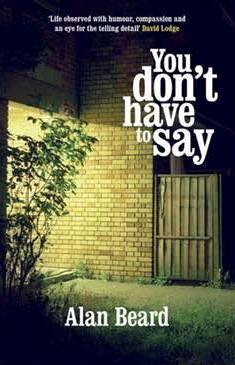
Alan Beard has published two short story collections Taking Doreen out of the Sky (Picador 1999, also on Kindle) and You Don’t Have to Say (Tindal Street Press, 2010). He won the Tom-Gallon award. Stories in Best Short Stories 1991, and Best British Short Stories 2011 and many places including Critical Quarterly, Malahat Review, London Magazine, and on BBC Radio 4.

Links: My website includes links to stories, news, reviews etc.

Two stories of mine on East of the Web
A recent flash 


Amazon author page


JOURNEY TO PLANET WRITE: When a Question Becomes an Answer

by Meg Tuite

Is writing another form of depression that needs a page instead of an ear to hear it?

How often do you write the same story over and over again? Are you trying to get somewhere? But isn’t it supposed to be about the journey? What do we want to convey? Should it be in 1st, 2nd, or 3rd person, or maybe a mix? Past tense, present tense or both? Should it be written with differing voices that aren’t in linear time or should it be written at all? When does it seem like it doesn’t matter? That what is written won’t change anyone, not even the one who writes it? Is it true that anything and everything is interesting in the hands of a skilled writer? And where does the skill come from?

No one can really teach you how to write well. But, isn’t anything done well, reworked over and over again until it moves somewhere. More skill involves more time in front of the page, writing and writing and then there’s the editing part which is more intensive sometimes than the writing itself. So, then would that mean that a person with an eye for that extraneous crap in a story is really the writer?

And is there a way to lead a healthy life as a writer? Do you start off with coffee and hole up for a few hours? Or eat some eggs or oatmeal, take some vitamins, and then hole up again. Or sit in a cafe surrounded by the white noise of stranger’s voices so you don’t have to actually be alone to complete the task?


And what about exercise? Do you become a head with a body slugging behind it? How much energy is left over to run or go to a gym? And do you really care to move around after your mind has been on a treadmill trying to circumvent so many questions and possible paths? Or do you just say, fuck it, I’ll do that tomorrow and get some wine, Scotch, beer? Or maybe you’ve already been there, and so you take another Xanax and go to an AA meeting.

Do you have a social life? After spending many hours alone, does your tongue still work and do you have anything to say besides what your story or book is about? Or do you sit back and listen complacently because you have already completed your task in the world and let others tell you why their life is not coming together?

And is it a good thing to be in a healthy relationship? You know, happy and trusting and oh, yes, we both love our solitude and that makes being together all the more peaceful and uncomplicated. Or is best to have a lot of drama, so you can rage on the page and throw lamps and knick-knacks, end up sleeping with the neighbor’s cousin or stealing lawn ornaments or street signs to keep life interesting?

Do you work all day in an office, while you keep a notebook of thoughts for your manuscript

awaiting you at home? Do you turn the key in your lock and strip off your uniform and get your holey pajamas with that t-shirt you got from making the 50k words in a month NANO one year, grab some more coffee and sit at your desk?


Is there a better stream that flows at night when you hear traffic and sirens, music somewhere out there, but you just keep plugging those veins with caffeine as you remember that one time in high school, or that guy who always started his stories with ‘I got to tell you,’ or walk that fine line between waking and dreaming and let the free-float of words pressure themselves into some kind of formula that makes sense when you’re stoned or is so close to not making sense that you are sure it’s multi-layered and is one of those abstract pieces that can be interpreted so many different ways depending on the reader?

Do you surround yourself with books and a thesaurus? Do you keep checking for that one word that will absolutely blow minds with its inimitable impact? How about a word count? Do you shoot for 1500 words a day? 2500?  Or are you set up in a stark room, maybe the basement with the shades down and no books, no view, no sound but the cracking of joints when you stretch?   

And how do you know your work is authentic? Do you get out your copy of Poets and Writers and look for a summer workshop? Or maybe make certain that everyone knows you are serious about your vocation and get into an MFA program? Those are places where they attempt to guide you in a distinct direction. You are surrounded by classes full of writers just as confused as you are or maybe they aren’t? They are always tapping away on their keyboards whenever you see them on campus. Maybe that’s their voice and not your voice? Maybe they are misguiding you, and you become more and more certifiably lost as you sit with a group of other writers who continue to give you advice, though each one likes or dislikes or is confused by a different part of your story.

Or you decide to go to AWP. Yes, you are going to go to the largest writers conference for five days. You go to a panel on how to publish a book without an agent. You go to a panel on how to speak your truth, how to write a blog, what genre is best for you. In between panels you get a map of the book fair with millions of books for sale, walk aisle after aisle, booth after booth of small-press publishers, large-press publishers, literary magazine editors, MFA programs, fiction, non-fiction, poetry, screenplays, graphic novels, playwriting, agents, and in-house readings with a floor plan that makes any museum look like a bathroom stall. You stagger off after drinking your way through a pariah of off-site parties and readings each night with a bag full of books, brochures, pamphlets, buttons, stickers and business cards and rush to make your flight back home.

Do you remember whom you met? You look on your phone and see tons of photos of you with other writers or publishers or were they editors? Do any of the notes you made make sense? Why do you feel so depressed? Did you lie in bed for a week after it was over wondering why you have no energy to even open your computer? You might remember snippets of introductions of authors who have bios that go on like breakdowns. You remember staring out over a balcony at what looked to be enough people to fill a city and think that every one of them has written at least one book, if not more, trying not to calculate. Your back aches and your credit card is maxed out.

And while you’re lying in that bed, do you remember that first desk you sat beneath? Not the one at school, but the one your mom bought you for five bucks at the school rummage sale that waited for you every day against a corner of your room. And do you remember that you wanted to be dead when you were three? And when you got that writing desk with paper and sat at it when you were eight, it was the first time that you found a way to disappear and appear without anyone seeing at the same time.

You sit in a therapist’s office with headphones on and a beep that goes back and forth. “What do you see,” asks the therapist? Your eyes are closed. Aren’t those images of snapshots you saw when you were a kid? Yeah, you see your Dad. And yeah, you are shaking. “No,” you hear yourself think. “Nothing is clear,” you say. “It’s a blur of images.”  You can’t be sure of any of them, even if you spend an entire lifetime trying to hide the tremors that unhinge you.

You do know one thing, for sure. Writing is the only reason you’re still alive, whether anyone reads it or not.

Theft
by Meg Tuite
The girl didn’t want all the necklaces from the store rack that she slipped into her coat pocket the size of a rural mailbox opening, but did want friends to notice that she wasn’t as afraid as the tremors that spread across her face like the make-up and lipstick she just palmed in her hand that would only make her imperfections brighter, more shrill when one of her friends got too close to her and whispered  secrets about other girls that could have been her pimples, flat chest, crazy thoughts, secrets that her mom told her would save her from the captivity of convention, anchor her within her own breed of otherness, keep her from walking within the lines as her mother slipped a pen and notebook into the girl’s pocket and went back to confiscating the wail of wind in stranger’s depressed faces, demolished buildings, the bruised colors of the girl’s interior with a paintbrush, humming a soft, velvet tune that the girl wanted to crawl inside larger than her bulging pocket filled with sparkly trinkets she would hand out to friends at school the next day.  

(Published in MadHatter’s Review)

______________________________________


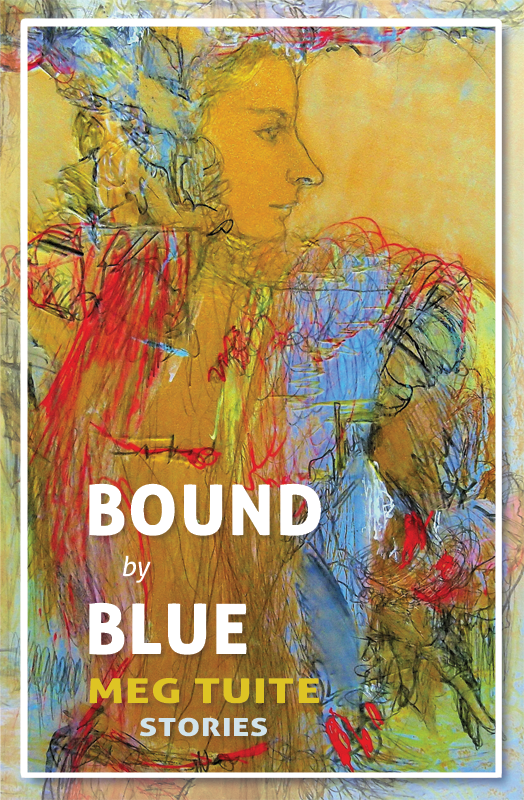
Meg Tuite is author of two short story collections, Bound By Blue(Sententia Books, 2013) and Domestic Apparition () San Francisco Bay Press, 2011), and four chapbooks. She won the Twin Antlers Collaborative Poetry award from Artistically Declined Press for her poetry collection, Bare Bulbs Swinging (2014) written with Heather Fowler and Michelle Reale. She teaches at Santa Fe Community College, and is a columnist at Connotation Press and JMWW. Her blog: http://megtuite.com
Hollow Gestures” nominated for Best of the Web at Blue Lyra Review
Fingerprints,” ekphrastic flash w/ art, music on video published by Michael Cooper, Orange Monkey Publishing.
“Worn-Out Fabric” published in People Holding
Video book trailer for “Grace Notes” with David Tomaloff and me; video by Marc Neys
Root People” published in Nervous Breakdown


JOURNEY TO PLANET WRITE: In a Word

by Jen Knox

Angst. A hard-hitting, Midwestern mixture of anxiety and unfocused resentment kicked off my journey toward Planet Write. I was a high school dropout with unrealistic ideas about what the world owed me. I’d had a hardscrabble journey to adulthood, and a lot to say about it, but I had yet to make my way to a writing life.  
Angst propelled me. I knew things needed to change, but the future was blurry. After getting my GED, to help with job prospects, I applied for financial aid and enrolled at Columbus State Community College. Next thing I knew, I was back in classes, self-conscious about being a few years older than most of my contemporaries. The high school I had spent many days avoiding was known for teaching survival skills, not sentence structure, so I began in remedial English.   
Somewhere along the line, college began to click for me. Much to my surprise, I enjoyed writing narrative essays, especially for classes that weren’t English. I loved the credibility of being a writer who knew a lot about subject X or Y. I spent hours writing entire essays that weren’t on the syllabus. Taking every sociology and psychology class I could, I began writing fictional case studies – getting into the minds of those I wanted to understand. I really kicked off my writing life in those psychology classes, exploring the research and theories of Erikson, Freud (Anna and Sigmund), Jung, Maslow, and Pavlov. Mental illness became the mainstay of my creative writing for many years after.  
Those first few years of college were long. I worked full-time in factories, clubs, restaurants, and gas stations. I took classes as I was able to pay for books, general fees, and transportation. I had to time things with the bus line for a few years, which wasn’t ideal, but I got through, and I wrote most of my essays on the bus or during breaks at work.  
When I was accepted into Otterbein University, I began to take writing seriously. I met a few instructors who opened new worlds for me. Dr. Shannon Lakanen urged me to explore my personal experiences in creative nonfiction, and, before I knew it, I couldn’t shut up about myself. I studied Joan Didion, Michel de Montaigne, William Hazlitt, and Phillip Lopate. I learned that when I wrote true stories, even traumatic stories, they lost their emotional grip on me. Writing allowed me to reframe reality.
I was lucky enough to study with Phillip Lopate personally after Otterbein because, at the urging of a few professors, I applied to a single grad school and, go figure, got in. I remember getting the acceptance letter and thinking, Shit! I can’t really do this.
Bennington was tough for me, but I was so grateful to be there that I absorbed everything it had to offer. I didn’t take a single breath in Vermont for granted. Although I continued to study creative nonfiction, I realized that the fundamental benefit of writing transcends genre and form.     
Once a graduate left to find sustainable work (after years of working and school, working alone feels rather strange), I found time to write but no structure and no audience, so I wrote what I wanted when I could, and I continued to read everything I could get ahold of. I also began to share work, mostly in online journals and small press publications. I had a voice.
I currently direct a program that connects writers to community settings around San Antonio. The writers, who are published and stellar instructors, bring their passion and expertise to young people, adults, the elderly, the incarcerated, and the homeless in order to show them that their voices matter. So many people do not understand how valuable their stories are.
I remember my angst vividly. It was my companion. I had been through quite a bit in my formative years that made me fear the world; and fear is a place from which we either make bad decisions loudly or hole up and hide. I hid.
It was writing, in all its “otherworldliness,” that freed me. I attempt to pay this forward with my work, both as an educator and a person who connects those who know the value of writing with those who are yet to discover the power of words. It is my belief that Planet Write should be about inclusion, and that it will only be made stronger with the addition of voices that have been silenced due to lack of access or time. So many people live every day just trying to get by.    
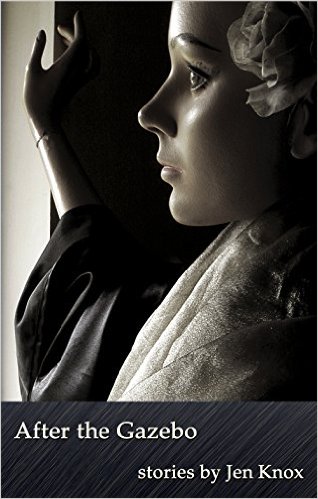
Writing, for me, is necessary, urgent, and sometimes it feels more real than reality itself. I recently published a book with Rain Mountain Press, After the Gazebo, and I am beginning to shop a new collection of eco-centered fiction. I am also finishing a very strange novella, To Shake His Hand.
My journey as a writer has just begun. It is only within the last few years that I’ve truly tapped into the authentic, creative voice. Writing equips me to deal with the messy stuff of life, and it has become a bridge to opportunities I could have never imagined existed. I suppose if I were to summarize what drives my writing life today in a word, it’d be gratitude. 
Lottery Days
by Jen Knox
You told me not to play with matches that summer, so I palmed a corner-store lighter. The serrated metal tickled and warmed as it rolled against my thumb. The flame reached for the tip of your blue Crayon, and globs of wax fell on my thigh. I pressed the warmth, eager to melt the whole thing, but you knocked the lighter from my hands. You wanted to color the sky, you said, and I wouldn’t ruin your chance.

(Excerpt from “Lottery Days,” which appears in Literary Orphans)


_________________________________________


Jen Knox directs Gemini Ink’s Writers-in-Communities Program in San Antonio. She is the author of After the Gazebo (Rain Mountain Press, 2015), and her short work can be found in The Adirondack Review, Chicago Tribune’s Printers Row, Chicago Quarterly Review, Istanbul Review, Literary Orphans, Room Magazine and The Saturday Evening Post. Find Jen here: www.jenknox.com


JOURNEY TO PLANET WRITE: Music and Words Have Always Been a Part of My Life

by Gloria Mindock

At age nine. I was writing music and lyrics. I loved to sing and was constantly writing small songs. When I was twelve, I performed in a school play and was hooked on theatre and acting and continued until age forty, when I retired from the stage.

While growing up, there were so many books in the house. My mother painted and art books were a big part of my life. She recited the poetry of Robert Burns and Robert Frost which drove me crazy. Only years later did I appreciate their poetry. My dad was a school teacher so between them, I learned to appreciate the arts. My sister Kellis plays the piano, my brother-in-law plays the clarinet and other instruments and my nephew plays the violin. I have a very inspiring and artistic family.

In high school, I discovered Keats and Shelley and feel this was a turning point in my life. In college, I would go to the library and read poetry for hours. One of my favorite poems during that time was “The Buried Life” by Matthew Arnold.

Fast forward to the early 1980’s. For years, I had been performing, acting, and singing in cafes, bars, and at a few universities my original music and lyrics. I also sang the music of other musicians whose songs were so poetic, Joni Mitchell being one of them. I loved singing so much! In 1982, I lived in Iowa City for two years. I met so many wonderful writers at the Iowa Writers Workshop. At this time, I was writing experimental plays and performing performance art. 

Iowa City is where I co-founded a theatre with my ex-husband. When making the move to Somerville in 1984, our theatre got a name. Theatre S & S. Press. We became a non-profit theatre and a magazine was founded which I edited called the Boston Literary Review/BluR. The theatre and magazine ceased in 1994. 

Around this time, I discovered Eastern European poetry, literature, and translations. I started writing poetry and was influenced by this writing. I felt like I was home. Still today, that is the writing that makes me tick, want to write, and makes me feel alive when I read it. I can’t get enough of it. All my singing, acting, writing text for the theatre led me to poetry and to writing.

In 2005, I realized how much I missed publishing so founded Červená Barva Press. I have published writers from all over the world and met so many wonderful poets and fiction writers. I get excited when I publish writing that I love. All this motivates me to write. Reading many translations, which are easier to find now, stimulates me. There is nothing like a good book. 

Bill, my partner, is an amazing artist and he listens to my new work all the time. It helps to read it out loud and hear it. I know by the sound and rhythm of it if it needs to be edited or not.

A few years ago, I started to write flash fiction. I wrote some very strange things which was fun. I am currently working on three more manuscripts called, “I Wish Francisco Franco Would Love Me (poetry),” “Screaming for Paul (a memoir of my teeny bopper years and all the bands I met),” and one that is untitled. I guess you could say the writing bug hit me at an early age.


IN A DARK WORLD
             For N.


You told me I was a light in
a dark world.
Hanging onto these words,
I continue.
Everyday, there is slaughter, murder,
horrific things, done to a body…
things that make me sick.

Day after day, death happens…
despite the sun coming out to
show the blue of the sky.
Beauty and ugliness in battle—
Light and dark in battle—
Each day, a tug of war and each day,
each side wins somewhere in the world.

You told me I was light in a dark world.
Why did you do this?
Do you know something I don’t?
Am I an angel alone weeping 
with words coming out of my mouth 
that no one listens to?

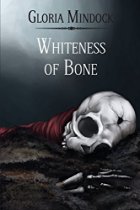
From Whiteness of Bone

_______________________________________________


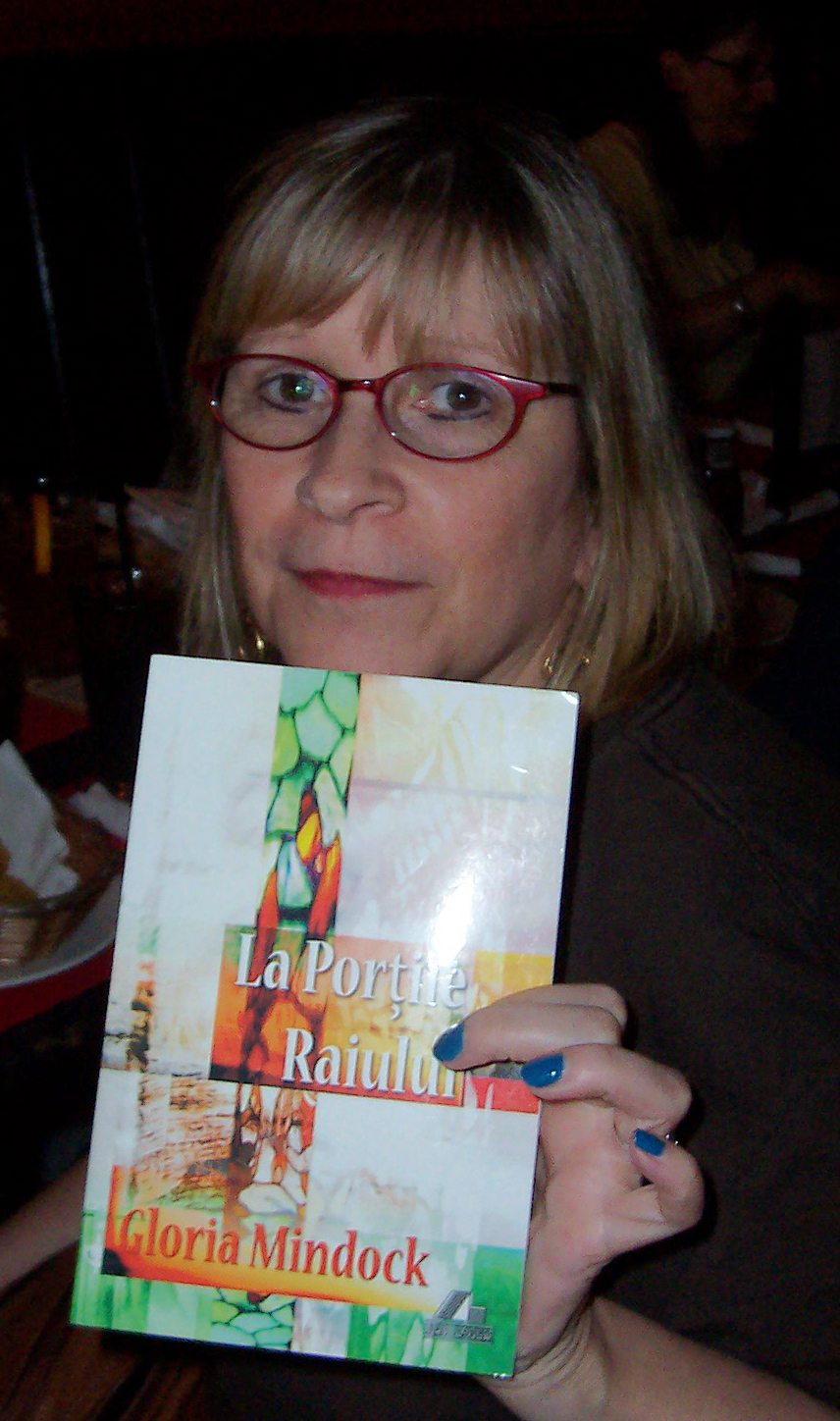
Gloria Mindock is the founding editor of Cervena Barva Press and one of the USA editors for Levure Litteraire (France). She is the author of  Whiteness of Bone, (Glass Lyre Press, Publisher), LaPortile Raiului (translated into the Romanian by Flavia Cosma), Nothing Divine Here, and Blood Soaked Dresses.
Widely published in the USA and abroad, her poetry has been translated and published into the Romanian, Serbian, Croatian, Montenegrin, Bosnian, Spanish, Estonian, and French.

Facebook page for Whiteness of Bone 

Buy at Amazon: Whiteness of Bone