Category Archives: Uncategorized

JOURNEY TO PLANET WRITE: Of Produce & Poetry

by Andrew McFadyen-Ketchum

I was a 14-year-old male. Which is to say: I was an asshole.

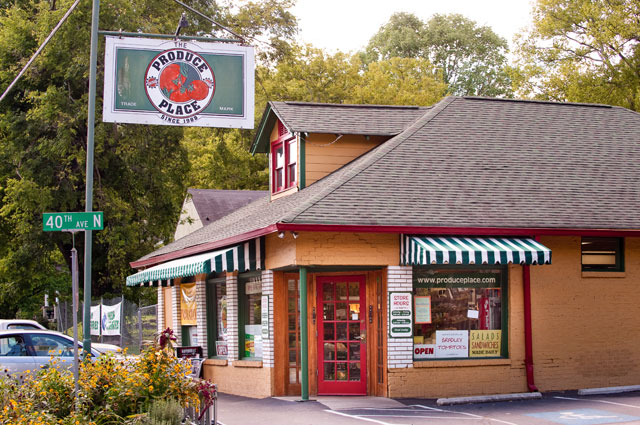
I was also working my first job as clean up boy of the Produce Place, a small grocer in my hometown of Nashville, TN. And I was doing a lousy job.

My mopped floors were dirtier than those unmopped. I could clean a clean window dirty in seconds. Flies were multiplying like flies.

What can I say? I was making $3.15 an hour, I was more interested in Amanda Hardaway’s hair than cleaning floors, and I was a 14-year-old male, which is to say…

So the boss, this dude named Steve who lived at the top of the hill south of my house and who’d tried to date my older sister a few times and whose kid brother, Chris, hadn’t yet died in a tragic accident—Steve approaches me and is like:

Hey. Andy. Can we talk a minute.

Hey. Steve. Uh. Sure.

Uh. OK… So, Andy, you’re doing a shitty job, and you suck overall. Jusy sayin’.

That was the gist of it anyway.

The Produce Place was set in an early 20thCentury bungalow on Murphy Road just off I-40 a ten-minute bike ride from my house. At the time, the entire sales floor consisted of produce bins: four rows of jonagold apples and kiwis and exotic lettuces. All types of beans in the summer. Tomatoes. Tomatoes. Tomatoes. Did I mention tomatoes? And kale. And six different varietals of onion. And cherries. And Rainier cherries. And rainbow chard. And and and.

The Produce Place helped turn around the neighborhood.

Built on a landfill after the Second World War, Nashville’s Sylvan Park of the 80s and early 90s was a ghetto. A neighborhood where men beat their wives and their kids, and their kids went out into the neighborhood to beat each other and to become men. White kids called black kids niggers and black kids called white kids all sorts of shit. Kids smoking dope and kids having kids. That was the law and word of the place.

But the Produce Place was different. The Produce Place was a place where kids could get jobs, where boys becoming men could be rewarded for their bodies rather than punished.

And as the Produce Place went, went the neighborhood.

The Produce Place thrived and so did Sylvan Park. Today, I couldn’t afford my parent’s house, let alone the land it sits on. Today, there are all sorts of jobs available to the kids in the neighborhood. Bars. Restaurants. Lawn care. Baby sitting. Etc. Etc.

Here’s the thing. There are no kids in Sylvan Park. Families with children can’t afford to live there. And if they can, their kids don’t work.

So the Produce Place was the only gig in town. Luckily, I had an in. My sister was one of their first employees. It was only natural I work there when I came of age. But it was also only natural that they demand I do my job. There were plenty of kids who didn’t have sister-ins ready to take my spot. If I couldn’t cut it, why keep me around?


One particularly important item on the list of ways I could do a “less shitty job and keep my job” was to “actually sweep up under the goddamn bins” under which rogue fruits and vegetables fell and quickly set up and quickly started attracting “all the fucking flies” that were buzzing around our heads.

So there I was, sweeping under the bins. When I got to the corn bins, out wobbled this old, rotted ear of corn. And as I was looking down at it, mid-sweep, out of nowhere, the line came: “What if I were this piece of corn?” And when that line came to me, I felt compelled to stop my labors and write it down. Thus I pulled out my Sharpie and grabbed the nearest corn crate and upon its surface scribed my line. And the brilliance? The brilliance continued from there.

At the end of it, I had a poem. I had no idea what it was or why I had written it down but there it was in all its awful glory. After that, I was writing poetry. Day in and day out. And I’ve never stopped. 

What I wrote was wonderfully awful then, and what I write is wonderfully awful now. But, for some reason, I keep at it, and it becomes less awful. I’ve tried to quit a few times to no avail. Poetry makes life present. When I’m writing poems, I’m at my best. The rest of the time? I’m alright.

We don’t know why or what we are doing here.

That is why we are here.


_______________________________________


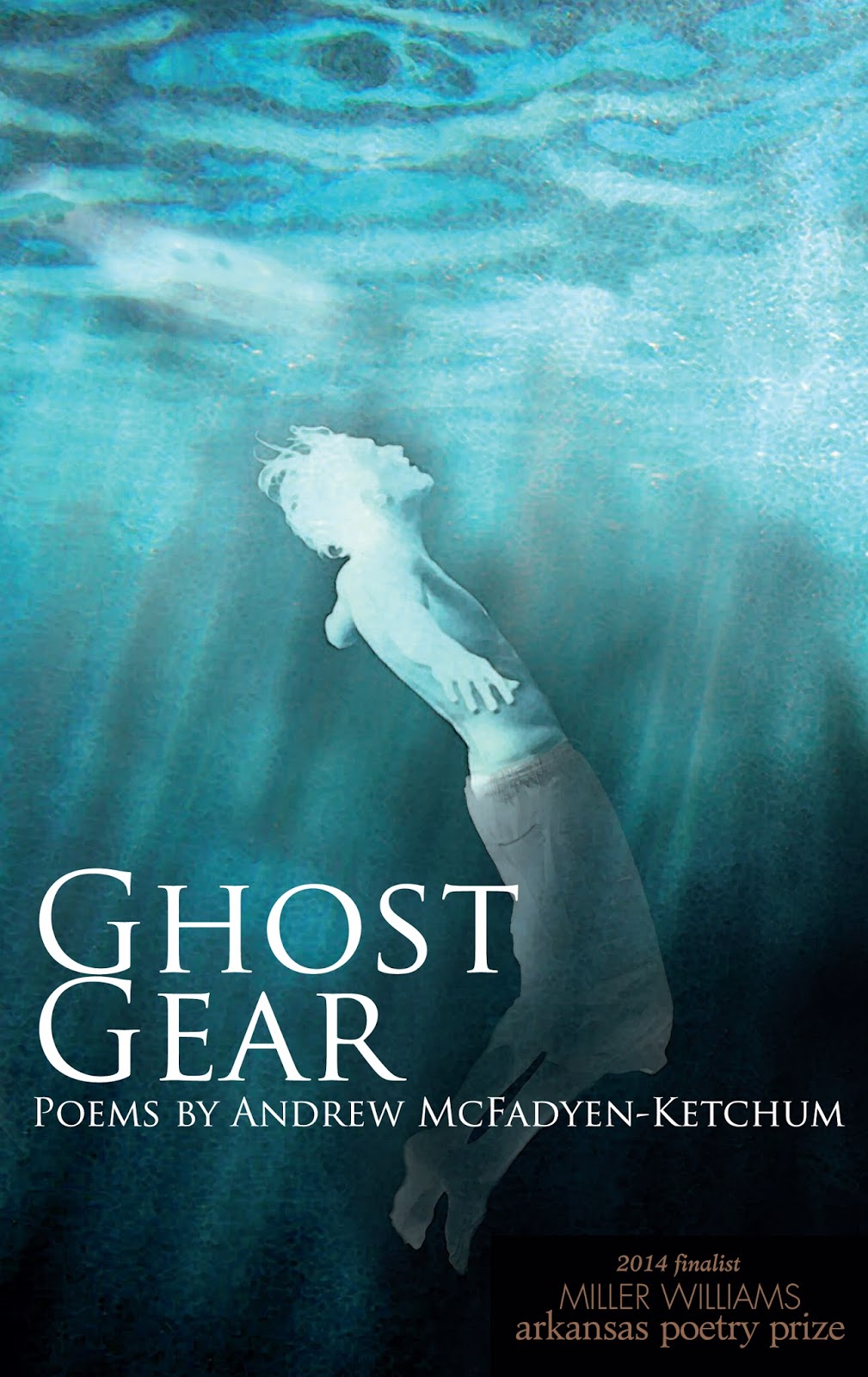
Andrew McFadyen-Ketchum is an award-winning freelance editorwriter, and lecturer at the University of Colorado. He is also acquisitions editor for Upper Rubber Boot Books, founder and editor of PoemoftheWeek.orgfounder of the Colorado Writers’ Workshop, founder and editor of The Floodgate Poetry Series, and editor of two anthologies. His first book of poems, Ghost Gear, was a finalist for the Miller Williams Prize, the Colorado Book Award, and the INDIEFABHis second book, Marysarias, is a Finalist for the National Poetry Series, 2016. Read and learn more at AndrewMK.com.


DERAILED: Nancy Stohlman’s Interrupted Journey

Nancy Stohlman
Writer, Performer, Musician


This spot was destined for Nancy Stohlman’s Journey to Planet Write; however, fate intervened on an interstate near Denver on Friday 5/20 when she was hit head-on by another car.  She’s home now but suffered a broken elbow along with the 6 broken ribs

It just doesn’t feel right for me to fill this space with someone else’s journey and hopefully at some point in the future, Nancy will write her own story, but in the meantime, I decided to ask a few of Nancy’s friends to contribute stories, comments, photos, anything to honor Nancy. 

Brought to you by Women Who Flash Their Lit

_____________________________________ 


From Sally Reno:


“One day, a couple of years ago, Nancy sent me an email which read, ‘This is what I had left after editing 40 pages of a dystopian novel.’ She attached the following:

Indentured  

How much are you getting paid to do this? he asks, a crease in his forehead.Enough to pay off my student loans I said, as he begins to tattoo the Coca-Cola logo across my face. 

~Nancy Stohlman

Look how much she gets done in 37 words: scores at least three direct hits on the social condition, makes a funny and creates a memorable character. Wow!”

_____________________________________ 


From Meg Tuite


~the world does rotate

We are in New York reading for the kickass flash anthology, Fast Forward: A Collection of Flash Fiction, edited by Nancy Stohlman, Kona Morris, and K. Scott Forman. It is my first reading outside of New Mexico.

“You’re next,” Nancy says. She illuminates blasts of greater shores to push toward. Every bit of her is lit electric beauty and bemused camaraderie.

The rest is a blur of acting as though it’s no struggle at all; I’m used to this, I’m not about to barf. I see Nancy’s wild smile somewhere in the midst as she asks me to “eat the mic.” I put my mouth over it and get laughs. That rocks me through the rest of the reading.
I become a groupie. I send my work to all of their anthologies and go to all of their readings in Denver, Portland, New York, Denver, Denver, and Denver. The LOVE is HUGE with talent, humor, and a damn great time!
In Portland we started shooting rubber bands when a guy glued himself to the mic and read on and on and on while the bartender and waitresses were putting up chairs and closing the place down. He was deeply embedded in his words, unwilling or unable to notice he had lost his audience long ago. As one of my favorite poet’s, Bill Yarrow, put it in one of his poems about poets: ‘Just two more…”
Nancy Stohlman, Len Kuntz, Karn Stefano,
Robert Vaughan, and Meg Tuite
I’ve been going to Denver for the last six years to read and hear some of the best voices out there. Nancy Stohlman is a phenomenon. Her work is extraordinary, like her being, and she rocks it from flash master to writing and starring in a published opera, to the wild-ass lounge singer of heavy metal songs in her band, “Kinky Minx.”
There is no one like her and never will be. Her work is fearless and without limits. Stohlman is yes, mythical beauty, an unparalleled writer, teacher, and promoter of her peers, but, never to be diminished is her beyond the beyond hilarity, her sidelong glance, her passing remark that has me running to the bathroom after spitting out my beer.


_____________________________________ 


From Kathy Fish


“Nancy and I read at Syntax Physic Opera as part of Monique Lewis’s At the Inkwell reading series in February!  It was a great night and Nancy of course knocked it out of the park reading her amazing stories. 


Hugs, Nancy! Get well quick!” 


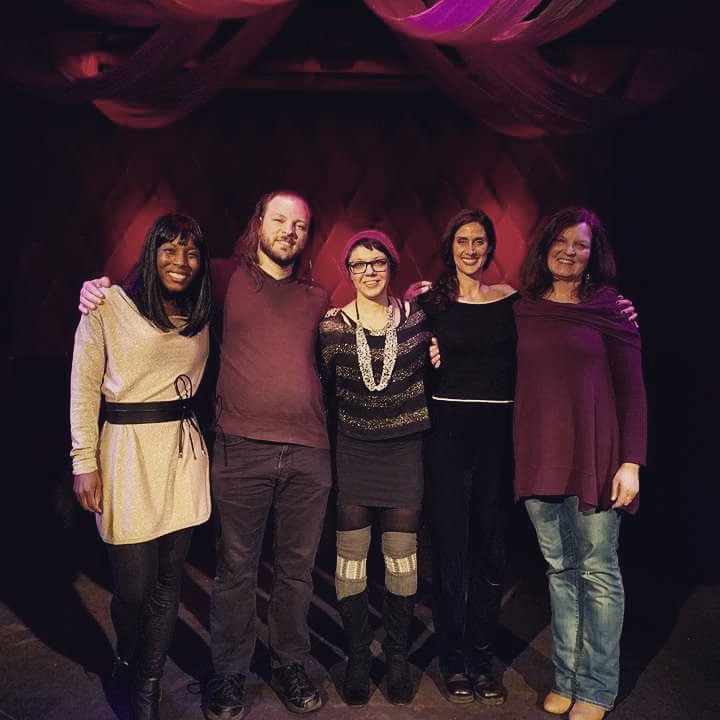
(left to right: Monique Lewis, Nick Morris, Kyria Abrahams, Nancy, Kathy Fish)


_____________________________________ 


From Ashley Inguanta


About Nancy’s story “My Father is Trying to Set the World Record for Days Spent Petting a Shark”

I love works of flash that use extraordinarily small canvasses, and there is so much to admire about this story. This work of micro fiction brings my fingers over the shark’s skin, over and over, and I am fascinated.  I feel the power and weight of goals, the uncertainty of dead air. Will the shark snap? Or will the father keep all of his fingers? For now, we wait.


Here is Nancy’s story, nominated for a Pushcart Prize by Blink-Ink


My Father is Trying to Set the World Record for Days Spent Petting a Shark 

The trick, he says, is to just lightly move the fingers. The shark has the frozen, unimpressed expression of all sharks. Are you coming home for dinner? I can’t stop now, he said. It’s only been 9 hours. It’s about goals, he added. Your mother never taught you the importance of having a real goals.

~ Nancy Stohlman 


_____________________________________ 


Kathy Fish, Sally Reno, and Nancy Stohlman


From Gay Degani

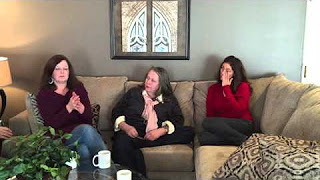
Nancy Stohlman, founder and curator of Denver’s F-Bomb reading series discusses Flash Fiction with Kathy Fish, Sally Reno, and Gay Degani at Bartleby Snopes.

Link to video: Mouth Crimes


_____________________________________ 


From Jayne Martin

Nancy is the personification of fairy dust. She creates magic in every word she writes and then, if you aren’t already sufficiently mesmerized, damned if she won’t tantalize you with tunes in a voice so seductive that the Sirens of the sea bow to her awesomeness. 
After meeting on a Facebook writer’s page, taking her flash fiction class, and swooning over her collection, “The Vixen Scream & Other Bible Stories,” I got to meet and hang out with Nancy at AWP a few weeks ago.  She was as lovely a human being as she is a talented writer, and I’m honored to call her my friend. 

It is said that there are no accidents in the Universe, and I believe that.  On her death bed, Nora Ephron’s mother told her to take notes because everything is copy.  I say it’s all fodder for flash and I can’t wait to see what Nancy’s brilliance makes of this experience. 

According to medical experts, Nancy, you shouldn’t be here, but you are because the world needs your gifts, and the people who love you need that beacon of light that is your incredible spirit.  Sending you bushels of love and healing energy, my friend. 


_____________________________________ 


Consider donating to the 

Nancy Stohlman Accident Fund: 


JOURNEY TO PLANET WRITE: Flash Time

by April Bradley

The first piece of fiction I wrote was supposed to be in the range of 80,000 to 100,000 words, but I ended up with 218. I labored over those few words and loved how the careful attention to that moment opened up a world, but I had no idea what to do with it. Who’d publish such a small thing or read it the way I did? I’d never heard of flash, had little familiarity with short fiction or literary magazines, had no training or academic experience in creative writing, didn’t know any other writers. It felt like I had failed because I was supposed to be writing a novel. I abandoned that unintentional piece of flash on my hard drive. That was in 2007.

This was during my mid-thirties when I read even more than usual, feasted on fiction and craft after the house was asleep, or in parking lots of elementary and middle schools, at libraries, doctor offices, the town green, and I did not write. That half-decade hosted an inferno of events and living that converged into a calm focus by the time forty came around.

By the time I was 36, my son and I survived a high-risk pregnancy and birth; I left a graduate program and dropped out of law school; my career was derailed by multiple episodes of blood clots in my legs, lungs, and brain; my spouse and I divorced. I agreed to co-parent my child with my ex-spouse in the same home and to mother full time. I should have been writing. I wanted to write, but coaxing the words to line up into a coherent, immersive story with evocative, vivid characters seemed impossible. I wrote around story; I didn’t create it.

For years supportive friends and family encouraged me, saying things like just sit down and write, keep a journal, free write, take a class, find your tribe, write, write, write. Keep in mind that an intense life was plowing right along; the topic of my creative writing didn’t come up all that often. Peter, my son’s father, and my grandmother were the most persistent.

Peter, also a writer and narrative theorist, knew I’d have to work for it and thought I was wasting precious time; my grandmother was firmly in the sit-down-and-write-a-masterpiece camp. I had outlines, plot ideas, research, and character sketches that obtained a great deal of length, but no life, and certainly no sense of story.

Those years were vital for me to read and re-read and study, turn my thinking around from theory and criticism to creation. Finally, when I was nearly forty-two I started writing what would be my first—and first published—pair of short stories. They too started off first unintentionally as flash. I wrote a vivid moment, put it away and came back to it a couple of months later and developed it into a story of more length and arc. At that time, I had a vague idea about flash that at best could be described as “I think it’s short short fiction.”
 
I wrote at least sixty drafts of a story over a five-month period, pushing myself to learn with it, and length is difficult for me. My naiveté with literary journals became obvious. After Glimmer Train declined to publish it, I sent it to two others, one of which was Bartleby Snopes. They told me that I had two stories in play, neither of which resolved the conflict of the other. They were right. The two shorter, revised stories immediately found homes at Dew On The Kudzu and Thrice Fiction.

As I acquired more familiarity with literary magazines and worked for one, I gained more exposure to flash. Discovering flash was like discovering a genre no one had ever mentioned. It was more than a miniature short story. Imagine if fiction or poetry were suddenly revealed to exist—that’s how wonderful and dazzling flash was to me. Yet, it was also familiar.

Flash is the medium I gravitate to out of a creative instinct, but it is no less difficult an art form. It intrigues me as a creator and as a philosopher. Narrative time in flash is uniquely experienced and expressed, and this feature of flash is particularly compelling. There is a dissonance in how long it takes to read a piece of flash, how it is portrayed in time through physical space in story time, and how long time and emotion resonate with the reader. The various elements of flash each influence the way time is re-ordered internally and externally.

Flash is similar in some aspects to many familiar forms of narrative, but it owns itself. After I started writing and publishing longer form stories and gained more confidence in my writing, enough confidence to write spontaneously, experiment with structure and form, emotion and content—I wrote more and more flash. Then, I sought guidance and studied with some of the masters of the forms: Kathy Fish, Gay Degani, and Nancy Stohlman. My education is by no means over.

These days, I have more story than time. There are flash projects in the works; I belong to a fantastic writing group, and I have been working on a flash novel-in-progress that suspiciously resembles a novel. Besides writing, the best thing about flash is the vibrant community of writers who shape and create it.

I found that original piece of flash, rewrote it entirely, and it didn’t work at all. In its original form with a bit of refinement, I submitted it Hermeneutic Chaos Literary Journal. They published and nominated it for a Best Of The Net Award.

_______________________________


April Bradley is from Goodlettsville, Tennessee and lives with her family on the Connecticut shoreline. Her work has appeared in Boston Literary Magazine, Flash FrontierHermeneutic Chaos Literary Magazine, Narratively, Pure Slush 5, and Thrice Fiction, among others. She is the Associate Editor for Bartleby Snopes Literary Magazine and Press. Find her at aprilbradley.net.

JOURNEY TO PLANET WRITE: Up, Up, and Awaaay

by Susan Tepper

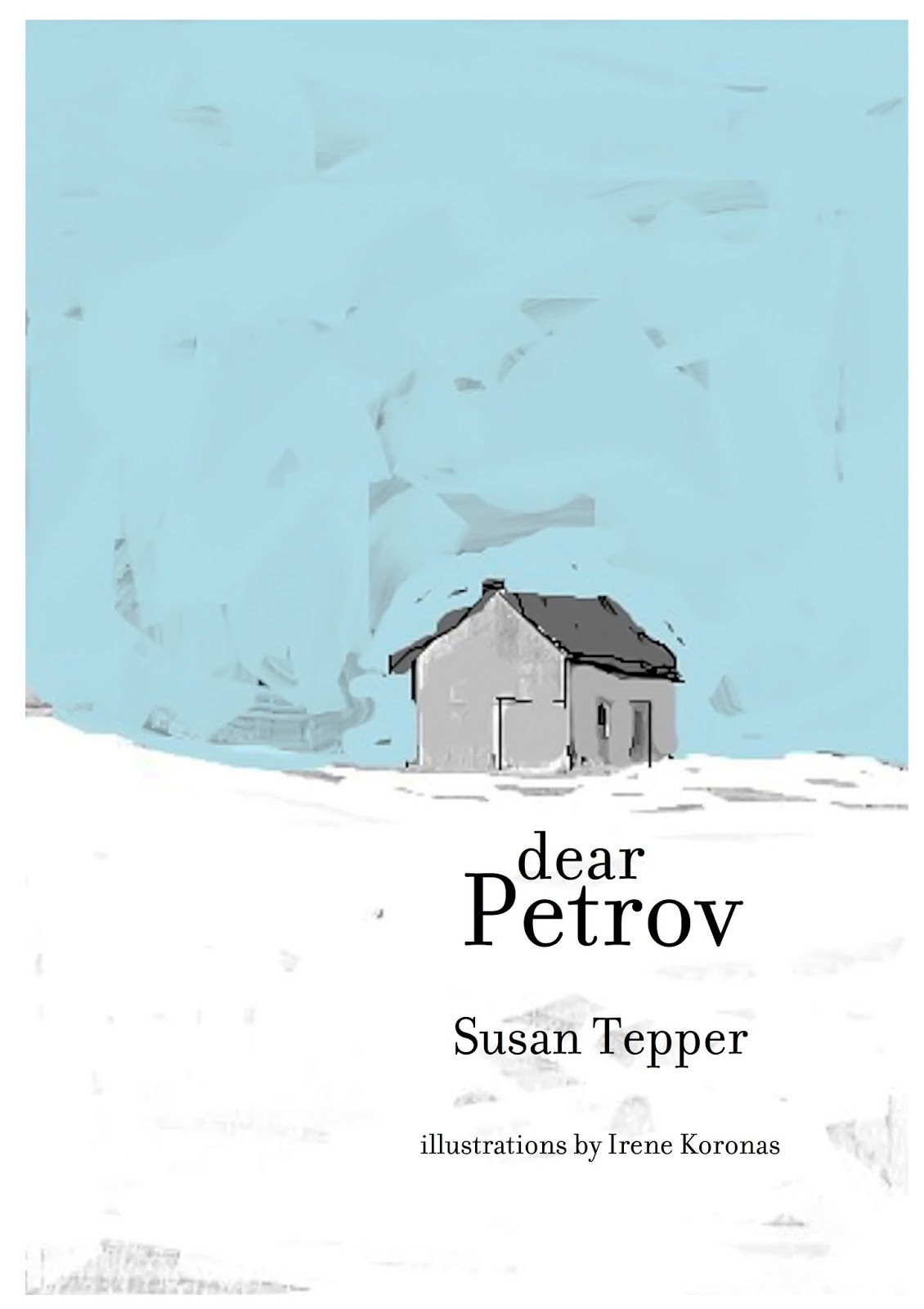
Due from Pure Slush Books in February

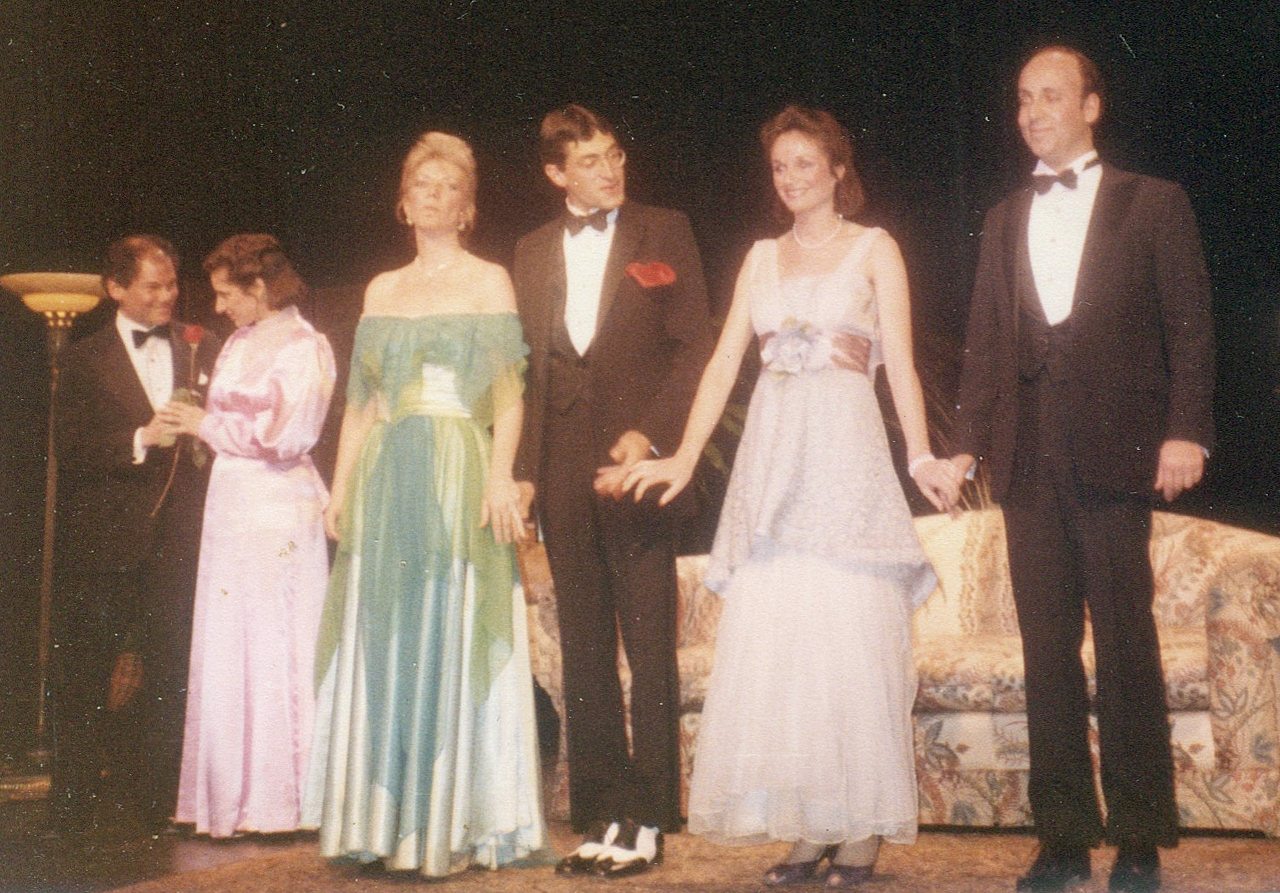
It was never my intention to become a writer.  From a really early age I wanted to be an actress.  At seventeen I went to NYC for drama classes.  They were held in the Carnegie Hall annex building and they were incredible.  This was a method acting school founded by the famous Erwin Piscator.  Marlon Brando had studied there, and other luminaries.  At lunch break our little group of wannabee actors would eat together in some dive coffee shop, then stroll over to Lincoln Center to the film library.  It was bliss.  The school also had a repertory company, and my first role ever was in Kafka’s Warden of the Tomb.  I played the princess.  It was a tiny role, but I was overjoyed.  People came to the rep theatre, watched the plays, applauded!  For a girl raised on Long Island when it was still fairly rural, well, this was just over the top.


From there I went on to study with every good acting teacher I could find in the city. 
Actors always work their craft.  The idea behind it being that you have to keep ‘your instrument’ tuned up at all times.  Your instrument is your body, your mind, your inner life, and your outer self. That meant movement classes in yoga and dance, voice lessons.  Suppose a breakout part is offered and you’ve been hanging out at the beach smoking and drinking.  You wouldn’t be ready to take on the part of, say, Maggie the cat in Cat On a Hot Tin Roof.  So the serious actors study in between roles.  I ran all over auditioning.  Long lines of actors.  I didn’t get many parts but I tried really hard. 

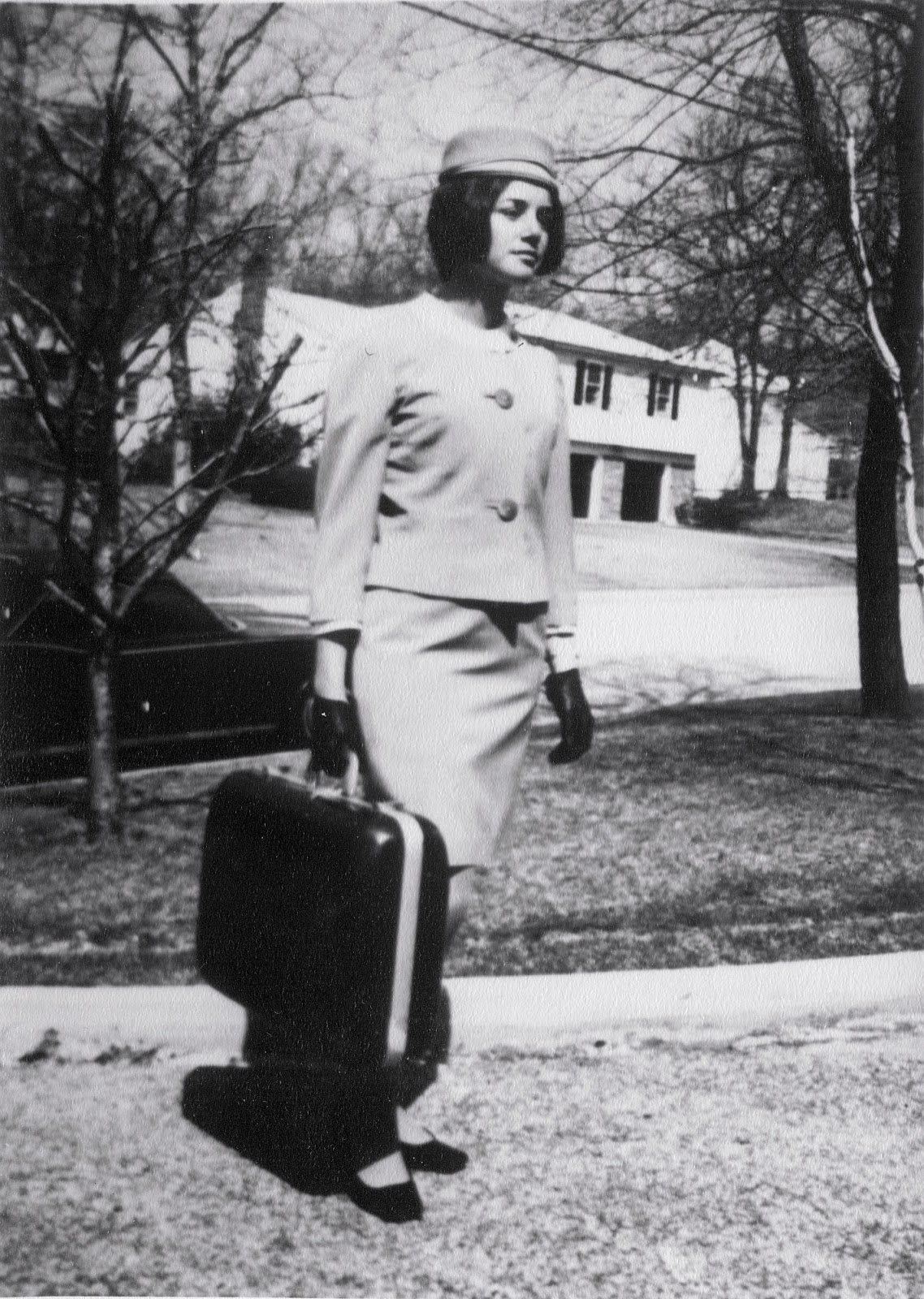
I was also dirt poor.  That meant finding a day job.  I worked as a receptionist for a big corporation.  People were different back then.  The secretaries covered for me when I had an audition.  But it’s hard to be poor in NYC.  One day I saw a Stewardess ad in the Times.  I went to the interview and was hired by TWA.  It was a good time to take a break.  At nineteen and one half (the youngest they would hire you) I got in.  It opened up my life.

A typical flight pattern went like this: JFK to Paris.  Two day layover.  Paris to JFK.  Repeat.  A week off.  Repeat.  That was my month.  Or, London, Madrid, Lisbon, Athens, Rome, Milan, Vietnam.  All on TWA’s dime.  OMG.  The adventure of a lifetime.  The greatest learning experience imaginable.  When I had five years of it, I quit and returned to acting.  Now I was much more worldly and grounded.  More roles opened up.  I still had not a smidge of interest in writing.

Got married.  Started singing with bands, all kinds of music.  I loved it, though my first husband was less than thrilled.  We had a little house that I adored fixing up.  One day I thought about becoming an interior decorator.  So back to school, this time for design.  I completed the course and started working for Sloane’s.  It really wasn’t all that delightful.  The customers were wealthy and demanding and soon the whole thing started to wear me out.  During that time Cable TV was in its infancy.  A producer for a local cable show came into Sloanes.  After I decorated her living room, she offered me a show on interior design, provided I would produce it, star in it, and supply all the furniture each week.  I remember the warehouse guys loading each show into an open pick up, with me stuffed in with the couches and chairs.  I did about a dozen of those shows.  Then I left design forever.

Bitten with the travel bug again, I went to work at a tiny travel agency on the Jersey shore, a block from the ocean.  Oh, and I got divorced.

I took that job strictly for the free travel benefits.  Supplementing my income by singing with the bands (no husband to bug me)!  One blustery day, the door was flung open at the one room travel agency.  At first I thought I was being robbed, but it was two sales managers from an airline paying me a sales call.  After our lengthy chat, they offered me a job with Northwest Airlines in Philly.  Goodbye travel agency!  I still had no thoughts of being a writer.

Philly was terrific.  I got a sales territory (3 states) and lots of spare time because I mostly didn’t make the sales calls.  Instead I went on acting auditions and landed some meaty roles.  The airline thought I was doing such a stupendous job, they offered me a transfer to NYC.  Goodbye Philly. 

NYC with Northwest Airlines was even better.  My sales territory was the West Side.  I could visit the allotted 8 daily accounts all in one building.  That took up about 2 hours.  Then straight over to Actors Studio to study with Shelley Winters and sit in on the Wednesday ‘sessions’.  A miraculous experience.   Unfortunately, during the job with Northwest, there was a terrible plane crash in Detroit.  All we sales managers sent there to work as a rescue team.  I’ll never forget the time spent in Detroit with the families of the victims, and what we went through as a team to help the doctors and dentists identify the bodies.  There was only one survivor.  A little girl.

I had been dating a really great guy, and we married a year after the crash.  One day I sat down and wrote a very long story.  Just out of the blue.  I went to NYU, then New School, and studied writing.  I haven’t stopped writing since.  The last play I acted in was over a decade ago.  If someone asks me to sit in on a set, do some vocals, it’s always a thrill. There were a few more jobs but these are the highlights.  Now I’m a writer.

_____________________________________


Susan Tepper is the author of five published books of fiction and a chapbook of poetry.  Her newest title dear Petrov from Pure Slush Books is a linked-flash collection set in 19thCentury Russia during a time of war to be released in early February 2016.  You can find a review of her new book at Change Seven. Tepper is an award winning writer with multiple Pushcart nominations, and one for the Pulitzer Prize in fiction.  She writes the column ‘Let’s Talk’ at Black Heart Magazine where she also conducts author/book interviews.  FIZZ her reading series at KGB Bar, NYC, is ongoing these past eight years. Also from Susan Tepper, The Merrill Diaries (Pure Slush Books, 2013).


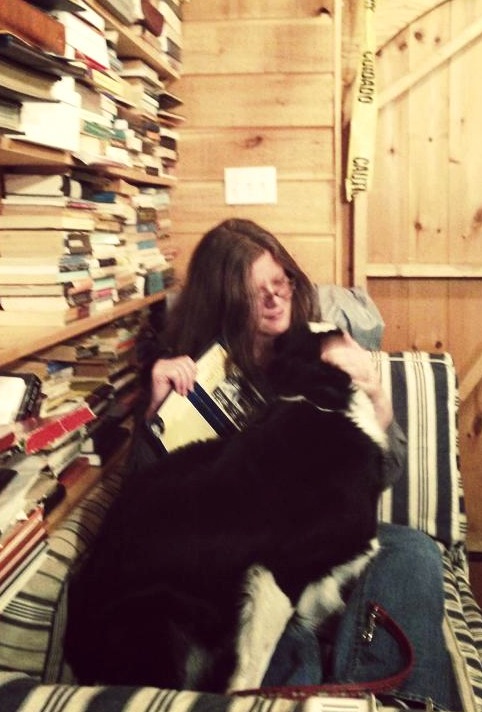
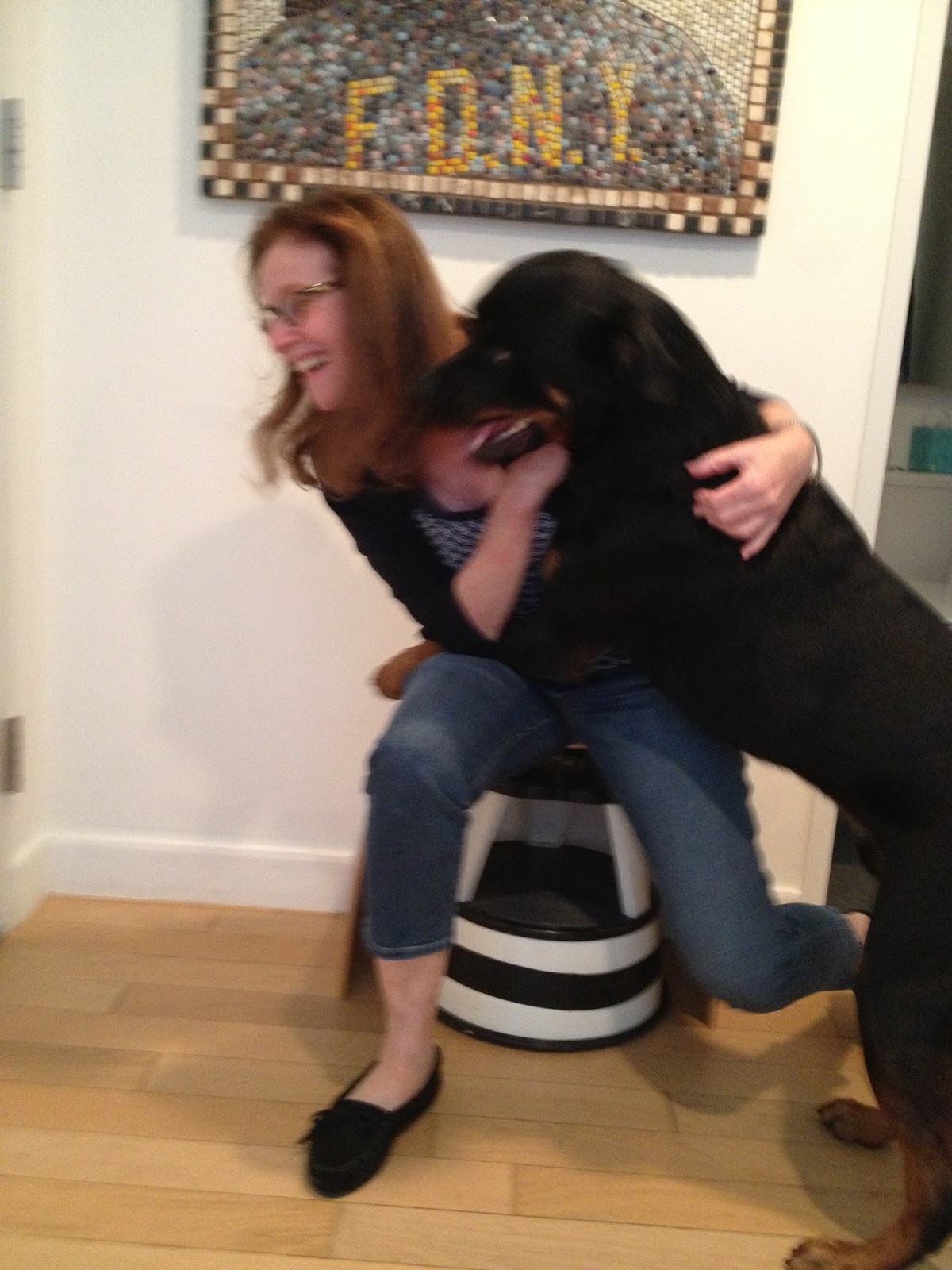
Shown with her dog, Otis.

JOURNEY TO PLANET WRITE: For My Own Sake, I Create!

by Matt PotterIt would come as no surprise to those who know me and/or have worked with me (in any capacity, but in this venue, as a writer/editor/publisher) … but I am an intensely creative person. Not creating makes me sick.

For a few years, in my thirties, I turned my back on being creative for creativity’s sake and focussed on my paid job. I was a site manager in the community services sector, and managed three programmes aimed at keeping older people in their homes. Two programmes provided care in the home, and the third was a therapy service, providing podiatry, physiotherapy, nutrition education, and gentle exercise programs.

I had a staff of 50 and a budget of about $1.5 million and I loved the leadership part of the job, taking programmes in new directions, winning people over to new ways of thinking and doing and being. (I was lucky in that the 4 staff who reported to me directly were great managers … I was a great leader, and they were great managers, so basically, it worked well.)

And I thought my job was worthwhile.

But ultimately, I realised that my job was to support other staff inventing and developing and guiding new initiatives … not the actual doing of those things. (Which can be very creative.)

And not being creative was actually making me, mentally, quite ill (aka I was, ultimately, very depressed).

So I left that job, took a pay cut and started a much more creative job, in sexual health. I was involved in local and national safe sex campaigns, working in communications and writing text for leaflets and brochures and resources and websites and designing flyers and posters and print ads and the problem was it was too creative! I wanted to be more creative and get back to writing and creative stuff for me but who wants to go home and do that when you do that in your day job five days a week?!

So what I’m saying is, there is always a tension in my life about being creative. I can’t NOT make things … to NOT make things makes me ill. But I also want to make things that are worthwhile and I want to do so when I feel like doing it, not because I have to. And I admit to giving a value to most things. I’m the kind of person who says, “That’s really a job?” and “You’re happy earning money doing that?” and “How fulfilling can that be?”

(I feel the same way about certain genres of literature … I can’t take them seriously.)

I also have a need to be funny, to make people laugh, which I think is seriously undervalued in western culture. (My humour also makes people think too.)
Growing up, my mother often seemed to be in a bad mood. But I think it was about her finding fulfilment in life, and I share that with her: there’s a constant question, is this worthwhile? Am I fulfilled by this?

Making my mother laugh also broke the tension. It was also something I realised, at a very young age, that I was good at.

So much of my writing is funny.

Sometimes writing and editing and publishing can be fulfilling for me, and sometimes, I think it’s a waste of my time.

I love it, but I also like to keep a distance from it. It doesn’t just define me.
You know those people whose idea of heaven is being able to take themselves away and spend their time writing? Not me. Full-time writer? No. Never. (It’s too limiting!)

I like to cook (in a big way, not a coming-home-from-work-and-cooking way) and if I ever ventured into clothes design, it would have to be women’s summer frocks and probably kids’ clothes. (This is a serious option for me, in a small scale fun and boutique way.) Walking into a fabric shop is breath-taking for me … the bolts and bolts of fabric present endless possibilities. I was a film and TV student once, making short films (my writing is quite cinematic) and I loved editing as well as storyboarding.

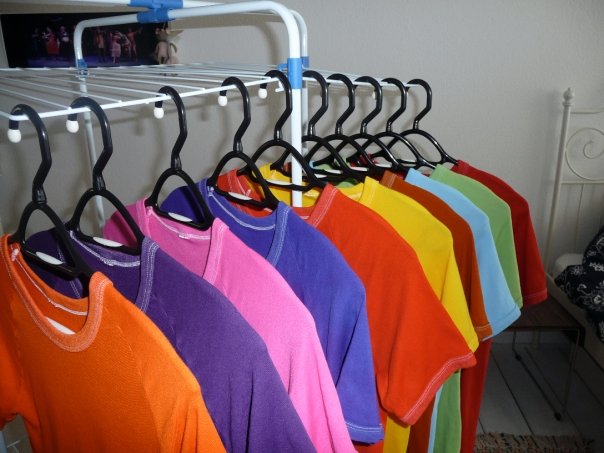
I’ve lost count of the items of clothing I’ve dyed. It would be hundreds and hundreds. (Ask to see the devilled ham t-shirt I dyed!) I love colour and I love creating welcoming environments, whether through design or through attitude or through being a version of me.

I love projects! I love the beginning, the middle and the end, and then I like to see the reaction.

That’s what writing is for me. I started “writing” when I was twelve, and while clearly I have got better at it, it’s still the same: think, do, finish, get the reaction. And hopefully, others think it’s worthwhile, and I do too.

___________________________________


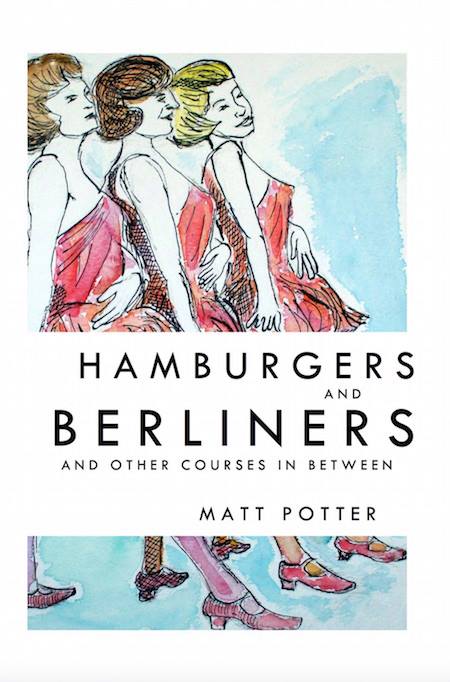
Matt Potter has travelled widely, read a lot, and plans to do more of both in the future. He lives in Adelaide, Australia, and is the founding editor and publisher of Pure Slush and Pure Slush BooksMatt’s latest book is a travel memoir, Hamburgers and Berliners and other courses in between (Cervena Barva Press), also available through Amazon.com and Small Press Distribution.
(Photo at left by Paul Beckman)

JOURNEY TO PLANET WRITE: From Film to Flash and Points In Between

by Jayne Martin
Starting in 1977, and for nearly 30 years thereafter, I worked as a writer of two-hour movies for television. “Two hours” is a misnomer as the actual screen time of the movie itself is, in fact, only 93 minutes. A writer has a lot to pack into a very small package and it is the discipline required to do so that has aided me in my transition to flash.
The script is structured in seven acts to accommodate six commercial breaks. Each act averages about 13 pages, more for Act One (15 to 18), less for Act Seven (8 to 9), and must end on an escalating dramatic moment to bring the audience back after the commercials. The end of Act Three needs to be a whopper because that’s your one-hour break; the time an audience is most likely to change the channel. The end of Act Six is the big reveal; i.e. we know who “did it,” and in Act Seven you wrap things up and get the hell out of Dodge. Sounds like an algebra equation, doesn’t it? But here’s where the tie-in to flash comes, at least for me.
Within each act of a TV movie can be any number of scenes, but few run longer than three pages, with most a page to a page-and-a-half. Tiny self-contained stories, they are the building blocks of the movie and, just as in flash, each must address character development, pacing, a dramatic arc, and a resolution that leaves the viewer yearning for more.
I wrote my last TV-movie in 2004. With the increase of reality shows nudging out the genre there were more writers vying for fewer jobs and, frankly, I was a bit fried by then. Between 2004 and 2009, I wrote nothing, nada, zip. Having never written anything but scripts, I was at a loss as to what to do next. Then I fell and broke my neck. Lucky me! Something to write about! And so my blog, injaynesworld-where nothing is sacred, was born.
Fast forward. After a couple of years of dipping my digital quill into the writing of prose, mostly in the form of humor essays, I came across a website called “Five Sentence Fiction.” A one-word prompt was posted each week and you had only five sentences to complete your story. This was long before I had ever heard the term “flash fiction.” My first attempt was in response to the prompt “shirt.” That became my story “Gone,” which would turn out to also become my first published piece when it was accepted by Boston Literary Magazine several years later for their fall 2014 issue.
By then I had written maybe 40 of these tiny tales and realized why I had such an affinity for them. Many of the same disciplines I learned from writing TV movie scenes also apply to flash:
  • Enter the story at the latest possible moment
  • Use action (either internal or external) to move the story forward
  • Cut any extraneous bullshit
  • Leave them wanting more

This is a fairly simplistic list, but the correlation for me could not have been clearer.
Today I write primarily micro-flash. Rarely will you read a story of mine that is over 300 words, with most well below the 200-word mark. The writing of flash fiction seeks to create its own fully-realized world within the confines of limited space and, for me, the tinier I can make that space, the happier I am.
Poster Boy

A shiny, new tricycle on the sidewalk, abandoned.
A single blue sneaker just inches from the curb.
From the house, a mother calls: “Tommy, supper!”
__________________________________
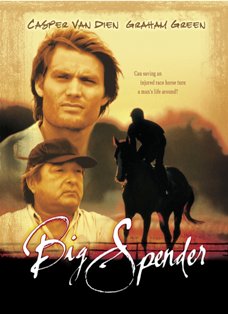
Jayne Martin’s work has appeared or is forthcoming in Boston Literary Magazine, Pure Slush, Midwestern Gothic, Blink Ink, Literary Orphans and Hippocampus Magazine. Her book of humor essays, Suitable forGiving: A Collection of Wit with a Side of Wry, is available on Amazon and Barnes & Noble.  Previously a writer of movies-for-television, her credits include Big Spender, for Animal Planet and A Child Too Many for Lifetime. She lives in a rural valley near Santa Barbara, California, where she indulges her passion for horses and fine wines, and can be found on the web at http://injaynesworld.blogspot.com.
Purchase Big Spender written by Jayne Martin at Amazon

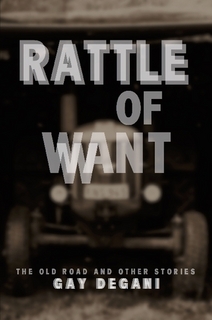
Rattle of Want Out and Available for Purchase

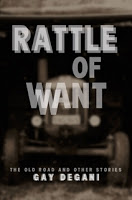
My collection of forty-six stories and a novella, Rattle of Want,  published by Pure Slush Books, is now available .  Matt Potter, editor and publisher, did a fabulous job.  Here are blurbs for the some of the individual stories followed by comments for the book as a whole.  Rattle is available at Amazon and Lulu.


Links:
For trade paperback at Amazon: Rattle Paperback
For Kindle version: Rattle Amazon
For the e-book version from Lulu: Rattle e-book  
For the trade paperback version from Lulu: Rattle paperback

Blurbs for individual stories:

About “RUBY” in decomP Magazine, “LOSING GROUND” in Tattoo Highway, and “THE WAY IT CAN BE” DOGZPLOT. What impresses me most about Gay Degani’s writing is the ease with which all her characters come to life on the page – story after story – with enough development, no matter the fiction’s length, to give readers a nod to understanding, a true shot of empathy.  She makes me believe I’ve known these people, have listened to their voices, have searched their hands and eyes for direction.  Degani makes me want to know more, and that strikes me as success. Sam Rasnake, Five-time Pushcart Nominee

About “RUBY” from decamp Magazine: I love a story that lingers with me. “Ruby” both touched my heart and broke it.  Such a powerful portrayal of a young lost soul, like so many these days, with only the streets to call home.  The vivid imagery and descriptions bring the reader right into this harsh world.  There is no looking away.  Most heartbreaking is the resignation with which Ruby seems to accept her fate.  I wanted to reach into the scene and hold her. Jayne Martin, author of Suitable for Giving: A Collection of Wit with a Side of Wry.
About “LOSING GROUND” from Tattoo Highway. Gay Degani’s story of friendship, love, loss and memory opens with, “It began with hands. Doesn’t it always?”, and hands carry the reader though a woman’s years on the hard life bayou in under 500 heartfelt words. You’ll want to read this story more than once and after each time sit quietly thinking about it. Paul Beckman, author of Peek

About “LOSING GROUND” from Tattoo Highway. Gay Degani is a superbly crafted, touching, and image-filled story of the south. In just a few words, Gay’s descriptions of the bayou, of love found, and of love lost pack powerful emotions. Definitely worth reading. Sue Babcock, Webmaster and Site AdministratorSilver Pen Writers Publisher, publisher of Youth Imagination and Liquid Imagination
About “THE WAY IT CAN BE” from Dogzplot
Sharp like arithmetic. You read it and feel a structure, feel removed, feel like you’re either a pirate or a coincidence. You learn about the feelings of machines and you learn never to smoke dope with some asshole named Josh. Mike Joyce, Publisher of Literary Orphans
About “SOMETHING ABOUT LA” from Litsnack. Exceptional dialogue. An apparition transforms into a twelve-year-old boy driving a truck, “rust eating its way across the hood.” Degani unravels the beauty of storytelling with visceral language and depth of observation. The reader absorbs and exalts in the movement of power between these characters. Every sentence adds to the unveiling of circumstances and who exerts the most influence through need. Don’t miss this collection! It is masterful and unforgettable! Meg Tuite, author of Bound By Blue

About “SOMETHING ABOUT LA” from LitsnackThis story’s subtext, of hope and chance being the fuel to one’s private future, provides such a delicate melody here. Favorite line: “Suddenly I feel lost, seeing what it’s like to belong.” I was right there with this narrator, always looking for an excuse to go to L.A.  A.E. Weisgerber, published in Issue 5 of Tahoma Literary Review
About “DOING MR. VELVET” from The Battered Suitcase is the quintessential SoCal murder story, playing out like a minor Manson rehearsal, blood and betrayal and misguided loyalties, a pseudo street Prophet offering accidental salvation, escape from the law in the form of a Mexican weed blowout, “Velvet’s” an elemental Tarantino flick-like crazy romp. Katherine Lopez

About “ISLA VISTA, 1970” from The Foundling Review. With its suburban accidental beauty queen in her gown and tiara and stalling VW drunkenly stumbling from one chaotic scene to the next, through unrest in the streets, a harrowing assault by a police officer, a campus protest that echoes the Vietnam war, and calls to mind Kent State, the burning of a bank and of the beauty queen’s sash signaling her new awareness, this story neatly captures the whole Nixon era and how it created that troubled generation’s unrest and struggles to break free of stifling expectations. Katherine Lopez
About “KINDLING” from Prime Number. Writing noir is hard.  Jim Thompson.  James M. Cain.  Elmore Leonard.  Others trying to write like those masters come across as either slavishly aping or else unintentionally funny.  Gay Degani’s flash “Kindling” sizzles.  Is it an unknown story by Cain?  Could be.  But no, it’s a Degani.  Andrew Stancek, nominated for a Pushcart Prize  by THIS Literary Magazine.
About “STARKVILLE.” I’m a sucker for a good diner/waitress story and Degani tells a fine one here. All alone in this small out-of-the-way diner the waitress, is all alone thinking about taking her teenage daughter and moving to a better place when the door opens and her world is shaken like a snow globe. Paul Beckman, author of Peek
About “GUMBO” from JMWW. A mother/daughter story told in food and recipes passed down from way back. Gay Degani’s storytelling is smooth and filled with memories that are all matter-of-fact and make the reader feel he’s in the kitchen listening in and watching this pair share their love and life through food and expecting his dish of Louisiana food to be set down any minute. Paul Beckman, author of Peek
About “RUNNING THE FENCE” from Monkey Bicycle. This childhood dare story runs full-tilt toward its anguished conclusion on Degani’s controlled stream of specific imagery: from childish locked knees and snot, to the hat brims and mantillas of grieving adults. Gay Degani builds a world, gives it wheels, and tells a tale that lures a willing reader to run breathless beside her.  A.E. Weisgerber, recent flash appears in The Airgonaut

About “SEDIMENT” from Blue Five Notebook. I’ll never again look at a Pink Pearl eraser without thinking of the struggle between truth and suspicion, reality and imagination, and Gay Degani’s moving depiction of an aging man’s battle against paranoia.   Audra Kerr Brown, published recently inPeople Holding, Easy Street Magazine, and 100 word story.


Blurbs for the Collection:

Award-winning author, Gay Degani, kills it again with this new collection. The stories in Rattle of Want are by turns smart, tender, dark, and always compelling. Degani gives us life in all its skewed realities and does so with finesse and vigor. This book is a knockout.  – Kathy Fish, author of Together We Can Bury It 

Rattle of Want ranges from brilliant brief experiments (such as “Abbreviated Glossary” and “Appendages”) to a novella-in-flash (“The Old Road”) for the canon in that new genre. Altogether these stories mine the wants and desires in the breakups of families, rebellions of youth, and occasional ascents of the spirit. Often they beautifully, and simply, nail a place, as in “Small Town” (a perfect evocation of the title), report an impending explosion, as in “Kindling” (a quintessential flash), or capture a character (if you haven’t met Blusterfuck … do so at your own peril). Few writers can do all that Gay Degani does. – Robert Shapard, editor of Flash Fiction International: Very Short Stories from Around the World
Short stories are one of the purest forms of storytelling. Luckily for us, Gay Degani is a master at it. Don’t miss Rattle Of Want! – Robert Swartwood, USA Today bestselling author of New Avalon
Short, bittersweet stories from a writer who knows just what makes us tick. Some are heart-stopping, some heart-breaking, but all these stories will make your world wider. – Sarah Hillary, Author of the ‘superbly disturbing’ Someone Else’s Skin, 1st in the DI Marnie Rome trilogy,
Rattle of Want is a narrative road trip across America, driven by memorable characters and prose with muscle. Degani is a consummate storyteller and a virtuosa of short fiction. – Christopher Allen, 2015 GinosokoLiterary Journal’s Flash Fiction Award and the managing editor of SmokeLong Quarterly
If you think of stories as noises, then Gay Degani will sometimes have you clamping your ears and other times leaning forward to soak every detail in. Her stories can be quiet and subtle or loud and bold. She pairs the ugly, imperfect, bumbling pieces of ourselves with the pure, beautiful parts of our souls – and the result is a magnificent symphony you want to replay again and again. – Tara Laskowski, author of Bystanders,2016, and Editor-in-Chief of Smokelong Quarterly

Gay Degani is that rare writer who makes you believe that a book can be a tornado sucking in neon paint, punk rock symphonies, animals burst from cages, oceans of both love, terror and un-dodgeable bliss. Rattle of Want is astounding, a map to the places we wish to discover.   – Bud Smith, author of F250 among others
Like a cleansing rain, pithy flashes and a penetrating novella hit the substantial body of Gay Degani’s phenomenal Rattle of Want, causing pools of meaning to ripple out forever. The language is sharp, the characters palpable, the situations exceptional. Read it!  – Bonnie ZoBell, author of What Happened Here.
Gay Degani has a talent for the observational narrative. This collection of stories is rich with vivid details and tangible desires. Rattle of Wantleaves you wanting more! – Diane Vallere, bestselling author of the Material Witness Mysteries.
“Gay Degani is a champion of the short form, packing so much emotional punch into each of her pieces that reading her latest collection, Rattle of Want, is like going ten incredible rounds with a flash-fiction heavyweight. From the medical traumas of “Abbreviated Glossary” to the murderous urges of “Complicit” to the natural devastations of “Monsoon,” Degani’s stories unearth the nuggets of humanity from characters in extremis.
–Rachael Warecki’s work has appeared in the Los Angeles Review, the Masters Review, Midwestern Gothic, and elsewhere.
The stories in this book are a masterclass in narrative craftsmanship. From the brief sparks of her microfiction to the meditations of her long stories to the tapestry of her novella-in-flash, Degani displays a mastery for calling forth human characters and conjuring whole lives out of meticulously wrought images and moments. Rattle of Want is a beautiful, smart collection. – Samuel Snoek-Brown, author of Box Cutters and Hagridden

An Insightful Review of What Came Before

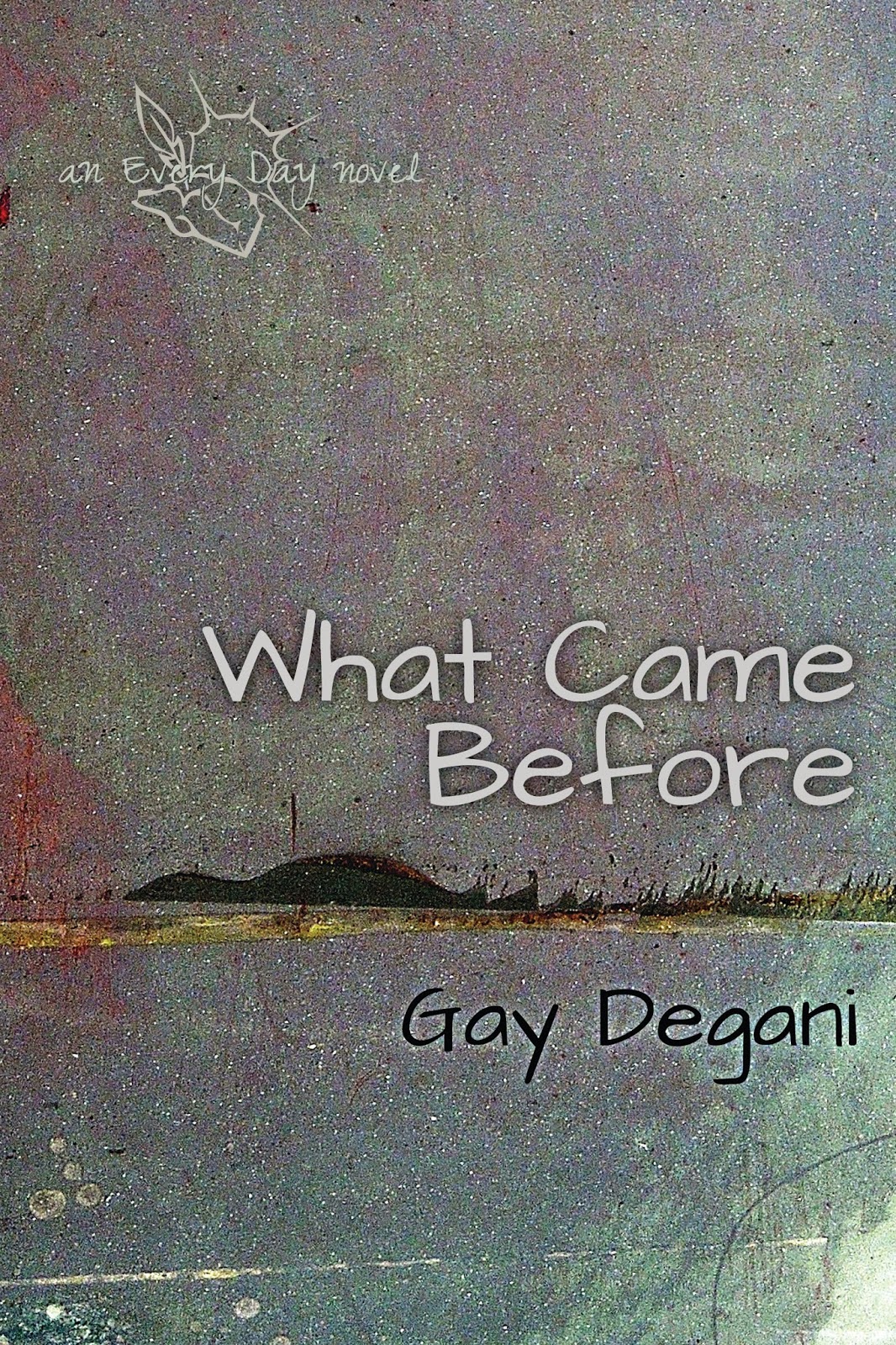
I missed it, a review of What Came Before earlier this year and don’t really know how except 2015 has turned out to be extremely busy.  Between editing my new collection of 46 stories and a novella, Rattle of Want, and checking travel items off our bucket list, my ability to track things (birthdays, health issues, obligations to review the work of others) fell apart.  I was pleased however to discover this wonderful article with legitimate critical points on the site of Hometown Pasadena by Kat Ward.

Here’s the beginning of the review followed by a link to the rest:

What Came Before by Gay Degani was written by a woman who, admittedly, got “lost in living.” Like so many people, and I suppose I mean particularly women, Degani felt writing took up too much of her time, time that “should” be spent—and would be better spent—raising a family, i.e. taking care of others and their needs.

“I was too busy living and too afraid to give up ‘real life’ for something I felt was basically selfish.”

For more REVIEW by Kat Ward.

Review of Flash Fiction International Anthology at Bartleby Snopes


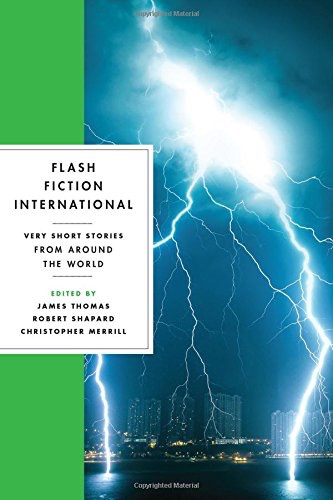
I had the pleasure of reading and reviewing the newest edition of Flash Fiction anthologies, Flash Fiction International, Very Short Stories from Around the World by Robert Shapard, James Thomas, and Christopher Merrill. You can find my article at  the Bartleby Snopes Blog.

Find out more about Christopher Merrill.

Other books by Robert Shapard, James Thomas, and others include:  
Mar 1, 2010
by Robert Shapard and James Thomas
Jan 17, 2007

by Robert Shapard and James Thomas
Aug 17, 2006
by Robert Shapard and James Thomas
Sudden Short Fiction: American Short-Short Stories
July 7, 1992
by Robert Shapard
by Tom Hazuka, Denise Thomas and James Thomas
Oct 17, 1989
by Robert Shapard and James Thomas
Dec 31, 1983
by Robert Shapard and James Thomas