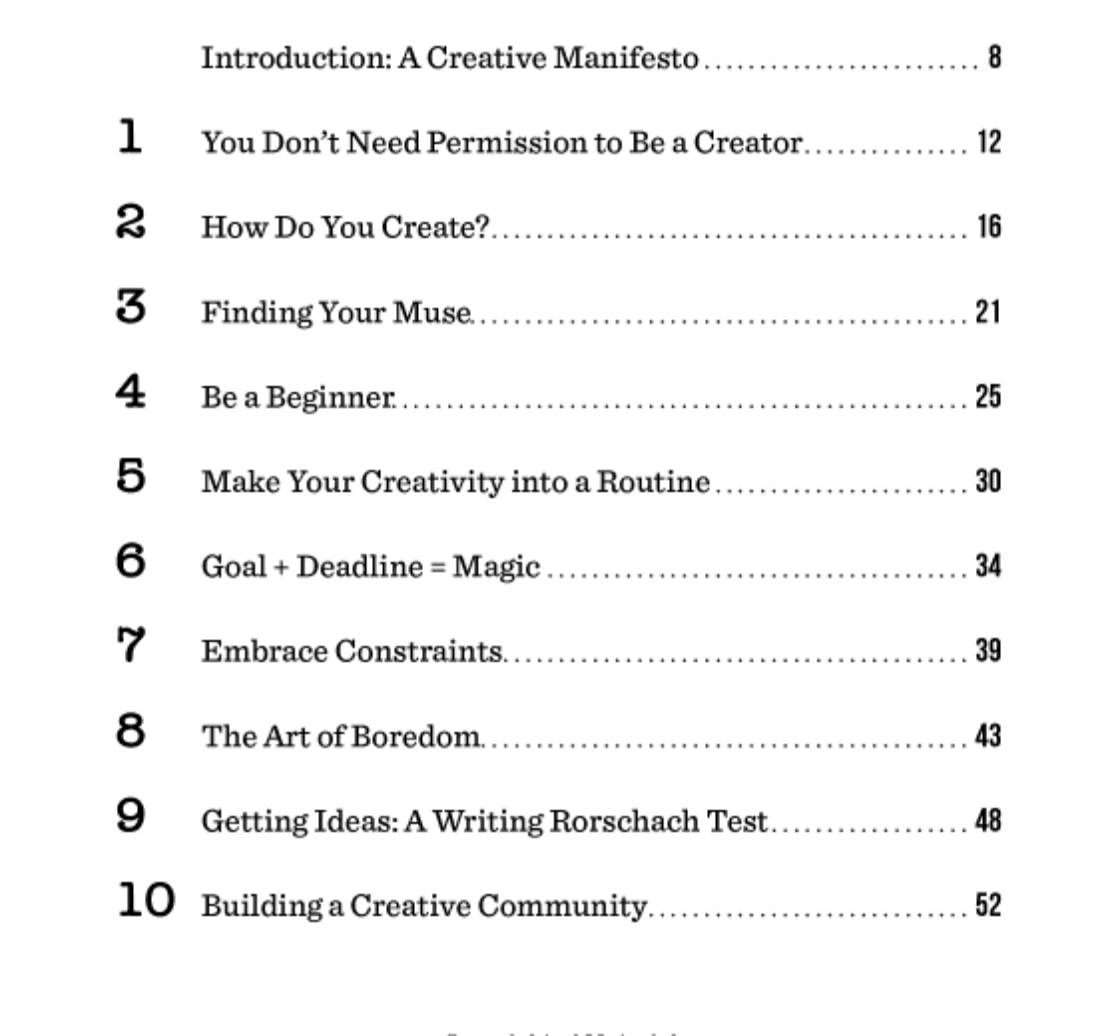
I recently drove from LA to San Francisco with a friend, and we listened to 52Pep Talk for Writers by Grant Faulkner from Audible. I am very glad we did. Many books have helped me stay the course in terms of writing, most of them in paperback and some in audio. These include all of Natalie Goldberg’s work, Anne LaMott, Julia Cameron, Jerome Stern, Stephen King, William Zinnser, Gardner, Strunk and White, Ueland, Welty, as well books on movies such as Robert McKee, Syd Field, and Chris Vogler.
I found myself thinking as I listened “Oh, yes, that’s true,” and “Wish I’d heard this years ago,” and “I should post one of these chapters on my computer for each week!” Grant Faulkner’s “Pep Talks” should be added to the above list of books for writers.
What Faulkner brings to the bookshelf is a fresh way to inspire writers as well as offering good advice and encouragement, fifty-two flashes of wisdom. He covers each topic in concise, yet
10 Pep Talk Topics
thorough detail: How important it is to take yourself seriously, how to get out of the habit of feeling like an imposter, how to use obstacles such as “not having enough time” to your advantage, how to stay on task using goals and deadlines. As a holder of an M.A. in creative writing, an oft-published writer, a veteran of Nanowrimo (he’s now the executive director), and co-founder of the journal 100 Word Story, Faulkner brings a vast amount of knowledge and experience to this handbook for writers.
I am thrilled to have a piece in the anthology, NEW MICRO: Exceptionally Short Fiction (Norton, August 28, 2018) edited by James Thomas and Robert Scotellaro and equally thrilled by the shout out in a review at Heavy Feather Review, writtenby Bryan Jansing. “Punch for punch, these micro fists hit at you hard and with life’s betrayals and losses. Gay Degani gives a knockout blow in “Abbreviated Glossary” when the termination of a pregnancy is also the loss of dignity at the hands of an unsympathetic, career-focused husband.” I’ll be reading Thursday night in San Francisco, September 6, at 7:30 at The Bindery Bookstore along with Stace Budzko,Kirstin Chen,Jane Ciabattari, James Claffey, Grant Faulkner, Thaisa Frank, Molly Giles,Cadence Low, Melissa G. McCracken, Lynn Mundell,Pamela Painter, andNancy Stohlman! Here’s the press release:
NEW MICRO
Exceptionally Short Fiction
Edited by James Thomas and Robert Scotellaro
“Reading these wonderful tiny fictions is like stealing food from the refrigerator before, or after, dinner. A sublime luxury.”
—Frederick Barthelme, New World Writing
“These micro fictions violate the laws of geophysics by compressing whole lives / whole worlds / whole heartbreaks into something like diamonds: bright, riven, reflective, edged, wonderful, and hard enough to cut through glass.”
—Pam Houston, author of Contents May Have Shifted
“New Micro’s quick, bright stories are, like our lives, as brief as lightning in the blinding dark.They offer us essential truth without the inessential facts.”
—John Dufresne, author of Flash! Writing the Very Short Story
Each story in NEW MICRO: Exceptionally Short Fiction [W. W. Norton & Company; August 28, 2018; $15.95 paperback original] comes in at fewer than 300 words. And each, according to the foreword by Robert Shapard, editor of Flash Fiction Forward, “hangs in the air of the mind like an image made of smoke.” Quick, surprising, demanding, unsettling—these shorts represent a new trend in contemporary fiction. With them, our finest writers achieve the power and range of much longer works in ever-more-brief and compressed spaces. Elusive, mysterious, deep and sudden as a sinkhole, they are sure to delight fans of flash fiction and novels alike.
Editors James Thomas and Robert Scotellaro spent years assembling the best examples of the form, drawing extraordinary stories from contemporary books, journals and smaller anthologies. The result is a collection of work by distinguished writers like Amy Hempel, John Edgar Wideman, Kim Addonizio, Richard Brautigan, Bonnie Jo Campbell, Stuart Dybek, Joyce Carol Oates, and James Tate. Works by less familiar names are equally thrilling and demonstrate the authors’ gifts and their abilities to test the limits of the form.
The stories in this anthology are as varied as they are indelible: a girl finds a job playing lookout for an adulterous neighbor; an old woman is robbed on a train; a child dies in a shooting; a family holds a barbecue. They deal with familiar fictional subjects—love and marriage, death, strangers coming to town—and yet make these canonical topics feel fresh.
There are subjects less familiar, and stranger, too. In a seventy-five-word story by Lou Beach, a character is shot in the arm by a thieving monkey. In “Furnace” by Kevin Griffith, a furnace repairman becomes stuck in a family’s ducts: “On certain nights, the children gather around the vent and listen to him tell fanciful stories about wolves, elves, and armless people.”
And others get yet more surreal. An unremarkable man finds a statue of himself in a park. A woman marries a breakfast cereal, then a cigarette, then a stone. An entire society of people decides to become hermits. An orgasm decides to take a selfie. Each story expands upon reading, hinting at worlds beyond the words. The stories “resonate in the silences,” write the editors, “like the last notes of a cello.’
With 89 authors and 135 stories, the anthology invites exploration. Travel time is minimal, but the destinations are far-flung. These stories instruct, enlighten, entertain, and, like the very best fiction, formulate new questions that resonate beyond their scope and length.
ABOUT THE EDITORS:
James Thomas has received a Stegner Fellowship, a Michener Fellowship, and two NEA grants. He lives in Xenia, Ohio.
Robert Scotellaro is the author of Bad Motel and Measuring the Distance. He lives in San Francisco.
No one element can make a story work. Many writers use a series of steps—brainstorming, outlining, drafting, revision, editing, and proofreading—to juggle content, structure, and language. The order of each step is a matter of choice and fluctuates with story ideas.
To create content: brainstorm, free-write, draft a first draft
To apply structure: outline first draft, then draft second draft
To perfect language: revise, edit, and proofread
Content refers to the subject matter of a story.
The who, what, when, where, and how of a specific idea.
A character (the protagonist) finds himself in a difficult situation at a certain time and place and must deal with that situation.
How the protagonist deals with the situation depends on the protagonist’s wants, character, and the nature of the obstacles he must overcome.
Content provides the “story question or problem” that propels the protagonist through the plot and ultimately reveals a universal theme, a jolt, an epiphany, some small observance of life.
Content evolves from a premise, notes, a rough draft, research, observation, plus the attitudes and concerns of the writer.
Structure refers to the basic organization of a story.
Just as a play is divided into three acts, most stories have three main segments
The opening (Act 1) gives a story focus and meaning by providing the premise, setting, and tone of the story as well as hints at the nature of obstacles the protagonist will face.
The main body of the story (Act 2) focuses on the protagonist’s actions to resolve the story problem.
The conclusion (Act 3) reveals the results of the protagonist’s struggle and infuses that struggle with meaning.
Each segment of a story has a similar structure: the overall story as well as each chapter, each scene within the chapter, each beat within the scene
Structure also involves other devices such as set-ups and pay-offs, sub-plots, and the shaping of structure specifically to content.
Structure evolves from outlines, note-taking, drafts or a combination of the three.
Language refers the diction and style used to express a story’s idea.
Diction refers the specific words that are chosen
Style refers to how those words are combined, the order, the length of sentences and includes the use of literary devices such as metaphor, symbolism, and allusion.
Grammar keeps writing clear and understandable.
Language evolves from revision and rhythm.
Process is what brings these three basic components of composition together. Writing is a Process. Yeah, it is!
The rough draft is about content… making it up. The second draft is about structure… making sense. The third draft is about language… making it clear. The fourth draft is about perfection… making it publishable.
Actually, the steps to the writing process bleed into each other like ink dropped from a leaky pen over one spot. The blotches don’t land in exactly the same place, but they seep beyond each other’s borders, and create a new kind of art.
A scream came from somewhere.Did it belong to her?When she was in the maternity ward panting through twenty-two hours of labor, she never heard her own voice.The other mothers were moaning, wailing, pleading for any painkiller the nurse could deliver.Not her, not then.When her boy was born she closed her eyes and transported herself to another planet far, far away where there was not a weak-willed woman in sight.Another scream wrenched the air.Deeper this time.Primal.
Herbie looked over his shoulder just as the young black man attacked, pummeling his body like a speed bag at Gold’s Gym.Ginger fell back, smashing into a wall of fine spirits and fashionable cosmopolitan glasses on the mirrored display.By the time she found her balance, Dante lost his.Her son lay on the floor, his limbs jerking like a mad marionette.
The first time Ginger saw such a sight was in Vegas when a high roller on a winning streak suddenly jackknifed into overdrive after tipping her five hundred bucks.He whirled around like a spinning top then collapsed on the poker table.Chips sprayed across a surprised dentist from Des Moines who held a full house, but thanks to Lady Luck, was about to win big because the guy with the royal flush suffered a seizure.What were the odds?
The second time she saw that same strange dance her only child almost died because she was too stoned to know what was happening.Tonight, she knew.Kneeling next to Dante, she turned him over just like they taught her. Grabbed the bar towel to elevate his head.Pressed her ear to his heart to make sure he was breathing.And then she felt her hair being torn by its roots as Herbie dragged her from her son’s side.
The Rochelle Staab Questions asked of Georgia
What was the weirdest thing that ever happened to you in Los Angeles?
My weirdest day in L.A. was my first.Almost nine years old and burning to see Disneyland, I arrived in the back seat of my parents’ Buick on our first family trip west.But Sleeping Beauty’s castle had to wait. The premier place on my folks’ travel agenda?Forest Lawn Cemetery.Early in the morning we were at the head of a long line to view the rainbow colored stained glass depiction of The Last Supper.Afterwards we were ushered along with a million other tourists into a vast hallway to see “the largest canvas painting in the world”, The Crucifixion of Christ. In the afternoon we made it across town to ogle the famous footprints embalmed in concrete in front of the Chinese Theater.I wasn’t too impressed with the feet in the cement.But I do remember a beautiful wild-haired woman sauntering down Hollywood Boulevard like she was the queen of the world.She wore tight belted short shorts, ankle-strapped wedgies and the skimpiest midriff top I had ever seen.Wow.Jesus at dawn, Jezebel at dusk.Peoria couldn’t hold a candle to the City of Angels.
More than one.But dreams are like birthday wishes.If you tell, they won’t come true.
Why write short stories?Why write at all? What’s in it for you?
I love the short story form and those twisted cliffhanger endings that grace the best.Why write?Why not?All those words are mirrors of our experience and hard-won survival techniques on planet earth.
What is the biggest challenge in writing to theme?
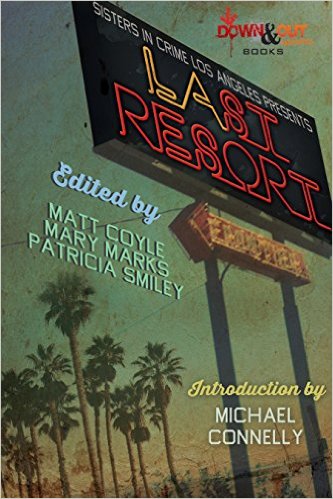
I don’t write to theme.I write to character.“Little Egypt”, my short story in LAst Resort, was finished several months before SinC/LA members were invited to submit our work to the anthology competition for consideration.Synchronicity in action.
Are the characters in your story based on you or people you know/met?
All the characters I write about are faceted reflections of people who have crossed my writer’s path.Everything is story material.
Los Angeles is a patchwork quilt of different neighborhoods.Why did you pick the area you used for your story, and how did the neighborhood influence your writing?
“Little Egypt” is set in Hollywood – as much metaphor as it is geographical location – until the protagonist decides to escape to a safer place.The “neighborhood” moves with our main characters.
Are there scenes in your story based on real life – yours, hearsay, or a news story you read?
A little of each, leavened with a whole lot of imagination.Plus I’d been wanting to write about a mother and son, each wounded by injustice, saving each other.
What came first, the character or the plot?.
Character always.See above.
While you’re writing: music (what kind?), dead silence, or…?
I like to listen to birdsongs in the trees outside my writing room window.Otherwise, silence please.
Favorite writing quote—yours or from someone else…
Mine: The writing life is a marathon, not a sprint.Pace yourself.
William Faulkner: “The past is not dead.It is not even past.”
Your writing ritual begins with…
Tall cups of tea, Earl Grey with vanilla almond milk or cherry sencha straight.
About Georgia Jeffries
Photo by Maia Rosenfeld
Georgia Jeffries cracked TV’s glass ceiling as a writer-producer of multiple Emmy-Award winning series, the first individual woman writer honored with a WGA Television Award for Episodic Drama.She created original pilots and movies for HBO, Showtime, ABC, CBS, NBC and is now adapting the NY Times best-seller, 72 Hour Hold.In addition to her short fiction, she is currently writing the novel, Malinche for Adaptive Books.A professor at USC’s School of Cinematic Arts, she just completed a supernatural thriller based on the true events behind her aunt’s murder in the Illinois heartland.
Corner on Figueroa in Highland Park Photo by Gay Degani
Late afternoon sun streams through my cousin’s renovated house, so brightI’m temporarily blinded, but find myself quickly wrapped in Clovis’s bony arms. I think he’s crying.
I smooth back his hair. “Talk to me, cher? Wha’s wrong?”
He points toward the kitchen.
I twist around taking in the open concept of living room, dining, and kitchen, the back yard through sliders, all on view in a single glance. Then I swallow hard at what I spy next. At the foot of the quartz island on the dark laminate floor sprawls a man’s body.
“Stay here,” I say, and offering up a pray to that Detective Lenny Brisco from Law & Order, I creep into the kitchen and stoop to take this poor man’s pulse but there’s a hole in his neck a bullet hole—I know this from TV. His flat dead eyes seem to ask me why?
I don’t know. I throw up. Twice.
The Rochelle Staab Questions asked of Gay Degani:
What is the weirdest thing that ever happened to you in Los Angeles?
Photo by Rachael Warecki
I’ve lived here a long time.I don’t think I know the difference between something weird and an “only in LA” moment.
Do you have a yet-to-be realized L.A. dream?
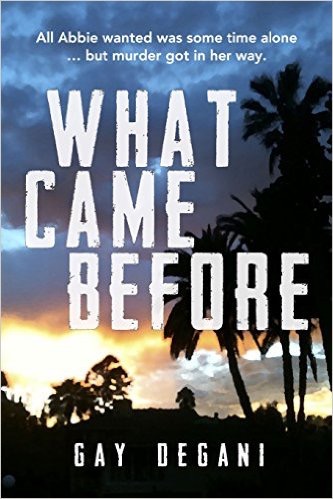
I do. I want to write a good suspense novel/film in the vein of “Rebecca,” “Suspicion,” & “Shadow of a Doubt.” These are all domestic suspense stories, and that’s what I think I do best, dealing with regular people in scary situations. It’s what my novel, “What Came Before” is.
Why write short stories? Why write at all? What’s in it for you?
Short stories allow a writer to hone his or her craft. 6,000 words are much easier to tackle than 66,000 words. You can rethink the plot, edit, revise, polish, even start over in a relatively short time.
What is the biggest challenge in writing to theme?
I don’t think theme is a challenge. It’s really a tool to help shape a story, decide what should be in and what should be out. It helps keep the characters and plot on track and deepens a reader’s enjoyment. It gives the endeavor meaning.
Are the characters in your story based on you or people you know/met?
Of course.It’s too difficult to pull stuff out of thin air.Could you make a vase without clay?The trick is changing to character to fit the needs of the story.
Los Angeles is a patchwork quilt of different neighborhoods. Why did you pick the area you used for your story, and how did the neighborhood influence your writing?
I’m interested in gentrification, how it affects the residents, though in this story it’s part of the milieu. I chose Highland Park which is an up and coming community in East LA because its close to me is an authentic community. Also I’m interested in other facets of restoring homes and how obsessed people are with watching renovation shows on TV.
Are there scenes in your story based on real life—yours, hearsay, or a news story you read?
No.This story came about because of the premise of the anthology. I needed to pick an LA area, which dictated what the setting would be. Then all I had to do was kill someone.
Character—also dictated by the anthology’s theme: thinking LA is the promised land. I chose a Louisiana cousin as the inspiration for Fanchon Landry, or “Fig” as her family calls her.
While you’re writing: music (what kind?), dead silence, or…?
Preservation Hall, Cajun music, the blues.
Favorite writing quote—yours or from someone else…
“The only kind of writing is rewriting.” Ernest Hemingway which leads to my own quote. “Never fear the shit draft.”
Gay Degani is the author of a full-length collection of short stories, Rattle of Want(Pure Slush Press, 2015) and a suspense novel, What Came Before(Truth Serum Press, 2016). She’s had four flash pieces nominated for Pushcart consideration and won the 11th Glass Woman Prize. She blogs at Words in Place.
Back in the ‘70s, if you were walking in Venice at night, you might have seen her standing in a doorway, singing softly to herself. You would have had to look straight ahead or even down because she was tiny, not more than five foot one and she herself joked that her bones were like noodles. You would have known her by her hair. It was always some color not found in nature, blue-green or vivid red or purple with silver streaks. She didn’t have it done in a salon, she never could have afforded that,so she got the dyes from somewhere and did it herself in public restrooms or friends’ homes. She spiked it and put some sort of grease on it and it stuck up from her head like alien plant life.
She came wrapped in old kimonos, worn camouflage jackets, denim vests and jeans, velvet robes, falling-apart lace gowns. Her nose was a bit beaky and there was a scraped area on one side of her face. She’d survived a motorcycle crash years before.
She called herself Mimo. People thought she was mispronouncing Memo. She pronounced it with a short “i.” Was her name Mimosa? Miriam?
Few people knew her real name. Welfare knew what it was. Mimo used friends’ addresses and at one time or another had a post office box. She lived nowhere and everywhere. She slept on peoples’ couches, in shelters, or on the street. Sometimes people told her she ought to get a permanent place to live and she shook her head and said “I don’t want to live anywhere.”
Why, Mimo? they would ask her. And she always answered:
“I’m free this way.”
The Rochelle Staab Questions for Lynne Bronstein
Photo by Alexis Rhone Fancher
What is the weirdest thing that ever happened to you in Los Angeles?
I’ve lived here a long time so there could be many incidents that I could cite. Maybe it was the time when I just accidentally ran into Jim Morrison on Santa Monica Boulevard (it wasnear the studio where The Doors were recording LA Woman at the time). He told me he was busy and I should meet him at the same place the following week. He never showed up.
Do you have a yet-to-be realized L.A. dream?
I always wanted a house that I own. The cost of a house now is too much. I used to design the house I wanted to live in, even drawing floor plans. I might instead build a doll house using found objects.
Why write short stories? Why write at all? What’s in it for you?
I’ve always written things. I can’t stop myself-it’s compulsive. I “wrote” my first poem before I could even write-my father had to write down what I dictated. I like to tell stories. A short story is easier than a full-length novel but it’s also a challenge in another way-you have to hit the beginning, middle, and end quickly and develop your characters quickly in fewer words.
What is the biggest challenge in writing to theme?
I often interpret a theme according to my imagination and my ideas, which may not be what an editor has in mind. When I submitted my story “Mimo” to LAst Resort, I was afraid it would not be accepted because it was not a whodunit or procedural but that was more a matter of story type than of theme. It turned out that I had fulfilled the requirements by creating a character that came from somewhere else and encountered bad luck in LA.
Are the characters in your story based on you or people you know/met?
As I describe below, “Mimo” is based on a real murder case and the character Mimo is based on a real woman-but I did not know her so I created her from bits and pieces of the behavior of real homeless people that I have observed. I also put some of myself in her. But then again, my character Roger the journalist, is also me to some extent. Most of my characters tend to contain parts of me. We know ourselves best (or we think we do).
Los Angeles is a patchwork quilt of different neighborhoods. Why did you pick the area you used for your story, and how did the neighborhood influence your writing?
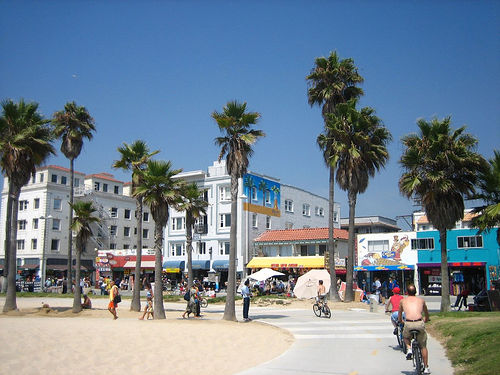
Venice was the neighborhood in which the real-life incident that I based my story on took place. But I also know Venice like the back of my hand. For many years I lived nearby in the Ocean Park section of Santa Monica. I worked in Venice, volunteered for a local newspaper published in Venice, and hung out with friends in Venice. I found myself referencing real Venice places in my story, such as the Lafayette Café where I used to breakfast on weekends. I wanted to capture the ambience of Venice as I knew it in the 1970s before the onslaught of development and faux-hipness that has taken it over now. It was a place where everyone was valued, even homeless people. I’d like to think that nothing can completely kill that spirit.
Are there scenes in your story based on real life—yours, hearsay, or a news story you read?
The real-life incident took place in 1977. The model for Mimo was Benita Bingham, known in Venice as “Bingo,” who was murdered by her ex-husband after he was released from prison. I never knew Bingo; I merely heard stories about her from people who did know her. My theory is that she resisted living in an apartment because it would be more difficult for her ex to find her if she were homeless. That’s the basis for what happens in my story.
What came first, the character or the plot?
They came simultaneously, due to the real-life incidents that inspired them. But I had to work on the development of Mimo as a believable character. I thought about how she would look and dress and talk. I wanted another character for her to interact with, a character that would also “ground” the story in reality for the reader and for that purpose I created Roger the journalist. I originally wrote the story in the third person but I switched to first person and it made an incredible difference in tone and credibility.
While you’re writing: music (what kind?), dead silence, or….
I prefer to write without music, with as much silence as possible. Music, especially if it has a vocal, distracts me and the lyrics get in the way. Instrumental music is sometimes okay to write poetry to.
Favorite writing quote—yours or from someone else…
I can’t think off hand of a quote. I can paraphrase something from Harlan Ellison’s Dangerous Visions anthology: he said that above all, what writers give is their courage. Add to that Anais Nin’s advice to writers that they write every day and you have my guidelines for the life of a writer.
Your writing ritual begins with…
I wish I could begin the day with writing before anything else but even my journal has to wait a bit. When I wake up each day, the first thing I have to do is feed the four cats. Then comes breakfast, showering, dressing, writing my journal, yoga, chores around the house. When I do get down to writing, I like it to be quiet, comfortable temperature-wise, and I usually have to have access to liquid refreshment. I often have to get up and pace around. If I am “on a roll” I just sit tight and type away. When I begin to write, I just begin to write. It has always begun that way.
More about Lynne Bronstein
Lynne Bronstein is the author of four poetry collections, Astray from Normalcy, Roughage, Thirsty in the Ocean, and Border Crossings.Her poetry and short fiction have been published in magazines, newspapers, anthologies, and on web sites.She has been a journalist for five decades, writing for the Los Angeles Times and other Los Angeles area newspapers. She also writes a blog, “No Rainy Days.” Recently she adapted Shakespeare’s As You Like It as a contemporary Valley-speak spoof which was performed at the Studio City and Hollywood public libraries. She has been nominated for two Pushcart Prizes for poetry and for two Best of the Net Awards for short fiction. She won a prize for her short story “Why Me” and two prizes from Channel 37 public access for news writing. She has taught poetry and journalism workshops for children at 826LA and for the Arcadia Library and was cited by the city and county of Los Angeles for her mentoring work with Jewish Vocational Service. Her latest publication is a short story in the crime fiction anthology LAst Resort from Sisters in Crime. A native New Yorker and LA transplant, she lives in the San Fernando Valley and has four cats.
Do you receive rejections remarking, “Some strong writing here, but this isn’t a story; there’s no arc” or “I like your character, but where’s the conflict?” And have you thought, “This editor is nuts! A guy’s chasing my narrator. She has a gun. She shoots him. Isn’t that enough conflict?”
No, actually, it isn’t. It’s “action,” but action is not the same thing as conflict. Have you ever sat through a movie that goes from one car chase to another, followed by an explosion, followed by a gun battle, then another chase, this time through the subways of New York?Unless you are a kinetic energy junky, you’re probably sneaking peeks at your cell phone or dozing. This kind of action is brought into a story for its own sake.
Conflict, on the other hand, is choicefollowed by movement. What?
As writer (Brief Guide to Flash Fiction) and writing coach Randall Brown points out in his book :
Something happens (precipitating incident) to create a desire, and that desire creates a need for action that is thwarted by this and that and this and that until, finally, there’s resolution.
While some stories are “linear movement” designed to ramp up adrenaline, good stories are more complex. They are built around a specific structure that offers character depth and motivation, actions springing from that motivation, and emotions created through empathy. How do you create mindful structure for a story?
Good movies teach structure because they take the viewer on a journey of choices: setbacks and success, indecision and rash action, humor and pathos, determination and self-doubt, with endings that reveal something about the human condition. How did the movies find this out? For a quick understanding of what I’m outlining there’s always Syd Field’s Screenplay: The Foundations of Screenwriting.For deeper understanding there’s Aristotle’s Poeticsand the 3-act play structure.
* How did I figure this out? Robert McKee’s classic text, Story.
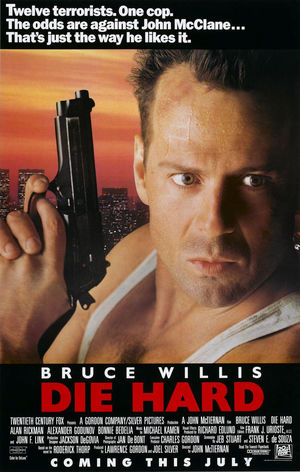
One of my favorite movies to illustrate structure in that old reliable action flick (I know, I didn’t say “structure flick”), Die Hard, made back in 1988 when Bruce Willis was moving from Moonlighting on TV to the Big Screen.
Get the Die Hard DVD and watch it with a pen and paper and the timer on your DVD player. You want to be able to stop it when you get behind. Number the lines on your paper from 1 to maybe 120 or so because that’s about how many minutes the average movies contains. Maybe skip lines to make sure you can write big if you get excited. Get ready to start the timer on your phone.
Now record what happens every minute or so all the way through. This may seem like a tedious exercise, but it’s amazing to see just how carefully the story is constructed. For the hot-shot movie critics out there who love those ponderous three-hour think pieces, Die Hard is too “on the nose,” but for learning about structure and character development (and for the simple joy of watching), it is one of the best.
Here’s how it goes:
Act 1 starts with a character living his regular life, something happens to turn his life on its head, and by the beginning of Act 2 (approximately 30 minutes in), the character’s life changes 180 degrees from what it once was and the character sets out to either change his or her life back or to figure out how to make the best of things. He doesn’t try all that hard in the beginning because frankly, he can’t really believe things could go this wrong. You know that saying? Man plans and God laughs? When you’re the writer, you are the one to make sure something goes wrong.
About a quarter way through Act 2 (around 45 pages in), the character has some kind of epiphany that he’s going to have to work a helluva lot harder than he thought. His simple solution isn’t working. He needs a better plan. (Did you hear that chuckle?)
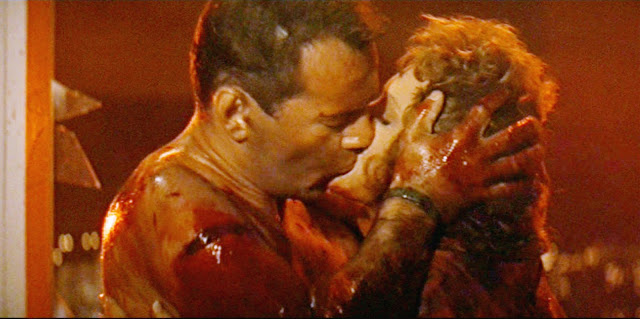
About half way through (60 minutes), he realizes who the enemy is (himself, his best friend, the woman with the man hands) and at the same time, there is a coming together between the character and his/her main relationship often including the washing of wounds or standing up sex or both).
In the second half of Act 2 some new effort is launched, but it doesn’t work (he-he-he) and leads to a dark moment around 75 minutes into the movie. The character gives up the game as hopeless.
But by 90 minutes, the beginning of Act 3, the character has come up with new energy, a new plan, a new assault on his problem and works through his conflict until he either wins or loses.
Notice as you are jotting down what is happening on your lined paper, about when these things happen in Die Hard. The timing won’t be perfect, but you’ll be shocked to see how close it is.
Look for: Set-ups and pay-offs:
On the plane McClane talks with the other passenger about being afraid of flying. The passenger offers a suggestion: After he lands, he should take off his shoes and grip the carpet with his toes.
Watch for this to pay-off when he is in the bathroom of the Nakatomi building, and then later when he’s in the elevator and because he’s barefoot, he considers taking the shoes of the guy he’s just killed, and later when he’s being chased by Hans. This suggestion from the opening sequence, pays off several times in this movie. THAT’s good structure.
Look for how exposition is handled: On the plane, in the taxi, between McClane’s wife and her boss, when McClane gets to the Nakatomi building and looks his wife up on the list of employees. Then consider set-ups and pay-offs again. How is information given to the viewer in these scenes?
Look for character development:
The characters in this piece are well defined and consistent in their traits. We get to know them quickly with a building of clues, and their motivation and subsequent behavior help to hold the structure together when the twists are thrown in. There is suspense without confusion.
Look for how setting is used:
Think about the airplane, the limo, and the high rise Century City building. Then think about how this movement evolves and what happens in the building and how each of these places has its own twists and turns.
Look at the pacing:
This is an action film.It unfolds remarkably fast, but with the right amount of time spent on relationships, on personal reflection, on what the characters WANT so the movie has meaning. And it does. It’s about loyalty, determination, married love, brotherhood, evil….
Okay enough. Now if you decide to do this experiment—this jotting-down-of-what’s-happening thing—here’s some of what you should discover.
By the first three or so minutes you know who McClane is, what his problem is, and how he thinks he’s going to solve it. Notice he HAS a problem and a goal: to find out what the hell is going on between he and his wife. That isn’t the PLOT of the movie, it’s a subplot, but it shows this is going to be more than one action scene after another. There is an human element, an emotional element, and these are the elements that makes this movie relatable and gives some universal meaning.
About thirty minutes in you notice that everything has changed 180 degrees from what it was at beginning of the movie (this is about where ACT 1 ends). The building is taken over and the story problem isn’t just about McClane and his wife, but it’s about surviving the “terrorist” attack. The conflict between these two characters is now accompanied by another larger conflict.
Act 2 comes next from running from around 30 minutes to about 90 minutes into the film. In that time, the major action is McClane fighting the bad guys.
The first part of Act 2 is all about everyone reacting to the take over.Characters on both side of the “battle” are introduced by their reactions to the circumstances.We see the gentle and wise reaction of the boss, the arrogance of a co-worker, and McClane’s wife’s smarts, as well seeing the hero trying to first get the police’s attention because he assumes, of course, that is the most logical thing to do. It’s their job to solve the problem. He has to just survive and create enough chaos to keep the bad guys busy until the cops save the day.
But in the middle of the movie—around 60 minutes in—we see that McClane isn’t going to get any help. As a matter of fact, he’s now perceived as one of the bad guys. The stakes are ramped up. There is no help coming. He’s got to do it himself. However, if I’m remembering correctly, this is about the time John McClane’s wife begins to feel more kindly toward her estranged husband. She knows his capacity to fight and survive.At this point, we see both the enemy for who they are and a kind of realization of love and admiration McClane and his wife have for each other.
And then, at about 90 minutes when Act 3 begins, John McClane makes his final assault to save his wife and everyone else who has survived. And he manages to do that in true action hero form.
The end? The enemy is defeated and he regains his wife.
Okay. Formula. Over the top. Right? Yeah, but it’s a learning tool too. Knowing why this movie works has helped me to have answers to story problems whenever I get stuck. What does the formula say at this point? Do I want to do that? If yes, make it a unique action with unique details. Lift it from stereotype. If I want to break the formula, I try to make sure that what does happen, has the same kind of emotional effect or performs a similar purpose.
I didn’t make this up. I don’t know that I would have thought of it, but understanding why good movies are good movies helps me to figure out what my next scene should be, what purpose I should fulfill.
If this idea has appeal, consider reading one of the books I mentioned earlier.
I can’t remember all the movies I did this with, but it is amazing to see how close movies THAT WORK stick to these structural elements.
Movies I logged:
Overboard
Witness
Terminator
Suspicion (wrong ending really but I still love it)
My first online story was published in 2007 at Every Day Fiction. It was new to me, writing stories to be read on a computer rather than in a magazine, but the possibility of publication was higher.
“Flash Fiction” is partly defined by length, stories limited to 1500 words or fewer, and I soon discovered that writing shorter stories made me more critical of my work, more careful in word placement, more conscious of finding an emotional center, and becoming clearer about my own intention.
I’d like to share how and why writers can juice up their craft by writing and publishing flash fiction.
What flash does for those who write fiction:
1) Flash forces clarity
Flash fiction depends on immediate reader engagement. There aren’t enough words available to waste on lengthy set-ups. The reader should “see” the place and situation at the same speed as someone first sees a picture in a museum.
A shape, a feel, a sense of breadth, a color, the reader needs something to hang on to, something that allows him or her to become immersed. This cannot be achieved without a commitment to clear imagery, finding specific words and details to pull the reader into the story. I call this giving the reader a visual anchor.
2) Flash insists on carefully chosen language
To continue to engage the reader, a writer must employ taut, muscular language that features specific details and must choose each word deliberately with an awareness of double meanings and inference. There must be no unnecessary words.
3) Flash requires a writer to think about structure
What concerns the structure of a piece of writing? Characters, tense, POV, order of events, theme, setting, all these elements need to be considered. Stories require a shape that will fit the concept and enhance the experience. A writer may have a vague outline in mind, but he or she cannot always work from a planned framework.
Sometimes the words come first and the structure follows, but the order in which a writer proceeds doesn’t matter. What matters is consciously studying the elements of a story so they will have the most impact. When a writer deals with 1000 words, it becomes easier to look at structure and discover what the story needs. A writer can experiment and become expert at matching content to structure.
4) Flash demands meaning, large or small
Flash fiction counts on meaning to make an impact. That meaning can be a life-changing event or a small revelation, but something musthappen. Too often writers forget that language is the tool used to move readers. While readers love and appreciate beautiful words, they are stirred by words that give meaning to the human experience. There must be a emotional shift in readers perceptions.
5) Flash requires characters who resonate
More than anything else, the characters in a piece of flash must show their individuality, their desires, their fears, their humanity. The writer must be clear about why he or she has chosen these characters to write about. If not, who cares? They can be humble or rich, kind or violent, but they have to be living individuals, and this must be achieved by using the slightest phrase, the sparest language, in dialog and/or in telling gesture.
6) Flash bestows confidence
Writing flash allows a writer to work with focus on a short piece in a more present way than possible on a longer story, especially if he or she is struggling with craft. It forces the writer to study every word, every nuance of a piece, to weigh the contribution each word and each phrase makes to the whole. It also challenges the writer to make sure most ( or all) the elements do some kind of double duty in terms of enhancing the theme.
Flash builds self-confidence because with so many journals online hungering for strong, well-written flash, a writer receives feedback in a relatively short period of time. Even if the response is a resounding NO, the writer usually knows quickly. This offers the opportunity to look at the story again. If that writer is you, you may see something different. You make it better. And eventually, your skills at understanding how to craft a story become expert.
(This piece was originally published at Bang2 Write on March 13, 2016)
My world had no endings when I was 13 in that Oregon farming and logging town.Only beginnings.Fields and groves were endlessly green, streams flowed forever and asphalt roads led to new sights. Life was a page of Dylan Thomas’s poetry.
Mornings began at 6:00 when I pedaled my Schwinn down to the Shell station for my pile of newspapers.But first, I dropped quarters in the machines to extract a Milky Way and a Coke.Now fortified, I gave each copy of the Portland Oregonian two practiced folds and dropped it in the canvas bag draped over the handlebars.For the next hour I’d pedal miles to stuff them in paper boxes for my 50 customers.I was getting rich, at $20 a month, in spite of having to hector customers who wouldn’t answer their doors when I went to collect.
Life was good, and eighth grade was a cinch with a really funny teacher who regaled us about his drinking episodes in the Navy and a strange food called pizza.
But one April morning a headline caught my eye as I folded papers.My Dad’s name leaped from the front page.It was a story about Pacific University that I couldn’t understand, a complicated story about the faculty in rebellion.Accusations.Hatred exposed.
Something had happened.The faculty had given my Dad, the college president, a vote of no confidence.He explained it to my two brothers and me over dinner as we sat in dumb silence.Mom was trying to hold back her tears. “I’m resigning,” he told us.“We’ll have to think about moving.
Forest Grove, Ore., my world in the 1950s
Moving?But I was at the point of telling Judy Bristow I loved her.Soon, I’d find the courage to kiss my 11-year-old girlfriend.Moving meant I’d never again see my pal, Frank Dunham, who double-dated at the movies with his girlfriend and had actually kissed (he said).
Our house was emptied that summer as boxes and furniture went into the Allied Moving Van.Accumulations of papers and magazines were thrown from the attic window to the driveway.Dad’s library and Mom’s manuscript of Oregon history were carefully boxed.But my Red Ryder BB gun, Schwinn Black Phantom and Erector Set disappeared.
Too soon our family and the cat were piled into our used ’48 Cadillac sedan and we headed south.Too soon to properly say goodbye to Judy and Frank or copy their addresses with promises to write.
***
Finding myself in South Pasadena was a shock.I was a year behind academically.There were curious classmates — Mexican-Americans — who wore pegged pants and called themselves Pachucos.And the girls in our church youth group were all blonde and unapproachably sophisticated.
My two new friends were geeks who read L. Ron Hubbard and J.R.R. Tolkien and wore clothes from J.C. Penney.My only achievement was writing my autobiography by hand, pasting in Kodaks, then binding the single copy.I got an A from my 9th grade teacher.
My brothers and I, Mom and the cat, lived in our rented bungalow and took each day as it came.For some aberrant reason, I ate only lunchtime sandwiches of Wonderbread and Kraft Sandwich Spread.But I didn’t die.Dad soon found work as a fund-raiser with the Volunteers of America before landing a position with the headquarters of the Congregational Church in New York City.
I didn’t write except for that handwritten autobiography.I read.Science fiction, Reader’s Digest Condensed Books, the Hardy Boys and other mysteries.But two things became clear.One, I was Heinlein’s Stranger in a Strange Land.Like Valentine Michael Smith, newly sent to Earth after being raised on Mars. Among different people for the first time, I struggled to understand the social practices and prejudices of human nature that often still seem alien.
Second, an internal universe of words appeared.Writing, absorbing new vocabulary and explaining things articulately were easy.Numbers came harder.This default writing ability made me an English-Journalism major at Grinnell College in Iowa. A career epiphany occurred the summer of my junior year.I was invited to be a staff reporter for a Chicago suburban weekly.I covered fires, the police blotter, sports, rewrites, even weddings, taking my own photos with a Speed Graphic.At last, it seemed there was an escape into the real world.
***
My first job after graduation was writing copy for new Mobil Travel Guides.Sure, it was a humdrum task — until I got an unsolicited letter from a woman who said she was home-bound.She read the Guides to escape into a world that was out of her reach.At last I had an audience, and every piece I wrote was directed to my secret spectator.
Three years of serving as an Army Security Agency analyst took me to Korea and Taiwan.Taiwan brought me a wife and some great source material I filed away for 30 years.
For the next three decades I soldiered on in corporate communications, creating, writing and editing employee publications; writing press releases; managing exhibits; crafting senior management’s speeches.I embraced it all.Each day was different.No one knew my job description, which allowed me to define my position and interact with everyone from the CEO to the clerk or bench worker.They were my audience that I worked to reach on some level of understanding.
Upon early retirement I ruminated on why I was drawn to write two anthologies, short stories and articles.It was simple:Somewhere there was a person who would read my words and say, “Yes, I know exactly what you mean.I’ve felt the same way but wasn’t able to put it into words.”I could help that person leave his or her couch or bed and enter another world.
In the process, I would discover meaning in the world that had turned me upside down.That’s why I write.
Transformation
by Walter Giersbach
Burt Forsyth was ready to rip out the fingernails of the girl sitting in the pew in front of him.That is, after he smashed her iPhone and shoved the plastic down her throat.While the rest of the congregation stood to sing “A Mighty Fortress Is Our God,” the girl sat in her stylishly ripped jeans and scrolled her manicured nails over the phone.
“Sitting!” he whinnied hoarsely to his wife.“Sitting during the hymn.Texting through the prayers.Eating her damned M&Ms during the sermon.I could kill her.”His heartbeat rose and he could feel his body shaking uncontrollably.
“Perhaps it’s her parents’ fault,” Beth whispered.“Not everyone has the upbringing of you and I.”
“Or two hundred other members of our church,” he steamed.
Rev. Abernathy was praying something about “O God, we seek the transformation of the world, but we fear the change it could bring to our own lives,” and Beth shushed him from going on.
Burt had an obligation to the parish as one of its deacons. A duty to maintain tradition.Church was a sanctuary to restore reason out of chaos, to sew up the raveled edges of behavior among the easily confused.He was a rational man trained in a rational profession to act in a rational world.If there was no control of the forces that shaped your life, he would often tell Beth, then what point was there to life itself?As a lawyer, he prided himself that the legal profession was the only thread of tradition that prevented Western civilization’s entropy.And the Presbyterian Church.That too.God and the Law.
Beth had volunteered to serve coffee after the service, so Burt stood in the hall off the kitchen nodding to parishioners.He joshed an old timer about his golf handicap, knowing the man would never play again.The pastor button-holed him about the Thanksgiving service coming up before being pulled away by an extremely small lady wearing a fur stole.Burt stared at the lady’s dead animals — 50-year-old, moth-eaten minks, he believed — draped over her shoulders on a 65-degree day.The animals’ glass eyes glared balefully back at Burt.
“Mister?”
He turned, bumping into the girl with the iPhone and almost spilling his coffee.
“A guy there told me you help run this place.”
Burt managed to choke out a “Yes?”
“I wanted to say I had a good time.I never been to church, but my friend kinda dragged me.So,” she shrugged, “I didn’t understand a lot, but I texted myself about what I thought was important.So I’d remember later.”
Burt stood a head taller than the girl, looking down at her unruly hair and the piece of metal piercing her eyebrow.The sound that came out his mouth could be taken for an affirmative gargle.
“This Matthew,” she said, screwing up her face as though its parts — nose, eyes, cheekbones — had been bought at a discount store and hastily assembled.“He was a saint, right?One of Jesus’ whattyacallits.”
“Disciples,” Burt muttered.
“I’m going to Google him.If it’s okay, I’ll come back next time.Okay?My name’s Tara.Who’re you?”
“Burt Forsyth.We’d love to have you, Tara.”The words came out as a choke.
“Hey, Burt, thanks..”She smiled once, pirouetted scarecrow-like, and walked out the door.
There was a vacuum in the room after she’d left, as though a hole had opened in an airliner that left him gasping at the change in air pressure.The smell of coffee and cinnamon rolls weren’t sufficient to replace the sensations that had left the room with the girl.
“Why are you so silent?” Beth asked in the car, giving him a curious look.
“Just thinking.Maybe we need some more young people to season the gentry.Sort of balance the demographics.”
(originally published at Every Day Fiction.)
____________________________________
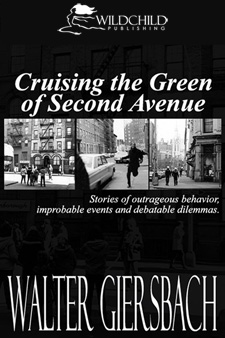
Walt Giersbach’s fiction has appeared in Bewildering Stories, Big Pulp, CommuterLit, Connotation Press, Corner Club Press, Every Day Fiction, Gumshoe Review,InfectiveINk, Liquid Imagination,OG Short Fiction, Over My Dead Body, Pif Magazine, Pulp Modern, Pure Slush, r.kv.r.y, the Story Shack, Short-Story.Me,and a dozen other publications.He also writes on military history and social phenomena.Two volumes of short stories, Cruising the Green of Second Avenue, were available until his publisher ceased operation.He directed communications for Fortune 500 companies, publicized the Connecticut Film Festival, and managed publicity and programs for Western Connecticut State University’s Haas Library.He blogs at http://allotropiclucubrations.blogspot.com/ while maintaining Web sites devoted to the children’s book author Holling Clancy Holling and the Manchester (NJ) Writers’ Circle.











 Gay Degani