Rattle of Want Out and Available for Purchase

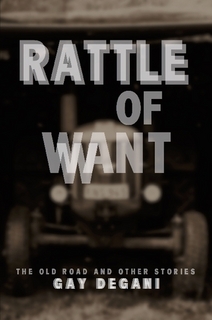
My collection of forty-six stories and a novella, Rattle of Want,  published by Pure Slush Books, is now available .  Matt Potter, editor and publisher, did a fabulous job.  Here are blurbs for the some of the individual stories followed by comments for the book as a whole.  Rattle is available at Amazon and Lulu.


Links:
For trade paperback at Amazon: Rattle Paperback
For Kindle version: Rattle Amazon
For the e-book version from Lulu: Rattle e-book  
For the trade paperback version from Lulu: Rattle paperback

Blurbs for individual stories:

About “RUBY” in decomP Magazine, “LOSING GROUND” in Tattoo Highway, and “THE WAY IT CAN BE” DOGZPLOT. What impresses me most about Gay Degani’s writing is the ease with which all her characters come to life on the page – story after story – with enough development, no matter the fiction’s length, to give readers a nod to understanding, a true shot of empathy.  She makes me believe I’ve known these people, have listened to their voices, have searched their hands and eyes for direction.  Degani makes me want to know more, and that strikes me as success. Sam Rasnake, Five-time Pushcart Nominee

About “RUBY” from decamp Magazine: I love a story that lingers with me. “Ruby” both touched my heart and broke it.  Such a powerful portrayal of a young lost soul, like so many these days, with only the streets to call home.  The vivid imagery and descriptions bring the reader right into this harsh world.  There is no looking away.  Most heartbreaking is the resignation with which Ruby seems to accept her fate.  I wanted to reach into the scene and hold her. Jayne Martin, author of Suitable for Giving: A Collection of Wit with a Side of Wry.
About “LOSING GROUND” from Tattoo Highway. Gay Degani’s story of friendship, love, loss and memory opens with, “It began with hands. Doesn’t it always?”, and hands carry the reader though a woman’s years on the hard life bayou in under 500 heartfelt words. You’ll want to read this story more than once and after each time sit quietly thinking about it. Paul Beckman, author of Peek

About “LOSING GROUND” from Tattoo Highway. Gay Degani is a superbly crafted, touching, and image-filled story of the south. In just a few words, Gay’s descriptions of the bayou, of love found, and of love lost pack powerful emotions. Definitely worth reading. Sue Babcock, Webmaster and Site AdministratorSilver Pen Writers Publisher, publisher of Youth Imagination and Liquid Imagination
About “THE WAY IT CAN BE” from Dogzplot
Sharp like arithmetic. You read it and feel a structure, feel removed, feel like you’re either a pirate or a coincidence. You learn about the feelings of machines and you learn never to smoke dope with some asshole named Josh. Mike Joyce, Publisher of Literary Orphans
About “SOMETHING ABOUT LA” from Litsnack. Exceptional dialogue. An apparition transforms into a twelve-year-old boy driving a truck, “rust eating its way across the hood.” Degani unravels the beauty of storytelling with visceral language and depth of observation. The reader absorbs and exalts in the movement of power between these characters. Every sentence adds to the unveiling of circumstances and who exerts the most influence through need. Don’t miss this collection! It is masterful and unforgettable! Meg Tuite, author of Bound By Blue

About “SOMETHING ABOUT LA” from LitsnackThis story’s subtext, of hope and chance being the fuel to one’s private future, provides such a delicate melody here. Favorite line: “Suddenly I feel lost, seeing what it’s like to belong.” I was right there with this narrator, always looking for an excuse to go to L.A.  A.E. Weisgerber, published in Issue 5 of Tahoma Literary Review
About “DOING MR. VELVET” from The Battered Suitcase is the quintessential SoCal murder story, playing out like a minor Manson rehearsal, blood and betrayal and misguided loyalties, a pseudo street Prophet offering accidental salvation, escape from the law in the form of a Mexican weed blowout, “Velvet’s” an elemental Tarantino flick-like crazy romp. Katherine Lopez

About “ISLA VISTA, 1970” from The Foundling Review. With its suburban accidental beauty queen in her gown and tiara and stalling VW drunkenly stumbling from one chaotic scene to the next, through unrest in the streets, a harrowing assault by a police officer, a campus protest that echoes the Vietnam war, and calls to mind Kent State, the burning of a bank and of the beauty queen’s sash signaling her new awareness, this story neatly captures the whole Nixon era and how it created that troubled generation’s unrest and struggles to break free of stifling expectations. Katherine Lopez
About “KINDLING” from Prime Number. Writing noir is hard.  Jim Thompson.  James M. Cain.  Elmore Leonard.  Others trying to write like those masters come across as either slavishly aping or else unintentionally funny.  Gay Degani’s flash “Kindling” sizzles.  Is it an unknown story by Cain?  Could be.  But no, it’s a Degani.  Andrew Stancek, nominated for a Pushcart Prize  by THIS Literary Magazine.
About “STARKVILLE.” I’m a sucker for a good diner/waitress story and Degani tells a fine one here. All alone in this small out-of-the-way diner the waitress, is all alone thinking about taking her teenage daughter and moving to a better place when the door opens and her world is shaken like a snow globe. Paul Beckman, author of Peek
About “GUMBO” from JMWW. A mother/daughter story told in food and recipes passed down from way back. Gay Degani’s storytelling is smooth and filled with memories that are all matter-of-fact and make the reader feel he’s in the kitchen listening in and watching this pair share their love and life through food and expecting his dish of Louisiana food to be set down any minute. Paul Beckman, author of Peek
About “RUNNING THE FENCE” from Monkey Bicycle. This childhood dare story runs full-tilt toward its anguished conclusion on Degani’s controlled stream of specific imagery: from childish locked knees and snot, to the hat brims and mantillas of grieving adults. Gay Degani builds a world, gives it wheels, and tells a tale that lures a willing reader to run breathless beside her.  A.E. Weisgerber, recent flash appears in The Airgonaut

About “SEDIMENT” from Blue Five Notebook. I’ll never again look at a Pink Pearl eraser without thinking of the struggle between truth and suspicion, reality and imagination, and Gay Degani’s moving depiction of an aging man’s battle against paranoia.   Audra Kerr Brown, published recently inPeople Holding, Easy Street Magazine, and 100 word story.


Blurbs for the Collection:

Award-winning author, Gay Degani, kills it again with this new collection. The stories in Rattle of Want are by turns smart, tender, dark, and always compelling. Degani gives us life in all its skewed realities and does so with finesse and vigor. This book is a knockout.  – Kathy Fish, author of Together We Can Bury It 

Rattle of Want ranges from brilliant brief experiments (such as “Abbreviated Glossary” and “Appendages”) to a novella-in-flash (“The Old Road”) for the canon in that new genre. Altogether these stories mine the wants and desires in the breakups of families, rebellions of youth, and occasional ascents of the spirit. Often they beautifully, and simply, nail a place, as in “Small Town” (a perfect evocation of the title), report an impending explosion, as in “Kindling” (a quintessential flash), or capture a character (if you haven’t met Blusterfuck … do so at your own peril). Few writers can do all that Gay Degani does. – Robert Shapard, editor of Flash Fiction International: Very Short Stories from Around the World
Short stories are one of the purest forms of storytelling. Luckily for us, Gay Degani is a master at it. Don’t miss Rattle Of Want! – Robert Swartwood, USA Today bestselling author of New Avalon
Short, bittersweet stories from a writer who knows just what makes us tick. Some are heart-stopping, some heart-breaking, but all these stories will make your world wider. – Sarah Hillary, Author of the ‘superbly disturbing’ Someone Else’s Skin, 1st in the DI Marnie Rome trilogy,
Rattle of Want is a narrative road trip across America, driven by memorable characters and prose with muscle. Degani is a consummate storyteller and a virtuosa of short fiction. – Christopher Allen, 2015 GinosokoLiterary Journal’s Flash Fiction Award and the managing editor of SmokeLong Quarterly
If you think of stories as noises, then Gay Degani will sometimes have you clamping your ears and other times leaning forward to soak every detail in. Her stories can be quiet and subtle or loud and bold. She pairs the ugly, imperfect, bumbling pieces of ourselves with the pure, beautiful parts of our souls – and the result is a magnificent symphony you want to replay again and again. – Tara Laskowski, author of Bystanders,2016, and Editor-in-Chief of Smokelong Quarterly

Gay Degani is that rare writer who makes you believe that a book can be a tornado sucking in neon paint, punk rock symphonies, animals burst from cages, oceans of both love, terror and un-dodgeable bliss. Rattle of Want is astounding, a map to the places we wish to discover.   – Bud Smith, author of F250 among others
Like a cleansing rain, pithy flashes and a penetrating novella hit the substantial body of Gay Degani’s phenomenal Rattle of Want, causing pools of meaning to ripple out forever. The language is sharp, the characters palpable, the situations exceptional. Read it!  – Bonnie ZoBell, author of What Happened Here.
Gay Degani has a talent for the observational narrative. This collection of stories is rich with vivid details and tangible desires. Rattle of Wantleaves you wanting more! – Diane Vallere, bestselling author of the Material Witness Mysteries.
“Gay Degani is a champion of the short form, packing so much emotional punch into each of her pieces that reading her latest collection, Rattle of Want, is like going ten incredible rounds with a flash-fiction heavyweight. From the medical traumas of “Abbreviated Glossary” to the murderous urges of “Complicit” to the natural devastations of “Monsoon,” Degani’s stories unearth the nuggets of humanity from characters in extremis.
–Rachael Warecki’s work has appeared in the Los Angeles Review, the Masters Review, Midwestern Gothic, and elsewhere.
The stories in this book are a masterclass in narrative craftsmanship. From the brief sparks of her microfiction to the meditations of her long stories to the tapestry of her novella-in-flash, Degani displays a mastery for calling forth human characters and conjuring whole lives out of meticulously wrought images and moments. Rattle of Want is a beautiful, smart collection. – Samuel Snoek-Brown, author of Box Cutters and Hagridden

An Insightful Review of What Came Before

I missed it, a review of What Came Before earlier this year and don’t really know how except 2015 has turned out to be extremely busy.  Between editing my new collection of 46 stories and a novella, Rattle of Want, and checking travel items off our bucket list, my ability to track things (birthdays, health issues, obligations to review the work of others) fell apart.  I was pleased however to discover this wonderful article with legitimate critical points on the site of Hometown Pasadena by Kat Ward.

Here’s the beginning of the review followed by a link to the rest:

What Came Before by Gay Degani was written by a woman who, admittedly, got “lost in living.” Like so many people, and I suppose I mean particularly women, Degani felt writing took up too much of her time, time that “should” be spent—and would be better spent—raising a family, i.e. taking care of others and their needs.

“I was too busy living and too afraid to give up ‘real life’ for something I felt was basically selfish.”

For more REVIEW by Kat Ward.

Review of Flash Fiction International Anthology at Bartleby Snopes


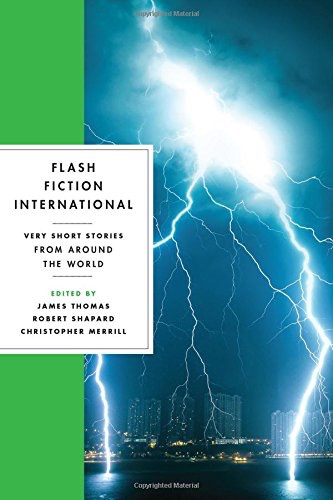
I had the pleasure of reading and reviewing the newest edition of Flash Fiction anthologies, Flash Fiction International, Very Short Stories from Around the World by Robert Shapard, James Thomas, and Christopher Merrill. You can find my article at  the Bartleby Snopes Blog.

Find out more about Christopher Merrill.

Other books by Robert Shapard, James Thomas, and others include:  
Mar 1, 2010
by Robert Shapard and James Thomas
Jan 17, 2007

by Robert Shapard and James Thomas
Aug 17, 2006
by Robert Shapard and James Thomas
Sudden Short Fiction: American Short-Short Stories
July 7, 1992
by Robert Shapard
by Tom Hazuka, Denise Thomas and James Thomas
Oct 17, 1989
by Robert Shapard and James Thomas
Dec 31, 1983
by Robert Shapard and James Thomas

Beyond the First Goal

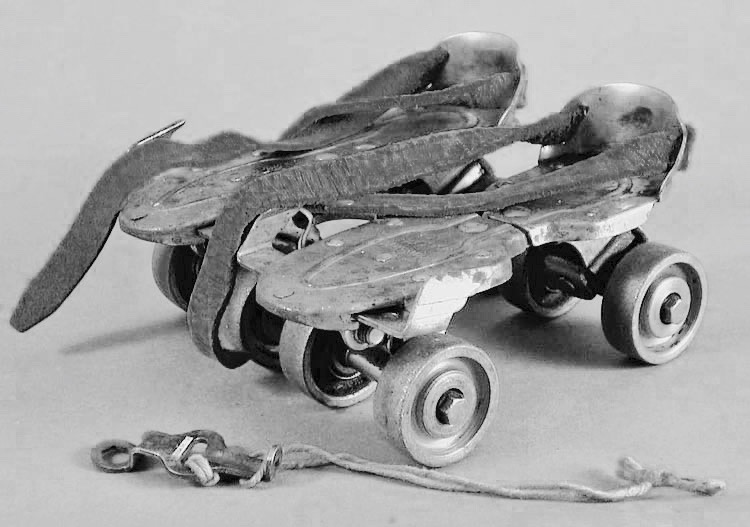
When we are new at something, sometimes all we can think about is that first goal.  Learning to skate doesn’t look that hard.  If  we can stay upright, feet on the sidewalk (or ice), body vertical, we’ll soon be doing figure eights and sailing backwards. The same goes for writing.  When we sit down at the keyboard to write a story, we figure if  we can get enough words on the screen, we’ll have a tale worth telling. 

In some ways, we need this attitude to get started.  If we knew we’d fall on our asses for the first twelve times we skated over a twig, a crack, our sister’s Barbie doll, we probably wouldn’t try.  We need that initial belief in ourselves to put the skates on in the first place.  The same is true for writing.  We picture ourselves  clacking away at the computer keys with lines of type building and building.  It is the only way to deal with our initial fear.
However, how we handle the results of those first attempts can dictate success or failure.  For many, a bruised butt and bloodied knees spell defeat.  “I don’t want to do this!  This is too hard” and they head inside to watch Saturday morning cartoons.  Others wear their scabs like badges of honor and take a moment to reassess their goals.  They realize they can’t jump from standing upright on skates to skimming down Devil Hill, carving eights in the liqour store parking lot, floating backward to the awe of the younger kids without blood and guts.
The same is true with writing.  Although there are those who have a natural talent for the written word can sit down and write it without too much angst.  But these are rare cases.  Most of us may write a story that has many strong elements, but as a whole it doesn’t work.  Not yet.  And we need to reassess and learn the craft.
This is the make-or-break moment for most writers, the moment of looking at a piece of writing as it might be read by others, readers who do not live in the head of that writer.  The ability to look at one’s own work with a critical eye does not come easily.  It is a skill that is learned with practice, patience, and awareness of what works and what doesn’t.  An expertise that evolves over time. 
Just as a young roller skater learns the sidewalk is smoother than asphalt, a writer learns clarity is more important that an obscure turn of phrase, but to do this, both must be willing to see beyond their first goals.  They must accept the reality that becoming good at something requires the understanding that learning is a process, that the large goal must be broken down into smaller goals because everything is more complex than we first perceive. 
There is a difference in skating and writing.  We teach different muscles to work harmoniously together.  In skating we train our bodies and our brain too, but most it’s about legs and balance and reaction.  In writing we train our brains–and our hearts. 
How do we train our brains to write?  We set up mini-goals, lots of them, beyond our first goal.  Here are a few I believe in, though sometimes I find it hard to actually do them all!
Mini-Goals for Each Story
  • Create content by taking notes, brain-storming, writing a “shit” draft
  • Write a draft
  • Do research to understand the world you’ve created or the personalities
  • Think about story structure
  • Make certain everything in a story serves a purpose (especially in flash)
  • Be willing to delete that which doesn’t fit into the structure
  • Go through the story to improve the language
  • Make certain everything that needs to be clear is clear
  • Make certain that verbs are active, that nouns are specific
  • Proof-read carefully
  • Set it aside (this is one of the hardest mini-goals because usually at this stage we are sooooooo excited about what we’ve created, we can’t wait to send it out)
  • Reread and make changes after it’s been set aside
  • Ask a trusted reader to read it (trusted: gentle, supportive, yet honest, honest, honest)
  • Decide what notes you agree with and what you don’t and make edits
  • Set aside again, at least an hour or two so that when you proof-read for the final time, you have enough distance to find now what your eye skipped over before
  • Send out and cross fingers
Mini-Goals for Personal Growth
  • Read widely and deeply
  • Talk to others about writing
  • Be open-minded
  • Try new genres
  • Be a mentor
 None of this is necessary if a writer is writing only for himself.   Just as skating up and down the block might make one child happy, putting together a story for fun can work for the “Sunday author.”  But if your goal is roller-derby, you’d better to be willing to work.  And if you want to be published?  Guess what…
Republished here from an article by Gay Degani at Flash Fiction Chronicles, publisheNov 22, 2009 

Hint Fiction: Three


The Landing

Silhouettes sway under a hunter’s moon. Crouching in muck, Dad whispers, “Humans, returning after 40 years.” I ask, “What do they want?” He frowns. “Us.”

You Thought You Could Crush Her

Day lifts its tattered curtain; wind rips through wheat. Arms in air, nightgown clinging, she’s a dervish in the field, her rubied ax held high.
Rest Stop on the I-10

I snatch the baby and sprint, asphalt burning my naked feet, into the willows. The mother wails. The father bellows. Too late. She’s mine now.

Found in a virtual drawer: a poem from someone who doesn’t poet

Raw Silk

We tromped in deep grass, bumping shoulders, walking dogs.

You had the Frisbee, I carried the plastic bag the onions came in.
From your pocket you drew a mustard sandwich, 
We drank from the fountain built into a stele of stones.
In fall the trees wore crimson bonnets, yellow too, and orange.
The terrier tormented leafy piles, the poodle gnawed on sticks.
You caught your scarf around my neck, and pulled me close.
I searched the field for a private place because the shack was locked.
Snow made the land a fleecy bed, quilted by the prints of deer. 
Dogs dashed from corner to corner, tearing through the sheet of white.
Your letter crumpled in my ungloved hand, I wept,
The pond stiff with polished diamonds in the frozen sun.
Now, the swath of brown stretches out like silk, beauty in monotony.
The poodle chases crows, trots back to me with soulful eyes.
Ducks seam the pond, shaking their wings, as if to wake the spring.
Me, I scuff along beneath the pale of cloud. Your scarf is all that’s left.

Fiction from the Archives: "SPOTTED & SOUGHT"

Fantasy written by Gay Degani, published in 10 Flash Quarterly, January 2010

Spotted & Sought

from The Chronicle Personals: 
SPOTTED & SOUGHT / Sunday, January 3
Friday night at the Mobil station.
You: hot guy in scruffy beard & flannel shirt caught my eye, a forty in one hand, a pack of Marlborough’s in the other. Me: pumping unleaded into my mama’s rusty Olds Cutlass.
You grinned and said someone with a chassis like mine deserved a better ride. Then you climbed into a 1969 VW bug. But STILL I liked your chassis just fine.
Wanna meet? When: Monday at 10 P.M. Where: Mobil station. You: Man. Me: Woman.
from The Chronicle Personals: 
SPOTTED & SOUGHT / Wednesday, January 6
You were a no show, mr. scruffy & flannel.
You: hot guy at Mobil station on Friday night. Me: girl with nice chassis in Oldsmobile.
I waited outside the gas station in the Cutlass for an hour. Two forties and a carton of cigs. WTF, BUG-MAN. I was hoping you’d show up and we could put on some Keith Urban and you could rock my world.
But maybe you don’t read the personals or maybe you didn’t read them on Sunday morning. Maybe you had one helluva hangover and couldn’t crawl out of bed. Or maybe you’d gotten sidetracked by some other woman with a nice chassis.
Irregardless, I’m willing to give you another chance because you gave me such a promising smile and your eyes have that little sparkle I like. When: Wednesday at 10 P.M. Where: Mobil station. You: Man. Me: Woman.
from The Chronicle Personals: 
SPOTTED & SOUGHT / Friday, January 8
How the hell was I supposed to know you have a girlfriend?
You: hot guy from the Mobil Station. Me: girl with 4 slit tires on her mom’s Olds.
You could’ve taken out a personal ad and told me you were spoken for. You didn’t have to send your Amazon girl friend after me. She is NOT an attractive woman, hot guy. Built like a fucking bear. And she’s strong.
There I was sitting up in the front seat, flipping through People Magazine, when suddenly I thought there was a giant earthquake going on.
I thought she’d roll my mom’s car right into the ditch. Thank goodness I locked my doors, because she pounded and smacked at the glass and I was so scared I peed my pants, thinking she’d pick up a rock and smash my windows.
Guess she isn’t that bright.
She eventually got tired of watching me panic and took off in your VW. I wanted to get the hell out of there, too, but that’s when I realized she’d slit my tires. I was not happy about spending the night out there, a Mobil station being devoid of magic of any kind, but I’m willing to forgive you.
I know you wouldn’t be with that awful woman if you weren’t scared to death, so here’s the plan. When: Saturday night at 12 A.M. Where: At the crossroads rest stop on I-13. You: Man who needs help. Me: Woman willing to give it.
Don’t let the bitch read this!
from  The Chronicle Personals: 
SPOTTED & SOUGHT / Sunday, January 10
I gave you plenty of chances, didn’t I?
You: scruffy guy from the Mobil Station. Me: girl with no regrets.
I suppose I should have been a little more up FRONT with you from the beginning, but sometimes I get a yearning to be like normal girls, who hang out at Curly’s on Saturday night, pick up hot guys, and hook up in the cabs of their trucks.
And that’s where I was going when you showed up on my radar with your scraggly beard and Bud Lights. I thought, there he is right there, that one.
After the incident at the Mobil station—the one with your gorilla girlfriend—I decided I needed to tap into a little bit of magic I have by way of my mom, she of the Oldsmobile Cutlass. And my father too. Between the two of them, it’s quite a gene pool, but only at the crossroads.
I was hoping none of it would matter. You would read my note and see what a forgiving heart I have and remembering my sweet little chassis, you’d come alone and we could shake things up. But you didn’t.
The two of you were like clowns climbing out of that VW after you parked at the rest stop. You both put your hands on your hips and glanced around until she spied me. Then the two of you came after me. Big mistake.
I stood exactly in the center where the two roads intersect, where my power is the greatest, but you didn’t have a clue and strode forward with purpose. You were not, I could see, a prisoner of this woman. You were her equal, her consort, her savage lover.
I realized I’d been wrong once again. You were not the one to rock my world. So with a few enchanted words from me, the black asphalt split open and only for a moment did you both look at me with anything other than anger and dismissal.
A horrified comprehension crossed your faces as you slithered into the earth. Sorry about that. You: Man gone to hell with Amazon bride. Me: Woman still looking.
from The Chronicle Personals: 
SPOTTED & SOUGHT / Wednesday January 13
Cute redhead jogging north in sweats.
You: spotted running at dusk on Monday in front of Curly’s Bar and Grill. You waved and said, “How you doing?” Me: climbing out of my mom’s Olds Cutlass, four brand new tires.
copyright January 2010 by Gay Degani

One Writer’s Awakening: Andre Dubus III

I’m at the point in Andre Dubus III’s memoir Townie when he describes that moment in his life when he had his first very vivid realization he wanted to write.  No, wait, that’s not what he says.  He says, he didn’t want to write, he had to write.

In this part of his remembering, he has this girlfriend – one of his father’s writing students.  He is losing her to another man, but he’s not all that certain he cares.  He stops by her dorm room.  She not there, but a story by the other man sits on her desk.  He reads it and is carried away by the power of the story.  He notices its precise language, specific details, as well as the emotion created by the text, the empathy he feels.

It is an awakening.  Partly because the character in this other man’s story is similar to himself: the diner busboy-dishwasher, for example, Dubus had been one.  But it wasn’t only that. It was that the story illustrated a moment of consciousness of conscience that Dubus had been encountering in his own  life.  Not just the awareness of the wrongs in the world which he’d been witnessing and going through since childhood, but the awareness that writing about these wrongs might carry weight and power.

Dubus describes a drive down the highway through a forest and how, after reading this story from his would-be rival, he finally sees trees as they really are: each one different and separate rather than an unrelenting mass of green. That same day, instead of meeting a friend for their usual workout, he sits down and writes a story.

What’s interesting to me is that Dubus’s father was Andre Dubus II, a man who wrote short stories and taught writing most of his life, a published, well-respected author.  Children often follow in the footsteps of the parents, doctors have children who become doctors, lawyers have children who go into law, teachers beget teachers and so on.  But Andre Three grew up learning to deal with his problems with his fist. Often picked on as a kid, his solution was to make himself as strong and formidable as he could through weight-lifting and boxing.  His world-view was one of danger, conflict, injustice, and literally beating an aggressor to the punch.   He didn’t understand that words, too, could change how people think and behave and can do so on a much larger stage than what the towns along the Merrimac River represent.

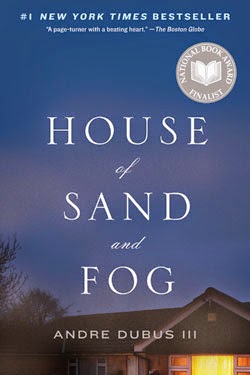
I came to Andre Dubus III through his novel House of Sand and Fog. Since most of the reading I do these days must include CDs and earphones, this book just happened to be on the library’s “What’s New” shelf.  I found it a revelation, how Dubus could bring his two antagonists so close to recognizing each other as real human beings – and thereby bring them to an understanding – and then how he snatches that opportunity from them.  This novel illustrates how underneath we are all human with human needs, and how our anger and prejudice keep us from recognizing ourselves in others.

Dubus’s memoir not only reveals  his first awareness of his need to write, but his source material.  As with most writers who draw from their own emotions, his stories are rooted in his own life, and reading Townie is like rereading and treasuring HOSAF all over again as well as The Garden of Last Days, and the stories in Dirty Love.

Reawakening to life and its many details, including the complex contradictions in our humanity, is what hooks so many writers.  To write is to see the world in high relief and to relive it through the lives of the people we create. This lesson is never more clear than it is in Townie.