JOURNEY TO PLANET WRITE: Why I Felt Jealous of a Twelve-Year-Old

by Sam Snoek-Brown


I knew almost as soon as I could write that I would become a writer. In my childhood, I put a schedule on my door insisting on undisturbed writing time each day. I had my parents custom-build a desk into the nook of my closet, with a small bookshelf installed above it, a gooseneck lamp, a door I could close—barely into a double-digit age, I had my own writing space. I wrote my first book by age twelve, won writing contests, and had only to wait for success to find me.
None of that is true. Or, it is true, but not of me. Working for a city newspaper during my college years in Texas, I was assigned to report on the local library’s youth writing competition, and all those wonderful, writerly details—the schedule, the desk in the closet, the book, the ambition—are from the profile I wrote about the young girl who won that year.
In my actual story, my parents gave me a desk, but I used my pencils and ballpoint pens to stipple the surface until it looked less like wood than like pumice. In second grade, I spent hours alone in my room writing pages and pages of material, but it wasn’t creative—my mother got tired of forbidding me my misadventures and told me to copy the definition of “No” 100 times, unaware that “No” comprised a full three pages in our family dictionary, two columns each page, in tiny print. I didn’t write a book by age twelve, but I did invent lyrics to absurdist songs about defecation and once adapted “On Top of Spaghetti” as a bawdy sex lyric.

In other words, I wasn’t born to be a writer. Or at least, I didn’t behave like one when I was a kid. My father wrote scathing editorials and short satirical pieces, my paternal grandfather was a natural storyteller full of a ship captain’s sea yarns, my maternal grandmother was a closet memoirist—but I was just a kid. There was nothing magical about my upbringing, no prophetic sign that I would take up the pen and the keyboard and become a writer.

Though there was my seventh-grade English class.
My middle school had begun a program of weekly “sustained silent reading” periods, and my English teacher, Mrs. Hoffmann, added a second period of “sustained silent writing.” We were allowed to write whatever we wanted—journal entries, rap lyrics, love poems—and I decided to write a novel.
I’d been reading a lot of my father’s action novels and was just beginning to discover Stephen King, and I realized that when I tried to predict what might happen next in whatever novel I was reading, I wasn’t hoping to decipher the story, I was wishing the story had gone differently—I was inventing stories of my own. I was rewriting stories as I wanted to read them. And right around the time I began to think that if Don Pendleton could knock out half a dozen Mack Bolan/The Executioner novels every year and sell millions of books, then surely I could, too, my English teacher gave me the gift of designated, disciplined writing time.
My first novel was about a teenager whose parents were killed by an evil crime boss surrounded by ninjas; in his sorrow and anger, the teenager devotes himself to martial arts and fights his way through the ranks of minions to confront the crime boss.
I eventually gave up on that novel, but Mrs. Hoffmann—who, after school, had become my first writing mentor—insisted I keep telling stories. My father signed me up for a writing workshop on how to publish (neither of us knew until I arrived that the workshop was for romance novelists, but I eagerly took notes on plot outlines and novel advances). I developed a sci-fi series about an alien race and invented a religion and a language. I began writing horror, stories about necrophiliacs and occult serial killers and mutated warriors held prisoner by secretive government agencies. I found Anne Rice and spent most of high school and college toiling over a melodramatic vampire novel.
Which is to say that by the time I wrote that newspaper article on the young library contest winner, I already was a writer. Yet I still hesitated to call myself one, and I marveled at this kid living a literary life I still felt outside of.
When I started that novel back in middle school, I began imagining the origin story for my writing career—publication as a teenager, phenom status, appearances on talk shows—and ten years later, working on that article about the kid writer, I began to wonder if I’d missed my chance. My origin story was too long delayed. I had wasted all those years poking holes in my writing desk and making up feces songs instead of becoming the writer I dreamed I ought to be.
In some parallel universe, there is a version of me that did publish as a teen and go on talk shows. He is telling the origin story I wrote for him decades ago. In another universe, there is a version of me who has never published. He is still concocting new origin stories, new fantasies. They will go into a password-protected file where no one will read them except that other Sam, late at night, only the computer screen and his fantasies alight in empty room.  In yet another universe—this one—there is me, many writerly milestones behind me but still sending ahead invented milestones to reach for (an advance on a book deal, film rights, career stability). And here I am, revising my childhood origin story, realizing that I started out as a writer in exactly the way I ought to: by daydreaming, by writing the stories I wanted to read, by crafting the story of myself, by always trying to make it a better story.

_________________________________________


Samuel Snoek-Brown teaches writing in the Pacific Northwest. His work has appeared in dozens of literary journals, and he serves as production editor for Jersey Devil Press. He’s the author of the chapbooks Box Cutters (sunnyoutside 2013) and the forthcoming Where There Is Ruin (Red Bird Chapbooks 2016), the forthcoming novella In the Pulse There Lies Conviction (Blue Skirt Press 2016), and the historical novel Hagridden (Columbus Press 2014), for which he received a 2013 Oregon Literary Fellowship. He is online on Facebook, Twitter, and at snoekbrown.com.
JOURNEY TO PLANET WRITE: Life Writes Itself

by Levi Andrew Noe

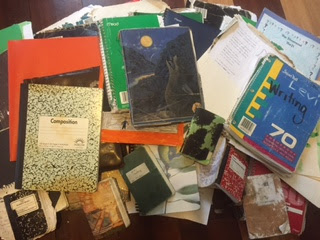
Most of my collected notebooks from age 7-27


It all started in kindergarten with my breakthrough story “The Bose Busbros,” (The Bossy Brothers).  It was my first typed draft of a semi-autobiographical tale. It chronicled a young boy whose elder brothers refused his right to hot chocolate and sent him to his room.


You could say I was always a writer. From the moment I learned how to shape words into somewhat cohesive sentences, I was telling tales, filling notebooks, and frustrating teachers with my illegible handwriting.

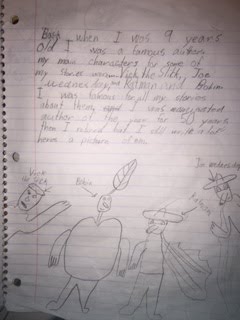
I haven’t deviated much from my hopes and dreams as a 9-year-old, as recorded in the notebook entry below left. Though experience has taught me those lovely lessons like cynicism, world-weariness, and the plight of the starving artist, my deepest hopes still place me as a would be “famous author.” I abandoned the visual arts, however, just after elementary school.

Middle school served to squash most of my passions and creative pursuits, as public school and puberty are so infamous for achieving. But in high school a new art form sowed its seeds in me: music. I was in a couple bands including pop punk, emo and/or hardcore, called Knester, Sell Out Boy, and A Call to Arms.  As arrhythmic and cacophonous as it was, in music the spark of artistic creation was again re-ignited and reimagined.

I was the bass player and backup screamer in A Call to Arms. We played house shows, dingy cafes and friends’ birthday parties. We were terrible, beyond offensively awful, but we played our angsty hearts out. Through music a new writing style emerged for me in the form of poetry. It was not my calling to play music, but music fuels, inspires, and moves me deeply, and I believe it permeates my writing to this day.

My college years came and I continued to grow, both as a writer and person. In those formative times I dove into academic writing right alongside dumpsters, beer bongs, and the bohemian lifestyle. Through it all, I found a deep affinity for every genre of writing. I graduated with a B.A. in English Writing and a minor in Holistic Health, but not before I took a semester off to hitchhike up and down the West Coast, sleep in bushes on the side of the road, and spend a few month at a yoga community in the redwoods of California.

It was those days, my wandering, unrestrained, wide-eyed early twenties in a perpetual existential crisis that formed the bedrock of who I am today, in my writing and in my personal philosophy. Post college, I continued in my voyage of discovery, but in a slightly more responsible way. I spent a summer in Ketchikan, Alaska working at a coffee shop, teaching yoga, picking berries, catching salmon and writing all the while. The jaw-dropping, infinitely astounding natural world is still probably the greatest muse for my writing.

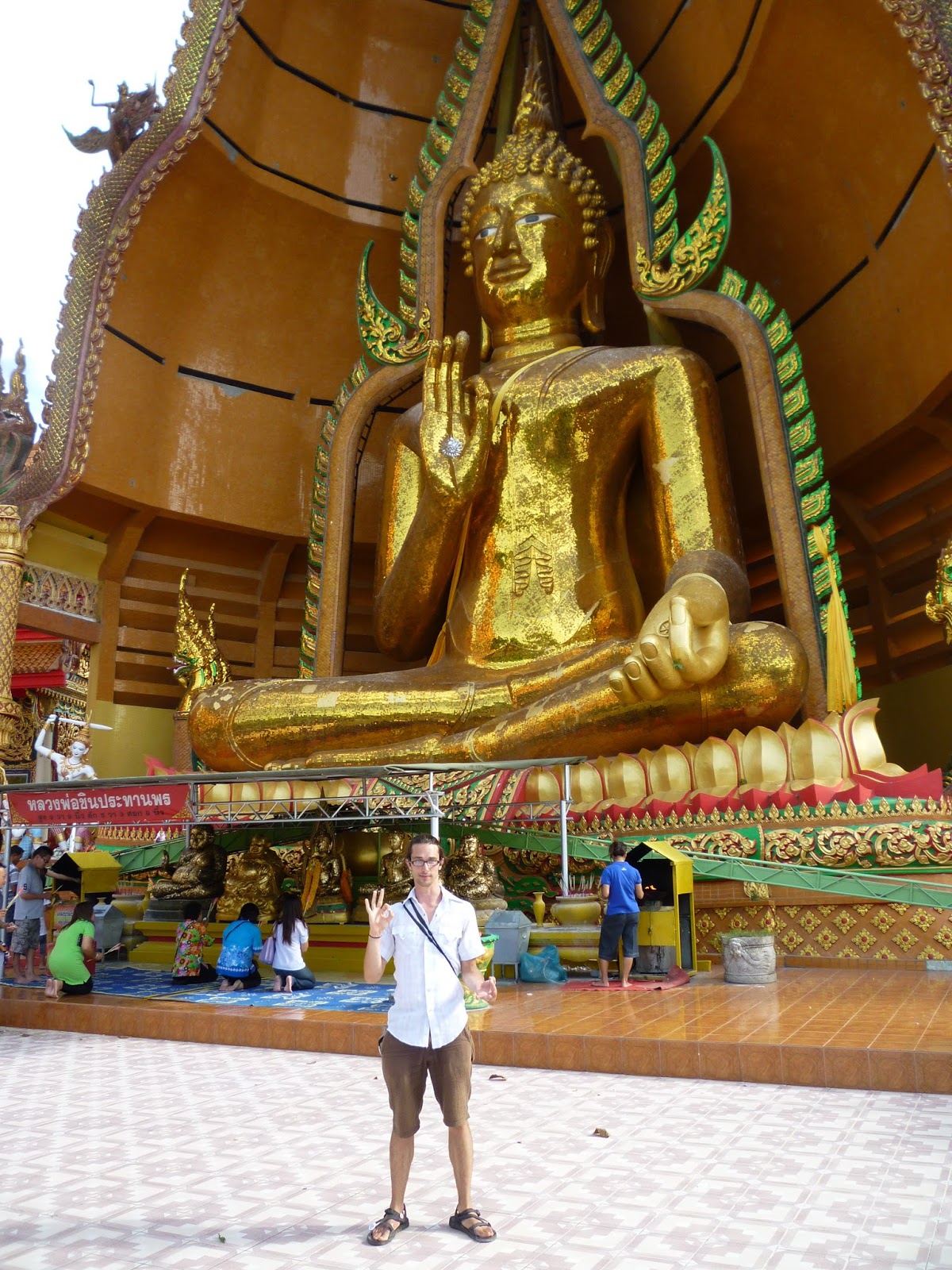
In 2011, just after the great earthquake and tsunami hit Japan, I decided it was a good ideato go teach English there, just about 150 miles from Fukushima. Japan is a place so full of wonder and weirdness, tradition and contradiction. It certainly inspired a new era of writing for me. I began my first novel (still unfinished), as well as many pieces of every genre which I have placed into various manuscript collections (waiting for their time), and there I continued and deepened my love affair with haiku.

Following teaching in Japan, I took the long way home. I traveled through southern Japan, then flew to Bangkok, Thailand. By train, bus, van, boat, tuk-tuk, and motorbike, I made the loop through Thailand, Laos, and Cambodia. I spent a few months in SE Asia and it was no big deal, just totally changed me forever and was one of the most important periods of time in my life thus far.  Then I spent 1 ½ months in India, got my yoga certification in Rishikesh, swam in the Ganges (the clean(er) part), and saw about one thousandth of what I wanted to see of the Himalayas. Needless to say, this period of my life carved its story through every aspect of my being.

But home’s call is always strongest, and always pulls at the heart the hardest. I returned to Denver, Colorado as a new, worldly-wise, battle hardened, adult(ish) person.  I came with goals, with plans, with a new perspective, and some sense of what I came here to do in this life.

Since 2013 I have started and liquidated four businesses and conceived of dozens of others, one is still currently running and semi-viable. This business is Tall Tales Yoga, the merging of my three greatest passions, teaching yoga to children through storytelling. In addition, I have self-published four children’s books, and had a couple dozen short stories, poems, articles, flash fiction, creative non-fiction pieces published. I started the podcast Rocky Mountain Revival as another merging of some of my greatest loves: literature, music, and podcasts. To top it off, I’ll be getting married in July to a woman who is as perfect as any creature on this earth can be.

Life has had its ups and downs, but through it all, writing has always been my salvation, my torment, my obsession, and the most constant of all my psychoses. So, now that I think about i. Life has been pretty good to me, though I don’t always feel that way or appreciate the opportunities and experiences I have been given. I still don’t feel like I’ve “made it,” whatever that means. But I’m blessed in my own relative ways. And whether or not I become a famous author, a wealthy entrepreneur, or a successful human being, at least I can say I’ve done some shit, and I’ve given it my damnedest. Thirty might feel like a long life subjectively, but I know what those elder and wiser than me would say: “You don’t know shit yet.”


____________________________________


Levi Andrew Noe was born and raised in Denver, CO. He is a writer, a yogi, an entrepreneur, and an amateur oneironaut. Levi won first prize in 2011 and 2013 in Spirit First’s international poetry competition. His most recent or forthcoming works are in Ink, Sweat & Tears, Connotation Press, Boston Literary Magazine, Crack the Spine, Eunoia Review, Scrutiny Journal, and many others. He is the editor in chief and founder of the podcast Rocky Mountain Revival, Audio Art Journal.
Twitter: @LeviAndrewNoe, @RockyMtnRevival

JOURNEY TO PLANET WRITE: Eight Words

by Robert P. Kaye

How did Robert P. Kaye begin passing as a Writer? In eight words. In slow motion.
The story requires build up, narrative arc, rising tension. A hero’s journey. All that crap. Start with a character we’ll call Bob.
Even as a child, Bob wasted a shitload of time. Picture a large, lumpy, slow kid. An excessive number of years pass until he even learns how to read, but eventually he discovers the escape offered by stories. He buries his nose in books, to the detriment of more useful skills like math. Spelling mystifies him. Maybe he’s autistic or dyslexic, but those terms haven’t been invented yet. Let’s call him unprecocious. Still, he enjoys writing stories because that’s the only thing he does well. Despite all odds, he arrives at college, switching from science to English, because he’s slow at math.  
After college he gets a job, then something called a “career” (synonym for vast wasteland). He writes a story every couple of years. In the days of manual typewriters, another draft means hours of frustration and yards of correction tape. Submitting requires photocopying and going someplace called a Post Office. Mostly he doesn’t write. Getting started is hard.
Flash forward to the miracles of word processing, spellcheck, the World Wide Web all shiny and new. In 1999, Salonmagazine, one of the hot new web publications, runs a contest for “Technology Epigrams for the Internet Age.” Middle-aged Bob submits a jokey one liner:
A fool and his money are soon automated.
He wins the contest. Publication, sweet as Mad Dog 20/20 on the tongue of a latent alcoholic. Addictive. Transformative.
The need for more compels Middle-aged Bob to get up early and fill blank pages, revising the inevitable drivel. He prints out (word processing!) the results and sends off stories. Checks the mail every day for those stamped self-addressed envelopes, hoping for scrawled notes of encouragement on form rejections, saving those. Finally, a story accepted for publication, something started twenty years prior. Then another online in Carve (electronic subs!). He joins a writing group, grinds out pages, adopts the author name Robert P. Kaye because of Google.
Eventually the stories come easier. Eventually the work becomes necessary as breathing.
Eventually, writing every day becomes a habit.
He does okay. In spite of a really slow start. In spite of wasting all that time.  Now it’s just a race against encroaching senility.
That’s how that happened.
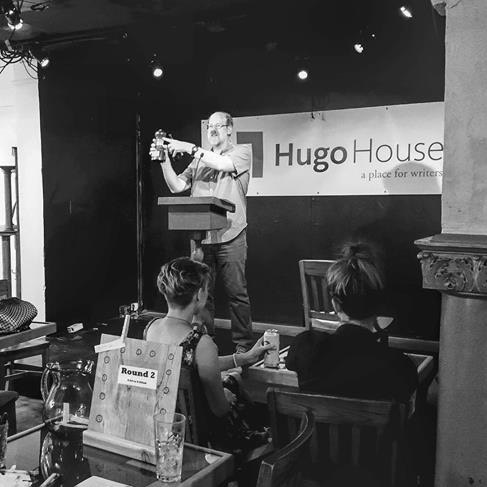
I’ve run an open mic reading at Hugo House in Seattle for almost three years. Works in Progress happens twice a month. We pack the room and cram thirty plus readers into two and a half hours. I exhort aspiring writers to get better by writing their brains out, reading the publications where they want to publish, submitting their work, risking rejection, celebrating any shred of success. Quite a few do so. Quite a few are getting published. Some are twenty years old and have more Pushcart nominations than I do. One just had an article in the New York Times. Yes, I envy them a little when this happens and wish I’d started younger and done the work. Oh well.
Word processing, electronic subs, and thousands of lit mags that didn’t exist in the days before MFA programs exploded making this writer thing so much easier. So if you’re reading this for clues on how to become a Writer, guess what, there is no secret. Stop wasting time wringing your hands. Be relentless. Just sit down and fucking do it.
Get at least eight words published. Rinse and repeat. Even the slow kids can do that.
 ____________________________________

Robert P. Kaye’s stories have appeared recently in Hobart, Juked, the Dr. T. J. Eckleburg Review, Beecher’s and elsewhere. You can see the whole damned list at www.RobertPKaye.com. His chapbook Typewriter for a Superior Alphabet is published by Alice Blue Press but you can’t buy it anymore because it’s sold out. Bob runs the Works in Progress reading at Hugo House and co-founded the mysterious Seattle Fiction Federation.

JOURNEY TO PLANET WRITE: How A Girl Became A Writer According To Nigel Watt’s “Eight-Point Story Arc”

by Audra Kerr Brown

1. STASIS


There once was a girl born amongst stories.  Her mother read aloud while breastfeeding, cooed lullabies while hanging laundry.  The older sister whispered fairy tales into the girl’s velvety ears. Grandfather bounced her on his knee, telling gothic stories of doomed salesmen and naughty children eaten by wolves.

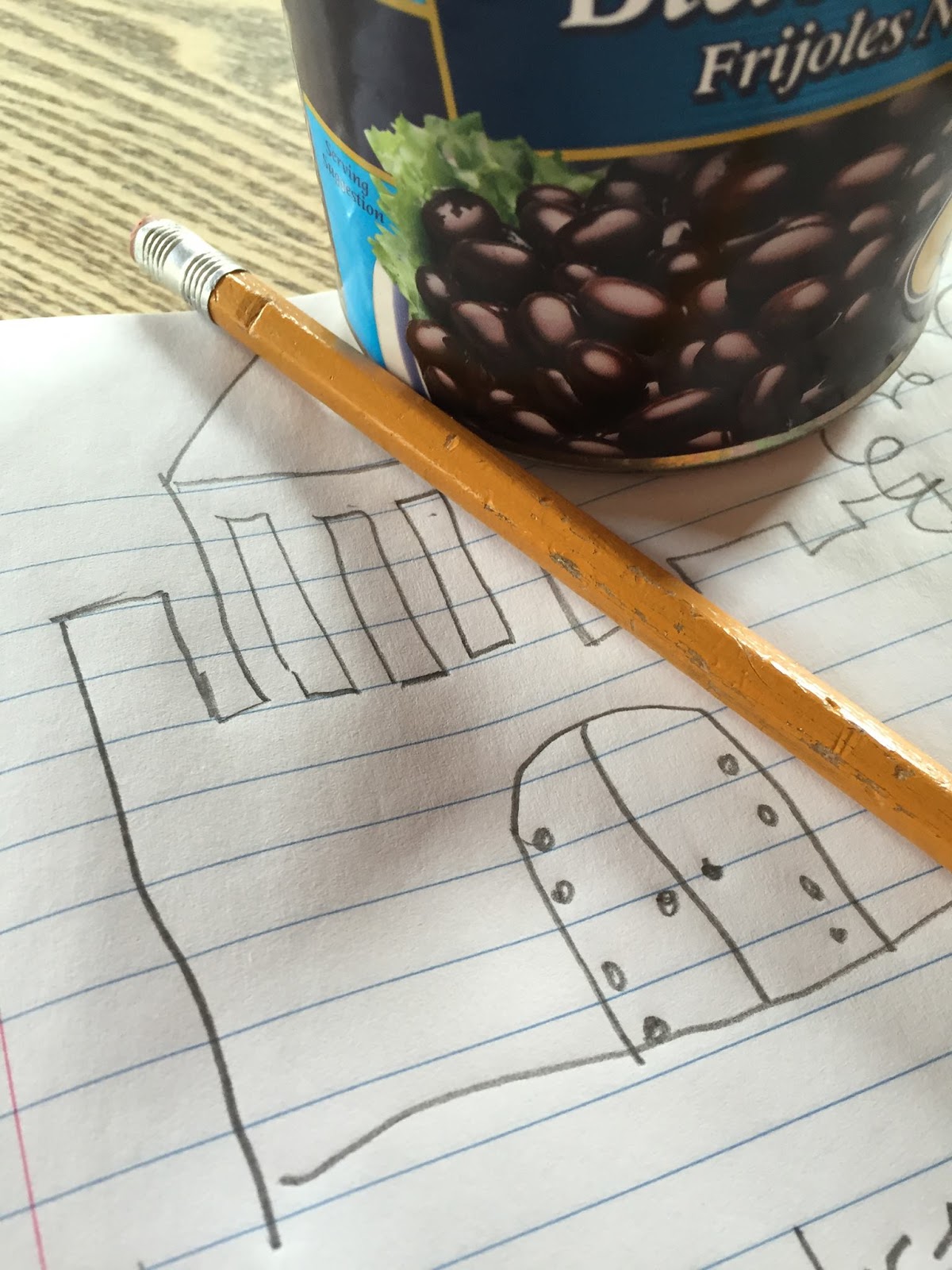
Before she could write for herself, the girl brought her mother a pad of paper and a pencil and dictated a story about a poor family and a can of beans.

2. TRIGGER

She found a best friend who also liked stories. They read time-travel romance novels and emulated the heroines by swooning on cue, fashioning their hair into wind-tousled tendrils, and cursing in 19thcentury vernacular. Damnable rogue! Filthy clod!

The girl stared at the author photos on the back of book jackets and yearned to be one of them. She especially wanted to look like Jackie Collins.

3. THE QUEST

For a class assignment on creative writing, the girl wrote a story about a bottomless pit and fuzzy creatures called Skupskins (this was soon after she’d discovered Stephen King). It had a better plot than the bean story of her youth, but her teachers thought it too strange. This negative feedback, however, did not deter the girl. She liked the feeling of creating stories, the pleasurable release that came with connecting words, so she continued.

Her parents bought her a desk and a word processor. The older sister offered constructive criticism. The girl’s stories improved.

Teachers eventually noticed. She was given awards, cash prizes. One teacher, who was especially encouraging to the girl, warned her not to let life get in the way of writing. The girl swore that it wouldn’t.  Not ever.

She borrowed her mother’s lipstick, looked in the mirror, practiced her book jacket pose.

The girl wrote, wrote, wrote, wrote, wrote.

4. SURPRISE

During the county fair, the girl met a boy at a 4-H food stand. A string of drive-in movies, Pizza Hut dates, and proms followed. There was an exchange of class rings. Now, instead of stories, the girl’s thoughts were consumed with the boy. She filled a scrapbook with wedding ideas and honeymoon destinations. She hoped their children would have her curly hair, his cerulean eyes.

Three years later the girl and boy broke up.

5. CRITICAL CHOICE

In college the girl began to think about writing again. She had a different advisor every year, and they all advised her not to set her dreams on becoming a writer. Perhaps they – being writers themselves – had good intentions of steering her toward majors with higher post-graduation success, but she was determined. Despite their warnings, she majored in English and enrolled in every fiction writing course the school had to offer.


But the girl didn’t like her stories. She tried to please her teachers by writing in the style of Alice Munro and Ann Beattie. She wrote about failed relationships and epiphanies when she wanted to be writing gothic tales of doomed salesmen, of naughty children eaten by wolves.
The teachers didn’t appear to like her stories either.

She graduated with her undergraduate degree, yet she feared her advisors had been right.


Then the girl, now a young woman, married a wonderfully kind man who knew nothing about writing. They were happy together and soon had a baby girl of their own.

6. CLIMAX

Ten years passed.

In her mid-thirties, the woman sometimes thought about writing, but the idea seemed frivolous. Sometimes she thought about her teacher’s warning about not letting life get in the way of writing. Sometimes this made her cry.

Then the woman’s wonderfully kind husband, who knew nothing about writing, bought her laptop and encouraged her to use it. She plunked out a few words about aging farm implements longing to recapture their youth. A familiar streak of pleasure shot through her.

The woman then joined a writing group.  She attended book readings and conferences. She plunked out a few more words.

She studied form, tone, and timbre. She dissected literary journals and short-story collections, performing line-by-line autopsies in attempt to discover the heart of a good story and what makes it tick. She sutured together paragraphs with threads of Neil Gaiman, Karen Russell, and Kevin Wilson until the heart of her stories began twitching with life of their own. She plunked out more words until stories emerged, mostly strange and tragic tales of pubescent girls, which she sealed in envelopes and sent out into the world.

7. REVERSAL

After a few rejections and several edits, the story about aging farm implements was accepted. Then a story about a girl who longed for big boobs. Then another story, then another.

She wrote about the stories she overheard at family gatherings when she was a girl, tales of Civil War soldiers drinking soup out of shoes, of meandering children drowning in horse troughs. She wrote about how she traced the creases of her father’s calloused hand in church while listening about Abraham, Joseph, and Moses.

One day she finished a gothic tale about a girl and her ghost brother. She mailed the story with an application to a prestigious three-week summer program offered by her alma mater. The woman worried that the gothic tale would be passed over for stories about relationships and epiphanies, but a month later she received news of her acceptance. She had come full-circle.

8. RESOLUTION

Years passed.

The woman continued to receive both rejections and acceptances. Sometimes she thought she should have an MFA. Sometimes she still tried to write like Ann Beattie and Alice Munroe. Sometimes she looked at her writing and cried because it looked like a plotless jumble of ideas. But in the end, the pleasurable release that came with connecting words was always stronger than her insecurities. So, the woman wrote. She wrote, wrote, wrote, wrote, wrote.

Latest published story:  Royce is Not My Father at Fjords


_____________________________________


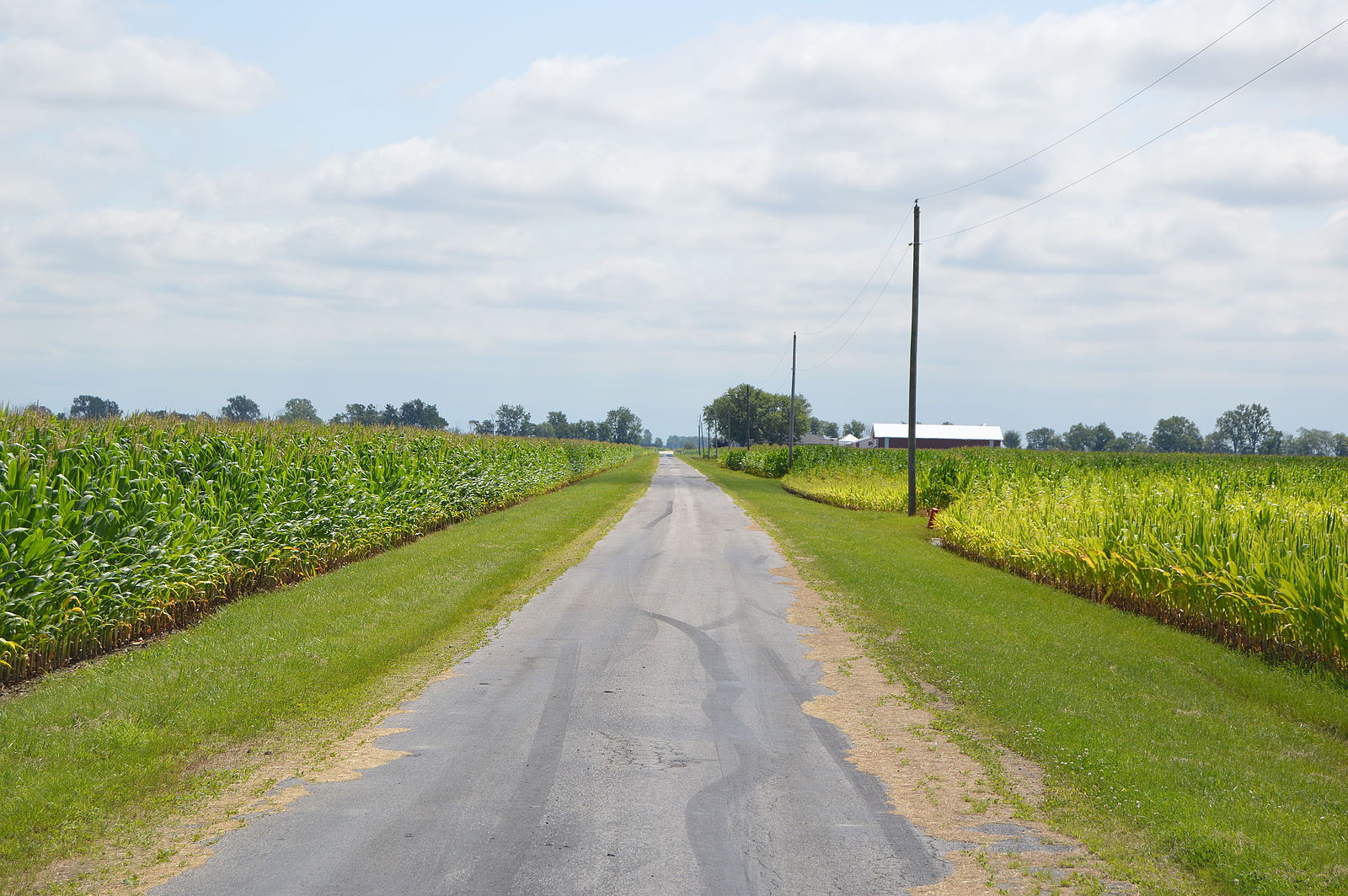
Audra Kerr Brown lives betwixt the corn and soybean fields of southeast Iowa. Her fiction can be found or is forthcoming in Fiction SoutheastCheap PopFjords (online), People Holding, Maudlin House, Popshot Magazine, and Pithead Chapel, among others.


The author doing her best Jackie Collins pose


Photo of cornfield provided by By Nyttend (Own work) [Public domain], via Wikimedia Commons


JOURNEY TO PLANET WRITE: My Road to Becoming a Flasher

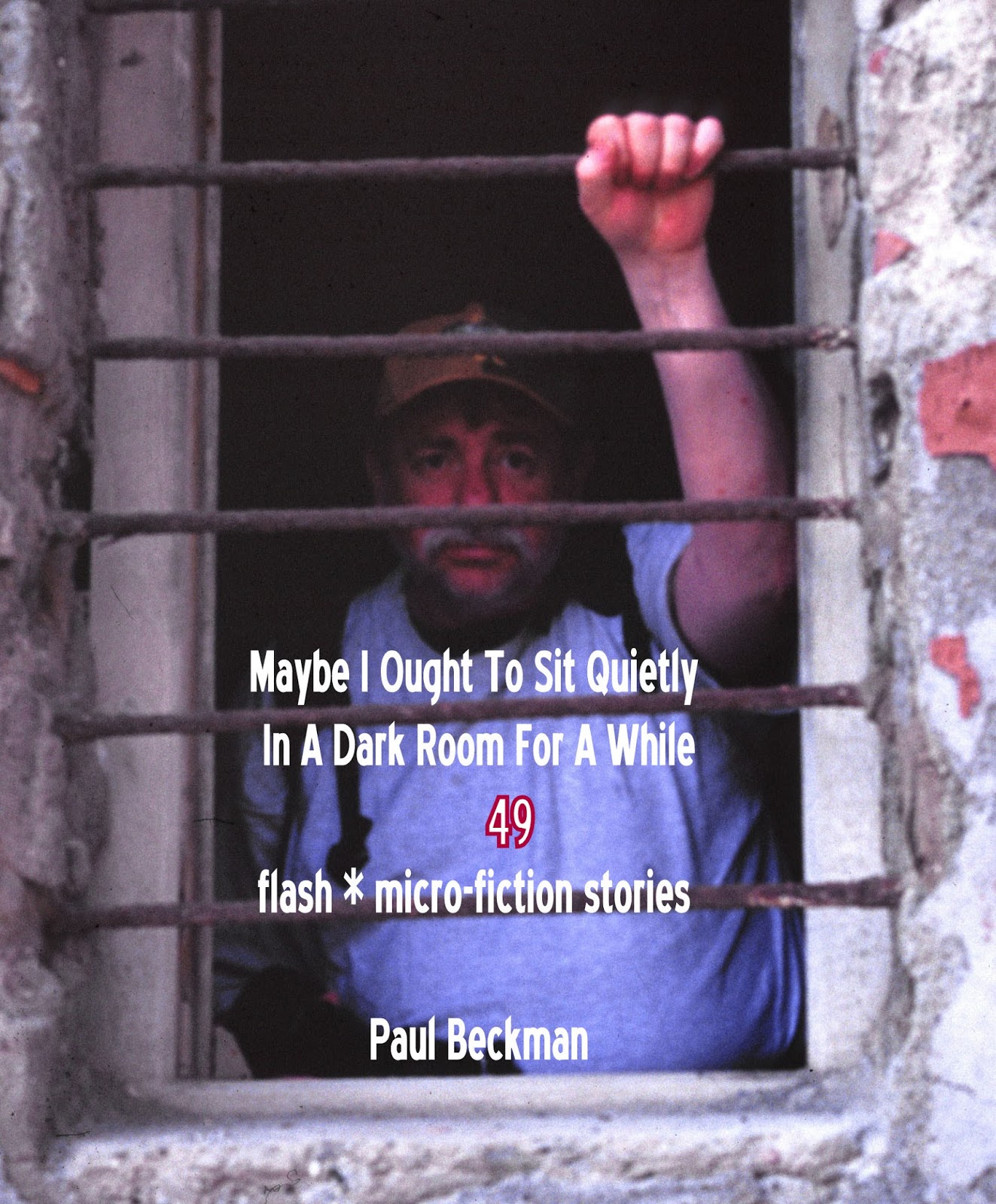
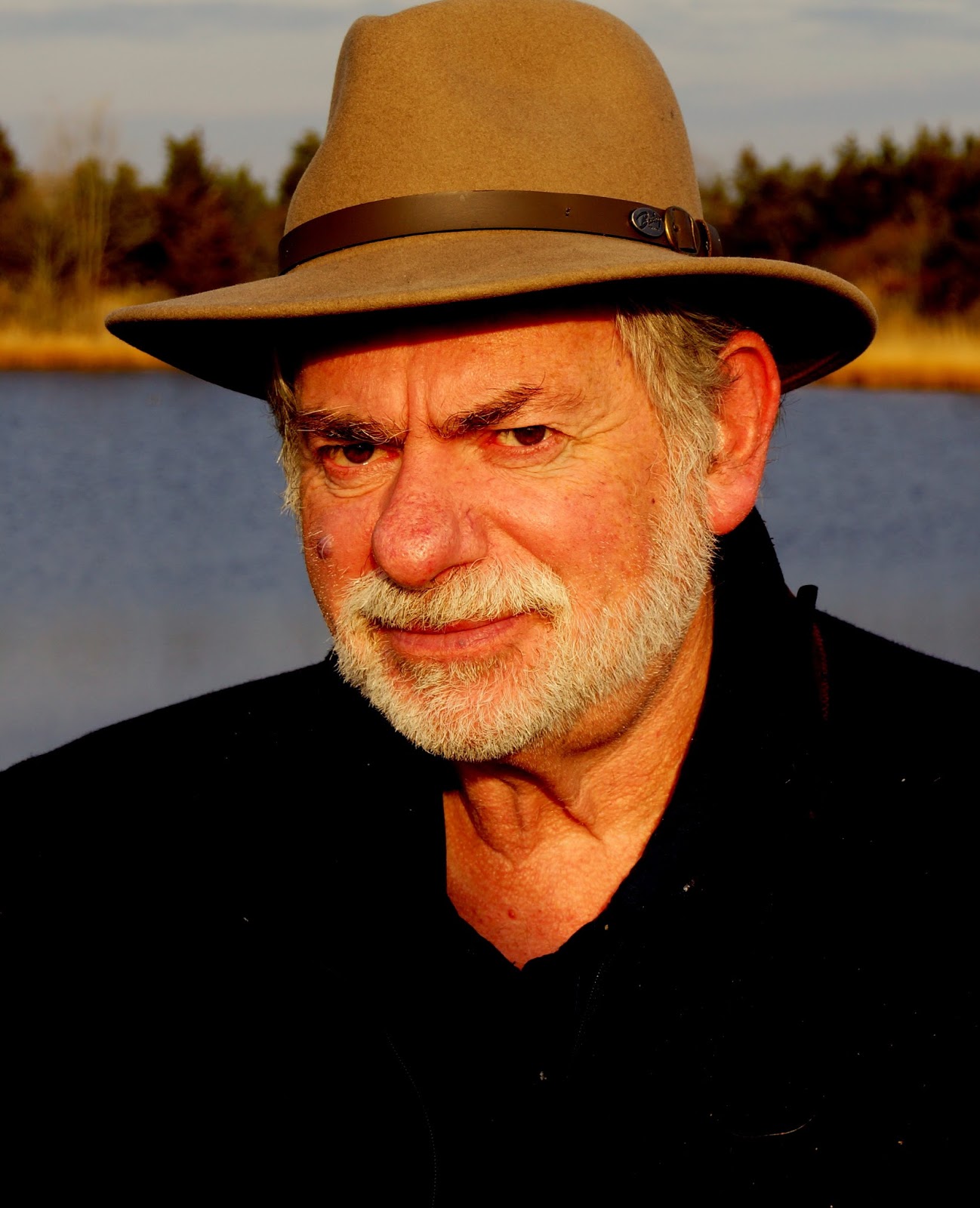
by Paul Beckman


My late older brother (by one year) was always considered the writer in the family. He wrote stories in grammar school and in high school. I spent my time being the kind of kid people write about.

After high school I joined the Air Force and volunteered for Southeast Asia. I finally got an assignment to Thailand but due to a disciplinary action they wouldn’t let me go get shot at and kept me in California. Go figure. Too bad more GIs didn’t know about Catch 23.

I’d always been a reader and in my very young days it was mostly biographies and then as I got older it was mysteries, best sellers and short stories—lots of short stories and every collection I could get my hands on. The first flash story I remember reading was a micro-fiction story by Leonard Michaels in an anthology He was a favorite novelist who became a favorite short story writer. I sent him a copy of my first book and he wrote back that he usually only laughs at his own work but in my case was making an exception. I wish I knew where I put the letter.

When Sudden Fiction came out I was hooked and told everyone about it.

In my 30’s I began thinking about writing and started writing story ideas and putting them in a cigar box and one day I tossed a new piece of writing in and the box was topped off. I decided I’m either a writer or a collector of scraps so I borrowed a beach house for a weekend and made up my mind that I would either write a story or toss the ideas in the drink. I went out on the pier with a yellow pad, red wine and my box of story ideas. I finished my first story in a little over an hour.

I bought one of those very thick books on places to have your writing published and a box of manila envelopes, stamps and sent off my story while I worked on others. Two weeks later I got an acceptance with a caveat. “Leave out the first paragraph and we’ll take your story.” No way was I going to let some guy tell me what to do with my story, so five years later it was finally published without the first paragraph.

I sent my brother some stories and asked for his opinion and I got it. “Unless you clean up your language no one’s going to publish you.” I didn’t clean up my language but started to have success with small litmags. Every year I bought a new volume of where to sell your stories and made a card system for submissions and took it very serious.

My son was in college writing poetry, a passion from his high school days, and putting out pamphlets and litmags and he offered to publish a book for me if we could agree on the stories and if I gave him final say. (I did say he was my son). He did a fine job and my first collection, Come! Meet My Family and other stories came out and I did readings and sold all of the three hundred press run. A publisher has read it and wants to publish it this year as a twenty year anniversary printing. My son, Joshua, has gone on to be a highly successful poet, translator and editor of the Wave Poetry Press.

There was a monthly reading series going on in New Haven that I started to attend and each time I went I brought a few of my stories to read at the open mic after the regulars. The problem was I couldn’t speak in front of people—I was too nervous. After months of listening to work that I thought was not as good as mine I signed up for an open mic. My hands shook, my voice quavered but I loved the applause. It took several more months of open mics before they offered me a feature spot and I lost my fear of talking in front of a group of people. It’s a good thing this took place a year before my book came out.

Also, I found that if I couldn’t get a story to work or stared at a blank paper too long if I grabbed a book and randomly looked at pages until a word struck me I could use that word and write a story. I was surprised in later years to find that other people did similar things and called them prompts.
I heard about a writer’s group in New Haven—The Anderson Street Workshop run by Alice Mattison. I had to wait for an opening but any success I’ve had stemmed from my working with Alice. She’s bright, insightful and has always been an advocate for my writing. She alternates novels and short story collections and shortly has a new book on writing coming out. I recommend everything she’s written including her New Yorker stories and various essays.

Alice ended the workshop after many years and began teaching at Bennington’s low res MFA program and convinced me it would be a good thing for my writing. It was great. I still have friends from my time there and I was thrilled to be asked back to be the alumni speaker at graduation several years after I graduated. Two of my teachers had the same agent and they sent my senior thesis (a collection of stories) to her and she called me and asked to represent me. She placed one story in Playboy within a month and then got a handful of no thanks and we parted company.

I wake up in the morning anxious to start writing and go to sleep thinking about stories written that need work. I’m in a writer’s group composed of myself and ten talented, supportive and interesting women and it’s been a lucky thing for me that I found this newly formed group and they let me in. My FB page, originally set up to see me grandchildren is now almost all writers and editors and is a big help in so many ways.

I’ve been fortunate enough to teach creative writing at a couple of high schools and at our local library. I travel to New York to read and go to readings because, except for one exceptional bookstore in my town of Madison, there’s a dearth of places to read in Connecticut.

I’m basically all Flash, all the time now in my writing and I have a published story website www.paulbeckmanstories.com. I’ve set it up so if you find a story you’d like to share you can email it with the click of a link. I’m also in the process of starting a blog to showcase my thoughts and books but also those of the many writers I’ve come to admire and enjoy.


Here’s a short-short story published in Boston Literary Magazine:

I Know A Guy Who Knows A Guy
who knows a guy who can take care of problems.
What kind of problems?
What kind do you have?
Boss problems. Wife problems. Neighbor problems.
Which one first?
It doesn’t matter. They’re all connected. Take care of one you take care of all. My neighbor boss is humping my wife.

________________________________________

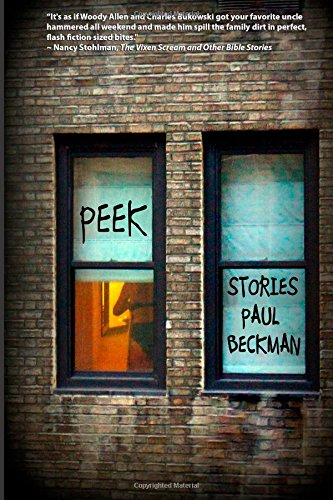
Paul Beckman’s 200+ stories are widely published in print and online in the following magazines amongst others: Connecticut Review, Raleigh Review, Litro, Playboy, Pank, Blue Fifth Review, Flash Frontier, Matter Press, Metazen, Boston Literary Magazine, Thrice Fiction and Literary Orphans. His work has been in a number of anthologies and a dozen countries. Paul was one of the winners in the Queen’s Ferry 2016 Best of the Small Fictions. His latest collection, Peek, weighed in at 65 stories and 120 pages. His website  www.paulbeckmanstories.com& email paul@paulbeckman.com . Paul is also a published and shown photographer who takes pictures above and beneath the water in his world travels.


JOURNEY TO PLANET WRITE: Insecurities in a Sentence or How I Became a Writer

by Eleanor Levine

When I was twelve years old, there was only one street, or “block,” as we called it, which separated our town, Lakewood, NJ, from our rival town, Jackson, NJ.

An insipid hatred existed between the neighborhoods. When you entered a backyard not part of your terrain, a nasty comment evolved into several fistfights. And we were all, equally, boys and girls, ready to pounce on one another.

One day, on May 11, 1975, before a dentist appointment, I witnessed my middle brother—we’ll call him Q—pummelled by a girl from Jackson. This was unprecedented. How could this ignoramus, I felt, from this “redneck” part of the planet, dare to touch my brother?

It was OK for me to hit him or people in my hood, but when the insurrectionists were next door, when they punched the well-educated, royal Lakewoodites, this was completely unacceptable. Thus, I grabbed the girl and punched her until, within seconds, her Abominable Snow Monster of the North sister, came strolling through the screen door, grabbed me by the hair, and swung me around. My hair was a veritable bird’s nest, which is what the dentist described it when the “twirl” by the “girl” was followed by his teeth cleaning.

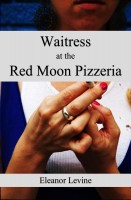
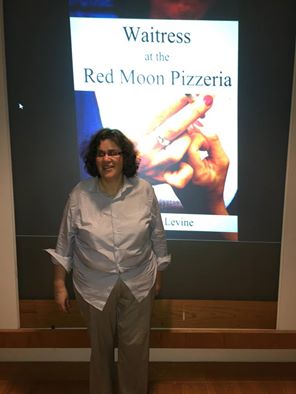
How might this hair-wrenching journey, you ask, account for my evolution as a writer and the culmination of my recently published poetry book, Waitress at the Red Moon Pizzeria (Unsolicited Press, Davis, California)?

Well, it is symbolic of the numerous humiliations I have suffered from having too much hubris.

For the longest time, I did not want to define “hubris.” I wanted to let it go unknown like some unfettered cloud. I wanted to circumvent any responsibility for pomposity.

The teenager who turned my hair into a bird bush, well, she was among the first to see me, a wild 12-year-old, act as if the world owed me something.

I still act as if the world owes me something, and then I am left on my own, without much of the world, and it’s just me and the computer.

I would like to have more lovers and friends, in theory, but after alienating much of the planet, it is the screen and Kindle (formerly the typewriter and paperback)—the only beings that tolerate my superciliousness.

Imagine if you will, the vision of a 12-year-old New Jersey byatch—moi—getting twirled for all the kids to laugh at, after I assault a lion’s cub. You do not injure a lion cub and hope to go unscathed to the dentist.

But of course, the deluded writer shall forever believe that all things and beings, including the meandering sushi chef who survived Hiroshima, are worth assaulting. This is why Kafka said it is better to release the toxins, if you are a writer, than to let them grow unattended in your garden of apprehension and despair. His exact quote was, “A non-writing writer is a monster courting insanity.

It has always been poetry that has allowed me to release the anger, hubris, obnoxiousness, insecurity and “toxins.” I would be a colossal nut, locked away in a mental institution, if it were not for Mr. Kafka’s advice and the notion that one must expel the brain waves and mood swings that harass and mortify us.

For more than 30 years, when I found myself alone, betwixt the world and the pen, I wrote poetry.

What you find, when you read Waitress at the Red Moon Pizzeria, is the culmination of many misadventures in my brain, much joy and love and even some displeasure at being a Jewish lesbian on the frontiers of New Jersey, New York, and Virginia.

My poem, “Insecurities in a Sentence,” shows the distempered release of angst and apprehension:

I like my insecurities
they float around me
like goldfish crooning
or poets snapping like piranhas
in a Dewey Decimal System of juxtaposition
metaphors strung out on anxieties

The contaminants are caught and their terrain is the English language:

insecurity in a sentence
without a spinal tap of reality,
or a scissor tap dancing toward metaphors
the flux and influx in a flood in a bathtub
like a string in a tampon
or the boy on the platform with the muted sensibility
the playwright disdaining his ideas
or a cockroach taking ambidextrous steps toward his food
Allen Ginsberg snapping photos from his verses
Walt Whitman dancing naked on a tree stump
a stroke of light fanning its way to me at an opera

Words are energized with our thoughts and feelings as in the poem, “Waitress at the Red Moon Pizzeria,” which is also the book’s title:

My green texts were longer than your grays
You felt smothered like a senior citizen in a hand-knitted Terracotta afghan

Insanity, like hair, is not meant to be a bird’s nest, and is best transformed into poetry, if you happen to write that. It keeps us saner than if we were receiving a lashing from Jackson, NJ’s Abominable Snow Monster of the North or our own mind.

I hope you’ll read my new poetry book, Waitress at the Red Moon Pizzeria, which is available at Unsolicited Press or Amazon.


___________________________________________________


Eleanor Levine’s poetry collection, Waitress at the Red Moon Pizzeria, was recently released by Unsolicited Press (Davis, California). Her work has appeared in over 50 journals, magazines, and anthologies, including Fiction, The Denver Quarterly, Litro Magazine, IthacaLit, The Toronto Quarterly, The Kentucky Review, Fiction Southeast, The Evergreen Review, The Literateur and The Stockholm Review of LiteratureShe is currently a copy editor and lives in Philadelphia, Pennsylvania, with her dog Morgan.

JOURNEY TO PLANET WRITE: A Story’s Bones

by Kris Faatz
Last summer, my husband Paul and I took a trip to Spain. I’d never had a passport before or been across the Atlantic. Paul and I had never thought of Spain as a place we might visit, until we happened to watch a movie about the Camino de Santiago, the great religious pilgrimage route to Santiago de Compostela in Galicia. We looked at the footage of woodland trails, blooming countryside, and turquoise ocean, and then we looked at each other. “Wanna go?” “Yes.”
I’m a nervous traveler. Imaginary dire scenarios line up in my head (car wrecks, broken bones, food poisoning, you name it). When Paul and I arrived in A Coruña, Galicia – a new continent! A different language! Medieval churches and Roman ruins! – I wanted to be thrilled. Instead, I could only think about how I didn’t belong there. I didn’t speak enough Spanish. I couldn’t read street signs or billboards or even a menu. Home was a million miles away, and if anything went wrong I’d have no idea what to do, and the strange ground under my feet felt no more solid than quicksand.
Then, early in the trip, I found a story. Paul and I visited a small medieval church in Asturias, a chapel consecrated to St. Toribio and housing what’s believed to be a piece of the True Cross. The story was that in the eighth century, a monk named Toribio traveled to Jerusalem and brought back a piece of the Cross to serve as holy relic in a new cathedral in the city of Astorga. The cathedral was built, but when the Moors invaded Spain some two centuries later, burning churches and relics, the monks of the Astorga cathedral fled for the mountains, taking the Cross relic with them. They also took Toribio’s bones; by then he had been canonized as a saint because of his journey to Jerusalem. The monks built a new chapel, the one Paul and I visited, and re-interred the saint’s bones there. In a bizarre twist, some five hundred years after the new chapel was built, one of Toribio’s bones was stolen to serve as the holy relic in another new cathedral.
Toribio’s story fascinated me. I thought about relics and stories-within-stories and how an ordinary man, like Toribio must have been, became revered as so holy that someone thought it was worth breaking into a tomb to steal a piece of him. As Paul and I explored Asturias, I started putting pieces together for a story of my own, which would become my second novel.
My first novel, a piece of literary fiction, took eight years of struggling and writing and re-writing before I finally decided it was as done as I could make it. I decided to set my next project in a fictional world, which shifted it into fantasy. I’d never thought of myself as a fantasy writer and didn’t know if I could do it.
Working on that second book turned out to be one of the most joyful experiences I’ve ever had as a writer. There were struggles and doubts, but the story pieced itself together and I fell in love with the characters and especially their world. Toribio was fictionalized as Ribas, a good man but very human priest who has profound doubts about the religion he serves. In that fictional religion, we learn how a young woman performed an act that, generations after her death, left her revered as a goddess. Stories inside stories. I drew on the real geography of Spain, the coast and the mountains and the flat, hot plains, for my fictional world, and tried to catch as much of it on paper as I could.
All of this brings me to the question of why I write. My first novel was a battle; it’s still unpublished, and as much as I’ve wanted to see it out in the world, I don’t know when or if that might happen. I don’t know about this second book either. My “quiet” style doesn’t help with pitching or selling books. Even in fantasy, which ought to have lots of plot twists and epic conflict, I find myself focusing much more on people: how they feel, what they say, how they treat each other.
Maybe that’s too quiet – that doubt nags me a lot – but it seems to be the way I write. And when I sat down to work on my second book, and these days as I’m working on its sequel, I go back to the Asturian mountains. Clear air, greenery, steep and twisty trails that only a mountain goat could navigate at speed, but so much beauty. As I write, I tap into the joy of discovering a new story, and remember the moment when the deep belief that built Toribio’s church sank in for me. That belief was rich and ancient, passed from one person to another for generations.
Stories within stories. Our stories make us human, make us whole, let us reach across time. Those things are all true, but maybe more importantly, our stories let us capture and re-capture the experiences that mattered most to us. Other people will see them differently, no matter how carefully we describe them: but when we record them, in some way we make them permanent. Because of that, and the joy of doing it, I write.
 ______________________________

Kris Faatz’s short fiction has appeared in the Potomac Review, Kenyon Review’s KROnline, Glassworks, Reed, Bluestem and Helen, among other journals. Her first novel, To Love a Stranger, is a finalist for Schaffner Press’s 2016 Music in Literature Award. She has been a contributor at the Kenyon Review Writers and Novel Workshops and the Sewanee Writers’ Conference, and currently serves as an assistant editor with Bartleby Snopesliterary journal. In her outside-writing life she is a pianist and teacher. Find her at http://krisfaatz.com, and read her most recent published story here: A Funnel of Time.

JOURNEY TO PLANET WRITE: As I Remember It

by Ashley Inguanta


The beginning was such an odd place. And like all beginnings, it was also an ending. The short version: At 12, I became obsessed with language, with writing. The long version is a bit different, a bit unexplainable, a bit miraculous. Here it goes.


I don’t remember what it felt like before the beginning, before I started to write—almost every day—trying to understand a feeling I could not put words to. Even though I could not find the words, I thought words were the answer, so I wrote them, and I read them, hoping to discover a definition, something concrete.

All I had was an image, a feeling inside of my spirit. I was 12–beginning the 7th grade–and a few days before the first day of school, I decided to “walk” my schedule, going from class to class, to make sure I didn’t get lost. I remember this: Looking through the window of my English classroom. I remember seeing a woman—she was young, and she was lovely. She was sitting with the rest of my teachers, so I assumed she would be one of mine that year. I felt a rush. I didn’t understand why. But I wanted to.

At first, I thought this feeling was purely spiritual, simply because I hadn’t felt it before. I couldn’t find the language to accurately describe it, but it was good—so good that I told my parents I no longer believed that a loving God would send me to hell. If God could create a feeling like this, how could a place like hell exist? That was my logic. I stopped going to church because I was no longer afraid of things I could not see.

Now, at 29, I understand that I had a crush (yes, it was that simple), but at 12 years old, I didn’t know that having a crush on someone of my own gender was possible. I remember going to a psychic in Port Jefferson, asking her why I felt this way. She said, “Do you have romantic feelings towards this woman?” I said, “No, no. Not at all.” I lied. I knew it.

From there, I began to find the language. I wrote about love at 15, about a dream I had—in this dream-place, it was okay to love someone of any gender. The piece I wrote didn’t overtly say this, but I tried to describe it the best way I knew how. I left gender out of the equation because I was terrified of having others know, but finally, I was getting there—grounding, understanding. I called the piece “Stardust Garden,” and it wasn’t quite a story, and it wasn’t quite a poem either—but that was okay. I was finding my voice, and I knew that was a gift. I won second place in my High School litmag, and I wasn’t even going to enter it. My homeroom teacher thought it would be a good idea, so I tried.

Before my homeroom teacher encouraged me to enter “Stardust Garden” into the litmag contest, I remember sitting with her and crying. I couldn’t stop crying. I remember telling her I had a feeling and I was scared, that I didn’t know what to do with it. She told me it would be okay. And I wrote. And I grew. And I haven’t stopped writing. As long as I continue to love, I will never stop.

_____________________________________


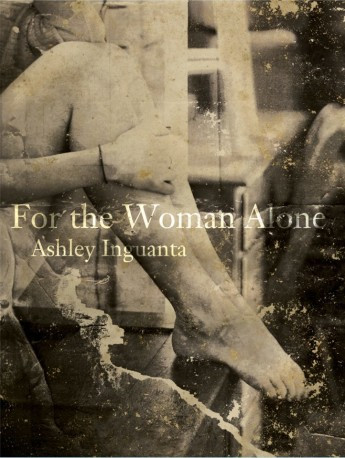
Ashley Inguanta is a writer and photographer who is driven by landscape, place. She is the author of three collections: The Way Home (Dancing Girl Press 2013), For The Woman Alone (Ampersand Books 2014), and Bomb (forthcoming with Ampersand Books in 2016). Her work has most recently appeared in The Rumpus, PANK, Bartleby Snopes, Adrienne: A Poetry Journal of Queer WomenThe Good Men Project, OCHOCorium Magazine, and the Rough Magick anthology. Ashley is also the Art Director of SmokeLong Quarterly, and this year she received an Orlando Weekly “Best Of” award for her poetry. Four-wheeled and wingless, Ashley is from Florida and now lives in California, and she finds blessings on even the longest of highways. 

Visit her website at ashleyinguanta.com. Also find her at Echo and Dime, which you can find here: echoanddime.com / echoanddime.tumblr.com / instagram.com/echo-and-dime / ashleyinguantaphotography.com / instagram.com/ashley-inguanta


Photo of Ashley Inguanta by Lauren Laveria / Lauren Rita Photography

JOURNEY TO PLANET WRITE: Awakening With No Memory of the Life Before

by David S. Atkinson 


My story is one of those “character wakes up in a strange place with no memory of where he was before” type tales, because I don’t really remember when I came into writing. There must have been some particular moment, but I no longer remember what it was. I remember writing short stories, poems, and such at least as far back as fourth grade including a western mystery novel centering on the perpetrator possessing a brass knife that left a very distinctive wound, which fell apart when I couldn’t figure out at age 9 how a knife would leave a very distinctive wound. 

My parents were big into reading and writing, always encouraging my sister and I towards the same, so maybe I simply considered it to be something people did.

For a long time though, it was bad. Very bad. I was into a lot of science fiction and horror at the time, so I wanted to write it. That’s all fine. I adore a lot of science fiction and fantasy out there, but it has to be good. Mine wasn’t…for a very long time. Still, I kept at it. I submitted my first short story my junior year in high school, done up on a typewriter sitting in a spare room of the foster home I was at for a year. I had a lot to learn. For example, I learned that postal submissions wanted return envelopes and didn’t care for single spacing. I also learned that the science fiction and fantasy I was writing wasn’t coming out anything like the science fiction and fantasy I was reading. My Lovecraft pieces were the worst.


My tastes started leaning more literary as I focused more on trying to figure out why my stories weren’t working. I figured I had to get the elements down before I could build interesting things with those elements, since building interesting things alone hadn’t been working so well. I picked up a few writers’ workshop courses in undergrad. Those seemed to help what was wrong in my stories, so I decided to go back for more. Once I had my law degree down, I went back for a BA in English as preparation for an MFA. Going through both of those, I finally started seeing my stories come up to where they needed to be to function.


This is where my novel in story form, Bones Buried in the Dirt, came from. As part of that very literary realistic fiction, I’d been doing a few child narrator pieces focusing on the same character. I started thinking about a whole series, covering a single story arc, which never brought the child forward to adulthood but instead gave impressions of the adult he would become. That gelled early into my MFA program and my work on that as my thesis eventually gave form to the novel.
Bones Buried in the Dirt turned out so well that I finally felt that I could write stories. About that time, wild hairs started creeping into my writing. Since I could handle a story, I started to bring in more interesting elements.
However, The Garden of Good and Evil Pancakes, though it fit that model of interesting things enhancing a solid story, was a bit of a frolic from my main path. Joseph Michael Owens recommended Donald Antrim’s The Verificationist and I got this really odd, greatly mistaken idea what the book was about. I told Joe about my mistake, and he told me to write that. I did, and it turned out to be one of the oddest writing projects I’ve ever gotten involved in, a young woman who may or may not be endlessly trapped in a Village Inn with her ex boyfriend and her ex-best friend, his current girlfriend.
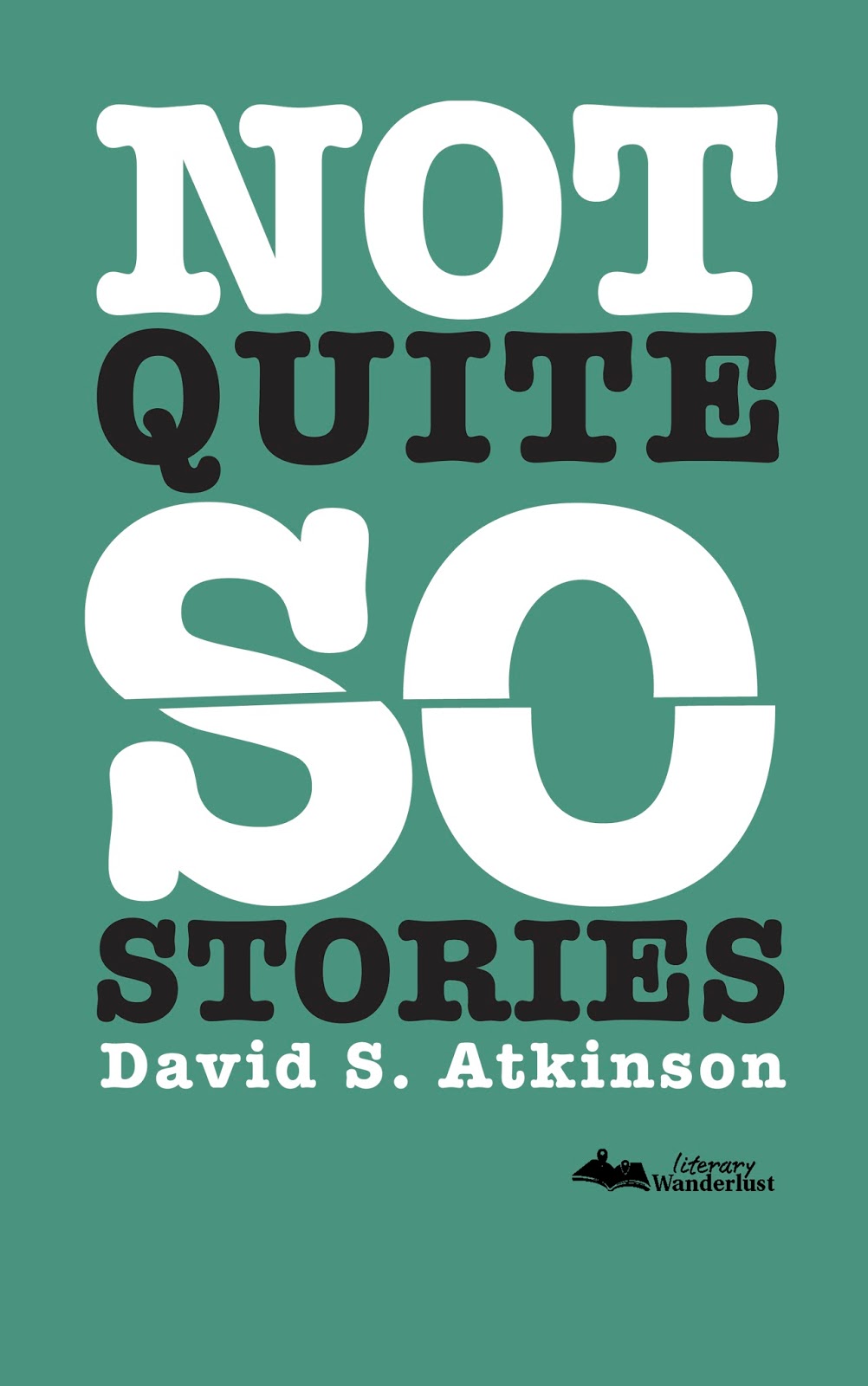
Once I managed to get The Garden of Good and Evil Pancakes out of my head, I found myself still going with those odder stories I’d been working on before. Going against the idea that myths are often supposed to explain the world, I was going with the idea that our lives are inherently inexplicable and wonderful and what we have to do is figure out how we are going to get along with that. The momentum I’d picked up carried me right through the end of Not Quite so Stories, where I find myself pretty much at the present.
The story doesn’t end there though. I started hanging around the monthly F-bomb Flash Fiction Series in Denver. Much of what I’d been working on up until then was too long for reading there, but I had a few pieces that were the right kind of length. They were really odd pieces, strangeness that made The Garden of Good and Evil Pancakes seem like straightforward realism. Going to F-bomb regularly, I started working more on those pieces, writing in a form I hadn’t played with much previously. It’s growing into something, literally as people read this. What that will be isn’t clear yet, but I can only hope that it doesn’t doom us all.

___________________________


David S. Atkinson is the author of Not Quite so Stories, The Garden of Good and Evil Pancakes (2015 National Indie Excellence Awards finalist in humor), and Bones Buried in the Dirt (2014 Next Generation Indie Book Awards finalist, First Novel). His writing has recently appeared in Wilderness House Literary Review; Bartleby Snopes; Apocrypha and Abstractions; Cease, Cows; and others. He coedits the book blog Eleven and a Half Years of Books and his writing website is http://davidsatkinsonwriting.com/.


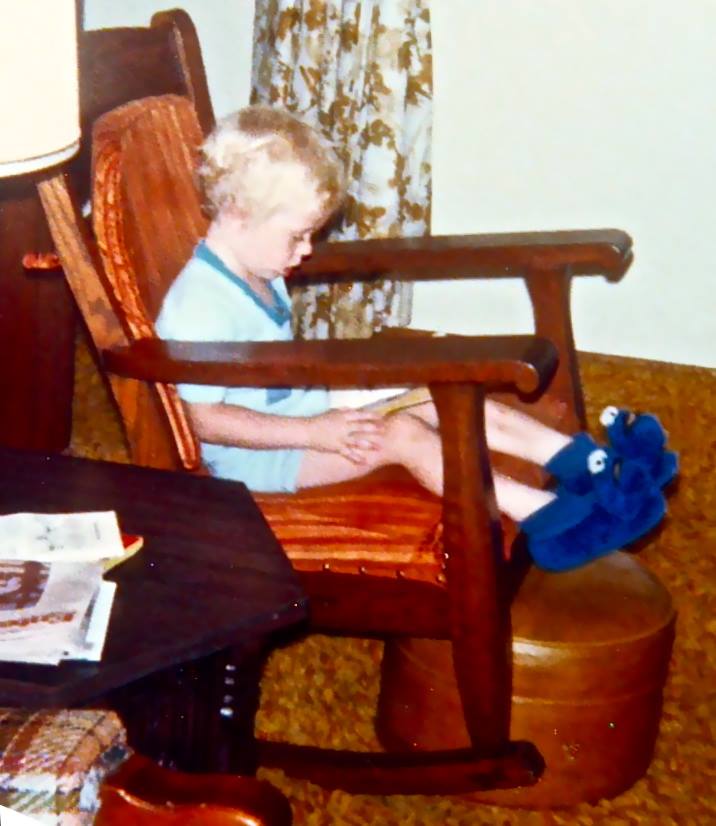
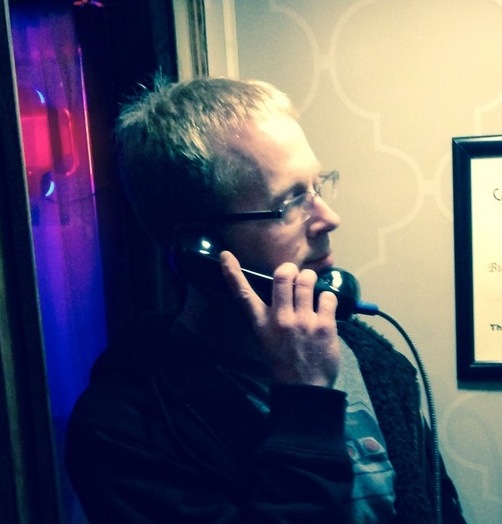
Photos: Top, David, age 3 or 4, already committed to reading. Middle, Visiting the influential Balzac

JOURNEY TO PLANET WRITE: The Power Lines of Story

by Andi Cumbo-Floyd


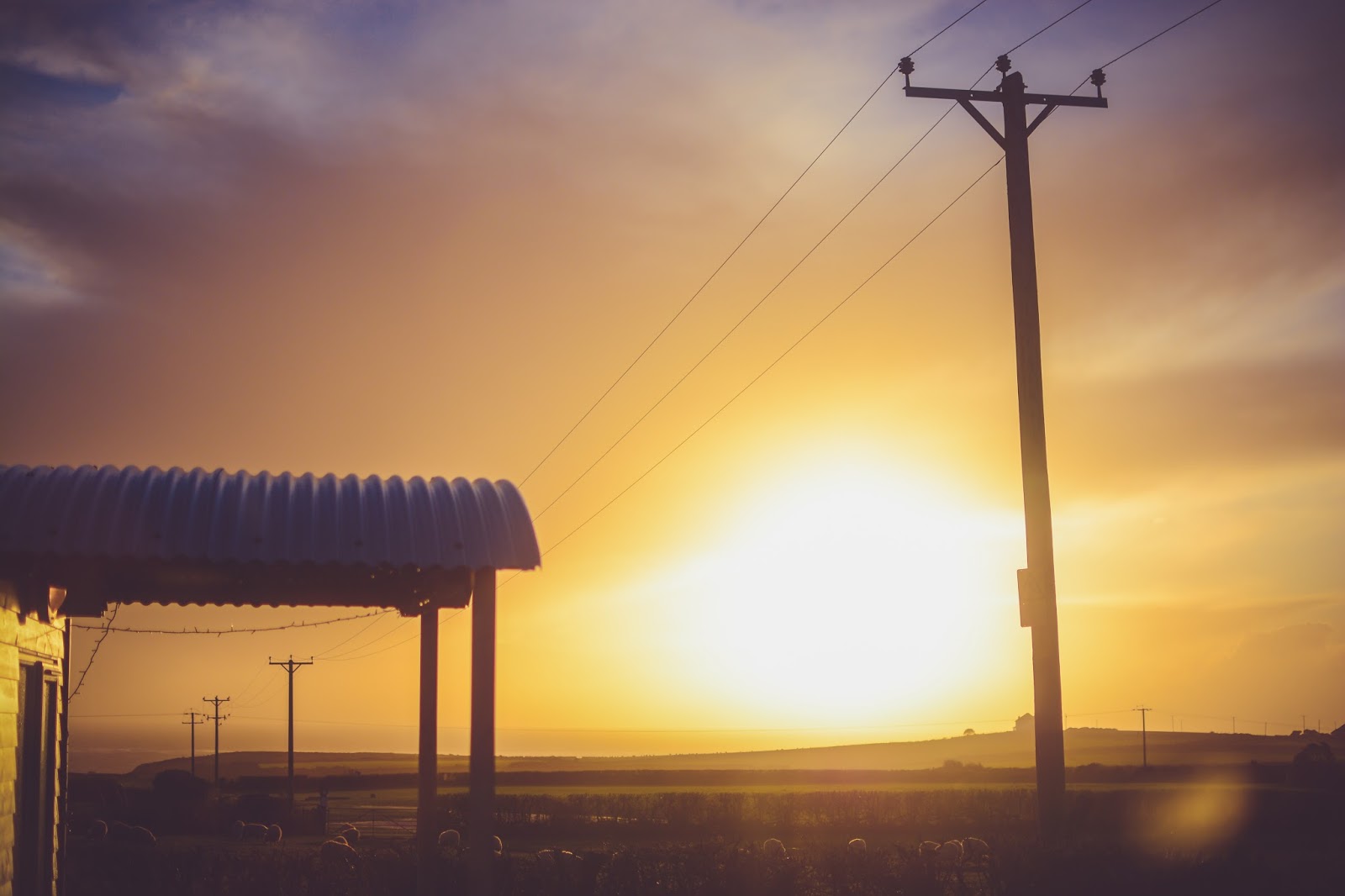
I was 7. I had the blue satin trim of the blanket tucked into my palm as my fingers flicked against the folded smoothness of it, and I was watching the power lines go by as my dad drove us across some part of America. I don’t remember which part because it didn’t matter. I wasn’t interested in the destinations mostly. It was the journey I was watching as those power lines swooped by. 

As we rode, I made up songs, none of which I can remember now, 35 years later. But they were stories those songs, my first writing, maybe. The way I took the journey of highways and laid it into language. A girl with her blanket imitating the Jack Kerouac I she didn’t know. 

I was 27. I had a Uniball Vision Elite pen tucked into my hand, and I was writing as fast as I could on the second floor of Guilford Hall at Case Western Reserve. Ted Gup, my writing professor, was sharing why he loved Tracy Kidder, and I couldn’t capture the language of his vision fast enough. The words were whipping by me like electric poles. I was on fire, and I didn’t know why. 


Weeks later, when I stood at Prof. Gup’s door to talk about my PhD applications, he said, “Andi, I wonder if you might want to consider an MFA instead.” He laid out the benefits – two years instead of five, lower cost – and then he said, “Maybe you’re a writer.” 


He wrote, in an analysis of my work that semester, that I had “a bohemian sensibility and a unique voice, and that the largest danger to her work is that she will begin to parrot herself.” 


It felt like he wrote a love letter to my soul. 


I was 35. I had an MFA diploma tucked into a trunk in my house, and I was writing as fast as I could to get the 35 end comments onto composition papers. My office was filled with a papers – compare/contrast essays, drafts of short stories, business reports complete with pie charts. I was suffocating in my office without windows. 


Weeks later, I sat in a brew pub with three of my dear friends, my colleagues in the English department, and I was telling them I was going to be resigning in one year. I had worked 10 years to become a full-time professor, and I was going to leave after 3 years. I cried as we talked, and they – good friends – thought I was sad about leaving teaching.


I still miss my friends – my heart aches with the journey away from them. 

I am 41. I have my hair tucked into a bun, and I’m wearing my father’s old sweatshirt as I type out these words at our dining room table. I am looking out the window, but I can’t see our goats. Our two hound dogs are on the couch near the woodstove. My life is filled with farming and with words. 

These days, I take the journey of words and lay them out in books, stories of enslaved people and the strength of their lives. I write novels where teenage girls save history, and I read books for clients who ache to have their stories reach the world. I’m still a girl writing the journey – maybe more Wendell Berry and Alice Walker than Kerouac now. I try not to parrot my own voice. 


My window is stationary most days, but out the door, I can see the power line that ties our farm to the road, the path that carries my words into the world.


 ___________________________ 


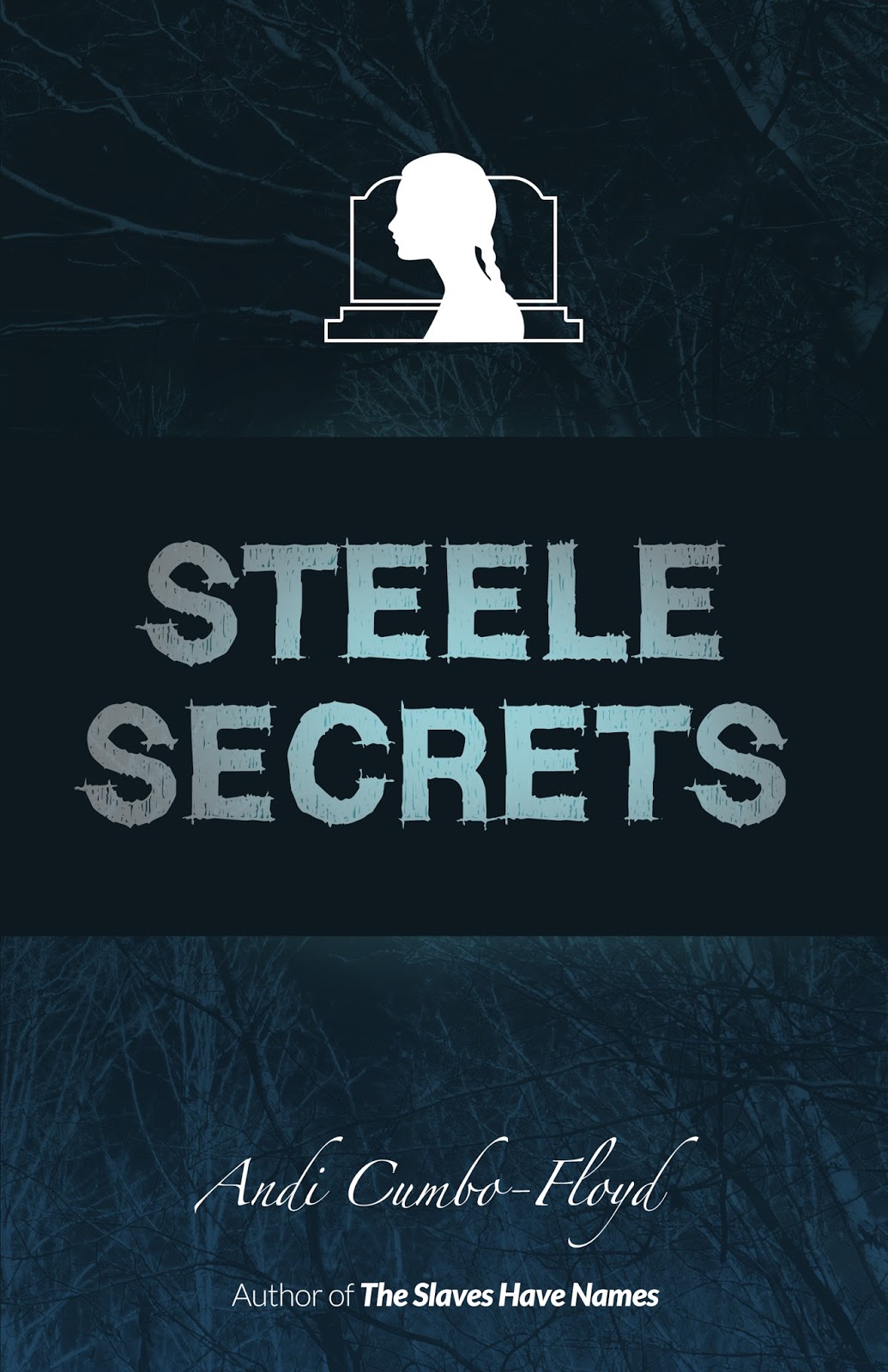
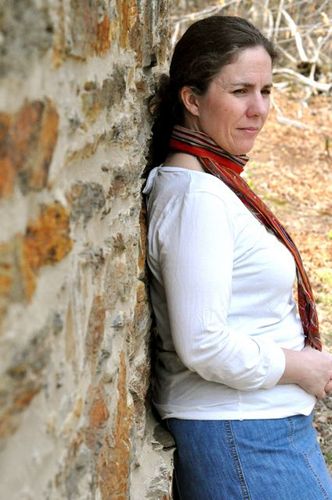
Andi Cumbo-Floyd is a writer, editor, and farmer who lives on God’s Whisper Farm at the edge of the Blue Ridge Mountains with her husband, 6 goats, 22 chickens, 4 dogs, and 4 cats. Her books include Steele Secrets, The Slaves Have Names, and Writing Day In and Day Out. You can connect with her at her website, Andilit.com

Photos: Top by Chris Lawton via Unsplash
Steele Secrets available at Amazon