JOURNEY TO PLANET WRITE: Three Decades, a Burnout, and an Island

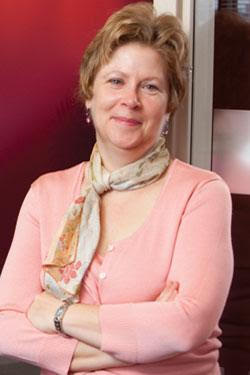
by Guilie Castillo-Oriard
In2011 I quit my job in the financial industry to “be a writer,” and everyone thought I’d gone mad. “Burnout,” they whispered.
In all honesty, they weren’t that far off; six years of twelve-hour days does take a toll. But, appearances notwithstanding, this wasn’t a spur-of-the-moment thing. None of my colleagues—no one here in Curaçao, only a scant few in Mexico—had any way of knowing that my journey into writing had begun three decades earlier (and would, in fact, involve actual travel).
The very first thing I wrote was a Christmas story. I was eight. It was a school competition of some sort. I can’t remember the plot (and I admit to a certain amount of relief there are no surviving copies), but it involved a family of swallows (and, probably, much gratuitous heart-string pulling). No one was more surprised than me when I received the first prize; I remember feeling an embarrassed sort of exhilaration as I stepped up to the podium to accept—what was it? a certificate, a piece of paper long lost and forgotten, never framed or showcased in any way. No need; the moment had been enough. At the tender age of eight I had been marked, taken in ownership by the white-hot branding iron of storytelling success, and there was no turning back.
They liked what I wrote.

Storytelling was my gateway. For a very long time, writing, for me, would be about telling a story. It would take me years to discover language—the power of putting words together just so, so that, all of a sudden and (best of all) without warning, the alchemy of meaning sparks into life. But back then it was the sorcery of disappearing into make-believe that hooked me.
I ransacked my father’s extensive library; I read everything, books as diametrically varied as Don Quixoteand Emmanuelle II. I read history and fantasy and cheap novels and Hemingway and Sartre. I stayed up late with a flashlight under the covers. Teachers confiscated the books I hid between lap and desk.
And I wrote and wrote: diaries, journals, endless ‘novels’ that never made it past Chapter 3. I wanted to tell stories, stories like the ones I was reading, stories that would make people laugh and cry and feel… but I had no one around to tell me the magic wasn’t in the telling but in the constructing. No one, except the books themselves. And I fell so deeply into the thrall of the stories that I forgot to—didn’t even thinkto—analyze structure, arcs, character development, management of backstory, nuances of plot; the stories I read worked (mostly), the ones I wrote didn’t (mostly), and I knew it. I just didn’t know enough to see why.
And then…
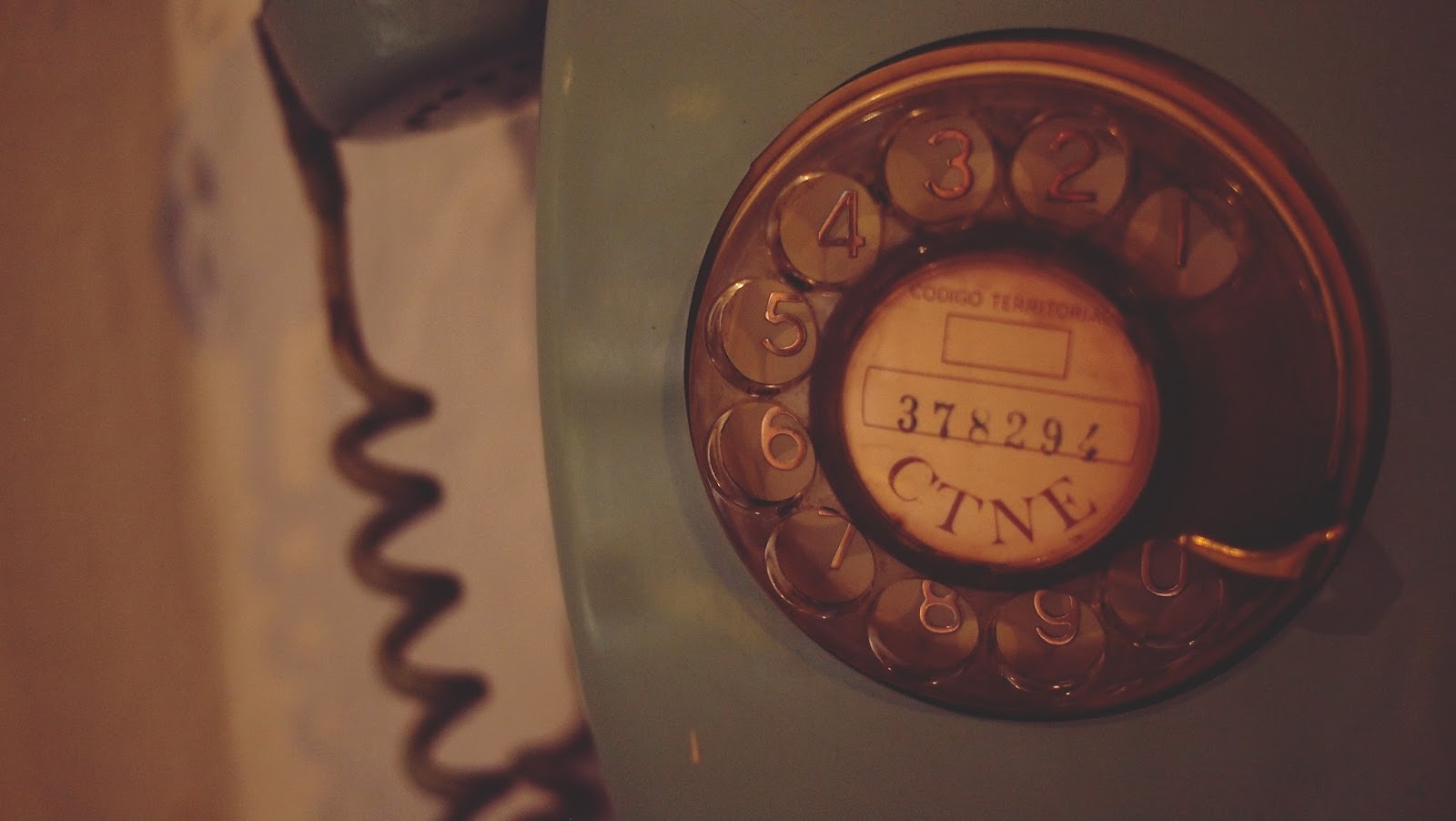
Do you remember that time, long, long ago, when phone lines could ‘cross’ and you’d find yourself listening to someone else’s conversation? One day, when I was maybe eighteen, I was talking to someone and suddenly I was talking to someone else. My call had dropped, this guy’s call had dropped, and—because life works in mysterious ways—we struck up a conversation. When I had to go, Ernesto—that was his name—asked if he could call me again. Why not, I said. I’ll need your number, though, he said.

He called every few days, and we talked—and talked, and talked. My writing must have come up at some point, though I have no memory of what I said or what he asked, because about a year later—we still hadn’t met, although we lived in the same city—he called with a mission. “A friend of mine is starting a writers’ group,” he said. “I told him about you, and he’d really like to meet you.”
Yes, of course I went—got to meet Ernesto, too—and landed smack in the center of a budding writer’s dream: I found myself a member of a group of young adults (‘teenagers’ sounds so amateurish) who started the city’s first literary magazine. It was called Tinta Seca(‘Dry Ink’ in Spanish), and it put out its last issue in February 2015.
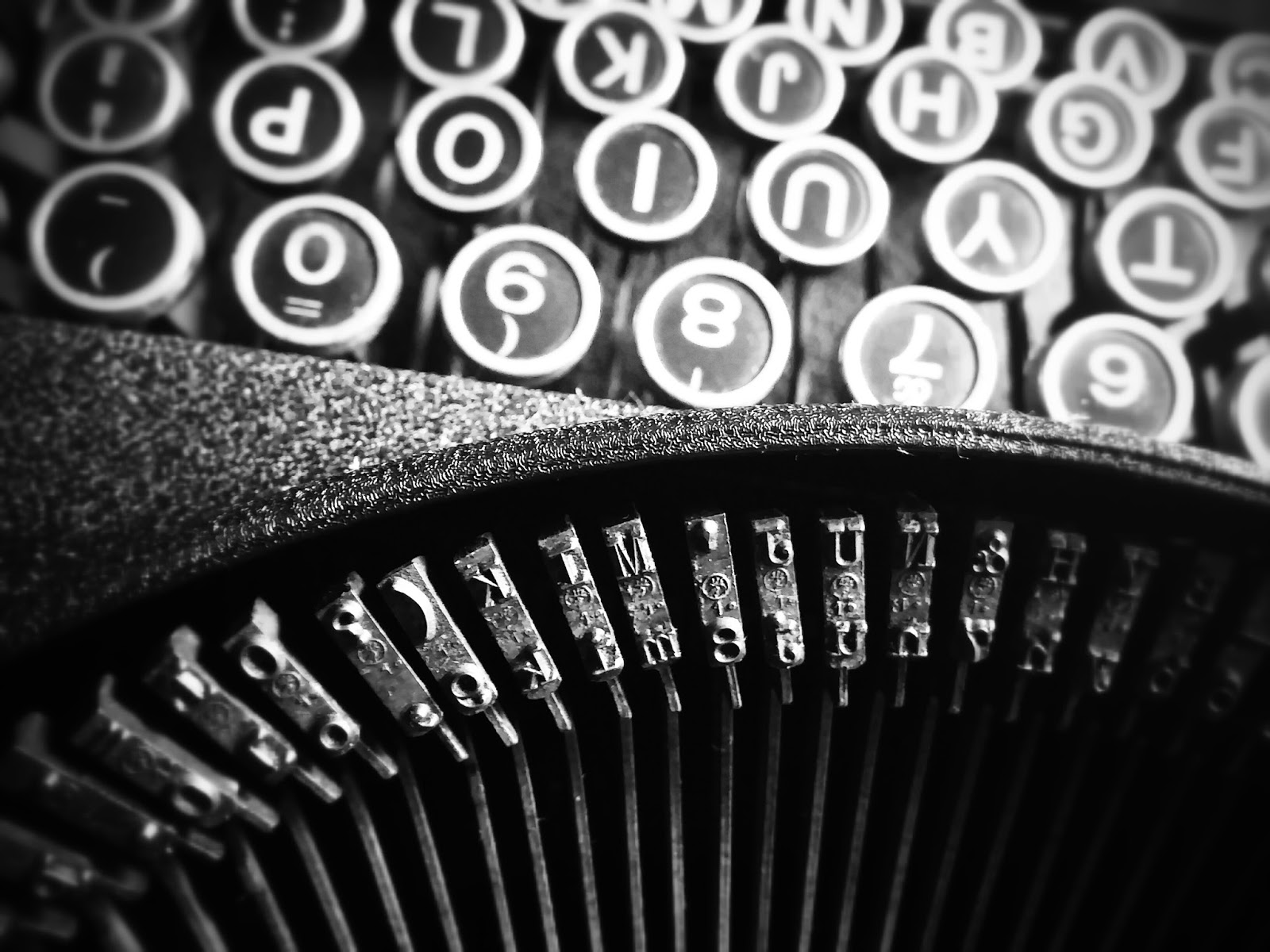
I was only part of it for maybe three years—but they were glorious years. I was in print! I sat at the big-people table the day the magazine was launched. I got to read one of my poems (at a microphone!) to an audience of literati and press with clicking cameras. I was consulted for content and layout issues. I met artists I’d only seen in museums, authors I’d only seen in print. And, less ego-stroking but more edifying, I had an assembly of like-minded individuals (read geeks) to provide example and stimulation. I began straying from the ‘mainstream’ into the uncharted realm of possibility. None of my experiments earned recognition (nor did they deserve to)—but who cared? I had discovered the craft.
It wasn’t meant to be, though. Not then. Not yet. My father died, and with him the bubble of financial security I’d lived in until then. College was out of the question; I had to earn a living, I had to do it now, and I couldn’t do it via writing. And so began the two fallow decades of write-less existence. I didn’t abandon the dream, I just postponed it: one day, when I retired, I would write.
And then…
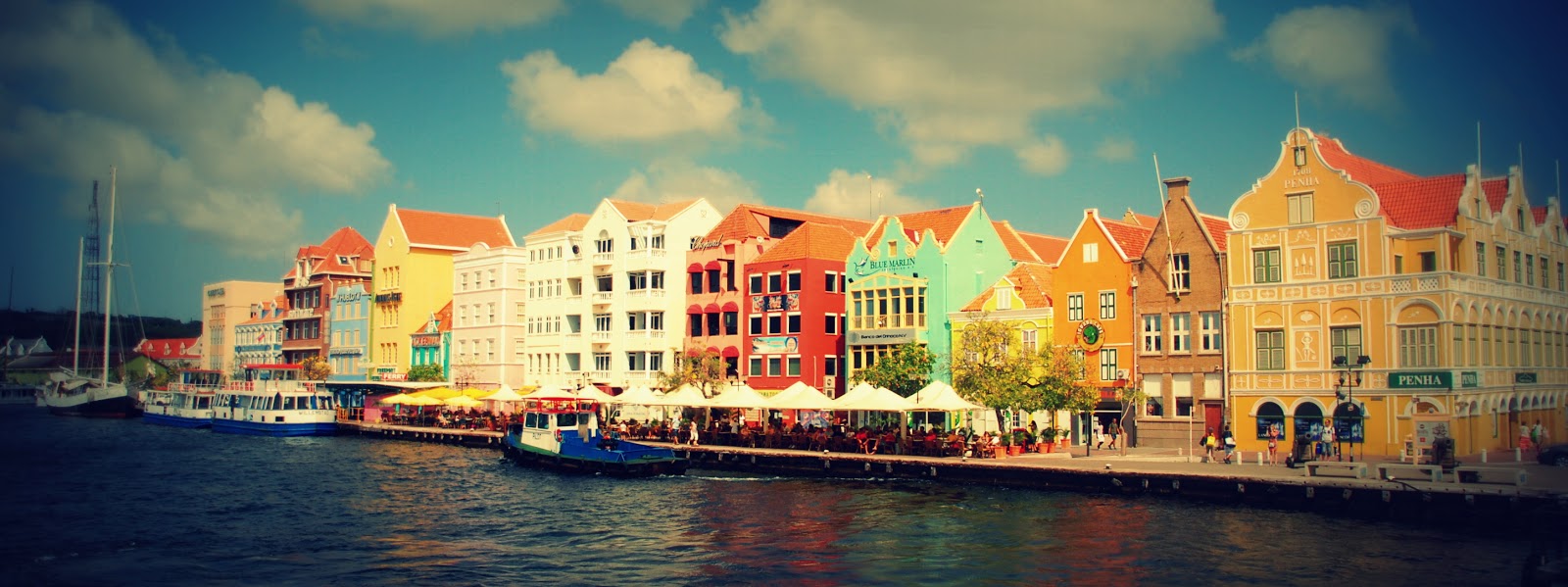
Travel. And with travel came the stories—and the urge, again, to tell them. Yes, I do hold Curaçao responsible for my return to writing. I came to the island originally for six months; that was thirteen years ago. Why did I stay? Because something here—the diversity? the contrasts? burnout?—provoked in me not just a rekindling of the storytelling monkey but the carpe diemunderstanding that stories, like dreams, wait for no one.

 ________________________________________
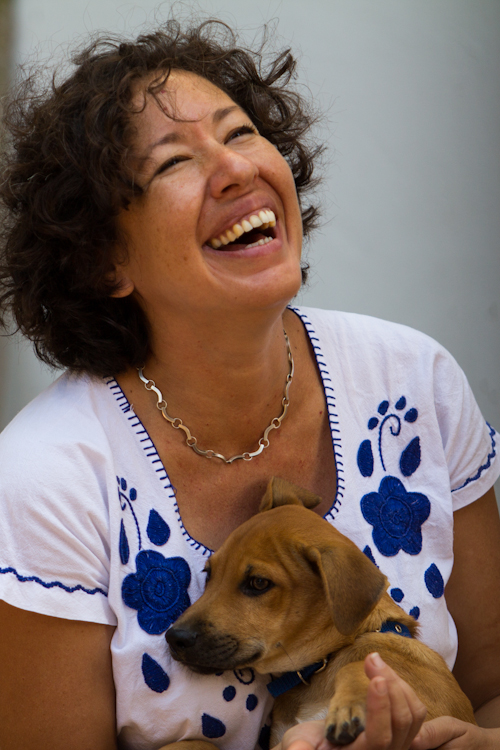


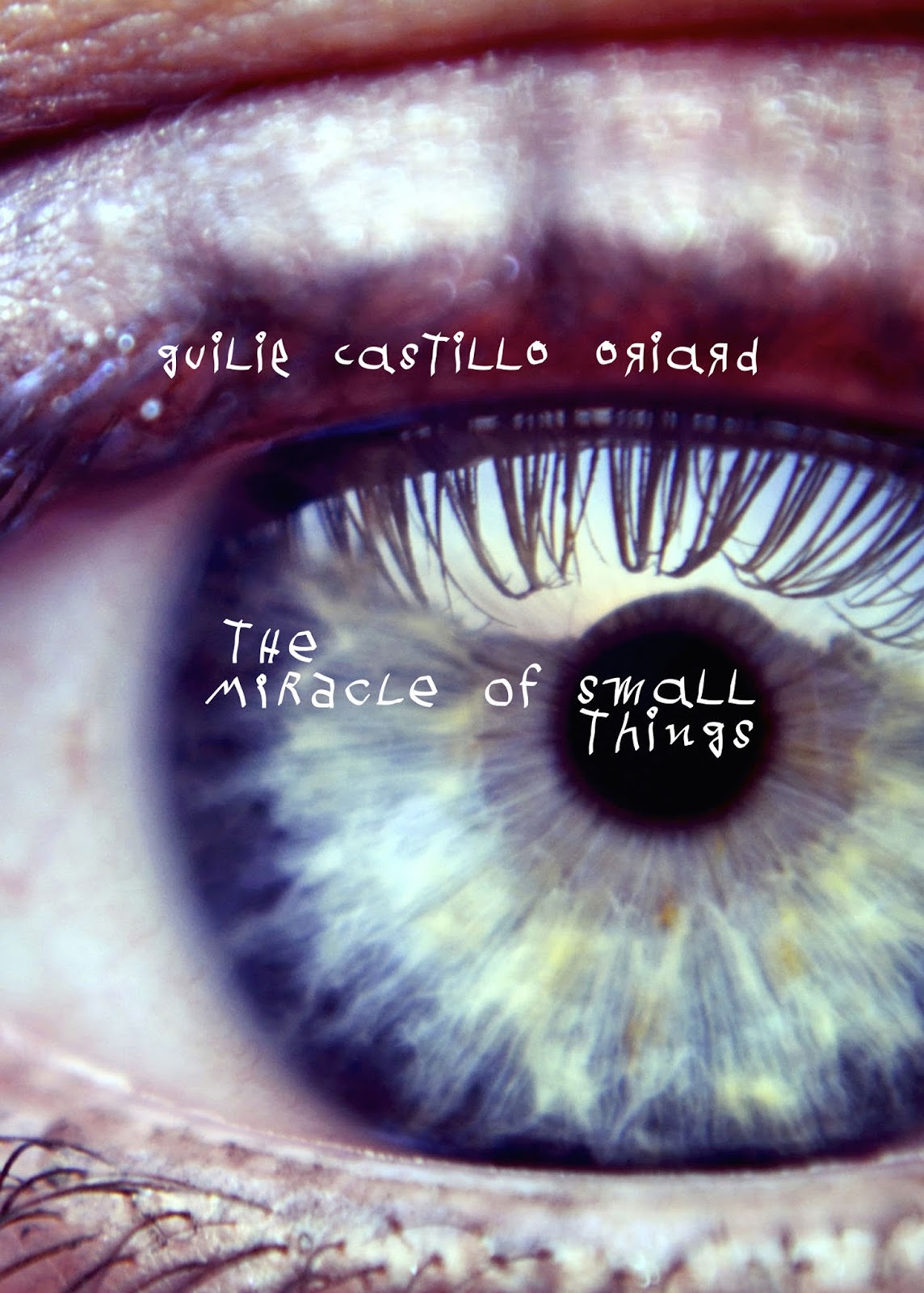
Guilie Castillo-Oriard is a Mexican writer and dog rescuer living in Curaçao. She misses Mexican food and Mexican amabilidad, but the island’s diversity and the laissez-faire attitude (and the beaches) are fair exchange. Her work has appeared online and in print. Her first book, The Miracle of Small Things, was published in August 2015 by Truth Serum Press. She blogs about life and writing at Quiet Laughter and about life and dogs at Life In Dogs.
Journey to Planet Write: Mickey Mouse to Jellyfish

by Christopher James

Part One
I always wanted to be a writer. Or, more accurately, I wanted to be an “author.” I feel a little silly saying “author” because it reminds me of the child I was back then. I was odd at five. Smart, yes, but too shy to raise my hand in class when I needed to pee, so I had more than one disaster. Good at sports, probably from running to reach the loo before it was too late! I remember having many friends, but also spending time alone, chasing butterflies and trying to walk with shoes on the wrong feet. Odd, right? And I must’ve read constantly.
I got a Mickey Mouse annual, full of comic-strips, letters to Donald and EuroDisneyland adverts. It had a do-it-yourself frontispiece – a space to draw your favourite character and some questions. What’s your name? How old are you? What do you want to be when you grow up? I don’t recall my favorite character (I feel like saying Goofy, but suspect it was Pluto. We later had a dog called Pluto). But I remember my answer to that last question. “Author,” written in a handwriting that’s barely improved in the thirty years since.
I found the annual some time later, when I was moving into teenagehood and starting to think more seriously about my future, and I saw that answer, “author,” and I thought YES! That’s exactly what I want to be. Nailed it aged five! And it’s been with me from then till now.
Part Two
Of course, wanting to be a writer and wanting to write are not one and the same. I didn’t write a lot. Zadie Smith once described being told that Ian McEwan wrote only fifteen words a day. That seems impossible to reconcile with his fairly prodigious output, and I don’t think it’s true, but for years I wrote even less than that. Fifteen words a day? Ha! Who had time for that hard labour? Nevertheless, whenever people asked what I wanted to be, I still said the same thing. A writer.
There were exceptions to my fourteen-or-less-words-a-day days. I spent a year in Central America and wrote constantly, a terrible spewing of handwritten nonsense, tiny cramped-up letters that wouldn’t fill my already-heavy backpack with any more notebooks. I finished a novel, since disappeared, about a hopeful plot to destroy manufactured pop, and started another, also disappeared, about god-knows-what. I wrote without reflecting back on what I’d written, and learned nothing. I was writing, but I still wasn’t a writer – I was a notebook-filler.
Back in London, I got a real job and the notebooks disappeared, and I waited for the day I’d wake up, look in the mirror, and magically be perfect at all this. About then, the Times (the newspaper) ran a competition for a love story in 300 words. I’d never written anything so short, but I gave it a go with a story about a man who spray-painted a love message to the woman leaving him, on a bridge where she’d see it every day. The same night, another man jumped from the bridge, and the world thought the message came from him. I called the story “Amore Eterno,” and it won third place. I was ecstatic!
They published it (the fools!) in the paper, meaning people all over the country could read it. Someone then told me about this website called Zoetrope, where writers workshopped stories, and this thing called Flash Fiction, stories in under 1000 words, and, buoyed by my national success, I thought that this was something I could do. Something that could really teach me how to write.
Part Three
So began an apprenticeship. I ‘met’ writers like Randall Brown and Kuzhali Manickavel! I slowly improved. Slowly got published. Now I was writing every day, or almost every day, and learning what worked and what didn’t.
Sometimes it was hard. I learnt to care less about rejection slips! Sometimes it was rewarding. I had pieces picked up by Smokelong, by McSweeney’s Internet Tendency, by Matter Press. I won a few prizes, with Camera Obscura, with Tin House. I discovered some amazing writers, and a new way of reading.
At the same time I moved to Indonesia. I stopped drinking so much, stopped taking drugs on the weekend, met a nice girl. I made more time to write, finally acknowledging that this writing dream wasn’t Just Going To Happen. I had to make it happen. I dedicated myself to it. And it was working. I was becoming a writer.
Then one day – I think it was Idul Fitri – I started an online magazine. I’d half-heartedly thought about doing this before, but on this particular day I did it. There were personal reasons – it would help take my writing to the next level. But there were other reasons too. It was a time when many magazines I loved were starting to charge for submissions, and when it felt harder for writers to take risks on what they sent out. I wanted a venue that encouraged risks.
I opened a WordPress thingy. I started a Facebook wadjamacallit, and invited thousands of people (sorry!). I announced a call for submissions. In honour of my favourite animal, beautiful and dangerous, I called the magazine Jellyfish Review. It would only publish flash.
Part Four
Jellyfish Review is now blossoming into a bit of a minor success. We’ve published stories by incredible writers, including Elaine Chiew, Beverly Jackson, Sara Lippmann, Len Kuntz and Gay Degani. We have stories by even more incredible writers lined up. We’re developing our own style, unique and unpredictable.
I spend hours every day working on it. Reading submissions, formatting stories, choosing artwork, promoting the magazine, keeping everything ticking. It’s hard work, but wonderful.
For the first time ever, I think I’ve found something I want to do even more than being a writer. And I love it. I finally know what I want to be when I grow up.
_______________________________________


Christopher James lives, works and writes in Jakarta, Indonesia. He has previously been published online in many venues, including Tin House, McSweeney’s, Smokelong, and Wigleaf. He is the editor of Jellyfish Review.

JOURNEY TO PLANET WRITE: Of Produce & Poetry

by Andrew McFadyen-Ketchum

I was a 14-year-old male. Which is to say: I was an asshole.

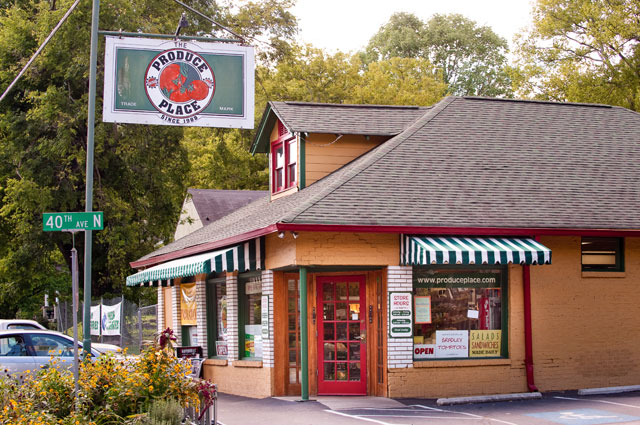
I was also working my first job as clean up boy of the Produce Place, a small grocer in my hometown of Nashville, TN. And I was doing a lousy job.

My mopped floors were dirtier than those unmopped. I could clean a clean window dirty in seconds. Flies were multiplying like flies.

What can I say? I was making $3.15 an hour, I was more interested in Amanda Hardaway’s hair than cleaning floors, and I was a 14-year-old male, which is to say…

So the boss, this dude named Steve who lived at the top of the hill south of my house and who’d tried to date my older sister a few times and whose kid brother, Chris, hadn’t yet died in a tragic accident—Steve approaches me and is like:

Hey. Andy. Can we talk a minute.

Hey. Steve. Uh. Sure.

Uh. OK… So, Andy, you’re doing a shitty job, and you suck overall. Jusy sayin’.

That was the gist of it anyway.

The Produce Place was set in an early 20thCentury bungalow on Murphy Road just off I-40 a ten-minute bike ride from my house. At the time, the entire sales floor consisted of produce bins: four rows of jonagold apples and kiwis and exotic lettuces. All types of beans in the summer. Tomatoes. Tomatoes. Tomatoes. Did I mention tomatoes? And kale. And six different varietals of onion. And cherries. And Rainier cherries. And rainbow chard. And and and.

The Produce Place helped turn around the neighborhood.

Built on a landfill after the Second World War, Nashville’s Sylvan Park of the 80s and early 90s was a ghetto. A neighborhood where men beat their wives and their kids, and their kids went out into the neighborhood to beat each other and to become men. White kids called black kids niggers and black kids called white kids all sorts of shit. Kids smoking dope and kids having kids. That was the law and word of the place.

But the Produce Place was different. The Produce Place was a place where kids could get jobs, where boys becoming men could be rewarded for their bodies rather than punished.

And as the Produce Place went, went the neighborhood.

The Produce Place thrived and so did Sylvan Park. Today, I couldn’t afford my parent’s house, let alone the land it sits on. Today, there are all sorts of jobs available to the kids in the neighborhood. Bars. Restaurants. Lawn care. Baby sitting. Etc. Etc.

Here’s the thing. There are no kids in Sylvan Park. Families with children can’t afford to live there. And if they can, their kids don’t work.

So the Produce Place was the only gig in town. Luckily, I had an in. My sister was one of their first employees. It was only natural I work there when I came of age. But it was also only natural that they demand I do my job. There were plenty of kids who didn’t have sister-ins ready to take my spot. If I couldn’t cut it, why keep me around?


One particularly important item on the list of ways I could do a “less shitty job and keep my job” was to “actually sweep up under the goddamn bins” under which rogue fruits and vegetables fell and quickly set up and quickly started attracting “all the fucking flies” that were buzzing around our heads.

So there I was, sweeping under the bins. When I got to the corn bins, out wobbled this old, rotted ear of corn. And as I was looking down at it, mid-sweep, out of nowhere, the line came: “What if I were this piece of corn?” And when that line came to me, I felt compelled to stop my labors and write it down. Thus I pulled out my Sharpie and grabbed the nearest corn crate and upon its surface scribed my line. And the brilliance? The brilliance continued from there.

At the end of it, I had a poem. I had no idea what it was or why I had written it down but there it was in all its awful glory. After that, I was writing poetry. Day in and day out. And I’ve never stopped. 

What I wrote was wonderfully awful then, and what I write is wonderfully awful now. But, for some reason, I keep at it, and it becomes less awful. I’ve tried to quit a few times to no avail. Poetry makes life present. When I’m writing poems, I’m at my best. The rest of the time? I’m alright.

We don’t know why or what we are doing here.

That is why we are here.


_______________________________________


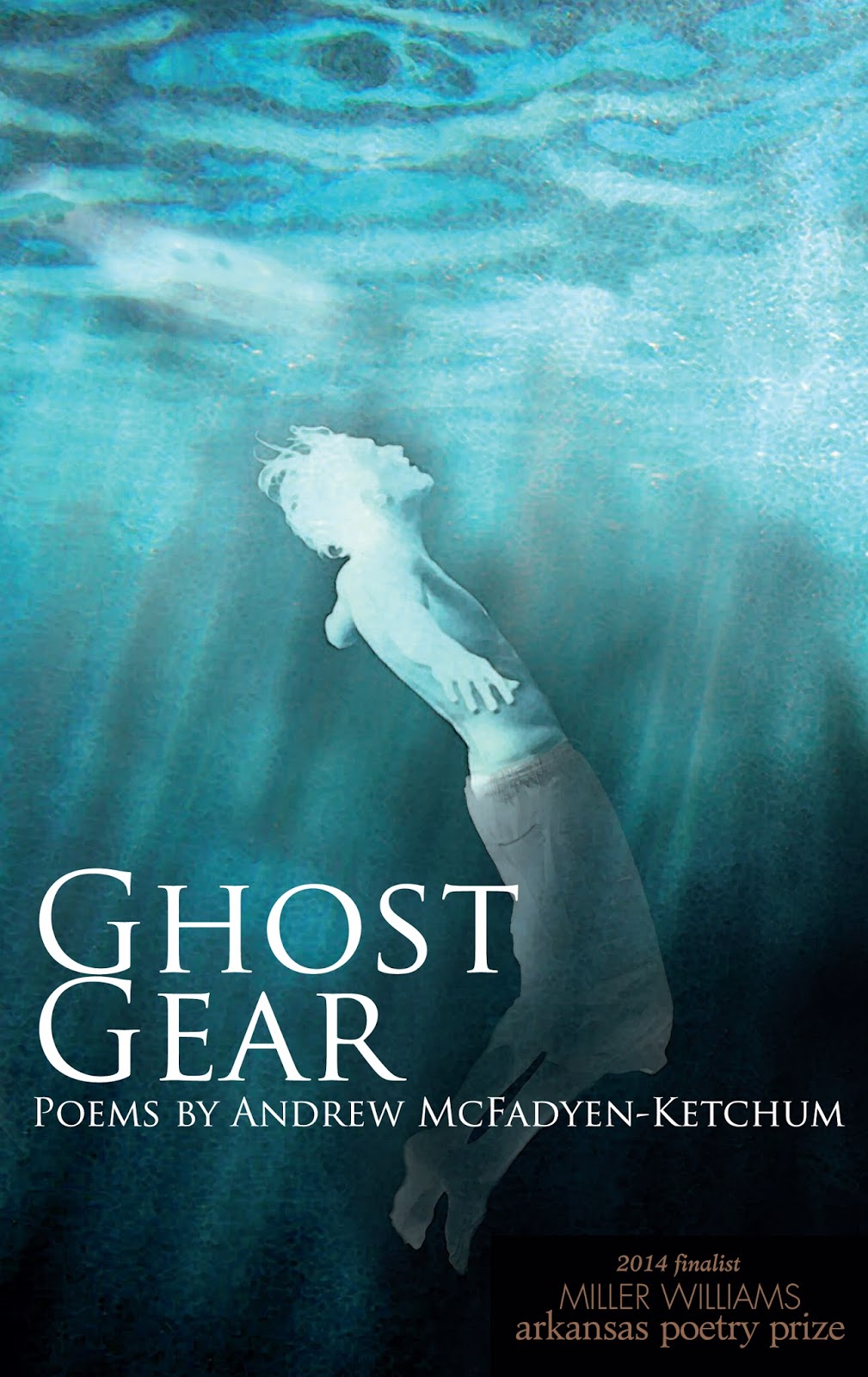
Andrew McFadyen-Ketchum is an award-winning freelance editorwriter, and lecturer at the University of Colorado. He is also acquisitions editor for Upper Rubber Boot Books, founder and editor of PoemoftheWeek.orgfounder of the Colorado Writers’ Workshop, founder and editor of The Floodgate Poetry Series, and editor of two anthologies. His first book of poems, Ghost Gear, was a finalist for the Miller Williams Prize, the Colorado Book Award, and the INDIEFABHis second book, Marysarias, is a Finalist for the National Poetry Series, 2016. Read and learn more at AndrewMK.com.


JOURNEY TO PLANET WRITE: Of Produce & Poetry

by Andrew McFadyen-Ketchum

I was a 14-year-old male. Which is to say: I was an asshole.

I was also working my first job as clean up boy of the Produce Place, a small grocer in my hometown of Nashville, TN. And I was doing a lousy job.

My mopped floors were dirtier than those unmopped. I could clean a clean window dirty in seconds. Flies were multiplying like flies.

What can I say? I was making $3.15 an hour, I was more interested in Amanda Hardaway’s hair than cleaning floors, and I was a 14-year-old male, which is to say…

So the boss, this dude named Steve who lived at the top of the hill south of my house and who’d tried to date my older sister a few times and whose kid brother, Chris, hadn’t yet died in a tragic accident—Steve approaches me and is like:

Hey. Andy. Can we talk a minute.

Hey. Steve. Uh. Sure.

Uh. OK… So, Andy, you’re doing a shitty job, and you suck overall. Jusy sayin’.

That was the gist of it anyway.

The Produce Place was set in an early 20thCentury bungalow on Murphy Road just off I-40 a ten-minute bike ride from my house. At the time, the entire sales floor consisted of produce bins: four rows of jonagold apples and kiwis and exotic lettuces. All types of beans in the summer. Tomatoes. Tomatoes. Tomatoes. Did I mention tomatoes? And kale. And six different varietals of onion. And cherries. And Rainier cherries. And rainbow chard. And and and.

The Produce Place helped turn around the neighborhood.

Built on a landfill after the Second World War, Nashville’s Sylvan Park of the 80s and early 90s was a ghetto. A neighborhood where men beat their wives and their kids, and their kids went out into the neighborhood to beat each other and to become men. White kids called black kids niggers and black kids called white kids all sorts of shit. Kids smoking dope and kids having kids. That was the law and word of the place.

But the Produce Place was different. The Produce Place was a place where kids could get jobs, where boys becoming men could be rewarded for their bodies rather than punished.

And as the Produce Place went, went the neighborhood.

The Produce Place thrived and so did Sylvan Park. Today, I couldn’t afford my parent’s house, let alone the land it sits on. Today, there are all sorts of jobs available to the kids in the neighborhood. Bars. Restaurants. Lawn care. Baby sitting. Etc. Etc.

Here’s the thing. There are no kids in Sylvan Park. Families with children can’t afford to live there. And if they can, their kids don’t work.

So the Produce Place was the only gig in town. Luckily, I had an in. My sister was one of their first employees. It was only natural I work there when I came of age. But it was also only natural that they demand I do my job. There were plenty of kids who didn’t have sister-ins ready to take my spot. If I couldn’t cut it, why keep me around?

One particularly important item on the list of ways I could do a “less shitty job and keep my job” was to “actually sweep up under the goddamn bins” under which rogue fruits and vegetables fell and quickly set up and quickly started attracting “all the fucking flies” that were buzzing around our heads.

So there I was, sweeping under the bins. When I got to the corn bins, out wobbled this old, rotted ear of corn. And as I was looking down at it, mid-sweep, out of nowhere, the line came: “What if I were this piece of corn?” And when that line came to me, I felt compelled to stop my labors and write it down. Thus I pulled out my Sharpie and grabbed the nearest corn crate and upon its surface scribed my line. And the brilliance? The brilliance continued from there.

At the end of it, I had a poem. I had no idea what it was or why I had written it down but there it was in all its awful glory. After that, I was writing poetry. Day in and day out. And I’ve never stopped. 

What I wrote was wonderfully awful then, and what I write is wonderfully awful now. But, for some reason, I keep at it, and it becomes less awful. I’ve tried to quit a few times to no avail. Poetry makes life present. When I’m writing poems, I’m at my best. The rest of the time? I’m alright.

We don’t know why or what we are doing here.

That is why we are here.


_______________________________________


Andrew McFadyen-Ketchum is an award-winning freelance editorwriter, and lecturer at the University of Colorado. He is also acquisitions editor for Upper Rubber Boot Books, founder and editor of PoemoftheWeek.orgfounder of the Colorado Writers’ Workshop, founder and editor of The Floodgate Poetry Series, and editor of two anthologies. His first book of poems, Ghost Gear, was a finalist for the Miller Williams Prize, the Colorado Book Award, and the INDIEFABHis second book, Marysarias, is a Finalist for the National Poetry Series, 2016. Read and learn more at AndrewMK.com.


JOURNEY TO PLANET WRITE: Treading Water Even in the Dryer Seasons

by Jane Rosenberg LaForge 
No matter where I am, people ask me for directions. I could be in New York, where I have lived for 18 years, or on the streets of Paris, where I have spent six days, and someone will approach me for help.  I rarely know, for I am a tourist even in my own city.  But I must look as though I have a terrific sense of direction. Or perhaps I always appear to belong, or I’m someone who knows where she’s going and how to get there.
Cub reporters were once told they needed five years of experience to get a decent job.  I got mine at the Ocean City, Maryland, bureau of the Baltimore Sun. I was the only employee of said bureau, i.e. a desk I fashioned out of motel-style end tables in my rented living room. Ocean City was laid out like an aircraft carrier: one long strip of cement. The streets were numbered and reached into the hundreds, so no one asked me for directions. You could drive in circles and find your destination. Among my many scoops was the story of a kid who drove very fast and backward in a parking lot one night. He was “doing donuts,” and drove himself into the ocean.
There was a drought that summer; the mainstream media was trafficking in the term “global warming” for the first time. Temperatures at the beach hit the 90s. I had brought my relatively new husband with me, which meant he was unemployed while I was on duty. We argued a lot about how I neglected him to I chase after fires, drunken boating accidents, and an NAACP boycott of the town.  Hotels, restaurants, and amusement parks would not hire townies, a.k.a. African-American kids who lived on the mainland. Across the drawbridge, their roads were not always paved, and their access to public sewage systems not guaranteed. It was territory the Industrial Revolution and the Civil Rights movement apparently forgot, which made great copy for me, but a lot of misery for everyone else.   
I was crossing a field of corn on a dirt road on an inky night when my car was either attacked or ran into some indeterminate yet vengeful force. It slammed against the windshield and the passenger-side door so fiercely I had to stop driving.  When I dared to look through the windshield, I saw it was the only thing preventing me from drowning. Perhaps it was a flash flood, or that global warming business had reached critical mass, and the ocean was cresting into farmland. Or this was some kind of a test, a trial by water with a blindfold that also covered my common sense.
I realized through my disorientation and panic that the field, unlike most, was irrigated. I had hit a bank of water because the system had switched on.  My job was a kind of trial too, to see if I worthy enough to transfer permanently to the Metropolitan desk. And right then, I knew the trial was over, and I’d lost. I knew because I would have rather been lost, under water and mud logged, than on my feet and on my way back to whatever I was working on. I wanted to savor this experience and mine it for its potential symbolism. It held more possibility and portent than all that transpired that summer, because I could make it mythic.
Indeed, I was demoted that December, and went onto other nowhere-newspaper jobs. I got divorced and enrolled in an MFA program. In my first year, I built a story around my watery encounter into the tale of a boy who thinks he got his skanky babysitter pregnant (waters of birth, a new beginning, etc.). Though it was not the most coherent story ever written, I had wrestled it out of my own ephemera. I won a fellowship for older women writers, and resolved to learn all of the shortcuts in the rural, suburban, and forested sprawl that surrounded the campus.  
Soon enough, I was assigned an instructor convinced I was an insult to the intelligence of all sentient beings. I’m sure others have had this experience, but she amplified the humiliation she doled out during workshop by confiding to others how ardently she disapproved of me. Because one of my thesis committee members had heart surgery scheduled for the day of my defense, I had to include her on my committee. I managed to graduate (re-marry, move, and have a child) but found myself unable to write for many years afterward. When I had any doubts, I had her voice reminding me how I should indulge them.
I have since published a memoir; four volumes of poetry; and am in the midst of working on two others scheduled for publication. But I can barely navigate the grid system of Manhattan, though isn’t that what subways and a New York native for a daughter are for? I recently was relieved of a freelancing gig. The editor disagreed with my interpretation of the myth of Prometheus, whose theft of fire from Zeus – the equivalent of writing – earned him a lifetime of suffering. I can’t find an agent for my new novel, though one agent said in rejecting it: “Your writing is beautiful, and many of your sentences are so gorgeously crafted. You have a lot of writing talent,” and if I kept working on my craft, some day “you’re really going to knock our socks off.” I wonder if she knows I qualify for Social Security.

It’s been my failures that have defined my journey as a writer. The only thing certain is there will be more of them. Yeah, yeah, yeah, I know about Samuel Beckett and “failing better.” At this point, it could be mathematically proven that this maxim doesn’t apply to my case. I don’t particularly like Beckett, but I think he’s onto something about how bleak our alternatives become if we do nothing in the face of inevitability. If I don’t know why I subject myself to ever more monstrous failures, I need only look at the settings of his plays to see what awaits me should I quit. I am a lost soul who cannot help but look for meaning in my life.  I’m headed where everyone is going, but I hope to take my time, and take notice, before I get there.
For her website: Jane Rosenberg LaForge
For the new chapbook, In Remembrance of the Life
Facebook author page: Jane Rosenberg LaForge
Twitter: @JaneRLaForge
______________________________
  
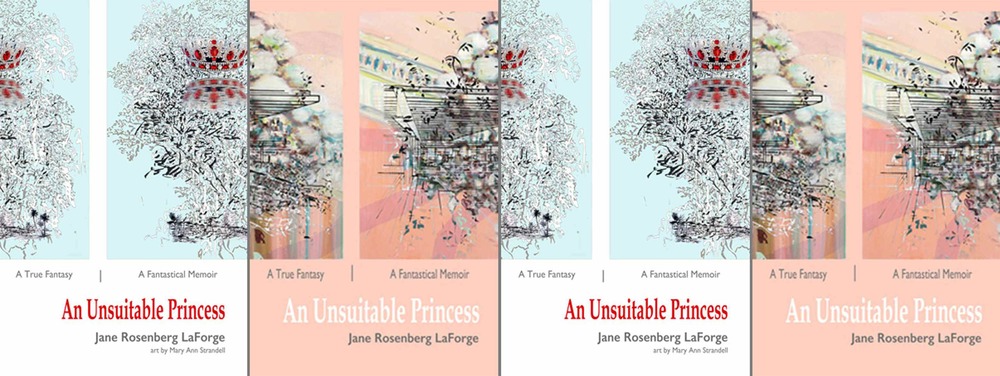
Jane Rosenberg LaForge is the author of An Unsuitable Princess: A True Fantasy/A Fantastical Memoir (Jaded Ibis Press 2014) and four volumes of poetry: After Voices (Burning River 2009); Half-Life (Big Table Publishing 2011); With Apologies to Mick Jagger, Other Gods, and All Women (The Aldrich Press 2012) and The Navigation of Loss (Red Ochre Lit 2012). Her newest poetry collection is the chapbook In Remembrance of the Life (Spruce Alley Press 2016) and her full-length collection, Daphne and Her Discontents, is forthcoming from Ravenna Press.

SaveSave

JOURNEY TO PLANET WRITE: What’s Writing? I Just Want to Help People

by Aaron Dietz

It started because I was bored. I was in a fine high school in Iowa and during class, I daydreamed stories and started writing them down.
I won ten dollars for writing a second-place piece for one of the high school publications, and it was a nice little story. But I had no idea why. It had just happened.
A couple years later a small zine published two pieces of mine in their first and only issue. I kept writing.
In Denver, I wrote for some more zines and eventually wrote a column called “100 Nights” for Needles for Teeth. I didn’t make it to night 100, but maybe I made it to ten.
In the year 2000 I started collecting some of the stories I wrote into a larger tale, like making a mixed tape, heavily influenced by my friend Joaquin Liebert, who once made me a mixed tape of the original Star Wars trilogy using only songs from a specific genre of music (I think it was classic R&B but I can’t pinpoint music to his level of geekhood).
I started calling my collection of stories a novel. I stitched it together like a series of documents, obviously influenced by books like House of Leaves.
Years went by. I collected rejection letters from publishers. I kept some special ones, including a hand-written note from McSweeney’s. I kept rewriting the novel.
I moved to Seattle, and rewrote the novel again while I worked on completing an   undergraduate degree—I was back in college primarily because I could pay the rent with student loan money instead of continuing a futile search for a job.
In school I took as many classes as I could that were taught by Bryan Tomasovich. He gave me more time than I deserved and pointed me toward the beginning of experimental fiction.
On Tomasovich’s recommendation, I submitted my novel to Emergency Press. They handed it back and said, basically, “We don’t like these parts. But what about these superhero parts? We like those.”
I rewrote my novel.
Whereas before I had used the superhero as a tiny symbol throughout, now it was a full-on superhero novel, told through a series of documents. It was funny, to a special kind of person.
Emergency Press accepted the book. It was published as Super on November 10, 2010, with an amazing look to the cover and interior provided by Charlie Potter. Friends gave me more time than I deserved to help promote it.
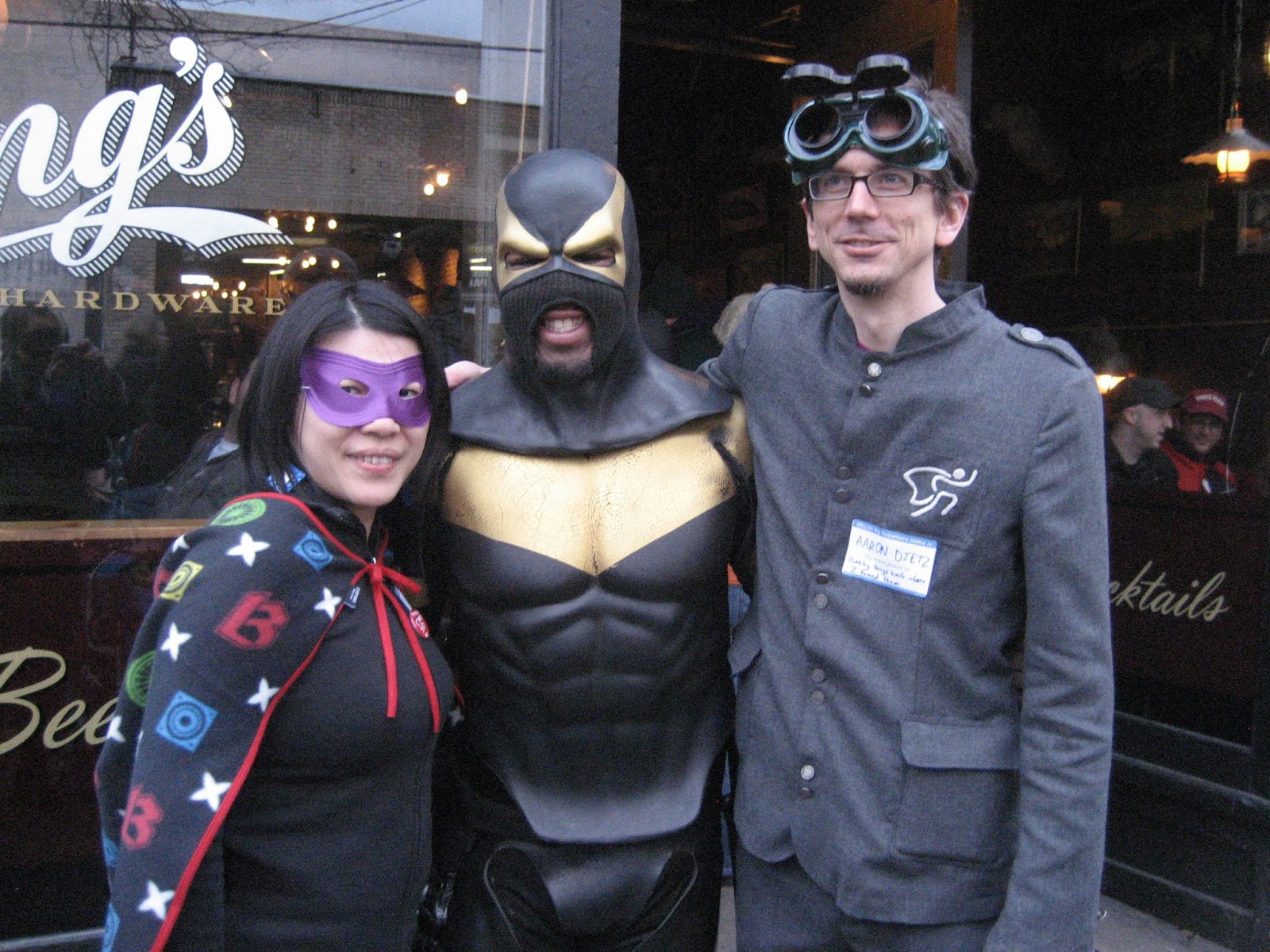
We put on what I like to think is Seattle’s most spectacular superhero pub crawl. I met Phoenix Jones and other real life super heroes, and went on patrol with them. I hung out with Black Knight, Blue Sparrow, SkyMan, Knight Owl, and so many more. I met fantastic people in plainclothes, too.
In 2011 and 2012, I took a minor break from writing and made short movies with friends. We made films in 24 hours and 48 hours and got relatively unexciting results.
Then we made movies in 8 hours and got excellent results.
This made me think about how I had just spent ten years or more creating a novel that didn’t really make the impact I had hoped it would, despite it being what I would call a satisfying little work.
I turned things around. I decided I’d create books in less than a month. I figured, they may not turn out to be as good as a ten-year project but they were darn well going to have more impact-per-hour-spent on them.
In 2013, I tried to make 12 books. I completed 9. Friends gave me more time than I deserved in helping me, including Charlie Potter again, who produced fabulous covers for 8 of the books.
The impact was small but for the time I spent on them, outstanding. Some books I produced in a weekend. Because of the small investment in time, the impact made sense and felt worth it. I was learning.
I started catching up on being an adult. This involved acting like I owned a home, which was good, because I did own a home (this had happened in the same year in which I produced 9 books). I wrote less and less.
My writing time became precious, but I was armed with the knowledge that I could create and produce satisfactory projects in very little time. And so I do.
I’ve become efficient: I rarely write anything unless I’m 80% sure it’ll be published in some form. Larger projects I get involved with are one-year projects at the maximum. Smaller projects are a couple weekends, maybe four at the most.
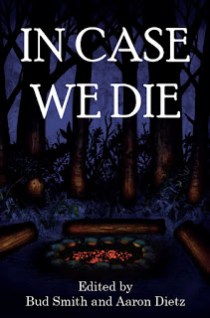
I work with the best people. Earlier this year I edited a book with Bud Smith—In Case We Die, an anthology of the strangest things that have happened to people. The intention was to encourage people to talk about the weird stuff that we don’t feel like we can talk about. It wasn’t a lot of work to do the book, and I think it’s helping the cause.
Recently, I helped put together the interior layout on For They Know Not What They Do: The Letters of Peter C. Kilburn. Peter worked as a librarian in Beirut from 1966 to 1986. He was taken hostage and killed.
I’m always telling people that they should write at least one book. It felt good to help Peter with his. It was probably about twelve hours of my time. Twelve hours to help someone posthumously produce their book? That felt great.
And that’s what I want: for the projects I do to feel good and have positive impact, within the very small amount of time I have to give to the art.
And that’s where I’m at as a writer, now, if I’ve even truly become one. Maybe I just like to help people, and writing just happens to be an efficient way to do this. And so here I am.
 _______________________________________


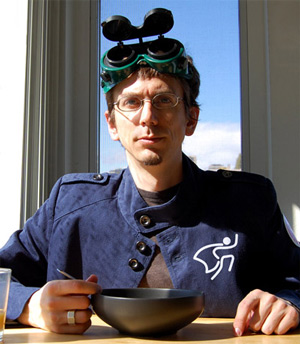
Aaron Dietz is the author of Super (Emergency Press, 2010), an experimental novel about superheroes that is obviously written by an instructional designer (there’s a test after every chapter). Dietz has created courses on computer programming, engineering, and green design. At parties, he likes to ask strangers, “What’s the weirdest thing that has ever happened to you?”


JOURNEY TO PLANET WRITE: Mirko and other Muses

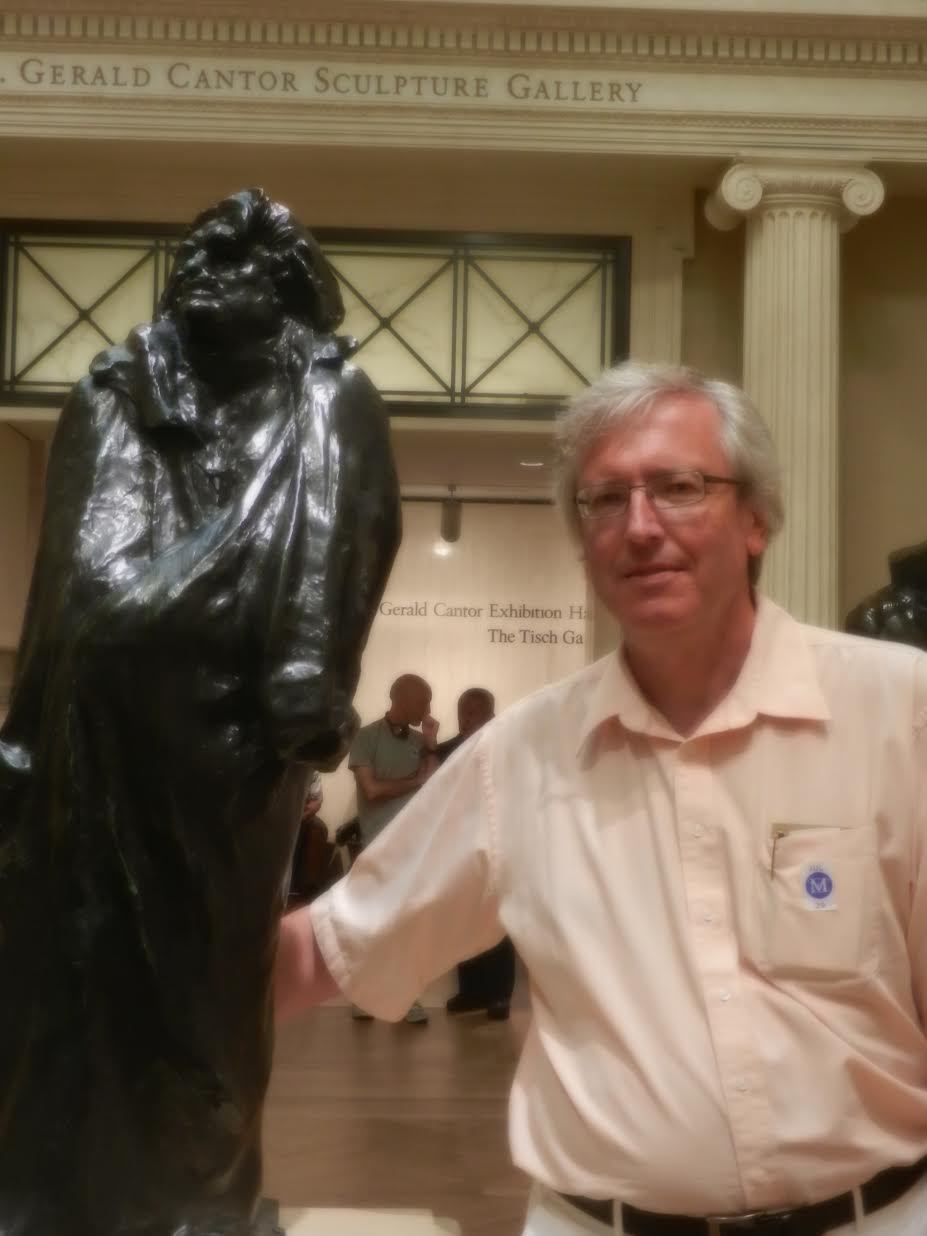
by Andrew Stancek


“You will bail us out, won’t you, sweet Mami,” Mirko laughed, at the conclusion of my 2011 story called “Moving On.” That last line from the first of my Mirko tales marks a beginning.  

At the time, my stories, reverberating with the influences of Chekhov, Faulkner, Munro and other luminaries, were only taking me down a death spiral.  But Mirko, a hooligan in Bratislava in the sixties, was different.  He shook me, called me by name and said, “Come, let’s do a little slumming.  We’ll have a blast.”  

In that flash story he is thrown out of home by his mother and handed over to a father only marginally more responsible than he is. Mirko pushes all the buttons.  He came, he told, he departed.  Almost thirty of his misadventures have since been shared with readers.  I’ve moved to other narrators, to other tales.  But Mirko’s in-your-face attitude, his eagerness to rush in regardless of consequences, was a breakthrough.  I continue to wrestle with long stories and a whale of a novel while finding the challenges and possibilities of flash liberating. 
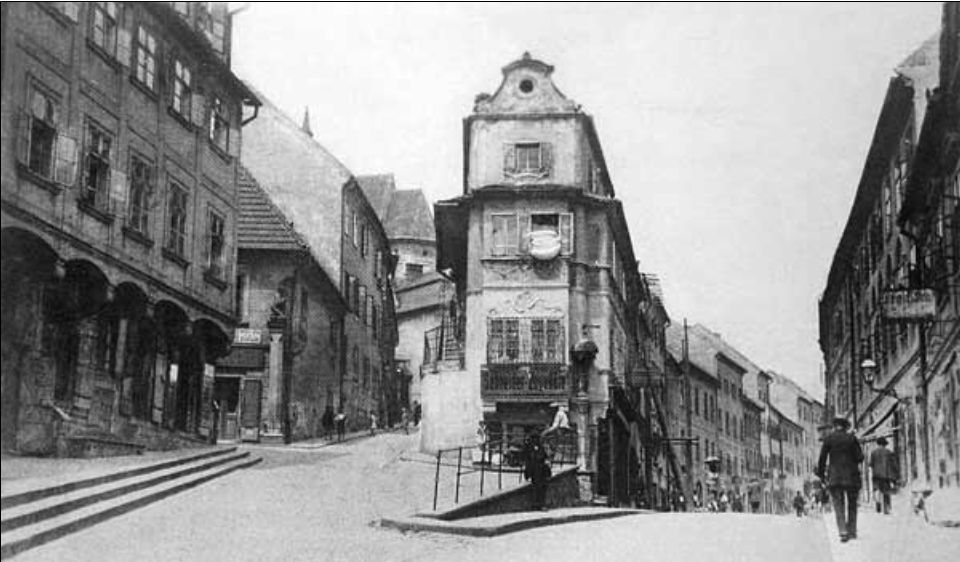
The world of Bratislava, of the sixties, of my childhood, has been fertile soil.  I have dreamt of that world all my life, and now I tinker with the right words.  Other preoccupations have followed:  flying, food, war, fatherhood and sonhood, death. 
Adam Zajac, in my serialized novella Wingy Unbound, has discovered the secret of flying which I have longed for ever since watching the gulls soaring over the Danube. A book of my early childhood called Perutenka concludes with the heroine growing wings and flying off, and ever since, imprisoned by one limitation or another, (too young, too clumsy, too daydreamy, too, too, too) I have longed to soar like the gulls, and do so with my protagonists.

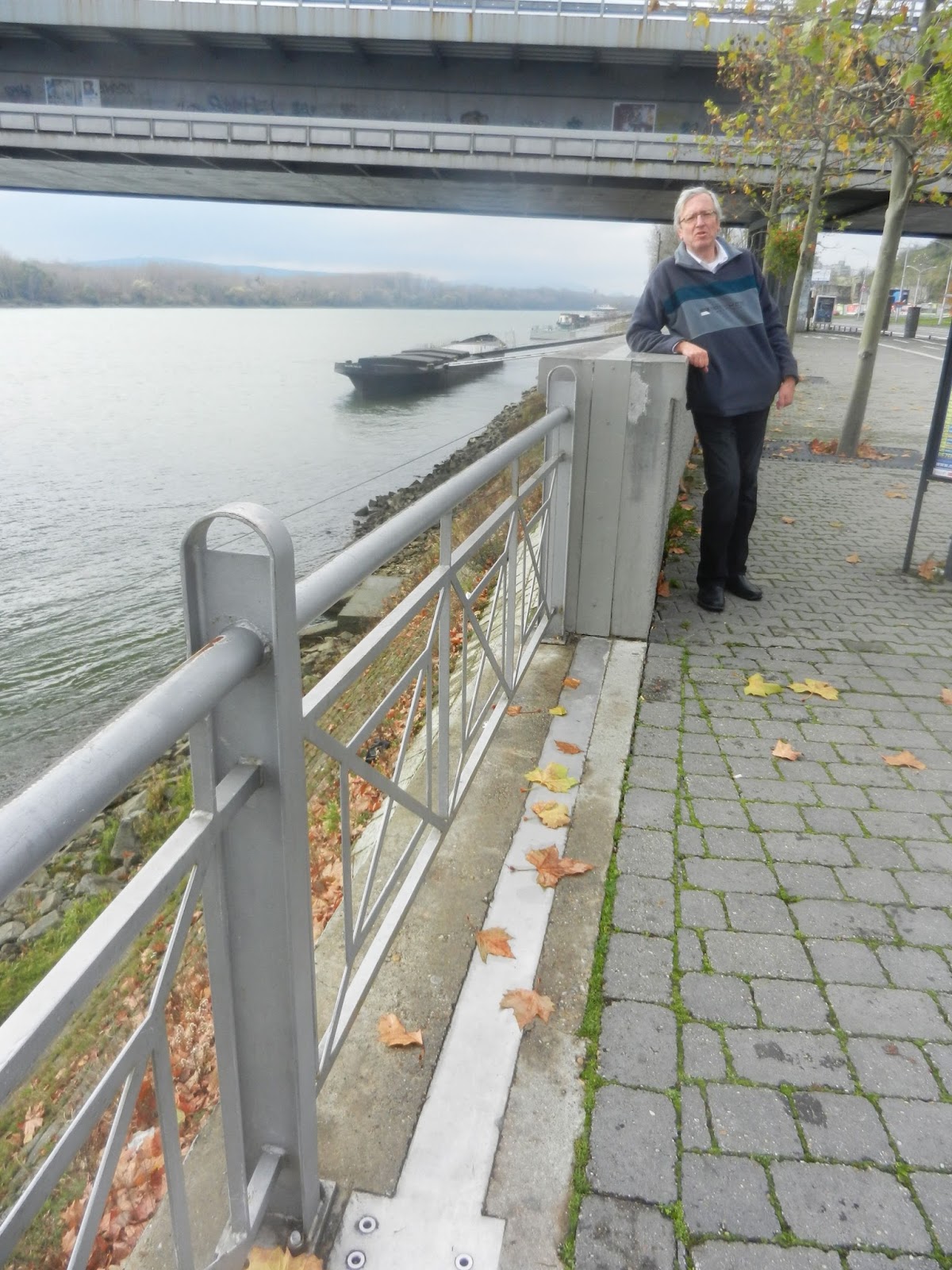
Frequently, as I sit at my computer in southwestern Ontario, I suddenly inhale the sweet cherry aroma of bublanina in my grandmother’s kitchen, my mouth fills with the tang of bryndzove halusky, and I am transported to Bratislava, my magic kingdom. I am again at my grandfather’s side as his magician hands turn empty boxes of chocolates full; we ramble through the woods and return with a basketful of fragrant summer cep mushrooms, hands sticky with the juice of berries, both crowned with a wreath woven of field flowers. I am again beaten in dark passageways by groups of jeering hoodlums; my palms throb after an encounter with the bullying Comrade Houskova’s idea of appropriate classroom punishment. My father and I make our Easter sibacka rounds, greeted by neighbors with chocolates for the youngster and a glass of something to take the morning stiffness out for him, culminating in full-voiced singing of folk songs. From those kernels, stories grow.


I dream of my father, his early escapades with me, his dark moods, his absences, his betrayals, his death.  In my eulogy at his funeral I shared the story of how he, a non-swimmer, rescued me when a sudden undertow grabbed my raft, and I only cried in terror.  As a three year-old I accompanied my parents, still married, to Rosutec Mountain in the Tatras, where I scrambled up a bank, fell, looked back, to see a cow low in my face.  My father yelled, “Hybaj, kravisko”, (Get away, huge cow), and that of course became a family tale, and another of my stories. My darker memories of him culminate in my stories of sons cutting down the rope around father necks.
War is the context in that novel I keep struggling with, which I will perhaps, one day, finally bring to a conclusion.  I have seen tanks first-hand, rumbling through the streets of my occupied homeland.  After immersing myself in research to ensure I avoid missteps, I walk away from it, time and time again.  But it will come.  It continues to bubble in me – it has to come out.
So I wake in the morning, see the glint of light on broken glass, hear the echo of an owl hoot, smell cinnamon and nutmeg folded into apple strudel.  My fingers race on the keyboard.  A story pours out.  I break off, like Sheherazade in The Arabian Nights who managed to postpone her death, night after night.  A thousand stories later, she was deemed worthy of living on.  I have many stories yet left to tell.  Perhaps even a thousand and one.

_____________________________________


Andrew Stancek entertains Muses in southwestern Ontario.  His work has appeared in Tin House online, Every Day Fiction, fwriction, Vestal Press, Pure Slush, Journal of Compressed Creative Arts, and Camroc Press Review, among others.  He’s been a winner in the Flash Fiction Chronicles and Gemini Fiction Magazine contests and been nominated for a Pushcart Prize.

Read Andrew Stancek’s work:

Horses’ Heads


SaveSave
SaveSaveSaveSaveSaveSave

JOURNEY TO PLANET WRITE: Three Mentors and a Lady (Me!)

by Tara Laskowski
Purchase at Amazon.com

Like many writers, I’ve always wanted to tell stories. I’ve got the notebooks and the diaries. I bound my hand-written stories and drew pictures to illustrate them, adding an “About the Author” on the back cover with a photo. I wrote bad poetry when boyfriends broke up with me. Blah blah blah.


For me, the path in writing has really been paved by people. The people who are willing to read my writing and give me an honest assessment. The people who understand when I tell them I can’t go out tonight because I’m in the middle of a draft. The people who didn’t tell me I was insane when I wanted to move to another state and go more in debt to get a graduate degree in creative writing.

I am fortunate that there are a lot of those kinds of people in my life, and that I continue to meet them. Writing is for the most part a solitary act, but you can’t do it in a vacuum.

There are three of those people in particular that encouraged me at times when I most needed it. Folks that I consider mentors, heroes, friends.

The first is Thomas Jones, my English teacher in high school. The guy who taught us that we don’t have to love all the books we read in school—that a critical eye is ok. The man who picked me up at my house one night and drove me to the local college to hear Joyce Carol Oates read. Up until that moment, I’d never met a “real” writer before, let alone one whose stories I adored. Mr. Jones was the faculty advisor for our literary magazine, and when controversy erupted my senior year because of some of the language and content manner in the stories and poems, he was one of the only faculty members who stood up for the students. Who made us realize that our words mattered, that they were powerful, and as long as we used them with care we were justified in defending them. He was the first person of authority who showed me that writing and reading was wonderful, and who took the time to tell me that I might have some talent.

All that led me to become an English major at Susquehanna University in Pennsylvania, although when I enrolled as a freshman I still had my sights on going to law school. Then I took a writing workshop with Dr. Gary Fincke.

I’ve never had a writing workshop—even in graduate school—better than the workshops I took with Dr. Fincke. He never seemed tired or uninterested. Even with the stories that needed more help than others, he was patient, kind, and had this uncanny ability to find the unique talents and strengths of every writer that came through those doors. Even now as he gets set to retire from SU at the end of 2016, I can still see the passion and enthusiasm and true affection he has for all of his students. The man is a saint. Just ask any writing alumnus from SU and you’ll see. He’s got his own fan club.

So instead of law school, I found myself at George Mason University pursuing an MFA in fiction. I took some great classes there and met some dear friends, but somewhere in the middle of my thesis I had lost my way. I was working on a novel that was too long and too cumbersome. I graduated, and hadn’t published anything in years. I was feeling aimless. I had forgotten what it was like to have fun writing.

On a whim, I sent in an application for the Kathy Fish Fellowship at SmokeLong Quarterly, a flash fiction publication that I’d tried for years to get into and never had any luck. I then forgot I’d applied. In 2009, on Barack Obama’s inauguration day, I got a call from Dave Clapper at SLQ—I’d won!

During that year of my fellowship I wrote dozens of stories. And thanks to Randall Brown, who was the lead editor at the time, I learned how to have fun writing again. His eye and attention to detail is something to be in awe of. At a time when I might’ve given up writing altogether, Randall introduced me to a whole new kind of writing. Which gave me the freedom to play and experiment with words and stories. That year was a pivotal point for me. More like a slingshot kind of year. I went from publishing one thing—one thing—over the course of several years to publishing dozens in one year. But more than that, I was finding my voice and my style.


I think sometimes we get caught up in the misery of the solitary act of writing. The rejection after rejection. The tireless hours editing when we could be watching House of Cards. Those are all valid feelings, of course, but it’s good to step back sometimes and recognize the folks around you who are cheering you on. Whether it’s your husband, who takes the kids one night so you can work on your draft at Starbucks for a few hours, or the editor at the literary magazine who sends you a few lines of feedback on a friendly rejection, or the random fan that sends you an email gushing over a story you published online—these are the real reasons why we do what we do, and why we continue to do it.

So thank you to my mentors, my friends, my heroes. All of you out there who are on this crazy journey with me. You matter more than you know. After all, who are we kidding? I would’ve made a terrible lawyer.

__________________________________


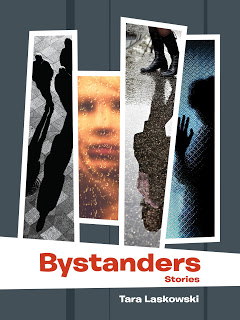
Tara Laskowski‘s short story collection Bystanderswas hailed by Jennifer Egan as “a bold, riveting mash-up of Hitchcockian suspense and campfire-tale chills.” She is also the author of Modern Manners For Your Inner Demons, tales of dark etiquette. Her fiction has been published in the Norton anthology Flash Fiction International, Ellery Queen’s Mystery Magazine, Alfred Hitchcock’s Mystery Magazine, Mid-American Review, and numerous other journals, magazines, and anthologies. Since 2010, she has been the editor of the online flash fiction journal SmokeLong Quarterly.


Author photo by Evan Cantrell. 

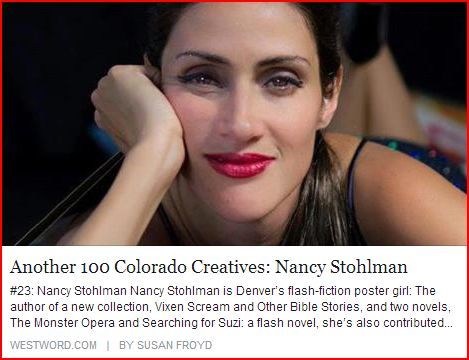
DERAILED: Nancy Stohlman’s Interrupted Journey

Nancy Stohlman
Writer, Performer, Musician


This spot was destined for Nancy Stohlman’s Journey to Planet Write; however, fate intervened on an interstate near Denver on Friday 5/20 when she was hit head-on by another car.  She’s home now but suffered a broken elbow along with the 6 broken ribs

It just doesn’t feel right for me to fill this space with someone else’s journey and hopefully at some point in the future, Nancy will write her own story, but in the meantime, I decided to ask a few of Nancy’s friends to contribute stories, comments, photos, anything to honor Nancy. 

Brought to you by Women Who Flash Their Lit

_____________________________________ 


From Sally Reno:


“One day, a couple of years ago, Nancy sent me an email which read, ‘This is what I had left after editing 40 pages of a dystopian novel.’ She attached the following:

Indentured  

How much are you getting paid to do this? he asks, a crease in his forehead.Enough to pay off my student loans I said, as he begins to tattoo the Coca-Cola logo across my face. 

~Nancy Stohlman

Look how much she gets done in 37 words: scores at least three direct hits on the social condition, makes a funny and creates a memorable character. Wow!”

_____________________________________ 


From Meg Tuite


~the world does rotate

We are in New York reading for the kickass flash anthology, Fast Forward: A Collection of Flash Fiction, edited by Nancy Stohlman, Kona Morris, and K. Scott Forman. It is my first reading outside of New Mexico.

“You’re next,” Nancy says. She illuminates blasts of greater shores to push toward. Every bit of her is lit electric beauty and bemused camaraderie.

The rest is a blur of acting as though it’s no struggle at all; I’m used to this, I’m not about to barf. I see Nancy’s wild smile somewhere in the midst as she asks me to “eat the mic.” I put my mouth over it and get laughs. That rocks me through the rest of the reading.
I become a groupie. I send my work to all of their anthologies and go to all of their readings in Denver, Portland, New York, Denver, Denver, and Denver. The LOVE is HUGE with talent, humor, and a damn great time!
In Portland we started shooting rubber bands when a guy glued himself to the mic and read on and on and on while the bartender and waitresses were putting up chairs and closing the place down. He was deeply embedded in his words, unwilling or unable to notice he had lost his audience long ago. As one of my favorite poet’s, Bill Yarrow, put it in one of his poems about poets: ‘Just two more…”
Nancy Stohlman, Len Kuntz, Karn Stefano,
Robert Vaughan, and Meg Tuite
I’ve been going to Denver for the last six years to read and hear some of the best voices out there. Nancy Stohlman is a phenomenon. Her work is extraordinary, like her being, and she rocks it from flash master to writing and starring in a published opera, to the wild-ass lounge singer of heavy metal songs in her band, “Kinky Minx.”
There is no one like her and never will be. Her work is fearless and without limits. Stohlman is yes, mythical beauty, an unparalleled writer, teacher, and promoter of her peers, but, never to be diminished is her beyond the beyond hilarity, her sidelong glance, her passing remark that has me running to the bathroom after spitting out my beer.


_____________________________________ 


From Kathy Fish


“Nancy and I read at Syntax Physic Opera as part of Monique Lewis’s At the Inkwell reading series in February!  It was a great night and Nancy of course knocked it out of the park reading her amazing stories. 


Hugs, Nancy! Get well quick!” 


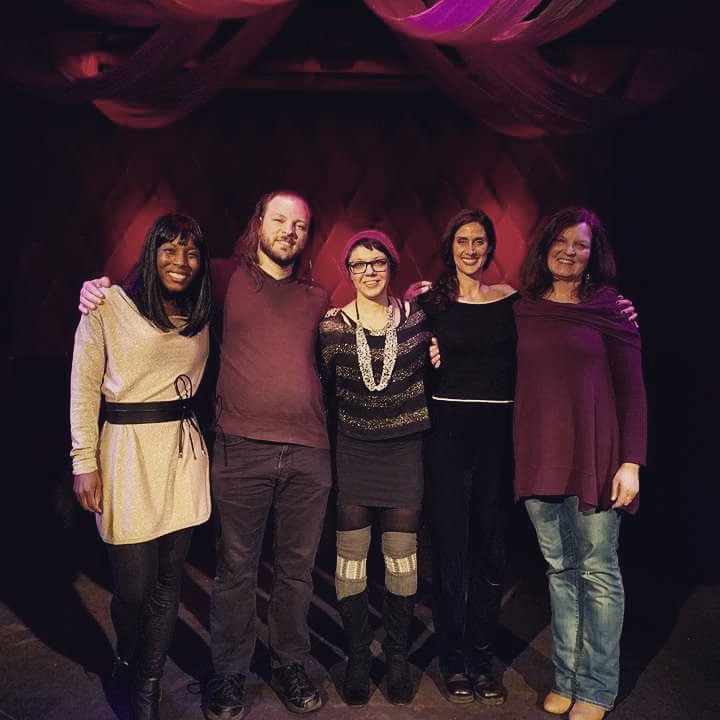
(left to right: Monique Lewis, Nick Morris, Kyria Abrahams, Nancy, Kathy Fish)


_____________________________________ 


From Ashley Inguanta


About Nancy’s story “My Father is Trying to Set the World Record for Days Spent Petting a Shark”

I love works of flash that use extraordinarily small canvasses, and there is so much to admire about this story. This work of micro fiction brings my fingers over the shark’s skin, over and over, and I am fascinated.  I feel the power and weight of goals, the uncertainty of dead air. Will the shark snap? Or will the father keep all of his fingers? For now, we wait.


Here is Nancy’s story, nominated for a Pushcart Prize by Blink-Ink


My Father is Trying to Set the World Record for Days Spent Petting a Shark 

The trick, he says, is to just lightly move the fingers. The shark has the frozen, unimpressed expression of all sharks. Are you coming home for dinner? I can’t stop now, he said. It’s only been 9 hours. It’s about goals, he added. Your mother never taught you the importance of having a real goals.

~ Nancy Stohlman 


_____________________________________ 


Kathy Fish, Sally Reno, and Nancy Stohlman


From Gay Degani

Nancy Stohlman, founder and curator of Denver’s F-Bomb reading series discusses Flash Fiction with Kathy Fish, Sally Reno, and Gay Degani at Bartleby Snopes.

Link to video: Mouth Crimes


_____________________________________ 


From Jayne Martin

Nancy is the personification of fairy dust. She creates magic in every word she writes and then, if you aren’t already sufficiently mesmerized, damned if she won’t tantalize you with tunes in a voice so seductive that the Sirens of the sea bow to her awesomeness. 
After meeting on a Facebook writer’s page, taking her flash fiction class, and swooning over her collection, “The Vixen Scream & Other Bible Stories,” I got to meet and hang out with Nancy at AWP a few weeks ago.  She was as lovely a human being as she is a talented writer, and I’m honored to call her my friend. 

It is said that there are no accidents in the Universe, and I believe that.  On her death bed, Nora Ephron’s mother told her to take notes because everything is copy.  I say it’s all fodder for flash and I can’t wait to see what Nancy’s brilliance makes of this experience. 

According to medical experts, Nancy, you shouldn’t be here, but you are because the world needs your gifts, and the people who love you need that beacon of light that is your incredible spirit.  Sending you bushels of love and healing energy, my friend. 


_____________________________________ 


Consider donating to the 

Nancy Stohlman Accident Fund: 


JOURNEY TO PLANET WRITE: Channeling Benjamin-The Data Made Me Do It

by Linda Wastila
On January 2, 2016, I marked my ten-year anniversary ofwriting. How do I recall so clearly when I began writing? And, after a decade of pen to paper, much of it devoted to two-and-a-half novels that remain unpublished, why do I even bother?
Let’s back up. By day, I’m a scientist, first trained as a pharmacist in the bucolic kingdom of Chapel Hill. I started down the pharmacy path as a means to medical school but discovered I didn’t want to deal with warts, ear infections, and patients’ poor lifestyle choices. I turned to public health, where I learned a lot, including the sad fact that after five years of an undergraduate curriculum studded with science classes and multiple choice exams, I didn’t know how to string together a sentence. My thesis advisor mandated I get a writing tutor. Which I did.
My first job was at a Boston think tank. My office overlooked the entrance to the emergency room at New England Medical Center. It was loud, distracting, fascinating existence. There, I wrote nothing you’d be interested in: passive voice, peer-reviewed manuscripts filled with science jargon. Shortly into my first gig, I realized I wanted to run my own studies, which meant I needed a Piled Higher and Deeper. I returned to another bucolic campus—Brandeis University. It was there I fell in love with… numbers.
Fast forward to Baltimore, 2005. As a Research Professor at the University of Maryland, my job was to grow our department’s research endeavor. My salary was 100% covered by me. Which meant a LOT of grant writing. Fortunately, I was good at grant writing and had several studies, almost all involving gigabytes of data that required massage and analysis using sexy techniques like negative binomial regression. But I acquired one unusual project that required me to look both back in time and into the future regarding psychiatric medication development. The study required both analysis and reading about drug discovery, theories on illness manifestation, and how chemicals alter psychiatric maladies.
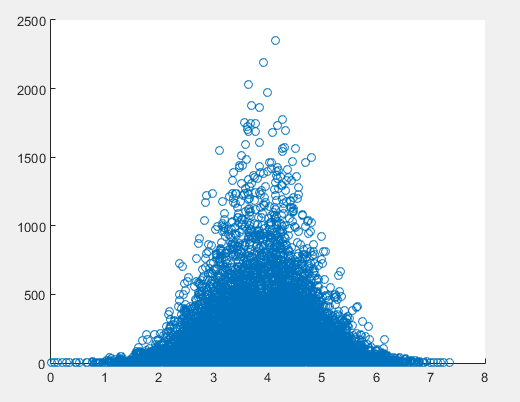
I read at night, crunched numbers by day. One afternoon, while studying data on health care costs among mentally ill people, I noticed several individual points scattered far from the bulk of the others. The outliers. And it occurred to me, for the first time, that those data points were people. Real people. Individuals with serious and expensive mental and physical health problems. Which made me ponder those dots of data, ponderings that didn’t make themselves known to me until…
I woke up one morning and my first thought was, “Who is Benjamin Michael Taylor and why is he in trouble?”
I got out of bed, went to my computer, and wrote a short, incoherent paragraph about Benjamin. I shut the file, went to work, and forgot about him.
Until six months later when, in the weeks between Thanksgiving and Christmas, I stumbled across the file I’d named ‘benmich’. As I read my notes, his entire story tumbled before me.
Benjamin consumed me during the holidays—What did he look like? Did he believe in God? What music did he listen to? I didn’t know what to do with the information. I believed myself mad—crazy mad—because Benjamin became an obsession: I saw him in the streets, I dreamt about his tattoo, I woke at night and worried about him locked up in the loony bin.
On January 2, 2006, after not listing ‘writing a book’ on my list of New Year’s resolutions, I began to type out the words stuck in my head. At first, I wrote tentatively—what if I got stuck? What if my words sounded ridiculous? But the writing came easily—I was in ‘flow’—and continued until I finished Ben’s story five months and 183,000 words later.
During those five months, it felt as though I was a medium and someone else channeled words through my hands onto the keyboard and onto the screen. I worried my protagonist and I shared a common malady—bipolar disorder. What else explained my extreme focus and productivity? Much later, I found out frenzied writing is a medical condition called hypergraphia, a compulsion to write. An incredibly heady and empowering experience. I believe if my first foray into writing had been ponderous and tedious whether I’d still be at it because, as I’ve since discovered, writing IS hard. Damn hard.
I continue to spend every morning, often in the dark, writing for 30-40 minutes before my family wakes and the day swallows me. I pluck away minute by minute, word by word, because in those blessed hypergraphic months I discovered I love the journey of creating with words almost more than the creation itself.
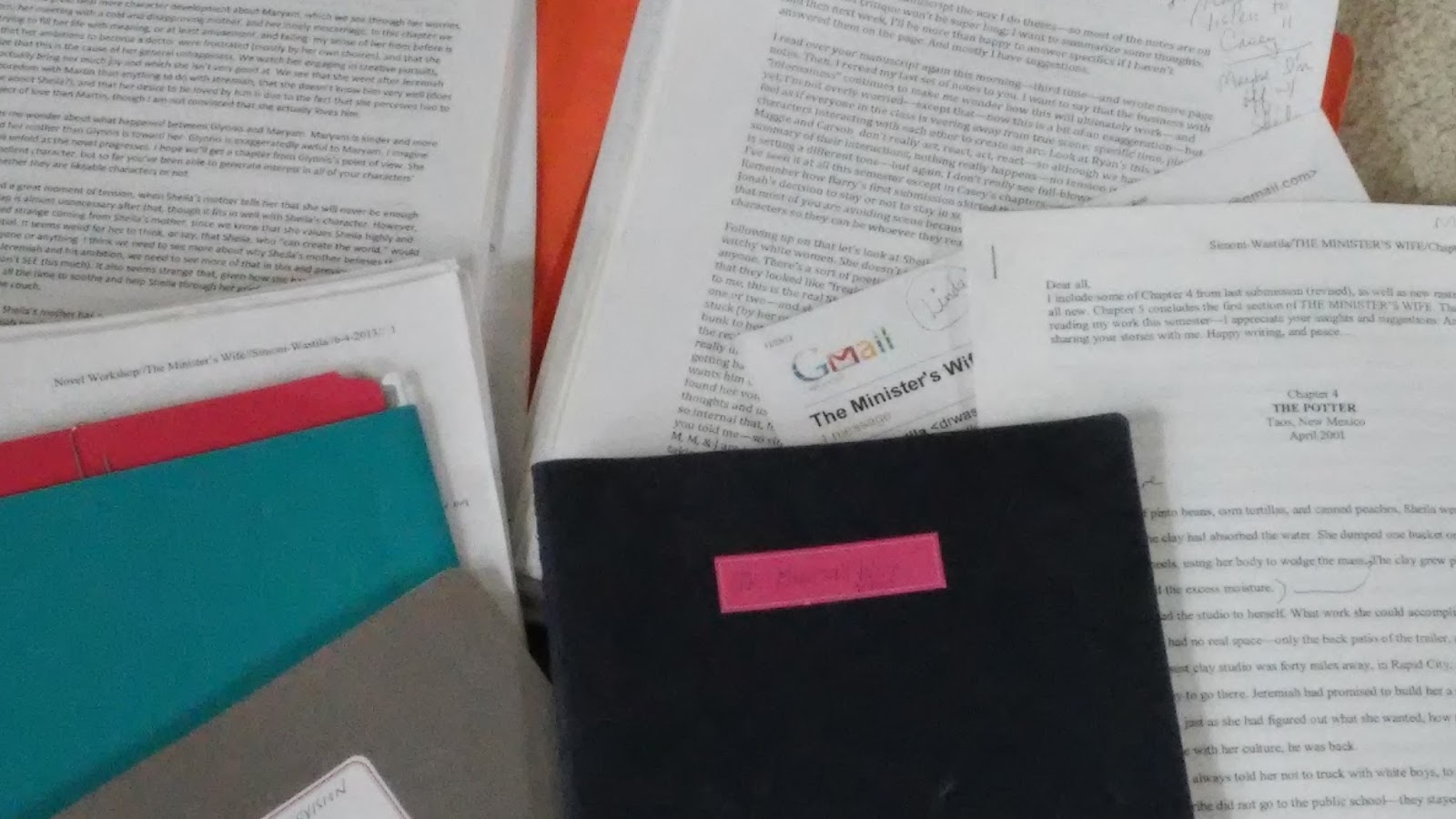
Ten years later, my sad-lad literary creation BRIGHTER THAN BRIGHT is exactly half as long as the first draft. I’ve continued Benjamin’s adventures in PURE, a novel of academic malfeasance. I’m marketing my novels in hopes of finding a sympathetic agent or editor who wishes to help me launch my babies into the world. My third novel, THE MINISTER’S WIFE, started three years ago for my Master’s thesis, remains a glorious mess.
As it should be—novels are beasts. And it’s this challenge—and pleasure—that compel me to write.
In the end, data drove me to write. I wrote what “I knew” and discovered the people behind the data points have stories to tell. So I try to tell them. Over the decade, these problems have become personal, affecting friends and family, but these experiences only fuel my need to write their stories, to bring to light my take on my world.  
_____________________________________


LJ Wastila writes from Baltimore, where she professes, mothers, and gives a damn. Her Pushcart- and Best-of-the-Net stories and poems have been published at Smokelong Quarterly, Monkeybicycle, Flash Frontier, Scissors and Spackle, MiCrow, The Sun, Blue Five Notebook, The Poet’s Market 2013, Hoot, Camroc Press Review, Every Day Fiction, and Nanoism, among others. In 2015, she received her MA in Writing from Johns Hopkins. She currently serves as Senior Fiction Editor at jmww. In between sentences, she blogs at Leftbrainwrite.