Category Archives: Uncategorized

Beyond the First Goal

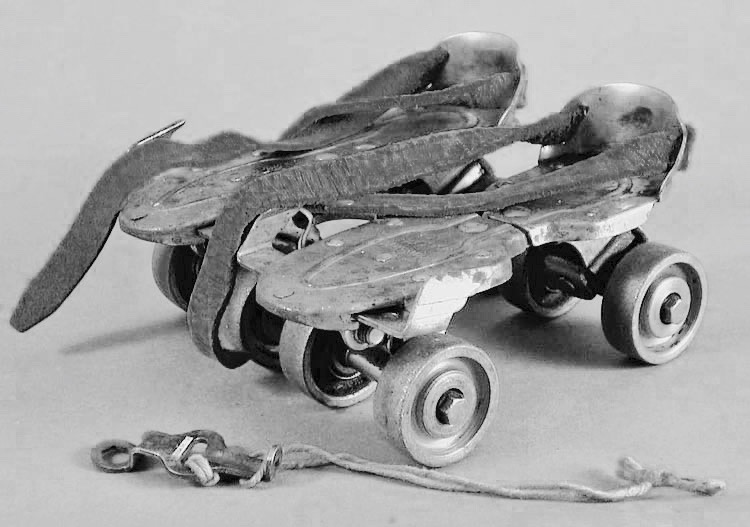
When we are new at something, sometimes all we can think about is that first goal.  Learning to skate doesn’t look that hard.  If  we can stay upright, feet on the sidewalk (or ice), body vertical, we’ll soon be doing figure eights and sailing backwards. The same goes for writing.  When we sit down at the keyboard to write a story, we figure if  we can get enough words on the screen, we’ll have a tale worth telling. 

In some ways, we need this attitude to get started.  If we knew we’d fall on our asses for the first twelve times we skated over a twig, a crack, our sister’s Barbie doll, we probably wouldn’t try.  We need that initial belief in ourselves to put the skates on in the first place.  The same is true for writing.  We picture ourselves  clacking away at the computer keys with lines of type building and building.  It is the only way to deal with our initial fear.
However, how we handle the results of those first attempts can dictate success or failure.  For many, a bruised butt and bloodied knees spell defeat.  “I don’t want to do this!  This is too hard” and they head inside to watch Saturday morning cartoons.  Others wear their scabs like badges of honor and take a moment to reassess their goals.  They realize they can’t jump from standing upright on skates to skimming down Devil Hill, carving eights in the liqour store parking lot, floating backward to the awe of the younger kids without blood and guts.
The same is true with writing.  Although there are those who have a natural talent for the written word can sit down and write it without too much angst.  But these are rare cases.  Most of us may write a story that has many strong elements, but as a whole it doesn’t work.  Not yet.  And we need to reassess and learn the craft.
This is the make-or-break moment for most writers, the moment of looking at a piece of writing as it might be read by others, readers who do not live in the head of that writer.  The ability to look at one’s own work with a critical eye does not come easily.  It is a skill that is learned with practice, patience, and awareness of what works and what doesn’t.  An expertise that evolves over time. 
Just as a young roller skater learns the sidewalk is smoother than asphalt, a writer learns clarity is more important that an obscure turn of phrase, but to do this, both must be willing to see beyond their first goals.  They must accept the reality that becoming good at something requires the understanding that learning is a process, that the large goal must be broken down into smaller goals because everything is more complex than we first perceive. 
There is a difference in skating and writing.  We teach different muscles to work harmoniously together.  In skating we train our bodies and our brain too, but most it’s about legs and balance and reaction.  In writing we train our brains–and our hearts. 
How do we train our brains to write?  We set up mini-goals, lots of them, beyond our first goal.  Here are a few I believe in, though sometimes I find it hard to actually do them all!
Mini-Goals for Each Story
  • Create content by taking notes, brain-storming, writing a “shit” draft
  • Write a draft
  • Do research to understand the world you’ve created or the personalities
  • Think about story structure
  • Make certain everything in a story serves a purpose (especially in flash)
  • Be willing to delete that which doesn’t fit into the structure
  • Go through the story to improve the language
  • Make certain everything that needs to be clear is clear
  • Make certain that verbs are active, that nouns are specific
  • Proof-read carefully
  • Set it aside (this is one of the hardest mini-goals because usually at this stage we are sooooooo excited about what we’ve created, we can’t wait to send it out)
  • Reread and make changes after it’s been set aside
  • Ask a trusted reader to read it (trusted: gentle, supportive, yet honest, honest, honest)
  • Decide what notes you agree with and what you don’t and make edits
  • Set aside again, at least an hour or two so that when you proof-read for the final time, you have enough distance to find now what your eye skipped over before
  • Send out and cross fingers
Mini-Goals for Personal Growth
  • Read widely and deeply
  • Talk to others about writing
  • Be open-minded
  • Try new genres
  • Be a mentor
 None of this is necessary if a writer is writing only for himself.   Just as skating up and down the block might make one child happy, putting together a story for fun can work for the “Sunday author.”  But if your goal is roller-derby, you’d better to be willing to work.  And if you want to be published?  Guess what…
Republished here from an article by Gay Degani at Flash Fiction Chronicles, publisheNov 22, 2009 

Hint Fiction: Three


The Landing

Silhouettes sway under a hunter’s moon. Crouching in muck, Dad whispers, “Humans, returning after 40 years.” I ask, “What do they want?” He frowns. “Us.”

You Thought You Could Crush Her

Day lifts its tattered curtain; wind rips through wheat. Arms in air, nightgown clinging, she’s a dervish in the field, her rubied ax held high.
Rest Stop on the I-10

I snatch the baby and sprint, asphalt burning my naked feet, into the willows. The mother wails. The father bellows. Too late. She’s mine now.

Found in a virtual drawer: a poem from someone who doesn’t poet

Raw Silk

We tromped in deep grass, bumping shoulders, walking dogs.

You had the Frisbee, I carried the plastic bag the onions came in.
From your pocket you drew a mustard sandwich, 
We drank from the fountain built into a stele of stones.
In fall the trees wore crimson bonnets, yellow too, and orange.
The terrier tormented leafy piles, the poodle gnawed on sticks.
You caught your scarf around my neck, and pulled me close.
I searched the field for a private place because the shack was locked.
Snow made the land a fleecy bed, quilted by the prints of deer. 
Dogs dashed from corner to corner, tearing through the sheet of white.
Your letter crumpled in my ungloved hand, I wept,
The pond stiff with polished diamonds in the frozen sun.
Now, the swath of brown stretches out like silk, beauty in monotony.
The poodle chases crows, trots back to me with soulful eyes.
Ducks seam the pond, shaking their wings, as if to wake the spring.
Me, I scuff along beneath the pale of cloud. Your scarf is all that’s left.

Fiction from the Archives: "SPOTTED & SOUGHT"

Fantasy written by Gay Degani, published in 10 Flash Quarterly, January 2010

Spotted & Sought

from The Chronicle Personals: 
SPOTTED & SOUGHT / Sunday, January 3
Friday night at the Mobil station.
You: hot guy in scruffy beard & flannel shirt caught my eye, a forty in one hand, a pack of Marlborough’s in the other. Me: pumping unleaded into my mama’s rusty Olds Cutlass.
You grinned and said someone with a chassis like mine deserved a better ride. Then you climbed into a 1969 VW bug. But STILL I liked your chassis just fine.
Wanna meet? When: Monday at 10 P.M. Where: Mobil station. You: Man. Me: Woman.
from The Chronicle Personals: 
SPOTTED & SOUGHT / Wednesday, January 6
You were a no show, mr. scruffy & flannel.
You: hot guy at Mobil station on Friday night. Me: girl with nice chassis in Oldsmobile.
I waited outside the gas station in the Cutlass for an hour. Two forties and a carton of cigs. WTF, BUG-MAN. I was hoping you’d show up and we could put on some Keith Urban and you could rock my world.
But maybe you don’t read the personals or maybe you didn’t read them on Sunday morning. Maybe you had one helluva hangover and couldn’t crawl out of bed. Or maybe you’d gotten sidetracked by some other woman with a nice chassis.
Irregardless, I’m willing to give you another chance because you gave me such a promising smile and your eyes have that little sparkle I like. When: Wednesday at 10 P.M. Where: Mobil station. You: Man. Me: Woman.
from The Chronicle Personals: 
SPOTTED & SOUGHT / Friday, January 8
How the hell was I supposed to know you have a girlfriend?
You: hot guy from the Mobil Station. Me: girl with 4 slit tires on her mom’s Olds.
You could’ve taken out a personal ad and told me you were spoken for. You didn’t have to send your Amazon girl friend after me. She is NOT an attractive woman, hot guy. Built like a fucking bear. And she’s strong.
There I was sitting up in the front seat, flipping through People Magazine, when suddenly I thought there was a giant earthquake going on.
I thought she’d roll my mom’s car right into the ditch. Thank goodness I locked my doors, because she pounded and smacked at the glass and I was so scared I peed my pants, thinking she’d pick up a rock and smash my windows.
Guess she isn’t that bright.
She eventually got tired of watching me panic and took off in your VW. I wanted to get the hell out of there, too, but that’s when I realized she’d slit my tires. I was not happy about spending the night out there, a Mobil station being devoid of magic of any kind, but I’m willing to forgive you.
I know you wouldn’t be with that awful woman if you weren’t scared to death, so here’s the plan. When: Saturday night at 12 A.M. Where: At the crossroads rest stop on I-13. You: Man who needs help. Me: Woman willing to give it.
Don’t let the bitch read this!
from  The Chronicle Personals: 
SPOTTED & SOUGHT / Sunday, January 10
I gave you plenty of chances, didn’t I?
You: scruffy guy from the Mobil Station. Me: girl with no regrets.
I suppose I should have been a little more up FRONT with you from the beginning, but sometimes I get a yearning to be like normal girls, who hang out at Curly’s on Saturday night, pick up hot guys, and hook up in the cabs of their trucks.
And that’s where I was going when you showed up on my radar with your scraggly beard and Bud Lights. I thought, there he is right there, that one.
After the incident at the Mobil station—the one with your gorilla girlfriend—I decided I needed to tap into a little bit of magic I have by way of my mom, she of the Oldsmobile Cutlass. And my father too. Between the two of them, it’s quite a gene pool, but only at the crossroads.
I was hoping none of it would matter. You would read my note and see what a forgiving heart I have and remembering my sweet little chassis, you’d come alone and we could shake things up. But you didn’t.
The two of you were like clowns climbing out of that VW after you parked at the rest stop. You both put your hands on your hips and glanced around until she spied me. Then the two of you came after me. Big mistake.
I stood exactly in the center where the two roads intersect, where my power is the greatest, but you didn’t have a clue and strode forward with purpose. You were not, I could see, a prisoner of this woman. You were her equal, her consort, her savage lover.
I realized I’d been wrong once again. You were not the one to rock my world. So with a few enchanted words from me, the black asphalt split open and only for a moment did you both look at me with anything other than anger and dismissal.
A horrified comprehension crossed your faces as you slithered into the earth. Sorry about that. You: Man gone to hell with Amazon bride. Me: Woman still looking.
from The Chronicle Personals: 
SPOTTED & SOUGHT / Wednesday January 13
Cute redhead jogging north in sweats.
You: spotted running at dusk on Monday in front of Curly’s Bar and Grill. You waved and said, “How you doing?” Me: climbing out of my mom’s Olds Cutlass, four brand new tires.
copyright January 2010 by Gay Degani

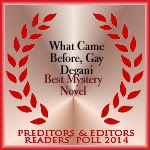
What Came Before First in Best Mystery Novel Poll

What Came Before won first place for Best Mystery novel in this year’s Preditors and Editors poll !!!! Thank you so much to everyone who voted for my novel!!! I really appreciate the time and effort!! Hooray. You guys are the best!!! 

Standings for Mystery Novels

1. What Came Before, Gay Degani, Every Day Novels,
2. Murder on The Seine, Nancy Curteman, Solstice Publishing,
2. Hanging by a Hair, Nancy J. Cohen, Five Star Publishing,
3. Dana Marton, Forced Disappearance, Montlake,
4. Conviction of Innocence, Chet Pleban, Gypsy Shadow,
5. Deadly Puzzles, Terry Odell, Terry Odell,
6. Ripped in Two, AJ Kohler, Solstice Publishing,
6. Calculation, Steve Marini
7. Sticking Point, Susan Whitfield, Amazon,
8. Island Charms, Sharon McGregor, Whimsical Publications, LLC,
8. A Death in the Hills, Paul A. Barra, W&B Publishing,
9. Dr Chandrix Dies, Christopher D Abbott, Amazon,
10. Secrets, Lies & Homicide, Patricia Dusenbury, Uncial Press, 

Comments

What Came Before, Gay Degani, Every Day Novels

The comments below are from those who voted for this entry. 

Gay Degani’s ‘What Came Before’ gives the reader interesting characters in a well-written novel of much mystery. I highly recommend this book.

A very visual writer, a delight to read.

I have followed her writing and love all her work.

A quick read, ‘What Came Before’ left me hungry for more! Degani knows how to bring characters to life and care about what happens to them. I look forward to reading more from this author!

Loved the short snappy chapters and zippy pace of this novel.

Great debut novel. T

This a fast-paced entertaining story that combines elements of a good police procedural with a family mystery. It has great pacing. The main characters are well-drawn and believable. I cared about Abby and Mackenna and I kept turning the page to find out what happened. It’s a good story.

A fast-paced murder mystery and a great character-driven story.

This author kept me on the edge of my seat and surprised me at every turn! A great read!

Complex and Compelling: Bonnie ZoBell’s "What Happened Here"

This review is followed by an interview with Bonnie ZoBell.   Scroll down to view the interview first.

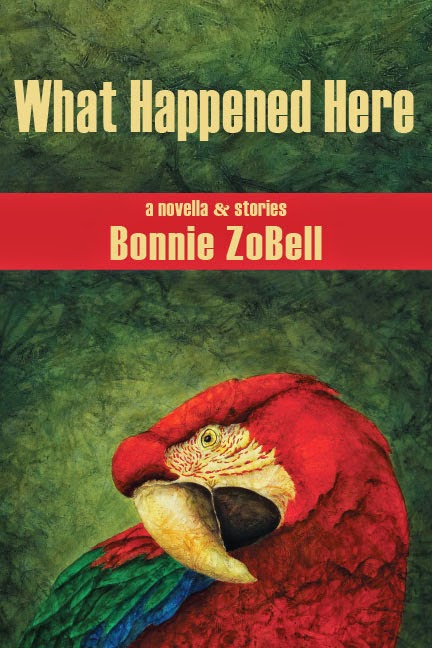
Bonnie ZoBell’s novella,“What Happened Here,” opens her collection of the same name, and her first page description of the PSA Flight collision with a Cessna in 1978 over the city of San Diego anticipates a collision of characters, the breaking up of relationships, the falling down of spirits—the kind of tragedies that permeate the stories that follow. What else is revealed is how such calamities, large and small, are endured and overcome with love and kindness.

 “The explosion was instantaneous—an enormous fireball whooshed into the sky, a mushroom of smoke and debris. Scraps of clothing leaped onto telephone poles, body parts fell on roofs, tray tables scattered across driveways. Airplane seats landed on front lawns, arms and legs descended onto patios, and a torso fell through the windshield of a moving vehicle.” 

Each of the eleven pieces (ten stories as well as the novella) take place in that North Park neighborhood of San Diego around thirty years after the PSA jet crashed into the ground. The ghosts of those who died linger in the shadows, behind palm trees, along the streets at dusk. The macaws who also haunt the area as they chatter and soar add a hopeful counterpoint.

The lingering impact of disaster impacts three specific characters in the novella: Lenora, a woman struggling to find herself after years of feeling discounted and unloved, her husband John who battles the “monster” of manic-depressive disorder, and their neighbor, Archie, who is the most obsessed with the crash even though he was not present for the disaster which took place years before. The author does a lovely job of showing the precarious state of the newly married couple’s relationship through references to Lenore in Edgar Allen Poe’s “The Raven” as John woos Lenora.

The raven and the macaws seem to represent the contrast of the blackness of a monster against the bright hope one can find in life. That hope comes from Archie, the complaining neighbor, who in the end manages to reach John in his depressive state in a way Lenora cannot.

In the second story of the collection, the eponymous Uncle Rempt, brings hope to Susan who is trapped in a narrow, constricted life. “Bloodstone.”

He folded it into my hand. “You need to keep the thing, sweetheart, living with that brother of mine. …The stone of courage, they say. Destroys the wall of prisons, opens all doors.” 

Like the North Park,macaws,Uncle Rempt, in his “Area 51” written in metallic silver on his t-shirt…his blue velvet jacket,” is full of color. He even sleeps “in the store room with a bunch of colored glass.”

One of the strongest pieces in the collection is “People Scream.” The shriek that shatters the calm one Wednesday night at the Center for Life haunts both the receptionist Heather and the story itself. She is filled with self-doubt—perhaps even self-loathing—and it feels inevitable that she works where other self-doubters, those who have turned to addiction, have come to recover. She works here for the wrong reasons–to meet men–and she’s come to the wrong place. Of course, she does meet them, including Wally, including the homeless drunk in her car.

Again the yin/yang of tragedy and hope finds its way into Zobell’s work. What Happened Here is rife with unhappy women who stick to their broken men and a few who hide from them like Lolly in “Rocks.” Yet these women are to be admired for their grit, their ability to forgive.

Hope and tragedy seep together in this group of stories, creating a kind of sunrise or sunset with macaws winging toward the reader or away. Zobell pens a line in her piece,“This Time of Night,” that sums up her work in general: “The evening is as close as it can be to darkness while still being light.”

Bio: 
Press 53 published Bonnie ZoBell’s connected novella and stories, What Happened Here, in February 2014. She’s won such honors as NEA, a PEN Syndicated Fiction Award, and the Capricorn Novel Award. She received an MFA from Columbia University and currently teaches at San Diego Mesa College. She is an Associate Editor at The Northville Review and at Flash Fiction Chronicles. Her collection The Whack-Job Girls (Monkey Puzzle Press) portrays a posse of women who don’t fit in or are deeply disconnected from society with dark humor.

Never Too Late to Write

Reprinted from an article published in Coastlines, Summer, 2014

My novel, What Came Before, took more than twelve years to write.
I’m not bragging about that. The book is only 242 pages long and it’s not a deep philosophical treatise on man’s inhumanity to man. There are no white whales, no Dublin boarding houses, no Madeleines, so why did it take me so long?

Well, life got in the way.

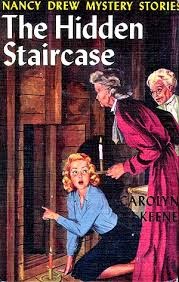
My dream of becoming a writer began in childhood. My mother read me the Bobbsey Twins, and my dad introduced me to the dauntless Nancy Drew. After devouring Little Women, I knew I had to be a writer, just like Jo. I drew pictures of books, my books, with enticing titles along the spines, my name just below. At 12, I scribbled a “novel” in purple ink about the Twellington twins and their nine siblings.

I was surprised in high school to find out that my Creative Writing teacher had entered one of my short stories in the Atlantic Monthly High School Writing Contest and more surprised when I won second place. “Collision,” I thought, was just the beginning.

After graduating with a B.A. from UCSB in 1970 and getting a Masters’ Degree in English at Long Beach State in 1971, I found myself in need of a career—or at least a job. I had to support myself, but I was certain I could dig up the “spare time” to write. As a kid of the 50s and 60s, I thought time grew like fat plums waiting to be plucked, but as a full-time worker bee, I couldn’t find the tree, let alone the fruit. Still I thought, one day, some day.

Now I realize I had to live my life before I could write. When I look back, I can identify those moments of learning that gave me the confidence and know-how to put words on paper.

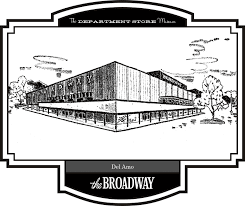
As a trainee in a department store executive training program, I learned that the Junior Department in Del Amo was only a small segment of huge enterprise. Behind the selling floors, the dressing rooms, and the customers was a complex operation spread over 40+ stores as well as a blocks-long system of offices and warehouses. In the beginning I vaguely understood the size and shape of the company, but not its intricacies, how it actually functioned. Later, as a writer, this experience helped me understand that behind a basic storyline, there is structure, a way of doing things, a way of controlling results.

As a Gap store manager, my job was about people—customers and employees. I understood something about human nature, but not enough. My first lesson came before I was even hired. The company gave all new employees an “honesty” test. It seemed obvious to me that anyone could pass whether they were honest or not, so I asked the man who hired me if anyone ever failed. His answer?

Yes, they did. A high percentage. This surprised me and forced me to become more aware of how very different we are from each other. Later, as a district manager, when I had to figure out how to foster top performances in others, I developed more insights into what motivates and what discourages people. Strong characters in good stories have to want something. What pulls the reader along is how those characters respond to the obstacles put between them and their desires.

Tupperware came next. Yep, I learned everything there is to know about eradicating mold from my refrigerator, but more importantly, this job forced me to rely on myself to get what I wanted. It taught me to rally to the task, to observe and imitate successful behaviors, to give encouragement as well as to accept it, and to think on my feet. Selling Tupperware made me feel something like a stand-up comedian—the more they laughed, the more I sold—and I became addicted to being “in the zone,” that feeling that comes when everything I do works. I had forgotten how that felt. I knew it was finally time to write. My first screenplay was called “Plastic Dreams,” about a man who seeks refuge in selling Tupperware.

I began to write screenplays, stories, random poems, and journal entries. I took extension classes, went to conferences and workshops. By the time my kids left home to chase their own dreams, I was beginning to understand what made good writing. I accepted that writing well doesn’t just happen, but that it comes with practice and study.

I am proudest of not giving up, of refusing to abandon my writing dream. Many of my pieces of both fiction and non-fiction have been published including sixty short stories, an eight-story collection about mothers and daughters called Pomegranate, a second collection almost completed, a novella serialized in Pure Slush’s 2014 project, and of course, my suspense novel, What Came Before. I’m 65 years old.  Thank goodness, it’s never too late.

 What Came Before

An Amazon Review of What Came Before by Rachael Warecki!


This review is from: What Came Before (Kindle Edition)

I started Gay Degani’s “What Came Before” with the vow to read only a few chapters before heading to bed. Famous last words, those: I stayed up until I finished the whole book, I was so compelled to find out what happened next. “What Came Before” is lean, spare, and tightly plotted, without sacrificing any of its literary qualities. The protagonists are sympathetic and realistically flawed, the language is beautiful, and Los Angeles — both the present-day city and the L.A. of the 20th century — is lovingly and accurately rendered.

Abbie Palmer, nee Hart, is shocked out of her mid-life crisis when a woman named Olita shows up on her doorstep, claiming that they’re half-sisters — both daughters of former pin-up girl Virginia Hart, who committed suicide when Abbie was four. The next day, Olita dies under suspicious circumstances, and Abbie resolves to find out the truth about her mother’s past while also solving the mystery of Olita’s murder. With the help of Makenna, Olita’s daughter and Abbie’s potential niece, Abbie sets out on a cross-SoCal journey that takes her from Pasadena to the High Desert, encountering old Hollywood producers, civil rights activists, and vengeful singers along the way.

Degani flings readers into her plot head-long, and the story is fast-paced: Degani covers a lot of ground in just over 200 pages, primarily by focusing tightly on the mystery; at times, Abbie’s relationship with her husband seems to fall by the wayside. That said, Abbie’s relationship with her maybe-niece, Makenna, is fully realized and conscientiously developed, and I found myself rooting for the best of all possible outcomes for the both of them. My only nitpick is that sometimes information was repeated from chapter to chapter, but I suppose that’s the result of the novel moving over from an online serial format. Definitely a book I’ll be recommending to my other mystery-loving friends!


About Rachael
Rachael Warecki is an alumna of Scripps College, Loyola Marymount University, and the Teach for America ’08 corps. She holds an MFA in Fiction from Antioch University Los Angeles. Her work has appeared in The Masters Review, The Los Angeles Review, and Midwestern Gothic, among other publications. She lives in Los Angeles.

Find Rachael on Twitter: @RachaelLaWriter
Find Rachael on Facebook: https://www.facebook.com/rachaelaw86

Talking with Len Joy about his novel, "American Past Time"

Len Joy’s first novel, American Past Time was released April 19, 2014 by Hark! New Era Publishing. He is the author of two short fiction collections, Casualties and Survivors. His work has appeared in FWRICTION:Review, The Journal of Compressed CreativeArts, Johnny America, Specter Magazine, Annalemma, Washington Pastime, Hobart, and Pindeldyboz. He is a competitive age-group triathlete. In June 2012 he completed his first (and probably only) Ironman at Coeur d’Alene, Idaho.
Gay Degani:Your debut novel, American Past Time, is set in the middle of America (Missouri) in the middle of the twentieth century. Can you talk about what drew you to this era? Which came first, the All-American sport of baseball or the time frame?
Len Joy:The novel has a twenty year arc, and it covers the most tumultuous decades of the post-war era. The civil rights movement, the space program and finally the war in Vietnam are all part of the environment in which the novel plays out.
I wanted to write a story about what happens to a man and his family after the cheering stops. What happens when the hometown hero becomes just another guy punching a clock? What happens when our hero loses the respect of the son who thought he was perfect?

I knew I wanted to weave into the story, the history of the times in which I grew up. And I chose a small town setting because, in my experience, it is much harder to be anonymous in a small town. Everyone knows your story. That can be great when you’re the hero, and it can be tough when you fall off the pedestal.
I’ve always loved sports, and I have an appreciation for the perhaps undeserved attention young athletes receive if they are really good at what they do. In this era, baseball, more than football or basketball, was truly America’s pastime. That’s probably not true today.
The Midwest locale, the small town setting, and the baseball action all provided what I felt was the appropriate backdrop for what is a quintessentially American story.
GD: These are all very conscious decisions to create a “quintessentially American story” and that’s what you’ve done. Baseball also seems like the perfect sport for that era. You say you wanted to explore what happens to “a man and his family after the cheering stops.” Why did you focus on this idea?
LJ:Many of us when we are young think we know what we want. We have dreams we pursue and we make decisions aimed at achieving our goals. We choose a path and if we don’t realize our dream, we just have to deal with it. How we deal with it can affect not just us, but our entire family. I was interested particularly in how a “failure” can affect the relationship between a father and a son and between a husband and wife.
I had a great relationship with my father. With both my parents. They were always there for me. They let me grow up and make my own mistakes, but I knew that they would always be there for me. I try to be that kind of parent to my children. Similarly, I think I’ve had a good relationship with my wife. She’s hung in there for forty years so I must be doing something right.
In playing that game of “What’s the worst thing that can happen?” for me, the idea of losing the respect of your children and your wife had to be at the top of the list. I wanted to explore that. How does someone deal with that kind of loss?
Most of us watch pageantry like the Olympics. It’s fun to celebrate the winners. Some have great stories, but for everyone up on the podium, there are hundreds who weren’t quite good enough or lucky enough. I wanted to tell a story about one of those folks who didn’t quite make it.
GD: You seem to have a stable life, strong relationships with the people that matter, which led you to approach this novel with the question “what am I afraid of?” The stability also makes me curious about your writing journey, when did you start, what made you want to write, what has stood in your way.  
LJ: I had some writing aspirations from an early age. I can remember I asked my mom to sign me up for a summer school writing course when I was in 6th grade and that was an unusual request because I would normally spend every day at the park or at the lake. I took a lot of grief from my buddies for voluntarily going to school in the summer.
When I went off to college I still had this inclination that I would be a writer. I don’t think it was the burning desire I see in many younger writers today. Maybe more than anything I liked the “idea” of being a writer. Anyway, I became an English major, but in my second semester I had one of my papers harshly critiqued (rightly so) by my professor and that criticism convinced me I didn’t have what it took to be a writer so I shifted my major to Economics and eventually went on to business school.
Thirty years later, after that aborted start, I got a mass mailing solicitation to take a creative writing course at the University of Chicago’s Graham School for continuing education. I enjoyed the course, found I had toughened up enough to accept helpful criticism, and I kept at it. That was ten years ago. Every summer from then on I went to a summer workshop. I started with the Iowa Festival (which I loved; great location, people, instructors; no pretensions;) and later on Tin House, Squaw Valley, Skidmore, Norman Mailer, Sewanee and last year, Bread Loaf. 
The advantage of trying to become a writer later in life is that for me I was financially stable and I could devote more or less full-time to the effort. The disadvantage, of course, is that I don’t have decades to figure it out.
Another advantage is that during my business career (I owned an engine remanufacturing company). I had to endure rejection from customers as well as challenges from suppliers, employees and the always helpful government agencies. After that experience the rejections from literary magazines, agents, and the occasional snarky comments during workshops just don’t bother me that much. 
However, one lesson I learned when I was a sensitive teenager was that it is important when we critique others to be sensitive to their feelings. We need to be honest in our feedback, but we have don’t have to be harsh or cruel.
GD: What authors or works have influence your writing over the years?
LJ: Hemingway and Fitzgerald were influences. I read most of their novels in my early twenties before I had serious writerly aspirations. Both of them had clean, spare styles, and they told engaging stories that transported me and kept me turning the page.
John Updike’s Rabbit books were also a major influence. He created a flawed character that I cared about. Each of those four novels came out at about ten-year intervals, and it was fascinating to follow the exploits of the characters as they aged.
I’ve loved everything I’ve read from Russell Banks. I don’t know if he has influenced me, but he has certainly impressed me.
I haven’t loved everything Joyce Carol Oates has written, but that’s because she’s written so much: forty plus novels, a ton of essays, reviews, and short stories. Her short story “Where are you going, where have you been?” gives me a chill every time I read it. It is also my candidate for the worse movie adaptation of all time.
I would love to write a novel half as good as The Last Picture Show by Larry McMurtry, my candidate for the best film adaptation of all time. I watched that film at least half dozen times when I was in college, although that may have been because of the scene where Cybil Shepherd strips on the diving board.
Elmore Leonard is also one of my favorites. I aspire to someday write with as much transparency as he was able to achieve in his stories. He never got in the way of his characters or the action.