Journey to Planet Write: The Dartboard > Vox > A Chance Encounter

by Jonathan Cardew

The Dartboard 

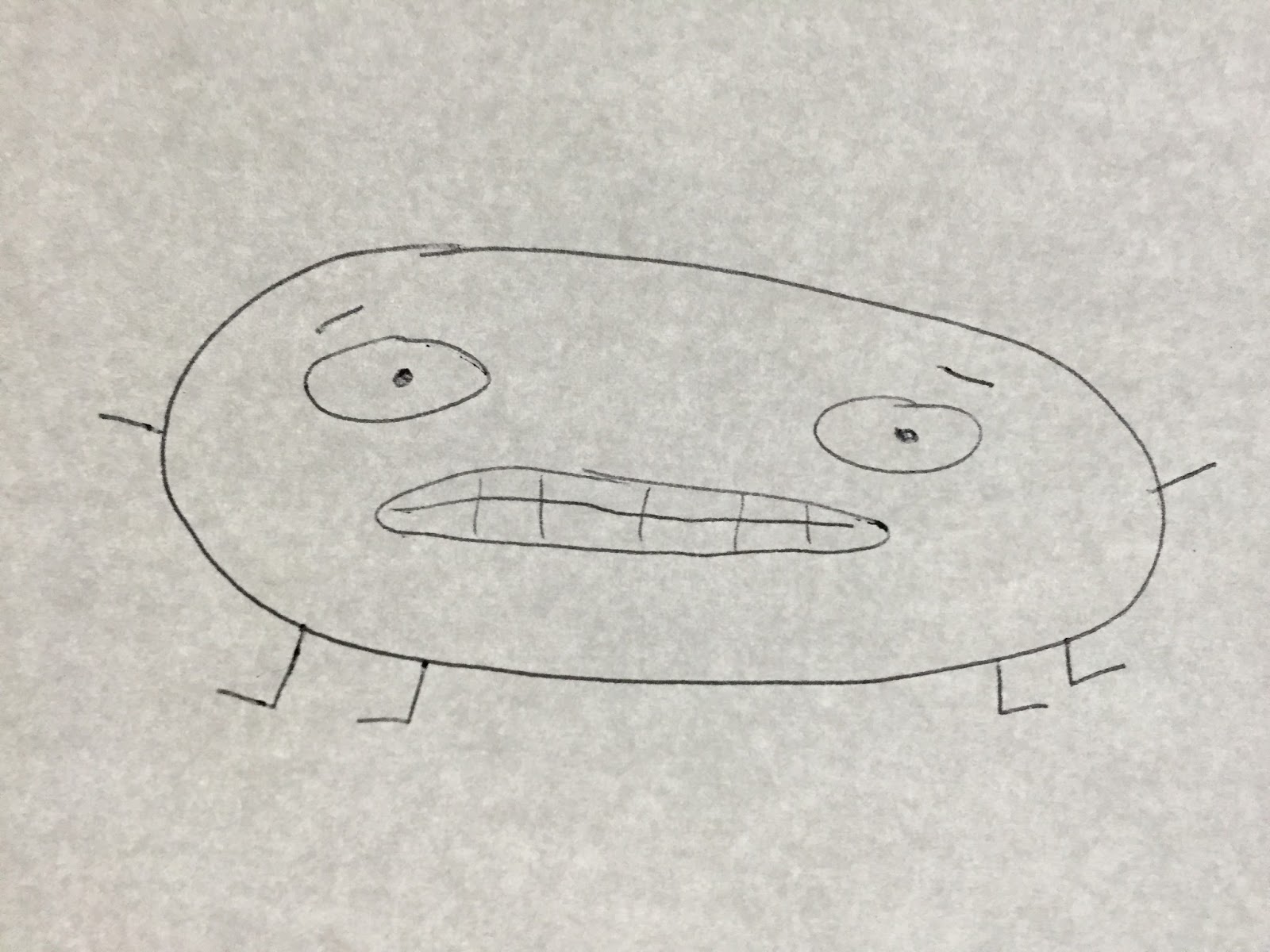
In the middle of the dartboard was a villain. Ninja Features. That was actually the name I had given him. He was pinned up on the board and taking his comeuppance, via darts. Throwing the darts were the good guys, of course. One was called Mummyface. Mummyface was a kind of squashed dartboard shape himself, with legs coming out of his head and a big-toothed grin and spaced-out eyes. I can visualize these images today, even though the comic book I wrote at nine is long gone. I can visualize Mr. Taylor, my English teacher, with his short-cropped beard and long legs, and I can still feel his enthusiasm for the work I’d done three decades later. 

Vox

I was enthralled, but mostly I was stoned, during Contemporary Fiction and the Self-Conscious Novel (I was also very self-conscious during the Self-Conscious Novel). Dr. Vic Sage mumbled. He ruminated. He had a beard. Sometimes, he just stared at us in our seminar room, modeled after a Swedish prison. He recommended I do a creative dissertation. We’d read Gulliver’s Travels, Cervantes, AL Kennedy, Arabian Nights. This was the late 90s in Norwich. I was raving a lot. I had my head in music. I put pen to paper badly. I licked Rizla and made spliffs, and wrote even worse. The Sage recommended Vox, a novel in dialogue. It was an erotic telephone conversation, which I devoured in one sitting. Then I wrote the best story I’d ever written. I kept on smoking for years.    


A Chance Encounter

I was about to have a baby. Not personally—via my wife. So I jumped head first into an MA at Sheffield Hallam University, as you do. Professor E.A. “Archie” Markham was from Montserrat, a small volcanic island in the Caribbean. He was back from Paris, in emeritus, teaching the short story unit. The English Department was in desperate need of a short story writer. I think they missed me, he said. He was the funniest person I know. And always late. And always equipped with a joke in observation form. One of our readings was ‘Chance Traveller’ by Haruki Murakami, a story about chance encounters* and coincidences. I read and re-read it. I wrote more bad stories. I cradled a baby. I worked a demoralizing job. I followed every word he said in our seminars. I followed every joke to the punch line. He suggested that we write a story about a year when spring didn’t happen, when the flowers didn’t sprout up out of the ground and the leaves didn’t return to the trees. I haven’t written that story yet. He passed away suddenly on his stairwell in Paris in 2008.

*I don’t believe in chance encounters. I would like to thank every teacher for teaching me.


Seascape

by Jonathan Cardew


Photo by Matt Richie
We fingered anemones and flicked crabs that summer while our parents screamed and threw things. I was the older, I was in charge, but the rock pools were all different shapes and sizes. Foothold was complicated. My sister bled.

When my mother shushed her, I could feel the scorn. She was blonde; I was brunette. She was outspoken; I was quiet. The ocean sprayed salt against the hulls of boats in the harbour. Jellyfish washed up and died, flecked in sand and seaweed. A storm passed through, snapping masts like toothpicks. I dreamt of a city far from water.

(Originally published in KYSO Flash Issue 5)

_____________________________________


Jonathan Cardew’s stories, interviews, and articles appear or are forthcoming in Atticus ReviewFlash: The International Short-Short Story MagazineThe ForgeJMWW, Smokelong Quarterly, and Segue, among others. He holds an MA in Writing from Sheffield Hallam University, and he teaches English at Milwaukee Area Technical College, where he co-edits The Phoenix Literary and Arts Magazine. He was a finalist in this year’s Best Small Fictions

Links

“A History Without Suffering” by E.A. Markham

Dr. Victor Sage

An Interview with Jonathan Cardew:

Jonathan Cardew’s Website:


JOURNEY TO PLANET WRITE: Reading. Writing. ETC.

“I never desire to converse with a man who has
 written more than he has read.”
         —Samuel Johnson

by Bill Yarrow

Growing up in a library, I fell in love with reading at an early age.


I should explain.

My dad’s business (running a penny arcade on the boardwalk in Ocean City, MD) kept him employed from May until September from early morning to midnight seven days a week. The rest of the year he was home with us. He was a voracious reader and an avid, if indiscriminate, book collector. He would frequent book auctions and purchase whole lots of books. One week, he’d bring home cartons of different encyclopedias. Another week, it would be plays—two or three hundred hardback editions of individual plays. Novels, cookbooks, memoirs, collections of letters, essays, literary history, art books, limited editions, small books in leather bindings, paperbacks of every stripe—our house was a book depository, repository, what you will. Our bedrooms, bathrooms, rec room (that’s what “family rooms” used to be called), garage, crawlspace—wherever you went in our house, you’d confront shelves or stacks or boxes of books.

I caught his habit.

I read everything. Everything. And then I bought every book I could afford and started building my own collection. As a teenager in the 60’s, I used to go into Center City (that’s what Philadelphians call their “downtown”) and hang out in this little bookstore on Chestnut Street (or was it Market Street?) called “Reedmore Books.” In the back of the store, they had a section of books without covers for ten cents apiece. I found some great books there! Ever read Nog by Rudolph Wurlitzer? On the back cover, in giant letters, a blurb screamed, “The novel of bullshit is dead!” (Thomas Pynchon). How could I not buy and not read that one?


The more books I read, the more books I wanted to read. The more authors I learned about, the more I wanted to read everything by those authors. I read like a demon. I devoured book after book after book. I never felt satiated. I never got tired. I could read anywhere—sitting, lying down, standing up, walking, on buses, on trains, on subways, on airplanes, in quiet places, in noisy places, alone, among other people, in libraries, in fields, on public benches—it didn’t matter where I was.


People who remember me from college remember me as the boy who always had a paperback in the back pocket of his painter’s pants. I was determined to read, along with the reading for my regular classes, at least one extra novel per week. Ah, the optimism of youth!


Self Interview


—Was there one certain writer you read who made you want to become a writer?
—No. Every good writer I read made me want to be a writer.

—When did you start writing seriously?
—When people started praising me for my writing.

All it takes is some early praise. And then all it takes is never stopping.

—At what age did you win your first prize for writing?
—Age 20. I won the Academy of American Poets Prize at Swarthmore College judged by Mark Strand.

—At what age did you publish your first poem?
—Age 30. In Confrontation or maybe it was The Antigonish Review. Same year. I can’t remember now which came out first.  

—At what age did you publish your first full-length book of poems?
Age 60. Pointed Sentences (114 poems) was published by BlazeVOX in January 2012.

—30 years passed between publishing your first poem and publishing your first book of poems. Did you ever get discouraged?
—No.

—30 years passed between publishing your first poem and publishing your first book of poems. Did you ever stop writing?
—No.

—How old are you now?
—65.

—How many books have you published so far?
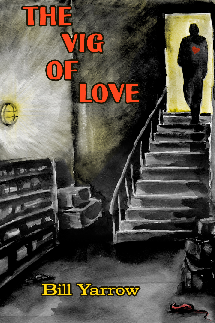
—Two full-length books of poems and four chapbooks. My third full-length book of poems The Vig of Love(79 poems) will be published by Glass Lyre Press on September 24, 2016.

—Are you still writing actively?
—Yes. I write all the time. Usually, I have about 40-60 poems out at magazines at one time.


THE OGONTZ BRANCH
A Poem by Bill Yarrow


There are stories I will not tell, stories I shudder
to remember. You’ll forgive me for withholding them from you.
You may, of course, not tell me everything about yourself either.

A violation of intimacy? To me it seems its guarantee.
What I mean is we can tell each other anything,
but we don’t have to. A string is stronger for its knots.

It’s not that I prefer living in a house with a locked door.
That’s not what I mean. What I mean is
did I ever tell you about the Ogontz Branch?

I mean the Ogontz Branch of the Philadelphia Library.
It was on Ogontz Avenue between Old York Road
and Limekiln Pike. Thirty years ago, it was old and run down.

It wasn’t close to where I lived, but I used to love
to go there afternoons after school. I’d drive over,
hang out, read the paperbacks. No one there knew me.

I made friends with the librarian, a young woman
from Conshohocken with an odd, cocky smile.
Part of her job was shooing out the boozy bums.

It was in the Ogontz Branch where I discovered Intimacy
by Jean-Paul Sartre. A book of five longish tales,
the only stories Sartre ever wrote. With eyes blazing,

I devoured them. I ate without tasting, speeding through them
like a starving man before a meat buffet, but back then
I read many books I said I loved but didn’t understand.

Back then that was perhaps the point—to race through the pages,
to engulf, to possess the book—that, I felt, was the true thing!
It would be decades before I understood what I had missed.

If I am a book, I am Intimacy. Read me. Wrinkle my pages.
I am not asking for understanding. If you want to check
me out, ask the head librarian of the Ogontz Branch.

(This poem appears in The Vig of Love)

____________________________________

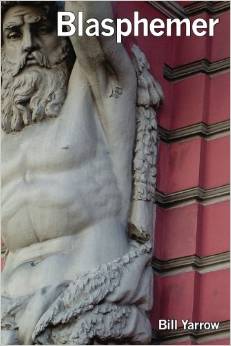
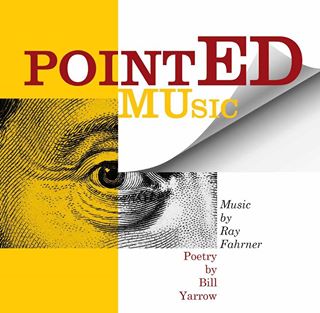
Bill Yarrow, Professor of English at Joliet Junior College and seven-time Pushcart Prize nominee, is the author of The Vig of LoveBlasphemerPointed Sentences, and four chapbooks. His poems have appeared in many print and online magazines including Pirene’s Fountain, Poetry International, RHINO, FRiGG, Corium, Gargoyle, Iodine Poetry Journal, and PANK. He is the co-author, with the Boston composer Ray Fahrner, of Pointed Music, a CD of poems from Pointed Sentences. Yarrow is also an editor at the online journal Blue Fifth Review.


Website: 

Poems on Fictionaut:
Goodreads:
TV interview on You Tube:
Eleven Print Interviews 2010-2014:
Print Interviews 2015-2016:
Journey to Planet Write: Lost and Found
by Lynn Mundell


Bed Is for Reading

Squashed between warm bodies, I listened to my parents read to me in their bed. Soon, I read to myself. In public school, we all pored over the Scholastic Book catalogs and filled in order forms. I would order 10, 20 books. School was very dull. Then the delivery came, and a high stack of books bound together with a jumbo rubber band landed on my desk, and I was saved by Amelia Bedelia, that fantastic blockhead.

When I was 9 my teacher announced a writing contest sponsored by the American Legion. We all wrote about what it meant to be an American. I was a so-so American, so got third prize, a small bronze medal hanging from a heavy red, white, and blue ribbon. I wore it constantly until my older sister asked me to please stop.  If you were a writer, you were pretty much a dignitary. Practically royalty. Who wouldn’t want to be a writer?

Youth Was for Writing

I wrote poetry and newspaper stories in high school and college, while working a series of weirdo jobs — toy store clerk, men’s clothing saleswoman, failed florist (I was fired after sending the funeral arrangement to the baby shower, and vice versa), trailer cleaner, preschool flunky. A boyfriend asked me what I planned to write about. I told him I wasn’t sure, and he scoffed, fueling my doubt.

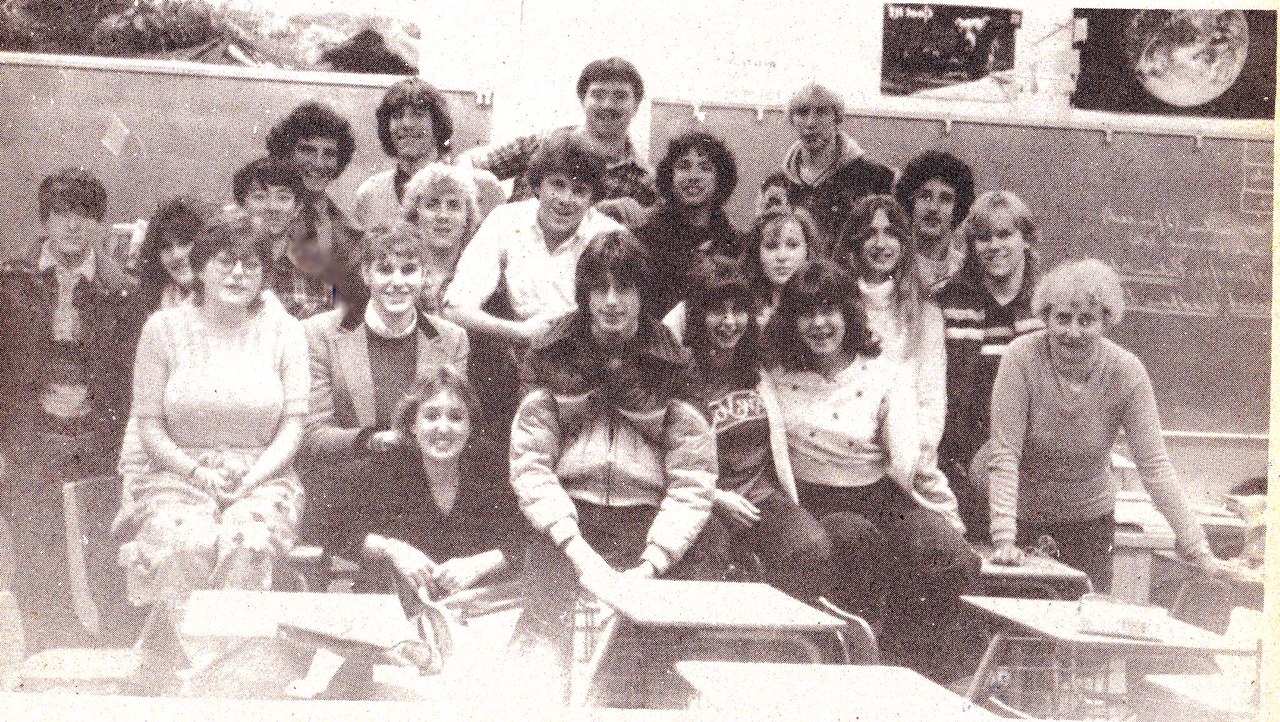
Chico Senior High newspaper staff. 
Lynn is second from the left, seated.

In the midst of being in big trouble at my newspaper internship for accidentally deleting the entire issue of the weekly during production, I was accepted to graduate school. At 20, I moved East to earn my MFA. More jobs. Hat shop worker. Postcard saleslady. Frank Conroy shredded my prose, then once gave me a friendly ride to class in his old station wagon. I wrote at odd hours and went alone into dark places in my head and wandered out again a little bit stranger and worse for wear each time. I worked at papers, and one sent me to St. Louis to interview U.S. Poet Laureate Howard Nemerov, simply because I was the closest thing to a poetry editor they had. I won a prize at the university. It felt almost as good as the one from fifth grade.


Throwing in the Towel

In my 20s I tried valiantly to be what I thought constituted a writer. I taught at a college, and whether due to circumstances (grammar night class) or myself (uncertain), it wasn’t for me. I chased literary magazines. The fat, healthy envelope would go off in the mail with a poem and an SASE, and a thin, pale one would return, sometimes months later. I stopped writing creatively. I thought my professors’ belief in me must have been misplaced. I threw myself into work life, married, moved home to California. On a whim, I took a creative non-fiction class from columnist Adair Lara, a wonderful teacher. An essay was published in The Sun, then another in The San Jose Mercury News.  The morning I went to a Merc box on Market Street and bought 10 copies of the issue with my essay, I broke down and cried. Somewhere in my now 32-year-old body, the writer lived.

Awakening

Also growing in that body was a baby. Then another. Nothing had prepared me for just how hard it is to be a working mother. Years passed in a blur of commuter trains and playgrounds. I read aloud to my sons in bed. I volunteered at the schools. (My favorite gig was  … the Scholastic Book Fair!) While I wrote for a lot of people and places, I never wrote for myself. I had given up.

One day my old friend Grant Faulkner invited me for a drink and asked if I would like to start an online literary journal with him. I didn’t understand the term “flash fiction” that he kept using, but I said yes. If I wasn’t a writer anymore, I could be a publisher. That invitation to start 100 Word Story five years ago was pivotal. Early on, we didn’t have enough stories for an issue. I sat down, wrote a trio of Halloween-themed “scairytales” in the proverbial flash, and was hooked. I interviewed masters of flash, who sometimes became treasured friends and teachers, and read thousands of story submissions over the years — seeing what worked and didn’t. Eclectica accepted a largely autobiographical story. Then Flash: The International Short-Short Story Magazine took another. I got word over my iPhone en route to a family vacation. Instead of tears this time, I gave a whoop of joy.

Stay with the Page

With time, I developed an actual writing life. Before going to sleep or when I awake, I write longhand in journals. (Bed. Again.) Stories are anywhere from 50 to 1,000 words and may take up to 30 drafts. After one is about 95 percent done, I type it up and keep it in my purse or pocket for a while, pulling it out at odd times to reread it and change it until I feel it is finished. I keep a long list of journals, alphabetized from A (The Adroit Journal) to Z (Zyzzyva) and spend a lot of time trying to find the right place for each piece. (I much prefer the age of online submissions, although I recently mailed a story in an old school envelope. Still waiting…) I’m grateful for every publication, heartened by the dedicated, generous writers, editors, and publishers in today’s literary community. I still have so much to learn, but I’m not giving up. At 51, I have a lot to say, fewer years now to say it, and I know what a very long time it can take to awaken the writer sleeping within.

___________________________________


Lynn Mundell’s flash fiction has appeared in Tin House “Flash Fidelity,” Superstition ReviewLiterary OrphansJellyfish ReviewThrice Fictionand elsewhere, with more forthcoming this year in Mulberry Fork Review, A3 Review, and Five Points. Lynn is co-founder and co-editor of 100 Word Story.

JOURNEY TO PLANET WRITER: And Back Again

by Michael Gillan Maxwell


My journey to Planet Write started in a most inauspicious manner. When my first grade teacher told us to turn in our writing workbooks, I panicked, grabbed another kid’s workbook, and turned hers in as my own. My plagiarism was discovered, and I was shamed in front of the class.

It was an important moment of awakening and personal growth. At the age of nine, I wrote my first and only novel: a work of fiction about the Korean War. My research consisted of watching Pork Chop Hill, starring Gregory peck. Handwritten in pencil, the novel filled a composition book. My mother was my only reader. That was the first baby step on my journey to Planet Write.

Flash forward to high school. My favorite courses were English Composition, Drama, and Speech where we created short stories recited to the class without the aid of written notes. It was challenging and scary, but also a rush. I landed a couple of poems in the high school literary magazine. They were laden with the usual teenage angst and apocalyptic existential dread, but they weren’t all that bad. My football teammates teased me mercilessly, thinking the only reason I wrote poetry was to suck up to our young, super hot teacher. It was one reason. Not the only reason.

I learned something about the relationship between writing and rebellion after discovering books by Jack Kerouac, Henry Miller, and Ayn Rand squirrelled away in boxes in the basement. Their writing bristled with subversive energy and danger, and carried the whiff of forbidden fruit. Around that time, I got my first guitar, a $25 Harmony with a sunburst finish. It was heavier than a box of rocks and a real knuckle buster, but I managed to hang with it long enough to learn some basic chords and a few folk songs. It was also a great way to impress girls. I saved money and bought a better guitar, and even though I didn’t have the life experience to really sing the blues, I started writing my own original story songs.

Onto the University of Wisconsin in Madison. It was an exciting and turbulent time for soul searching, ecstatic exploration, and pushing back against the status quo. As a student, I was a train wreck; undisciplined and distracted by social upheaval and a heady concoction of sex, drugs, rock & roll, the anti-war movement and the birth of the counter culture. 

My real education happened outside the classroom. There was a rich and vibrant indie literary and art movement, with underground newspapers, street artists, musicians, and guerilla theater performance artists. Poets handed out mimeographed, self-published broadsides. There were great bands, happenings and regular visits by political poets like Allen Ginsberg. I soaked it all up. During this idyllic time, I backpacked around Europe and lived in Germany, fell hopelessly in love, wrote some pretty awful poetry and some pretty decent songs, and discovered Leonard Cohen and Herman Hesse.

After Madison, I landed in Colorado, working construction before entering the University of Colorado to study Fine Art. The Boulder writing scene exploded as the Naropa Institute was getting off the ground. There were readings, poetry workshops, and opportunities to meet writers who came to town to get the whole thing started. Hunter S. Thompson, Allen Ginsberg, Anne Waldman, Gregory Corso, William Burroughs, Michael Burroughs, and Anais Nin were some of the writers who came and went. It all made an indelible impression on me, even as I was heading off in another direction.

From that point on, I focused on visual art and education.

I moved to New York state where I established Old Mill Pottery and eventually became a teacher of Visual Art in public schools, community art centers, and at the college level. I went to Japan on a Fulbright and produced an artist’s book, 17 Syllables: Haiku and Images. I also played in rock bands throughout those years, writing songs and coming to realize that my heart truly resides in the 4-minute story song, a novel in three verses and a chorus.

I went on to work as a school principal, program coordinator, educational leader, and consultant. Through it all, I wrote constantly, but it was an entirely different type of writing. It was a world of academic papers, Masters theses, student and faculty evaluations, and professional reports. Though the writing was often dry, boring, and tedious, that time was a critical stage of the journey. While not “creative writing” per se, it trained me to work to a deadline, organize my thoughts, and concisely articulate them. That kind of writing has its own strict rules and constraints, but it taught me discipline. The real trick was shaking off those shackles when I came out the other side so I could make my way back to Planet Write.

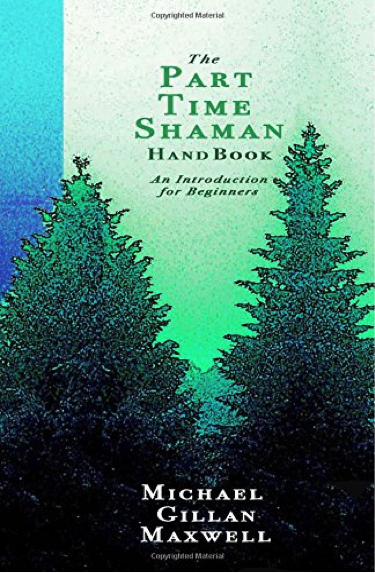
As my education career wound down, I started blogging and wrote prose poetry, flash fiction, and memoir. I found my tribe on the internet, workshopped in writing circles and attended writing conferences. In 2015, The Part Time Shaman Handbook: An Introduction For Beginners was published by Bud Smith’s Unknown Press. A hybrid mix of prose poetry and images, it feels like my true path and my own authentic voice. 

I’d love to take this opportunity to close with a shout out to my colleagues in the writing community and to the editors who have published my work, but especially to fellow writers and friends Robert Vaughan, Meg Tuite, Bud Smith, Kathy Fish, and Lawrence Kessenich. You all helped me find my voice and showed me ways to make my writing my own. Your patience, professional insight, collegial support, and friendship have helped me find my way back to Planet Write. For that I will remain eternally grateful.

Good Help Is Hard To Find


Some of them are notorious tweakers. Nobody epitomizes the cowboy-outlaw biker more than the ironworkers, who are wired on Black Beauties they sell on breaks. 

Bulldozers rumble over loose red soil, kicking up dust and spewing acrid exhaust. Machinery clamors and clanks in pandemonium. Heavy metal blasts from a boom box with such fury that it overpowers the machine gun roar of jackhammers.

The ironworkers sing along at the top of their lungs as they climb the latticework, and Dave leans on his shovel, staring in disbelief at the pink slip in his hand.

(Published in the Santa Fe Literary Review 2013. Meg Tuite, Editor)


__________________________________


Michael Gillan Maxwell is a writer and visual artist in the Finger Lakes Region of New York state. Maxwell writes short fiction, poetry, songs, essays, lists, recipes and irate letters to his legislators. A teller of tales, and singer of songs, he’s prone to random outbursts, he may spontaneously combust or break into song at any moment.

The Part Time Shaman Handbook: An Introduction For Beginners was published by Unknown Press in 2015. Maxwell can be found ranting and raving on his website:


JOURNEY TO PLANET WRITE: Accidents, Ruptures, and External Illumination

by Steven Dunn


I spent most of my life drawing and painting, but in 9th grade keyboarding class, me and my friend spent the entire semester typing out rap lyrics. And I wrote a racist story about a Mexican who robbed me and my aunt by gunpoint at an ATM. The police found out who he was because he dropped his I.D. for food stamps. I’m from West Virginia and had never seen Mexicans or used an ATM. And we were the ones who used food stamps.

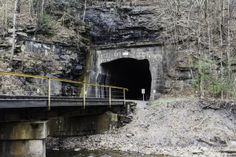
My older cousin who taught me how to draw used to take me in the train tunnel with a flashlight and spray paint to tag the walls. But we couldn’t see the whole of what we wrote until a train came. We’d press our backs to the tunnel and look across to the other wall for a few seconds until the train blocked it.

My aunt (who got robbed by the Mexican) had books all over her house and always talked about what she was reading. She traveled a lot, and collected shot glasses from wherever she went. I would pitch fits because my mom wouldn’t let me go with her. My aunt told me not to worry, that I could read instead because books could take you anywhere.

So I went anywhere and everywhere. In elementary school, I wrote and illustrated a book about a little boy named Lorenzo who wanted to travel but his mom said no, and he ran away and met a dragon and all they did was fly around the world getting drunk in bars. (I stole from “Puff the Magic Dragon,” NeverEnding Story, and my uncle talking about getting drunk in other states.)

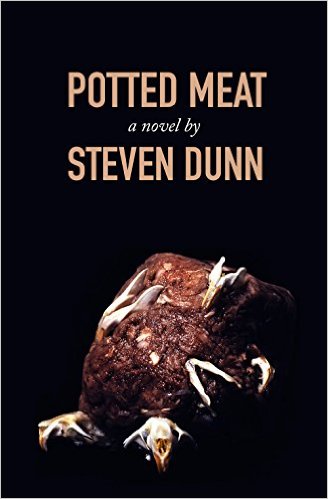
Later, I ended up joining the Navy and flew around the world getting drunk, and actually met a guy in the Navy named Lorenzo, who ended up being one of my best friends, and he helped me write Potted Meat. We did and still do get drunk and travel together.  He is the dragon, or I am, depending on the time.  

All of this is to say that reading/writing and its pleasures, fears, secrets, dangers, subversions, and mysterious ways of calling out/in, had been persistent haunts. But I was still set on being a painter. I had an art show in Denver at Mutiny Now Bookstore. And my wife (then girlfriend) asked me did I notice that my paintings had a lot of words on them [rupture, new opening].

I wasn’t expressing what I needed to in my painting, and that small rupture [external illumination], made me start taking writing seriously and attempting to figure out what was trying to express itself through me.

Ten years later, Tarpaulin Sky Presspublished my first novel. In between that time, I wrote while on nuclear submarines (dark tunnel). While I was a student/security guard/parent. I wrote in Hawaii, Japan, Korea, Guam, Belize, England, Scotland, Norway, France – traveling like my aunt who is now going blind, but listens to audio books. But my cousin told me she used what little sight she had left to read my book. A little light to see the whole of what I wrote.

_____________________________________________


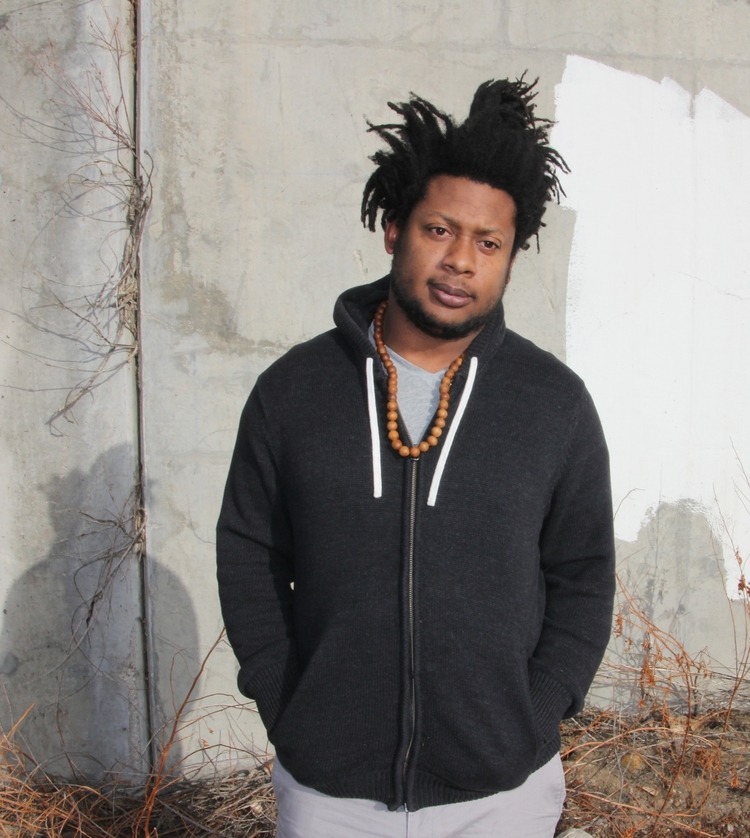
Steven Dunn is the author of the novel Potted Meat (Tarpaulin Sky, 2016) He was born and raised in West Virginia, and after ten years in the Navy, he earned a B.A. in Creative Writing from University of Denver. Some of his work can be found in Columbia Journal and Granta Magazine.

JOURNEY TO PLANET WRITE: Nipples and Cocaine

by Catfish McDaris

The writing bug bit me while I was in the army in Germany. I’d write family and friends about all my experiences: castles with paintings where the eyes seemed to follow you around the room, shooting cannons, the pretty frauleins, and rough toilet paper on the trains. Everyone looked forward to my letters.

I’d been reading westerns and war books because they fit in my pocket. I learned about the classics from different authors of all nationalities. I decided I could write, so my first attempt was a western set in my home state of New Mexico. It never got published. I finished my three-year hitch, then headed “back to the world.” I explored Mexico where I fished for sharks, lived in a car through a winter in Denver, built adobe buildings, worked in a zinc smelter. I kept a few notebooks from then, but never sent anything out. Later I moved to Milwaukee, got a job in the Post Office, and married a beautiful Mexican lady.
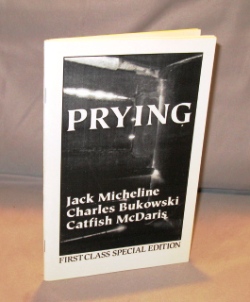
I discovered small presses and Bukowski. I started sending poems (which to me were always stories) and short fiction to magazines in 1992. After lots of rejects, I began to get published. I was able to write at work in small notebooks or on scraps of paper, then rewrite on my typewriter. I figured Buk did it this way. In 1994 I went to De Paul University to read at the First Underground Press Conference and met many publishers and writers. I organized several charity music and poetry events in Milwaukee called Wordstock. In 1997 I was published in a three-way chapbook called Prying with Jack Micheline and Charles Bukowski. By then I’d done five or six solo chapbooks. In 1998 I went to Cherry Valley, NY to Ginsberg’s farm and read with all the Beatniks left alive. (Burroughs and Ginsberg were dead) This was a three-day event that got real wild.
In 2007 I took my wife, Aida to Paris for our 25th wedding anniversary. I read at Shakespeare and Co. Bookstore. I also read on 42nd in NYC with a Jimi Hendrix impersonator. All of my readings were practiced and rehearsed in Milwaukee at various venues.
I was leery of the small press on the web. I was so used to the envelope, snail mail, SASE method. I didn’t trust or like computers. I had what I called my Hammer. It was a Smith Corona word processing typewriter. It held ten pages of memory, then you had to erase it. I’d written 20 chapbooks on it. Finally my wife gave me a computer and a few lessons. I was amazed at the ease.
I’ve met people from all over the world because of the web. I’ve been translated into many different languages. I quit counting Pushcart nominations after 15 and Best of Net. I’ve won a few things over the last 25 years. I was a contributing editor to Latino Stuff Review for over ten years and Shrimp over five years. I earned lots of money for Hope House here in Milwaukee for abused women and children. The sheer joy of writing has opened my eyes and heart to many things.
A few years ago Marquette University Special Archives bought my collection of books, magazines, and broadsides. They also collect anything electronic about me or from me in their archives. Now I can read over the phone on radio shows. Technology is amazing. I hope writing is never replaced by computers. Now I’m going to take a walk down to Lake Michigan, good day.

The Mirage

Spaniard screamed in the rain and drank from the sky trying to figure where he went wrong and lost his way. He met a beautiful maiden, they ate rabbit and quail and soon she led him up a steep trail.

___________________________________

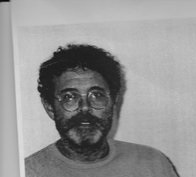
Catfish McDaris has been active in the small press world for 25 years. He shot howitzers three years in the army and used to fish and hunt as a boy in New Mexico. Sometimes he goes down to Lake Michigan and feeds seagulls and dreams of mountain horses. He’s working in a wig shop in a high crime area of Milwaukee. He’s been translated into Spanish, French, Polish, Swedish, Arabic, Bengali, Mandarin, Yoruba, Tagalog, and Esperanto.
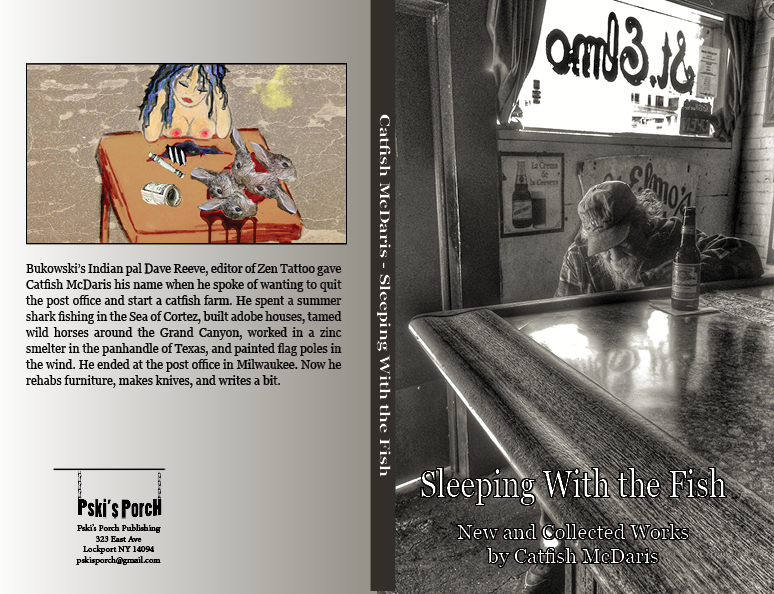
His book, Sleeping With the Fish, contains poetry and prose and is 265 pages for under $10 from Pski’s Porch

JOURNEY TO PLANET WRITE: The Perfect Corpse

by Katey Schultz

I remember the day in graduate school when the highly regarded author, who was also my thesis advisor, looked at the 150 pages of creative nonfiction I had amassed and told me I’d written “the perfect corpse.” It was the best thing she could have said to me—a type A, beat-my-head-against-the-wall, determined, writer. I knewI’d write for the rest of my life. I knew I’d find a way to make a living as a writer, not a professor. But first, I had to learn a very hard lesson. I smiled and trembled all at once, humbly accepting my pages back from my thesis advisor. I had six months to find the life in my memoir, and the only thing I knew was that what I thought worked, didn’t even come close.

Hitting a wall had never felt so good, because somehow—perhaps it was growing up in a house of books, perhaps it was a high school English teacher who had made the work of the writer sound honorable—whether or not I’d keep writing was never at risk. I knew I was lucky in that regard, and finally, someone was going to help me see what wasn’t lucky about all that determination I’d been carrying around.

Writing the perfect corpse looked like this: I followed all the rules. I considered my balance of scene, summary, and reflection. I applied metaphor and concrete imagery at the line-level. Whenever possible, I also extended metaphors to address the broader narrative themes that I thought my essays about “growing up girl” in America addressed. I read deeply and passionately, studying a wide spectrum of creative nonfiction.

But through all my drafts, I’d never questioned the initial entry point into my memories. My brain often latched onto a story through a startling, frozen, concrete image locked in my mind’s eye. From there, I had my beginning. The rest was following the rules—and I had fun, writing both beautiful and not-so-beautiful sentences, thinking for sure I’d given it my all.

What I didn’t know at the time was that the initial spark of a memory frozen in my mind’s eye—that thing I’d become so dependent upon to get the work done—wasn’t always the best place to begin. Furthermore, the image or memory itself didn’t always signify the heart of the matter in a literal or direct way; that is, it wasn’t necessarily the best way to say whatever it was I was actually trying to say.

I could write a solid scene and stack several solid scenes in a row along a particular theme. But could I get at the emotional pulse of the predicament I was portraying? Could I articulate the stakes of the short-lived moments my memory kept telling me I needed to write about?

I could, but not through traditional memoir form. I’d written “the perfect corpse,” but it was a corpse because the writing didn’t have a pulse. The writing didn’t have a pulse because it wasn’t in the correct…body (to extend the metaphor). The initial spark of memory that told me to write my scenes and balance things out with summary and reflection did get me through to that 150 pages—but the approach came up short in terms of determining the truly correct form for future drafts. I ran my head into the same wall over and over again, making it more and more real with each blow, until I’d built it up so high that I mistook it for absolute. But the form (or body) I needed to tell my stories in wasn’t even made of walls, so to speak. I needed something entirely fresh; something that allowed for more pulse than a basic balance of scene, summary, and reflection could provide.

I needed flash nonfiction…that tiny, beautiful, little monster in the corner of the room that I hadn’t even known had a name until push came to shove my 4th and final semester of graduate school and someone finally suggested I “start writing short.”

Like magic words, this advice made that damn wall I’d been running into completely vanish. The pulse of my stories resided in the moment, there and then gone—as fleeting as the adolescence I was writing about. I wrote short and my own heart raced. So did my thesis advisor’s. I never looked back.

Interestingly, I never published a single piece of flash nonfiction from that final version of my thesis. But “writing short” hooked me forever, and I’m now known as a flash fiction author whose debut collection of short stories about the wars in Iraq and Afghanistan helped open multiple sides of the military and civilian experience to average readers who “didn’t like to read about war.” They like to read about people, and “writing short,” helped me offer readers digestible glimpses into the lives of my realistic, fictional characters in ways that I’ve been told have allowed them to experience the “human side” of war.

Writing short didn’t prove to be enough, though. I became obsessed with helping others delight in this fun, magnetic form. It’s both accessible and challenging. It forces hard skills like word choice, imagery, repetition, and rhythm…but it doesn’t require 200 pages for a universal payoff. It solidifies a writer’s attention to scene, in particular, but also heightens a writer’s ability to trust the reader, omit extraneous details and backstory, and cut to the chase. Today, I offer a 5-day e-course in flash form writing, a 5-week online live course in creative flow and flash form writing, and one-on-one mentorships for writers also drawn to this form. Life is busy. Life is full. Life is as alive and kicking as ever, and I’ve got the pulse to prove it.

____________________________________


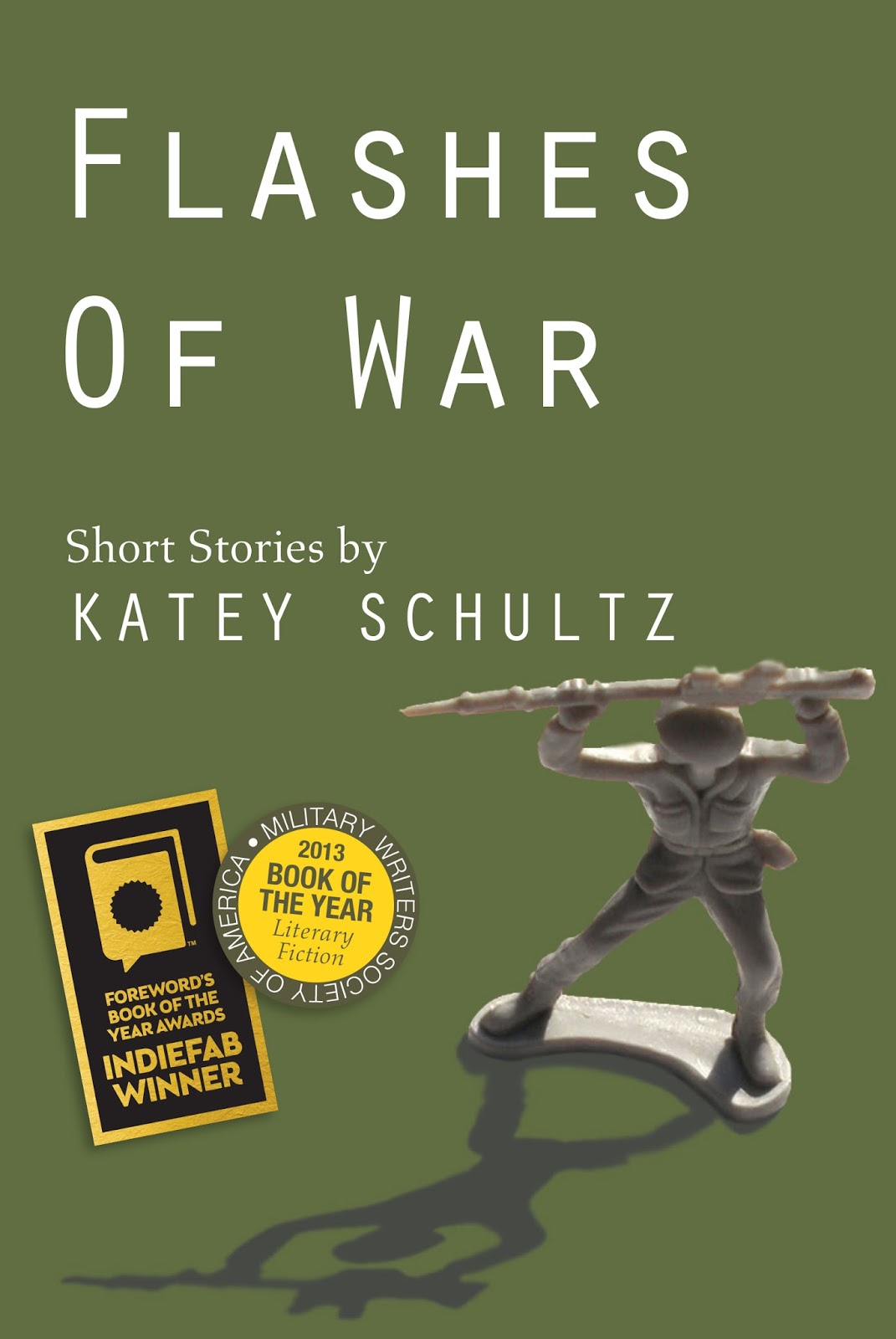
Katey Schultz is the author of Flashes of War and editor of three fiction anthologies. She is also the founder of Maximum Impact: Precision Courses for Writers, Artists, & Trailblazers, dedicated to the principle that the right word in the right context, can change a life. Her novel, set in Afghanistan, is represented by Sobel Weber Associates.

Purchase Flashes of War from my fave indie bookseller, Malaprop’s!
Events, blog, & course info: opt-in via email here.
Visit website: www.kateyschultz.com

JOURNEY TO PLANET WRITE: Back to Age 9

Available at Amazon

by Len Kuntz

When I was a boy, there was always a lot of turmoil in our house, things I didn’t understand. I was painfully shy and had no friends, so I didn’t know how normal families lived, yet I knew ours was different.

The only place I felt safe was the basement bathroom where no one ever went. Sometimes late in the evening I would wedge myself between the sink and toilet, sitting over the heat vent because warmth, too, signified a kind of safety, as our house was always quite cold, because heat cost money and that was another thing we lacked.

I was around nine when this habit started. I’d stay up for hours, holed away in the bathroom, reading Gulliver’s Travelsor any other book I’d gotten from the library. Reading was escapism, something that felt like wonder, something I desperately needed.

School was another safe place and one semester in fourth grade, we focused on creative writing. The teacher assigned us four different writing prompts each day and we were to pick one to write about. I’d always choose all four because it seemed a shame to waste a good story idea, even if it wasn’t mine.

At the end of the year, my teacher pulled me aside and said, “You should think about being a writer when you grow up.” I thought she was joking at first, but the more I thought about it, the more the idea became a kind of dream that I carried around with me, tucked away safely in my shirt pocket, right beside my heart.

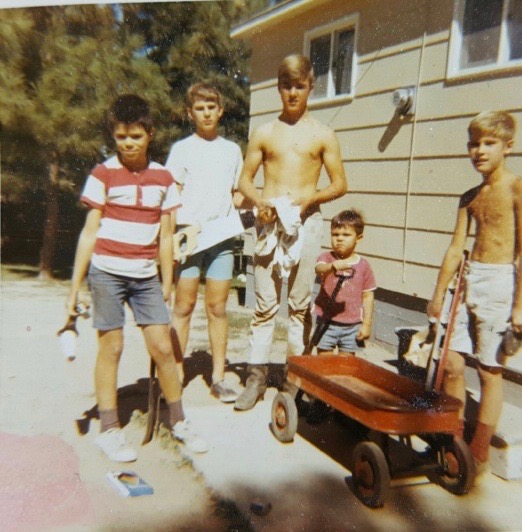
That summer our garage burned down and we were laying the foundation for a new one. All of us boys were helping out. (Len is on the far right at the end of the wagon) My brothers were very good with their hands, as well as my father, who was a mechanic. Me, I wore puka shells, had long, David Cassidy hair, and read poetry. My assisting simply meant handing over tools.


At one point we broke for lunch and as my brothers left, I was alone with my Dad, something kind of rare, but for whatever reason I felt brave enough to say, “Hey, Dad, I figured out what I want to be when I grow up.” To wit, he asked, “Yeah, what’s that?” He was staring at me then, but I still told him, “I want to be a writer.” Without hesitating, as if he knew what I was going to say all along, he said, “Quit your fucking dreaming. How’re you going to eat on that?”


Though it was a knife to the heart, I don’t think he meant it that way. We were poor. The way you made a living was with your hands and hard labor. He just couldn’t fathom being able to feed yourself, let alone a family, by writing words.

But what he’d said quashed my dream and so as I got older, I took a more pragmatic path and ended up having a corporate career.

More than thirty years later, I retired early and started writing full-time. This was around 2009. I had no idea what I was doing. I didn’t know there were online journals and had never even heard of the term “Flash Fiction.” But once I discovered them, I became a student.

It was easy to assess who the top writers were at that time, so I picked a handful—Roxane Gay, Kim Chinquee, Kathy Fish, xTx, Meg Pokrass—and I read everything they wrote, read it forward and backward. Then I started submitting to the same places I’d seen them published, not realizing that for a novice like me, some of those places are extremely hard to get into. But that bit of naivety helped as my first few pieces landed in some of the top sites—Juked, Elimae, Storyglossia and others.

Along the way, I kept trying to be a student of the craft.  Additionally, I watched people like Matt Bell, who really worked hard at immersing himself in the writing community, and I tried, in my own way, to emulate what he had accomplished. What I never expected is how easy it would be, how welcoming and supportive other writers are. And it didn’t occur to me until later that, as writers, we’re all boats in the same ocean, just using different oars.

It’s a joy and a gift to be able to create and engage with other writers. It’s like finding your soul mate and realizing how lucky you are, never taking it for granted.

It’s been a long, sometimes crooked, road since I was that nine year old boy, but when I’m reading something that really sings, or when I’m totally engrossed while I’m writing, I think I’m still him. I’m warm and I’m safe. I’m quite happy.


                                                        Beautiful Violence 


Here’s what happens:

She thinks this is forever.  You love her.  You say so regularly.  Most of the time, you’re kind.  Occasionally, you’re a bastard because you have fists and impulses that are difficult to quell.
           
Still you’re her best thing ever.  She tells you that often, especially during sex–those seldom, soft-churning, almost-like-lovers, sex times.

And so a home movie or two is fine.  She’ll do whatever.  

Really, whatever.   Film all you want.  It’ll be ours to watch alone, titillating. 

Yes, she actually says that.

And then, out of the blue, the impulses and fists become overactive, finding flesh and bone, making hamburger over and over until she finally leaves you.

Stupid Bitch, why’d it take so long? 

But you still have the movie.  It’s just sitting there inside your phone, so you download it to a site where everyone can see what a ruler you are of women, how you dominate them, how they do whatever you command, and the video gets so many hits that you somehow start to make an income from it, plus your face is pixeled out, but not hers, because it’s important for her agony to be choreographed.

History—those tortured, yet intimate moments—is recorded from mere memories.  Easy peasy.  Yay!

And so you strut in front of a mirror naked, fists raised toward the ceiling, noticing how large your gut’s gotten, everything bigger now—ego, bravado—though not your understanding of love, sex, or how violence can possibly be a thing of beauty.

 _______________________________


Len Kuntz is a writer from Washington State, an editor at the online magazine Literary Orphans, and the author of I’m Not Supposed To Be Here And Neither Are You out now from Unknown Press. You can also find him at lenkuntz.blogspot.com


JOURNEY TO PLANET WRITE: How to Become a Writer

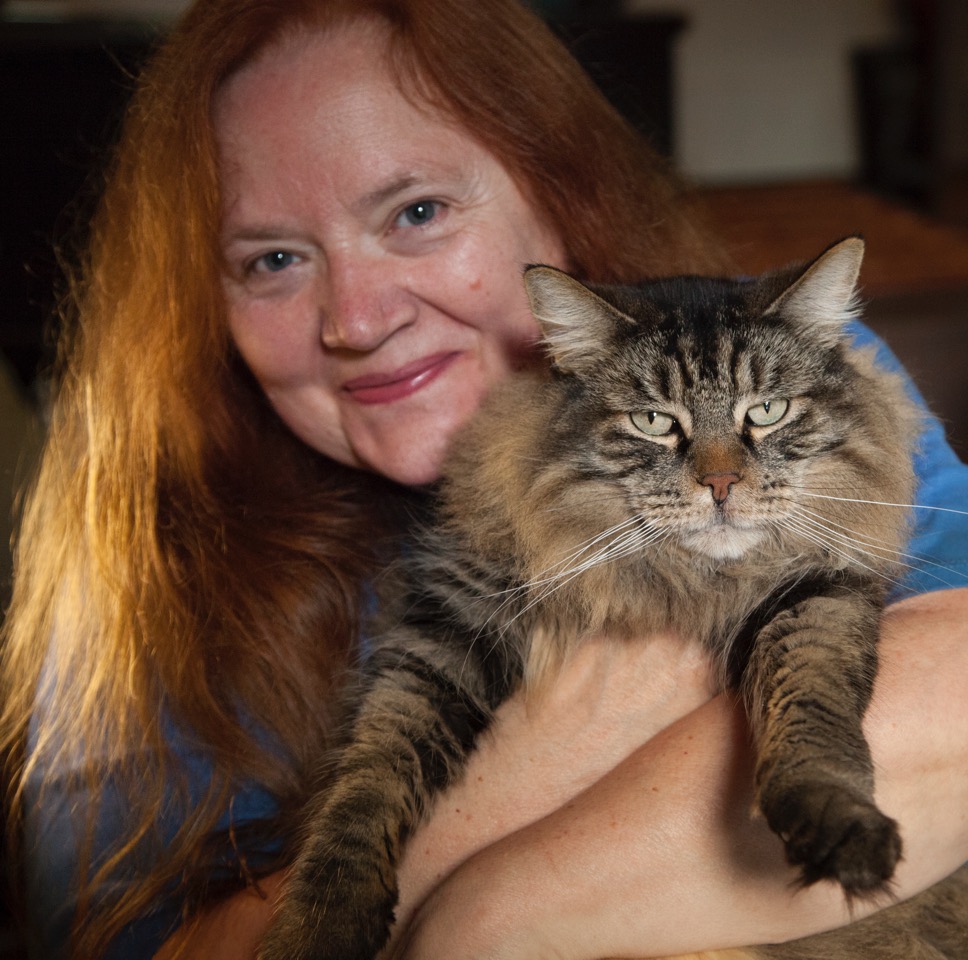
by Sandra de Helen

The moment I realized not all books were already written, I decided to become a writer. Maybe I thought that because I’d never seen a new book. I was born into a poor working class family. My parents had lived through the Great Depression. My dad was a painter/paper hanger, my mom stayed home and cooked, cleaned, gardened, sewed her and my clothes. We had no electricity, no running water.

She had a treadle sewing machine, and she created her own patterns. My dresses were made of flour sacks. My winter coat and hat were made from old woolen suits she cut up and repurposed.

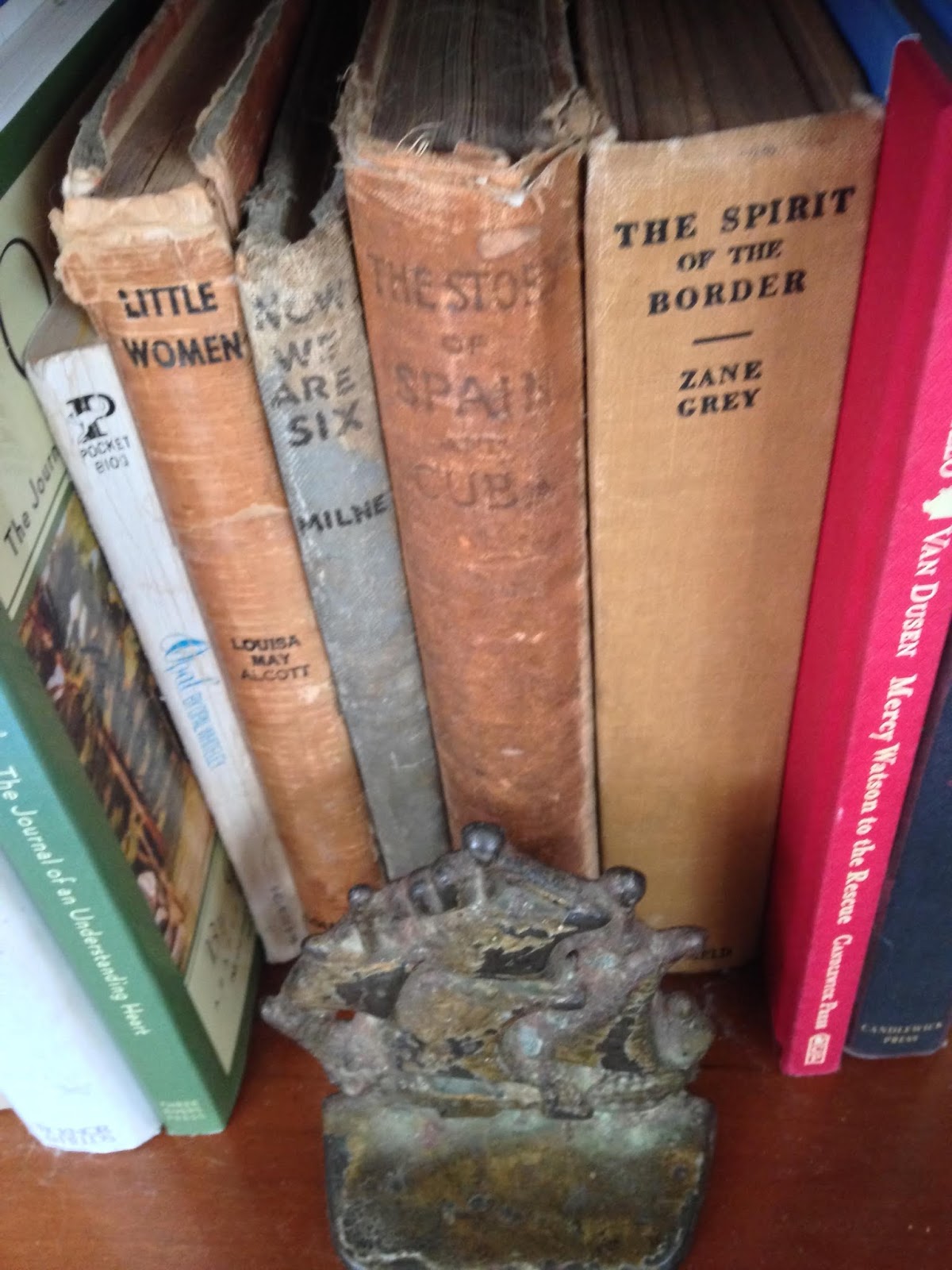
We made weekly trips to the town dump where we found books. Mom and Dad read every night after supper until bedtime. When I was four years old I learned to read from A. A. Milne’s Now We Are Sixwith missing and torn pages, and crayon scribbles throughout. My dad taught me.

We had a bookcase filled with the strangest collection of books. One volume from the Encyclopedia Britannica, one book on etiquette, one book called Mathematics Made Easy, one called Reading is FUNdemental, The Well of Lonelinessby Radclyffe Hall, Black Beauty, Water Babies, a book on the Spanish War of the 1800s, several books by Zane Grey, science textbooks, how-to books, and the complete Sherlock Holmes. I read them all, most of them several times, each one as I was ready.

I started writing in earnest when I was eight. My dad had died the year before, and I was baby-sitting my two-year-old sister all summer while my mom worked two jobs: shoe factory and restaurant. I made up stories and wrote them down.
At twelve I won my first writing contest. The American Legion sponsored an essay competition. I won first prize of $3.00, and read my patriotic piece in front of their monthly meeting.

Sophomore year my English teacher entered my poem on abortion to a teacher’s magazine, and showed me my first publication. It was a surprise to me, but I’ve never forgotten Mrs. Janice Wallace for that gift.

For years I called myself a poet. Then I discovered live theater and became a playwright. I waited until I was middle-aged to begin writing novels because I believed a person needed years of life and experience in order to write books.
I still write poetry. I still write plays. And mysteries and thrillers, and essays. And a blog. For my next trick, I will write screenplays. I’m enrolled in a screenwriting class now.

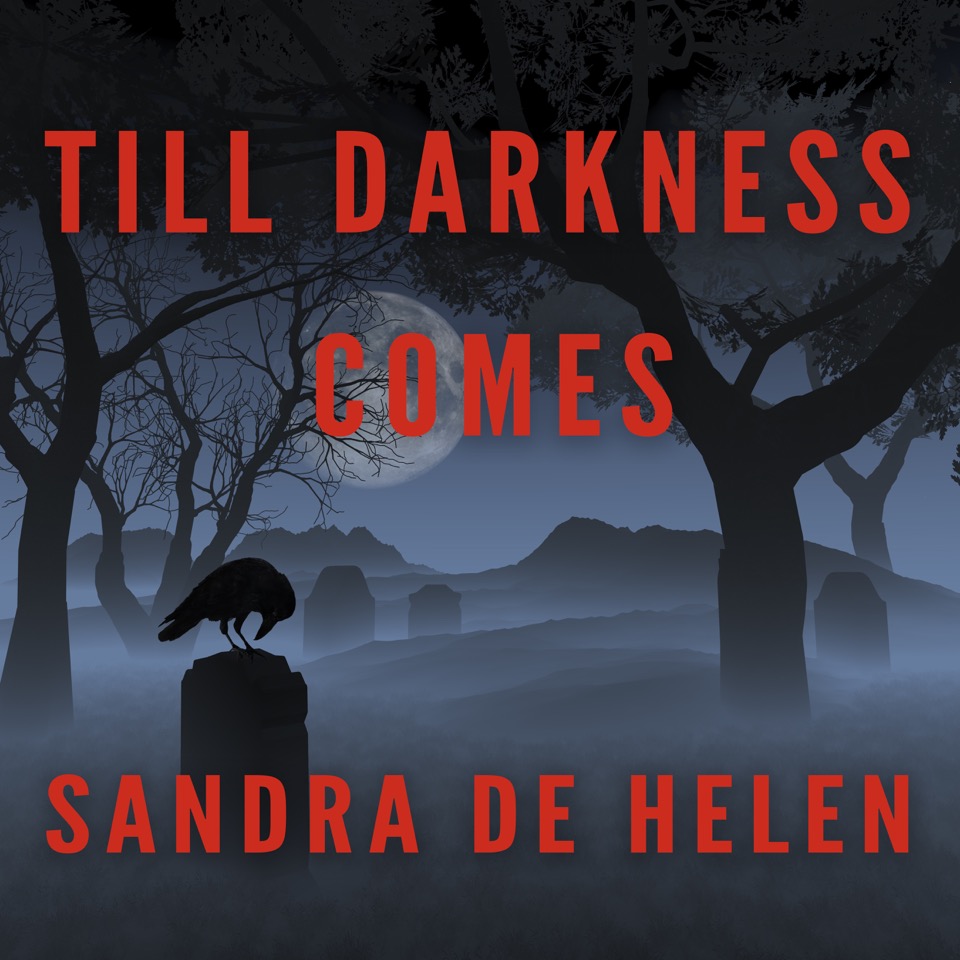
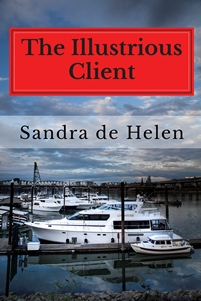
My first two books in the Shirley Combs/Dr. Mary Watson mystery series, The Hounding and The Illustrious Client are available through any bookstore, and of course Amazon. The third Shirley Combs/Dr. Mary Watson book The Valley of Fear will be out later this year. My first thriller Till Darkness Comes will be out by September 2016. Check my website for exact publication dates.
I believe in life-long learning. I believe in practice. I write every day, usually for two to four hours, sometimes more. On days with other scheduled activities, I might write for a shorter time, but I always write. I’m getting better at it all the time. I can’t not write.


Sandra de Helen’s advice on How to Become a Writer: 

  • Be a reader
  • Use your imagination
  • Get a bit of instruction on grammar, spelling, formatting
  • Write stories, essays, plays, novels, reference books, poetry
  • Keep writing
  • Get some exercise
  • Keep reading
  • Get more exercise
  • Continue learning
  • Write because you can’t not write

____________________________________


Sandra de Helen, author of the lesbian thriller Till Darkness Comesalso pens the Shirley Combs/Dr. Mary Watson series. She is a poet and a playwright. Her plays have been produced in the Philippines, Ireland and Canada, in thirteen of the United States, as well as Chicago and New York City. She is a member of Sisters-in-Crime and the Dramatists Guild. Her poetry chapbook All This Remains to be Discovered is available online and at Another Read Through Bookstore in Portland, Oregon. Samples of her work are available on her website.


See below for links:

Sandra de Helen
Novelist/playwright/poet


JOURNEY TO PLANET WRITE: My Very Best Character

by Christopher Bowen


When I was a small child, I used to create flipbooks with crayons and staples on construction paper late in the evening as my mother slept on a couch behind me after a twelve hour nursing shift. I used my first typewriter at four or five, an electric IBM my librarian grandmother had. I remember it’s low, sleek hum when turned on, the power of pressing those keys.

My story, the one I live, is the most important story I’ll ever create.

In 2008, I founded a small chapbook press called Burning River. We published eight chapbooks over about five years hinging on the credit that “the writing Burning River tends to admire, if not imitate, is human. It is flawed. It is incomplete. And it is seeking understanding into and of other human beings.”

And I used grants from culinary school to fund it. I worked full-time as a hospital cook and lived in a cheap, cash-only apartment in a rundown, small Ohio town that industry forgot.

I’m not going to go into exactly howrough life was then, but the press, my life, was worth the sacrifice. I began booking readings and venues outside of Cleveland for myself and other authors. I began to travel more. Just after the closing of the press, I completed two author tours, one on the East and the other on the West.

What makes this part of my story important isn’t the excitement or discovery, even the confidence of it—the writer residency in Quebec or anything else, but the knowing that you are capable of doing these things. What makes this part of my story important is how I earned the ability to do it, the humility and character of all that time, my life.

There’s a small sidebar of random quotes I’ve collected over the years on the Burning River website, ones that still remain there today, even as I only blog from it.  I found this quote over ten years ago while reading a book called Henry Miller On Writing.

“With the endless burrowing a certitude develops which is greater than faith or belief. I become more and more indifferent to my fate, as writer, and more and more certain of my destiny as man.”


How can human beings improve? How can they shape who they are? Sometimes, it’s just the simple decisions they make in the face of adversity.

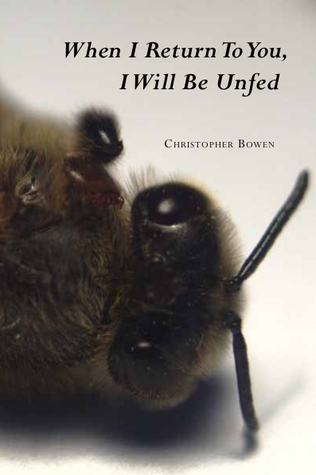
I recently published a novella, or chapbook, about adversity. When I ReturnTo You, I Will Be Unfed is about some of the very things I’ve been talking to you about: adversity, life-changing, character. I will always be the very most important character I develop. I work now as a travelling, managing chef. I write when I can and appreciate being a part of both the literary world and, at times, the culinary. When I wake up tomorrow, two weeks, three months, one year down the road, what is my destiny as a man?

A lot of people measure successes with a yardstick, a map and a compass. Sometimes, it’s simply the situation you never chose. The main character of my novella doesn’t choose mental illness and it’s something that surely defines him, then and later in life. I have been blessed to have a very full life even at my very young age of thirty-six. I have been blessed with so much character: from hopping into a semi-truck as a kid with my father and sister after breaking down on the Ohio interstate to understanding the natural world: camping, a hike, weathering a storm. Life is a storm and storms haunt me. It’s my ability to look back at them that makes life so much more worth it, that makes me so much more grateful for them, for my life, my human being.

***

The Farmers of Shangri-La


We are farmers. We are grown from a blackest dirt to be found above the clay table that’s there below the ground in Ohio. Black means rich, black means vitality to us because we are farmers. We plant trees, we grow them.

When years pass us by, by the old oak tree and the swing from its limb we used to climb, it will still be here to whisper secrets only children know and our hollow ghosts.

Summer passes us: the ball game, a worn leather mitt, the county fair and the dusk a part of the wind. Like the way it feels to skinny dip at night when everyone’s parents are asleep and though we are adults ourselves. The owl keeping one eye open and watching the summer pass us farmers and every creeping, crawling thing the night over knows it, knowing nakedness.

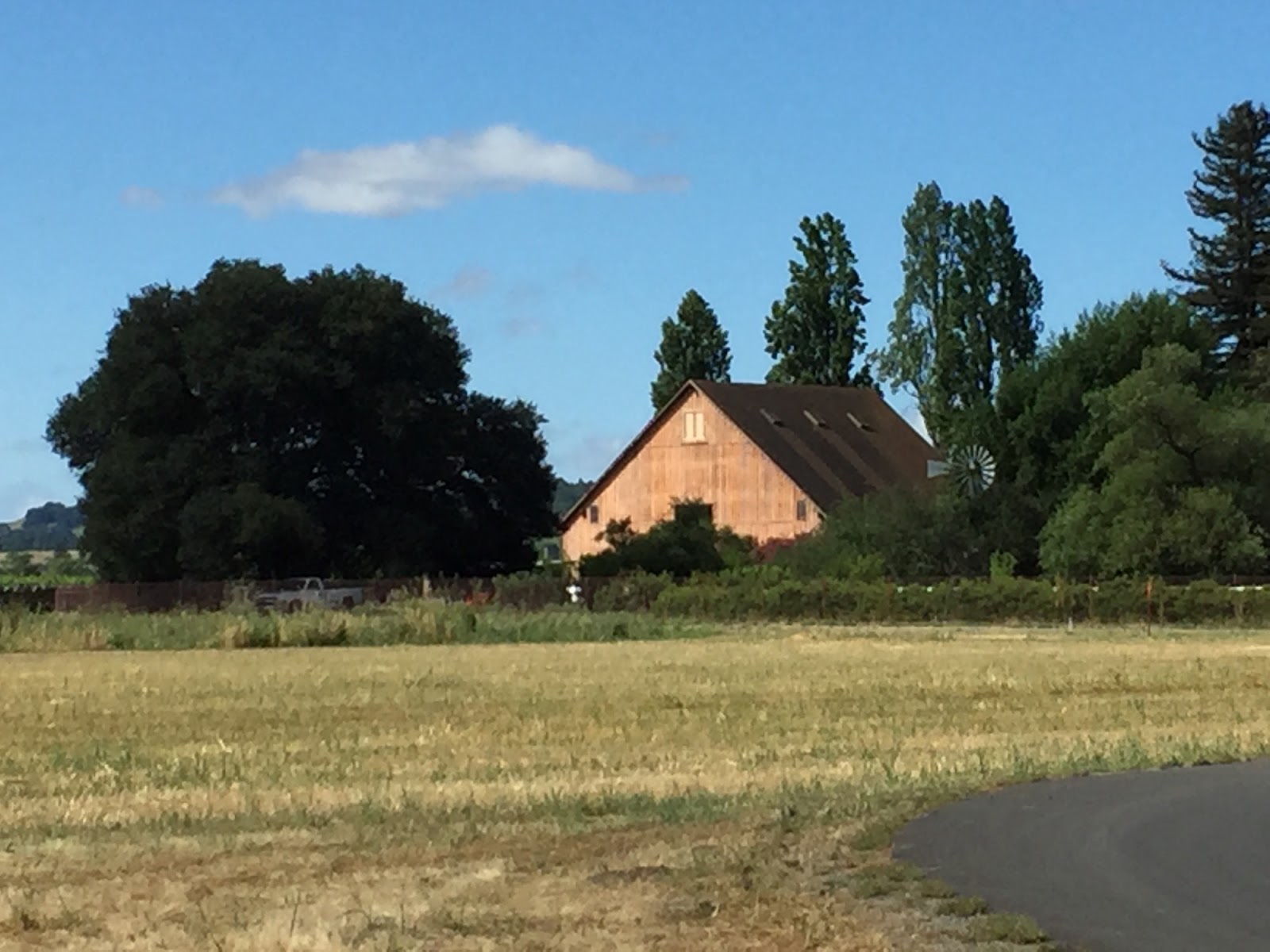
We’ve a barn to prove our stores, our progress and toil. We’ve a place behind it to smoke cigarettes or cigars or pipes after the family dinner. We’ve gravel driveways and blueberry homegrown stout or wine and rhubarb pie to eat while joking about the billy goat or how the dogs in the yard are just so stupid, just so dumb.


“What happened?”

“We were out by the dock out on the boat and it tipped, is all. That’s why I’m so wet,’ said as one enters the house, too late to notice the sun setting behind dripping ears. And the person in the living room or dining room nods in approval, knowing the question need not be answered and that it was only half asked to begin with, and offering the last slice of pie.

“What happened to the rest of the world?”

They are failing at something and running from us. It is well affixed in them to repeatedly escape this way, to take the fastest car, the fastest plane to do this, never to be seen the same way again and always lost in one or two or more ways. They leave behind the black, vital dirt of here and Shangri-La behind shaking heads, not shaking water, but disbelief at what is left behind in the past in the country in Ohio. They are on toward the city and clean futures like good barbershop haircuts to return the day like to some lagoon where a father or uncle or grandfather spits into the wind at mosquitoes and mumbles at the lack of predators in the area, natural predators to hunt and kill. This is God’s country.

There is incoming wind to an open window of a pickup truck, the bed filled with wood to last the winter. Bugs scramble at the weight of the statement. But no one hears this: not the bugs, not above the crack and shoot of gravel beneath rugged tires, not below the whistle of wind shaped for the ear and aimed from across a field of corn or alfalfa. Not God hears this, let alone the passenger.

Jackson Browne plays on the stereo, Running On Empty,and the car is in gear. And we will wait for you here, we will wait many years.


This flash fiction piece was first published by Stirring: A Literary Collection published at Sundress Publications.  Here is the original link to “The Farmers of Shangri-La.”

 ____________________________________


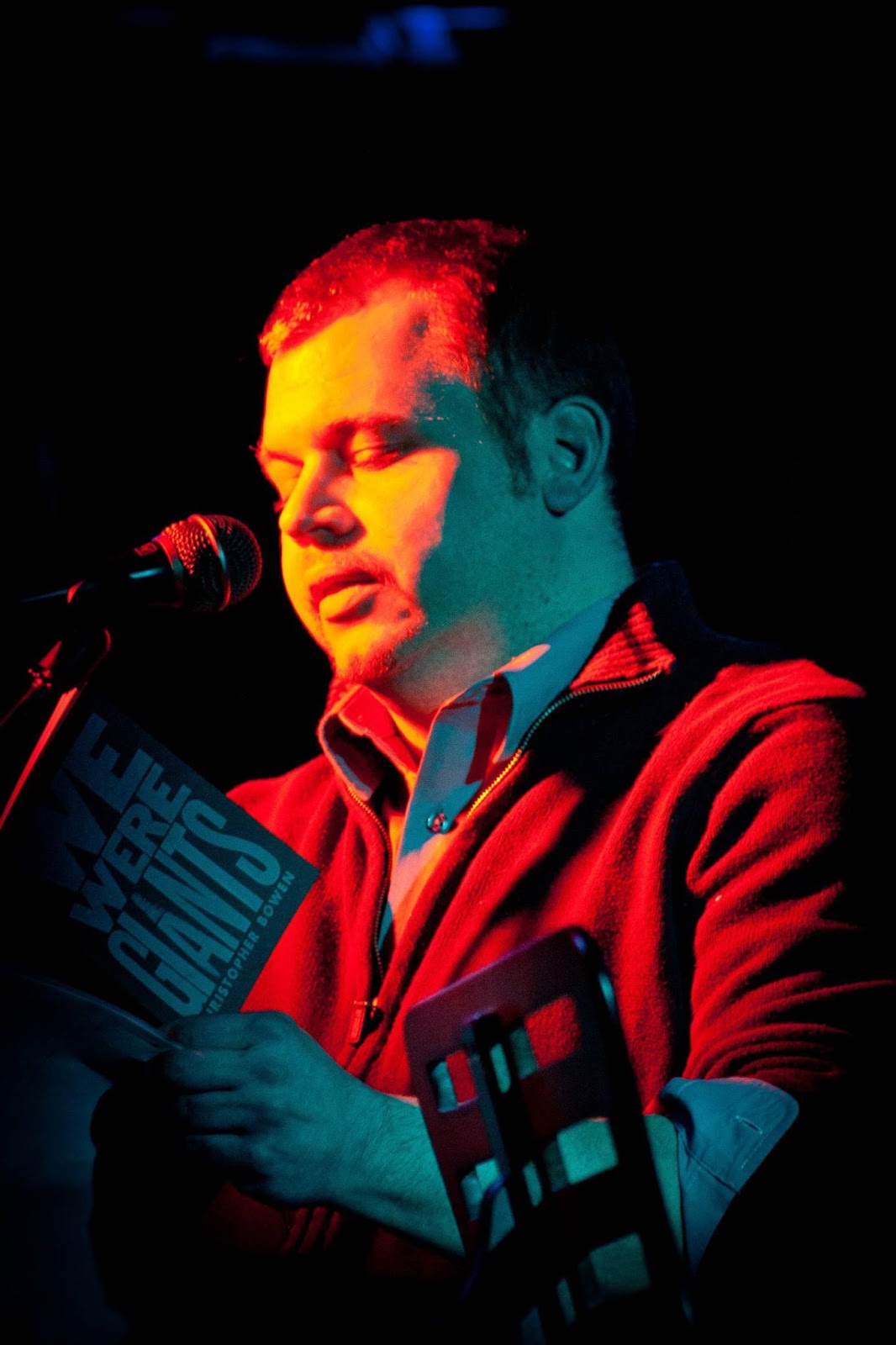
Christopher Bowen is a Midwestern chef. Author of the books We Were Giants (sunnyoutside) and When I Return To You, I Will Be Unfed, he blogs from Burning River.