Author Archives: Gay Degani

Unknown's avatar

About Gay Degani

Gay Degani's suspense novel, What Came Before, was re-published in 2016, her full-length collection, Rattle of Want, in 2015, and a shorter collection, titled Pomegranate, features eight stories around the theme of mothers and daughters in 2010. A complete list of her published work can be found at http://www.gaydegani.com

JOURNEY TO PLANET WRITE: Flash Time

by April Bradley

The first piece of fiction I wrote was supposed to be in the range of 80,000 to 100,000 words, but I ended up with 218. I labored over those few words and loved how the careful attention to that moment opened up a world, but I had no idea what to do with it. Who’d publish such a small thing or read it the way I did? I’d never heard of flash, had little familiarity with short fiction or literary magazines, had no training or academic experience in creative writing, didn’t know any other writers. It felt like I had failed because I was supposed to be writing a novel. I abandoned that unintentional piece of flash on my hard drive. That was in 2007.

This was during my mid-thirties when I read even more than usual, feasted on fiction and craft after the house was asleep, or in parking lots of elementary and middle schools, at libraries, doctor offices, the town green, and I did not write. That half-decade hosted an inferno of events and living that converged into a calm focus by the time forty came around.

By the time I was 36, my son and I survived a high-risk pregnancy and birth; I left a graduate program and dropped out of law school; my career was derailed by multiple episodes of blood clots in my legs, lungs, and brain; my spouse and I divorced. I agreed to co-parent my child with my ex-spouse in the same home and to mother full time. I should have been writing. I wanted to write, but coaxing the words to line up into a coherent, immersive story with evocative, vivid characters seemed impossible. I wrote around story; I didn’t create it.

For years supportive friends and family encouraged me, saying things like just sit down and write, keep a journal, free write, take a class, find your tribe, write, write, write. Keep in mind that an intense life was plowing right along; the topic of my creative writing didn’t come up all that often. Peter, my son’s father, and my grandmother were the most persistent.

Peter, also a writer and narrative theorist, knew I’d have to work for it and thought I was wasting precious time; my grandmother was firmly in the sit-down-and-write-a-masterpiece camp. I had outlines, plot ideas, research, and character sketches that obtained a great deal of length, but no life, and certainly no sense of story.

Those years were vital for me to read and re-read and study, turn my thinking around from theory and criticism to creation. Finally, when I was nearly forty-two I started writing what would be my first—and first published—pair of short stories. They too started off first unintentionally as flash. I wrote a vivid moment, put it away and came back to it a couple of months later and developed it into a story of more length and arc. At that time, I had a vague idea about flash that at best could be described as “I think it’s short short fiction.”

 
I wrote at least sixty drafts of a story over a five-month period, pushing myself to learn with it, and length is difficult for me. My naiveté with literary journals became obvious. After Glimmer Train declined to publish it, I sent it to two others, one of which was Bartleby Snopes. They told me that I had two stories in play, neither of which resolved the conflict of the other. They were right. The two shorter, revised stories immediately found homes at Dew On The Kudzu and Thrice Fiction.

As I acquired more familiarity with literary magazines and worked for one, I gained more exposure to flash. Discovering flash was like discovering a genre no one had ever mentioned. It was more than a miniature short story. Imagine if fiction or poetry were suddenly revealed to exist—that’s how wonderful and dazzling flash was to me. Yet, it was also familiar.

Flash is the medium I gravitate to out of a creative instinct, but it is no less difficult an art form. It intrigues me as a creator and as a philosopher. Narrative time in flash is uniquely experienced and expressed, and this feature of flash is particularly compelling. There is a dissonance in how long it takes to read a piece of flash, how it is portrayed in time through physical space in story time, and how long time and emotion resonate with the reader. The various elements of flash each influence the way time is re-ordered internally and externally.

Flash is similar in some aspects to many familiar forms of narrative, but it owns itself. After I started writing and publishing longer form stories and gained more confidence in my writing, enough confidence to write spontaneously, experiment with structure and form, emotion and content—I wrote more and more flash. Then, I sought guidance and studied with some of the masters of the forms: Kathy Fish, Gay Degani, and Nancy Stohlman. My education is by no means over.

These days, I have more story than time. There are flash projects in the works; I belong to a fantastic writing group, and I have been working on a flash novel-in-progress that suspiciously resembles a novel. Besides writing, the best thing about flash is the vibrant community of writers who shape and create it.

I found that original piece of flash, rewrote it entirely, and it didn’t work at all. In its original form with a bit of refinement, I submitted it Hermeneutic Chaos Literary Journal. They published and nominated it for a Best Of The Net Award.

_______________________________


April Bradley is from Goodlettsville, Tennessee and lives with her family on the Connecticut shoreline. Her work has appeared in Boston Literary Magazine, Flash FrontierHermeneutic Chaos Literary Magazine, Narratively, Pure Slush 5, and Thrice Fiction, among others. She is the Associate Editor for Bartleby Snopes Literary Magazine and Press. Find her at aprilbradley.net.
JOURNEY TO PLANET WRITE: It’s a MAD, MAD, MAD World

by John Towler

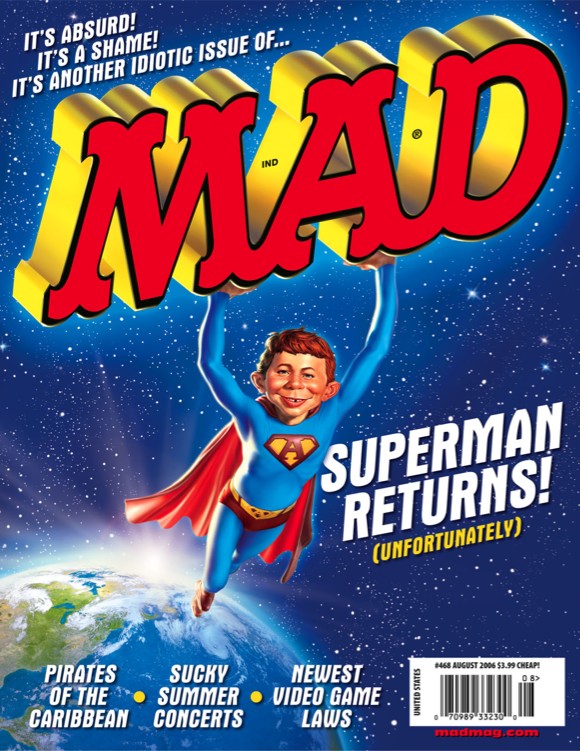
In the late 70’s and early 80’s, there was no greater thrill for my brothers and I than getting the latest issues of MAD, Cracked, Spiderman and Superman. We each started our own handwritten satire publications to entertain each other, and spun off from those were our own series of superhero comics. I was about ten years old.


I used creative writing in a variety of ways, including school projects, homemade birthday cards and my first forays into short stories. Creative energy was never lacking, but proper training to use that energy did not come along until I took college level coursework. Reading over one’s early work is a trip down Dreary Lane. As a novice you unwittingly violate all the rules of writing a thousand times over. Only in retrospect do you appreciate the reason writing, with all its diversity and originality, has some universal structures that should be honored.


One of the most developmentally important college courses I took was was playwriting. It was a year-long program (one semester of beginner/intermediate, one of advanced) which taught me valuable writing principles. The most enduring lesson was learning to trust dialog. Writers sometimes struggle with trust issues with their audience. Will the reader picture the character’s expression? Will the reader understand the emotion? Will the reader imagine the correct action, be it a whimsical flourish of the hand or a fist pounding a table top? Some of these things we must describe, but some are implicit in the character’s dialog. Circumstance may frequently be relied upon to dictate tone. Allowing your reader to understand through inference rather than blatant explanation involves them in your story to a much greater degree.


After my formal education, the three most significant influences on my growth as a writer came from participation in an active writer’s forum, a terrific writing group and my role as an editor at Every Day Fiction.


Back in the mid-2000’s I joined the Writer’s Digest online forum. We had a mix of novice and experienced writers in the WD Forum and writers were welcome to post their work for critique. There were some brutal, sometimes cruel assessments, of the work offered for review, but after sorting through the snide and sadistic remarks, you could find plenty of helpful commentary to improve your piece. Growing a thick skin was a side benefit of throwing your fiction into the mix and the clever participant could learn from other writer’s mistakes, improving their own craft at other’s expense.


The “Nudge Nudge Collective” was the name of our writing group. There were six of us and everyone had experienced some publishing success. We lasted through about seven or eight  of each other’s novels, picking them apart chapter by chapter, paragraph by paragraph, line by line, word by word. It was intense, emotional at time, but unlike the forum experience, it was utterly devoid of snark or nastiness. Tough love? Yes. But when everyone is operating from a place of honesty, it makes the toughest critique easier to handle.


Finally as an editor with Every Day Fiction I worked with a core group of insightful people who could ferret out the strengths and weaknesses of a story with remarkable accuracy. EDF editors provide some of the best feedback in the business, and so from my colleagues’ comments I came to learn not only the finer points of fiction writing, but also that intangible quality of what “works” in a story and what does not.


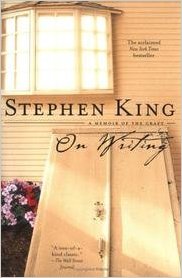
I’ll close by noting I’ve read a number of how-to books, from Stephen King’s On Writing to Jordan Rosenfeld’s Make a Scene. They are helpful for tips, learning useful habits, and developing your own critical eye, but there is nothing more useful than finding beta readers who will give you honest, detailed feedback about your work.

__________________________


John Towler lives on the Outer Banks of North Carolina with his wife and children. He is a career law enforcement officer, a videographer, writer and is now running for public office. 

Read John Towler:  “Company” and “Punch Buggy

Outer Banks Hummingbird Rescue video.

JOURNEY TO PLANET WRITE: How Did I Get To Be A Writer?

by Barry Basden

How did I get to be a writer? I often wonder how I got to be anything. It all seems like a kind of dreamy accident.
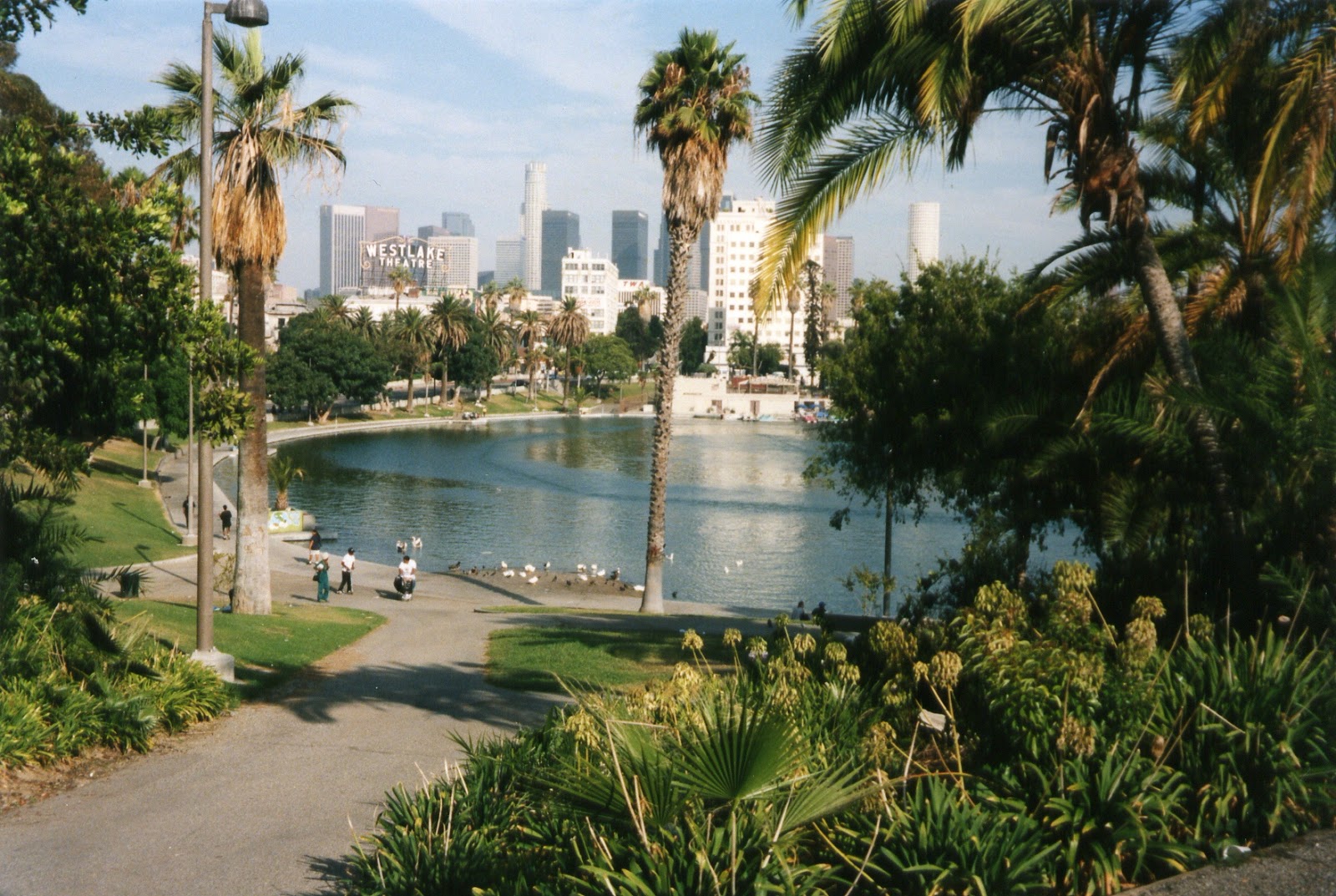
My early years were chaotic, eight or nine different schools in twelve years. Read a lot. Hung around with poets and actors and other loners in high school. After graduating in Houston, I bounced around the country. Lived near MacArthur Park in LA. Rode a Greyhound to New York. Clerked. Drank. Spent a lot of time in the Village, but made sure I read for three hours every day—Faulkner, Hemingway, Wolfe, etc.—trying to educate myself.
Hitchhiked back to Texas. No trade, still clerking, I took freshman English at night. The teacher was an alcoholic, a former English professor at Notre Dame, but by then just an adjunct trying to get his life back together. He used to sip ginger ale with a bunch of us while we drank and listened to him in a quiet bar after class. He seemed to know everything I wanted to learn, very supportive, urged me to write about NYC, saw that I was published in the school magazine. My writing, raw and terribly derivative of the Beats, gained some notoriety in that west Texas town. The best teachers are often the kindest and I remember Mr. Mooney fondly all these years later.
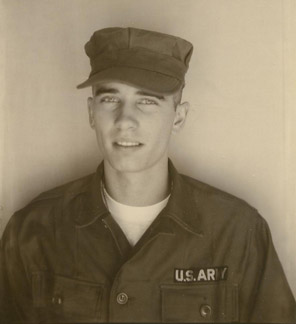
I scraped by on the fringes and learned “join the army if you fail” long before Dylan sang about it. I served in the Far East and Central America, but missed Vietnam. Barely. Cosmic luck. Somewhere in there I wrote 25,000 words of a novel that just petered out. I volunteered for straight midnight shifts at my radio site and took evening courses before work. Out of curiosity I enrolled in an accounting class. The teacher was an air force captain who told stories about auditing officers’ clubs and supply systems and catching thieves. I found it interesting, just the sort of high class trade I was looking for, something I thought I might actually be able to do.
I finished school on the GI Bill, 3 years in 18 months, top accounting grad, a piece of cake because all I had to do was go to class and do the assignments. I became a CPA and spent several years auditing youth training centers, wildlife refuges, and Indian affairs throughout the West, trying to make the world a little better place.
Then I worked for years as a financial manager for the military in Europe. There I found Annie Proulx’s Heart Songs and Carver’s What We Talk About. I now know that Gordon Lish had a lot to do with why I couldn’t read Carver’s book without weeping.

After I retired, I did oral histories for a WWII museum, writing up war stories that got filed away in dusty archives. That’s how I met Charlie Scheffel, a combat infantry officer who fought in North Africa and Europe. I found his story riveting and it eventually became Crack! and Thump, published in 2007. The book still gets nice reviews on Amazon. It’s actually a memoir in flash and writing it helped me find my natural way to tell stories.

I began to read and write flash and micro fiction and later founded Camroc Press Reviewthat focused on stories under 500 words. I couldn’t seem to get enough of it and ran CPR for 7 years before closing down last year.

I keep plugging away at my own stuff. I’m not prolific by any means, but I’ve turned out a couple hundred flashes, some of it collected, with a chapbook related to war coming out perhaps this summer. I love trying to hone a story down to its essence. It’s something I hope to spend the rest of my life doing, happy that my long strange journey has led me to such a perfect place.

__________________________________
Barry Basden lives in the Texas hill country with his wife and two yellow Labs. He is coauthor of Crack! and Thump: With a Combat Infantry Officer in World War II. His shorter work has been published widely, both online and in print. His latest flash collection is Wince. You can also read Ray’s People here.


MacArthur Park Photo: https://commons.wikimedia.org/wiki/File%3AMacarthur_Park.jpg”Macarthur Park” by Wurzeller at English Wikipedia – Self-photographed. Licensed under Public Domain via Commons 

JOURNEY TO PLANET WRITE: No More Hawaiian Punch Notebooks For Me

by Bud Smith

I remember driving very fast down Double Trouble Road in Berkley Township. There had been a forest fire a few years before and all the pines were charred. But there was new sprigs of green coming up out of the last of the dirty snow and I didn’t have a job, I was in love. This is when I decided I was going to write a novel.


My brother was in the hospital because he’d fallen off the back of a garbage truck and landed in a giant slush puddle.

I didn’t know how bad he was hurt, just that he’d gotten hurt at work and I had to sign the release forms at the ER for him, or maybe he just needed a ride. I don’t remember.

Double Trouble Road is just two lanes and there’s usually no one on it so you can drive as fast as you want. Around 80mph I decided when I got back to my room downstairs I was going to make a real novel.

I’d written them in notebooks since I was fourteen. But I’d never learned how to type and now I didn’t give a shit anymore. I was going to type out the novel, skip the notebook. All the notebooks in all my life have never gone anywhere. They’ve just gotten Hawaiian Punch spilled on them or left out in the rain on a picnic table and that’s that.

My father had found a computer at the township dump and he figured out how to put a new motherboard in it, and he gave me the computer. And he gave me a garbage dump keyboard. And a garage dump mouse. And I took the shitty formica desk from upstairs because they were going to throw it away, smashed off the top hutch and made it a computer desk. I’ve still got that here actually, I’m sitting at it right now, 13 years later. On 173rd Street and Haven Ave. in Washington Heights, NYC. Year of our Lord 2016.


When I got to the ER, Year of Our Lord 2003, my brother was wheeled out by an orderly and he was holding this big plastic bag on his lap.

“What happened?”

He started to tell me this story: “I was jumping over this slush puddle and my foot slipped when I landed on the back of the truck and … I cracked my head on the road and I was laying in this icy ass puddle and this old lady opened the door and said ‘don’t move you might have a spine injury I’ll call an ambulance’.

“What’s in the bag?”

“My trench coat.”

The orderly busted out laughing and I started laughing too and my brother was pissed.

In the car on the way back to the house I think I told him that I was going to write a novel and he was looking out the window still really pissed off at me.

We were on Double Trouble Road again and I was driving very fast again. Pretty much the only road I ever drive recklessly on back in my hometown was that road.

Except this other time when I was thinking about buying the car I have now, and I wanted to take it for a test drive but my brother is much more mechanical than me so he went along for the ride and it was pouring rain and I got that car up to 125 mph on a rain slick road and my brother said, “Please slow down you’re going to get us fucking killed.”

“I’m just testing it out …”

“Well don’t …”

“Seeing what it can do.”

“Take me home.”

I did write that novel. I came home from the hospital and I started that night. I was laid off of work at the time and I didn’t have to go to sleep. And back then everything was new to me and I didn’t know a single rule, I liked to drink Seagrams Seven and ginger ale. I’m glad I didn’t learn too many of those rules. I’m happy they still make Seagrams Seven and they still make Ginger Ale.

I just wrote and wrote and wrote and it was all garbage.
But Jesus, I had the best time.

When the novel was done, I was cool with being done too. I didn’t edit it past a first draft. I didn’t submit it to any publishing houses. I went to Staples and I got one copy of the book printed out and bound with rings. Cost me $22 or something silly.

I looked at it and said, “Fucking A, I wrote a book.”

I remember it snowed really hard and my friend who was living in Seaside Heights called me up on the phone to come over and eat painkillers with him, so I hopped in my car and drove across the bridge all icy like the end of the world and when I got to my friend’s apartment there was nowhere to park on the street, so I put the car on this little basketball court that was around the corner because I figured no one was going to play basketball with the court that iced over. I guess the cops figured that too because they didn’t give me any tickets, which was strange because pretty much anytime I ever went to Seaside Heights, I got a ticket. Once I got two tickets and one must have blown away and I got my license suspended for not paying the other one.

When I walked up to my friend’s door he’d grown a beard and I guess so had I, so it looked like something you just automatically did when you turned 20, no matter who you are. We sat on his couch and he asked what was new and I said, “My brother fell off the back of a garbage truck and got hurt pretty bad and I wrote a novel.”

“Holy shit, bro! You wrote a novel? You’re gonna get fucking rich.”

“Oh definitely.”

“R, I, C, H.”

We celebrated our good fortune that there were five Yuengling beers in the fridge and one Rolling Rock and the Chinese food place down the block would still deliver no matter how close the apocalypse came to the edge of the cave.  And we took the painkillers and watched TV, and it was a Wednesday with nothing at stake and life was good.

_______________________________________

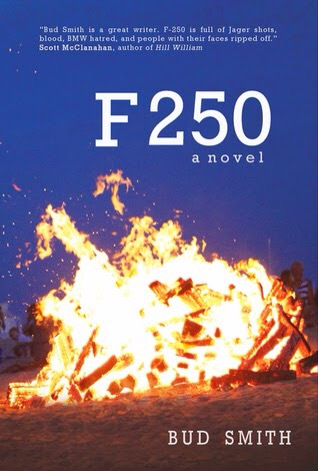
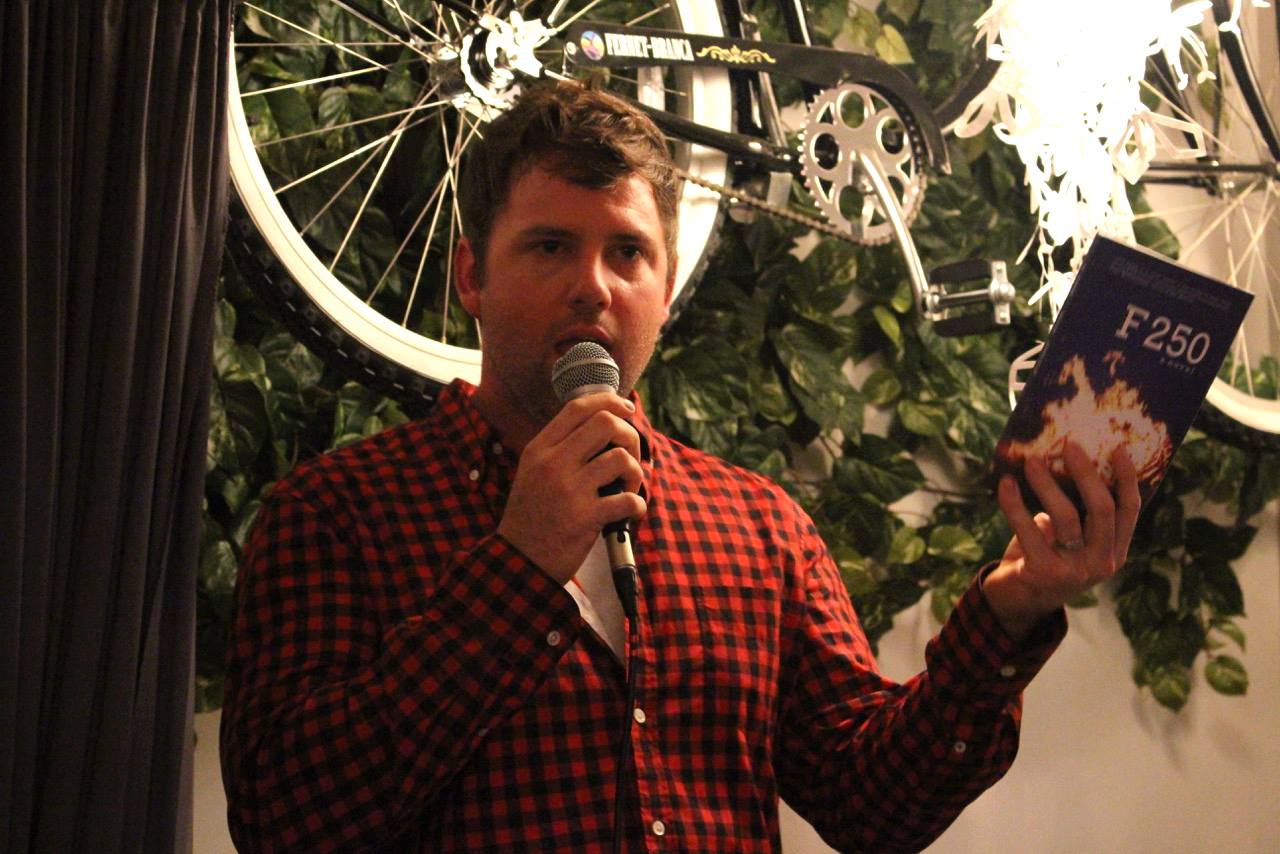
Bud Smith wrote the novels F 250, Tollbooth and I’m From Electric Peak. He works heavy construction in NJ. budsmithwrites@gmail.com 
Here’s two stories I like:
Tiger Blood at Hobart
JANT at Monkeybicycle 

http://monkeybicycle.net/jant/

JOURNEY TO PLANET WRITE: Syntax makes me hot

 by Sally Reno
It took 3 days to read on radio

I have always written short. I remember, before I was school-aged, composing little notes. As soon as I knew the alphabet, I had things to say. Very short things. This because my method was to ask my mother to spell out for me aloud the words I wanted. I somehow sensed that she was not going to be willing to spell me through anything like a Russian novel.
By 17, I was writing and publishing what would be called flash fiction today. The peculiarity of this was noted, but not always reviled. There was a lot more experimenting with form then than there is now.

“To irony, ambiguity, and tension–Andother things I do not wish to mention.”

~Kenneth Koch 

At Columbia University, I was fortunate in being able to take a poetry writing class with Kenneth Koch, a thing well known to be a life changing experience. He taught us never to undervalue either simplicity or surprise.
Lady Murasaki composes flash fiction circa 1000 C.E.
The magic words, “flash fiction” came along only recently, but people have always written very short fiction. The form has a history millennia longer than the long forms like novels. Romans of the classical age, early medieval Japanese court ladies, and 17th century Frenchwomen have been especial masters of the craft.
The next issue of blink-ink print, coming in early April and themed, “Mystery Train” will lead off with a 40-word microfiction by Petronius Arbiter, written about 54 A.D. Petronius lived in Cumae and had been to see the Cumaean Sybil. He constructed a couple of stellar sentences about the experience. When, eventually, he built a scene in the Satyriconaround them, the purport of the scene was to make fun of anyone who would say anything so preposterous as those two sentences. Yet, they remain one of the best pairs of sentences in all of literature.
I love sentences. Most writers will tell you they love words. Words are good, but sentences are the bees’ knees. Syntax makes me hot.
I have been a hired-gun writer most of my working life and have only gotten back to writing the things I wish to say in the last decade or so.
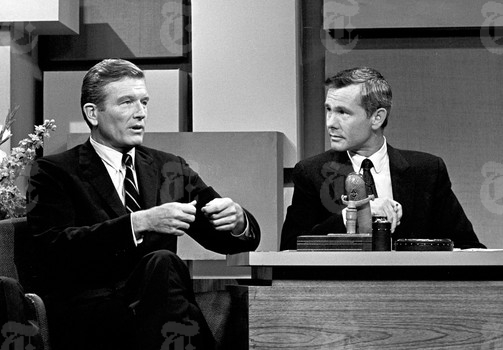
I began as a political speechwriter, which was my introduction to writing comedy. A joke I wrote for the Mayor of NYC to tell on The Tonight Show provoked more hate mail than anything the show had received up to that point—an early career triumph that I am unlikely to live long enough to top.
I am also a radio-head, another exercise in writing short best defined as getting to the point immediately or sooner. It also teaches the difference between writing for the eye and writing for the ear.
The Mayor tells a joke.

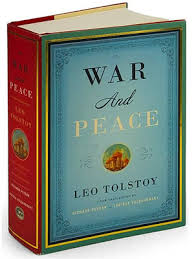
The best radio also breaks the waves of form. At WBAI, we read every word of War and Peace on-air. This was accomplished by relays of readers working around the clock. My best recollection is that it took about three days. We also pioneered naked radio, claiming to be broadcasting with no clothes on. We invited listeners to come down to the studio, take off their clothes and join us. It was a fine measure of living in heady times that so many people took us up on that offer.

This was before the corporate Kraken crushed the life out of broadcasting, but even then, the commercial spots were heinous. The effect of that, in legal language, was that of an ‘attractive nuisance’—something I could not resist messing with. To my knowledge, I was the first (and probably the last) to write and produce radio commercials that exploited multi-tracking capabilities around tiny whacked stories.  I recorded 30 and 60 second stories with bed music and the commercial message woven through them on side and travel tracks. Thus, I learned what is actually at stake when we say, “in a minute.”
Perhaps because of time spent telling other people’s stories, I like to throw some elbows in my writing. I like it even better when I hit something.
I am among those writers who need to get a first line down in order to release the goat pen of babble. That first line is often the first line of the finished piece but not always. Sometimes that first sentence is entirely gone when the piece is finished—the sacrificial sentence. I suppose this amounts to being mostly muse-driven. As such I don’t benefit from disciplines like writing at the same time every day or setting a daily quota of words or pages. Sometimes a whole piece will leap from my head fully-formed. Only the white goddess knows why.

See Sally Reno in action at the January F-Bomb event: MOUTH CRIMES with Gay Degani and hosted by Kathy Fish:


_______________________________


Sally Reno’s fiction has been among the winners of  National Public Radio’s Three Minute Fiction Contest, Moon Milk Review’s Prosetry Contest, and has been nominated for the Pushcart Prize. She lives in a vaporish grotto where she serves as Pythoness to blink-ink print and Haruspex for Shining Mountains Press.

Author photo by Jesse Coley

JOURNEY TO PLANET WRITE: If You’re Going to Try, Go All the Way

by Hillary Leftwich

Hillary Leftwich with her father
I was called stupid by my classmates. I began to think I wasn’t smart and there was something wrong with me. In kindergarten, I was diagnosed with dyslexia and held back from the first grade. The love of reading saved me.

One of my happiest memories during this time was when my dad would to read to me and my older brother at bedtime from a book called Mrs. Frisbee and the Rats of Nimh. As I grew older, I figured in order to improve my own reading and writing I would have to read as many books as I could. I looted my mom’s bookshelf. I read her entire hardback collection of Stephen King and Douglas Adam novels. When I ran out of those, I moved on to Poe, Fitzgerald, anything I could get my hands on, sometimes reading two or three books at a time. 

Reading was a natural progression into writing. After my parents divorced, we were dirt poor. I was always aware of how bad off we were, yet somehow my dad found the money to buy an electric typewriter and gave it to me. I guess he figured to be a professional writer you had to have a typewriter. I soon found myself writing my first short stories.
In junior high I was harassed and bullied. It was the first time I began to suffer from what would be a lifelong battle with severe depression. During this time I focused on writing as a way of escaping. I wasn’t aware that my short stories were anything more than a way of expressing myself. 

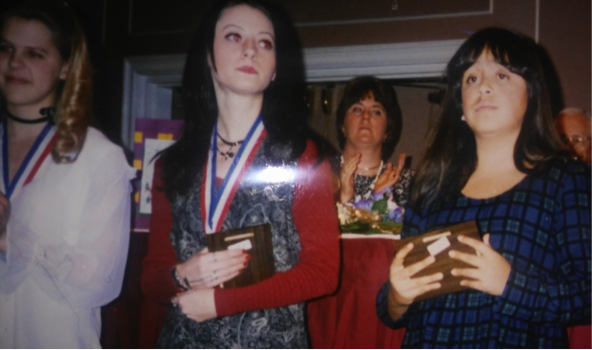
State of Colorado Young Writers Award

My senior year English teacher convinced me to submit one of my stories to a state competition for young writers, which I did, with much hesitation. It was the first time one of my stories would be read by anyone, and it scared me to death. When my school’s principal asked me to come to his office I thought I was in trouble (again) but he congratulated me and told me I had won first place. It was a surreal but fantastic moment in my life.


During this time I took a ten year hiatus from writing. I started college, was put on academic suspension for bad grades (too much partying) and moved back home with my tail between my legs. I had a baby and had to untangle myself from a horrific and messy domestic violence situation with my son’s father. I realized the only way to better my life and my son’s life would be to go back to school. 

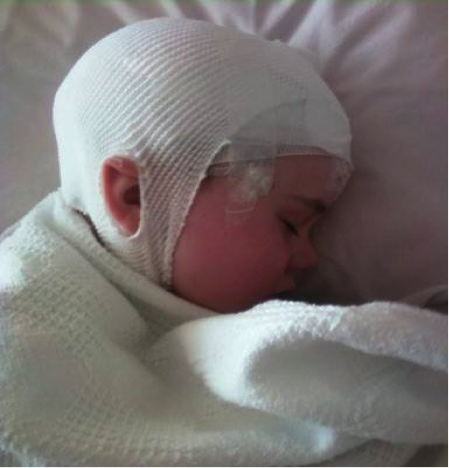
I was accepted into CU Denver and moved to pursue my degree in English. I was working full time and during my last semester before graduation, my son, who suffers from epilepsy, had a terrifying series of seizures and almost died, really should have died, according to the doctors. 

My son at Children’s Hospital

I spent a week sitting next to his hospital bed, diving into my homework, trying to get my mind busy. I began a blog to keep track of what was happening and found this type of insight-through-writing to be therapeutic in a way I never considered. I found a new love for creative nonfiction. It opened a vein for me, a way of writing about my experiences with domestic violence, my son’s disorder, (hell, all of my struggles), in a way that fiction would not allow.


After receiving my MA in creative writing from Regis University I began to focus solely on writing for the first time. I was working odd hours as a private investigator and as a maid, supplementing my income by occasionally modeling for pinups. 

I stumbled upon a NYC based mystery novelist, Chris Orcutt, who took me under his wing and became my mentor. He told me to write what I know and to hell with everyone else. I was also working with Marty McGovern, my advisor and professor, who introduced me to flash fiction, a genre I knew nothing about. I found Kathy Fish’s flash online and instantly felt something spark inside of me. There is something about her style that really connected with me and I read as many flash writers and journals I could find: Pamela Painter, Elizabeth Ellen, Sean Lovelace, Randall Brown, Kim Chinquee, Amber Sparks, Sherrie Flick, Gay Degani, the list goes on. 

MFA with David Hicks and Kathy Fish.
During my reading I discovered a journal called NANO Fiction. I fell in love with their micro stories and set a goal that my first flash fiction story would be published in their journal. After six months of probably too much revision, they accepted my first story. 

I’ve had a lot of people take chances on me. Because I had no experience, I put a lot of pressure on myself, and still do. I never want to let anyone down, including myself. I attribute my dive back into writing to Chris and Marty, who told me to never give up, that writing is possible, that a single working mom with no publications or background can be just as successful as everyone else. 

In January, I began the Mile High MFA program at Regis University and found myself surrounded by an incredibly supportive as well as talented community (including Kathy Fish!). The co-director, David Hicks, is one of those people you meet maybe once or twice in your lifetime, if you’re lucky. In addition to co-founder/co-director Marty McGovern and their program assistant, they all have managed to foster a culture of unrelenting support amongst the faculty and my cohorts. This was a huge relief because I wasn’t quite sure what to expect from an MFA program.

I recently quit my job to pursue my MFA and writing full time. I gave up everything. I knew if I was going to do it, I had to go all the way. I couldn’t half-ass it. Quitting my job and leaving the 8-5 routine is the scariest thing I have ever done, especially when my son is depending on me, but there are moments when you have the chance to take a huge leap of faith and just trust yourself, trust your gut. Your gut will never be wrong. I will never regret the choices I made because they all led me to writing, my first love, and without writing, there is no leap, no exhilaration. And without this, what kind of life is that to live?  

________________________________


Hillary Leftwich lives in Denver with her son and is currently attending the Mile High MFA program in Denver for fiction. She is the associate editor for The Conium Review and the nonfiction editor for The Fem. Her writing has appeared in Hobart, WhiskeyPaper, NANO Fiction, Monkeybicycle, Dogzplot, Cease, Cows, Five Pure Slush Vol. 10., Crab Fat Magazine, Eunoia Review, Tethered by Letters, Progenitor, One Sentence Love Stories with Meg Pokrass, and The Citron Review. Her story “Free Lunch” was nominated by Progenitor for The Pushcart Prize in 2015. She thanks her writing tribe, The Fishtank, for their continued support. Find her on Twitter @HillaryLeftwich.

JOURNEY TO PLANET WRITE: It’s Always Pouring In My Kingdom

By Anne Elizabeth Weisgerber

I remember one of my childhood nuns, Sister Margaret Mary, as very Irish.  She pronounced laughter LAHWt-rr. She was mean, crabby, quick to knuckle-up with the ruler, but man, I loved how she said that word.  She insisted. 


My favorite teacher as a child was Mme. Pearl Phillippe.  She would let me visit with her after school, and she would teach me French words and phrases.  She made me hand-copy poems into a book and illustrate them.  Not a hugger, she would sometimes touch my hair to move it behind my ear. I still love her for all those things.  

In second grade, I was moved up for being precocious, and soon learned (for self-preservation reasons) to pretend that I could not read.  The third graders didn’t want a baby around, and my old classmates thought, Jersey-style, she thinks who she is.  Publicly, I would stumble over the word ocean: privately, never.  Happily demoted, I read a lot at recess.  My favorite books involved building undersea cities, and Ezra Jack Keats illustrations.  I was glad when my parents transferred my brother, sister, and me to public school for seventh grade. 
Although I was in junior high school with comedienne Janeane Garofalo (a very nice girl from a respectable home on the hill), I got voted class clown.  I remember making Janeane laugh once when, at the lunch table, I wondered aloud who had manhandled my banana.  It was good old LAHWt-rr to the rescue over and over for me.  I wrote a lot of terrible poetry, which I still have in hand-made books with green felt covers.  I still like the drawings my old self did, but not the poetry so much.  

Other things I remember from those years were that one of the teachers in my school was a Playboy centerfold.  Another teacher played pocket pool regularly in his tighty tweeds.  Another teacher dangled a troublemaker outside a second-story window. I had a letter published in the Aerosmith newsletter, Aero Knows.  I continued to write.  When a kind of famous neighbor died, my town paper, The Madison Eagle, published my poetic tribute to him, and I was asked to read it at his memorial service, but I was too shy.  I also remember sentence diagramming fondly.
In high school, I loved the art room.  It was quite the hangout, and it seemed we could help ourselves to any supplies.  India Ink, Speedball linoleum cutters, paper.  I am still friends with Anthony Vitale, art room buddy, who owns a wonderful music school.  We saw Queen and the Police in concert with our thrash-metal friend Eddie Trunk. I tell my sons about high school back then, and they can’t believe it.  

There was a used bookstore in town, The Chatham Bookseller, and when I was thirteen I read my way through the existentialists, 35-cents a pop.  I still have those copies of Huis Clos, Une Saison En Enfer, and Resistance, Rebellion, and Death.  Merci, Mme. Phillippe.  I got an award for creative writing, and was the editor of my school’s literary magazine for my junior and senior year.  Graduated.

In college, I met Yeats, D.H. Lawrence, and the Transcendentalists.  I stayed in touch with just one professor, Bill Doreski (he and I are coincidentally published together this month in Pure Slush FIVE.) I spent most of my creative energy in college DJing at the radio station.  It was a wonderful time for music – Talking Heads, Black Flag, New Order, Grandmaster Flash – and I think I still have the Beastie Boys’ “Cookie Puss” on vinyl somewhere.  I used to draw editorial cartoons for the school newspaper.  I graduated with my degree in English, having written my final paper on King Lear. 

Then, kind of like Matt Potter referenced in his essay for this column, I too distanced myself from writing. I managed creative agencies, ran a telemarketing center, traveled the world, won national sales awards, got an MBA.  My claim to fame was this 1990s thing called the “authorization check.”  I worked for the phone company, and we’d mail these $20 checks to customers who dropped our service for a competitor’s.  When people signed and cashed those checks, it authorized a switch back.  LOL. I was the audacious 1995 sales champ. But it was picking up a palette again, and standing in front of an easel, that reclaimed my creativity. Soon after, I found love. I met my artist husband, Paul (our first date is recounted in “How to Meet Marc Chagall.”) 
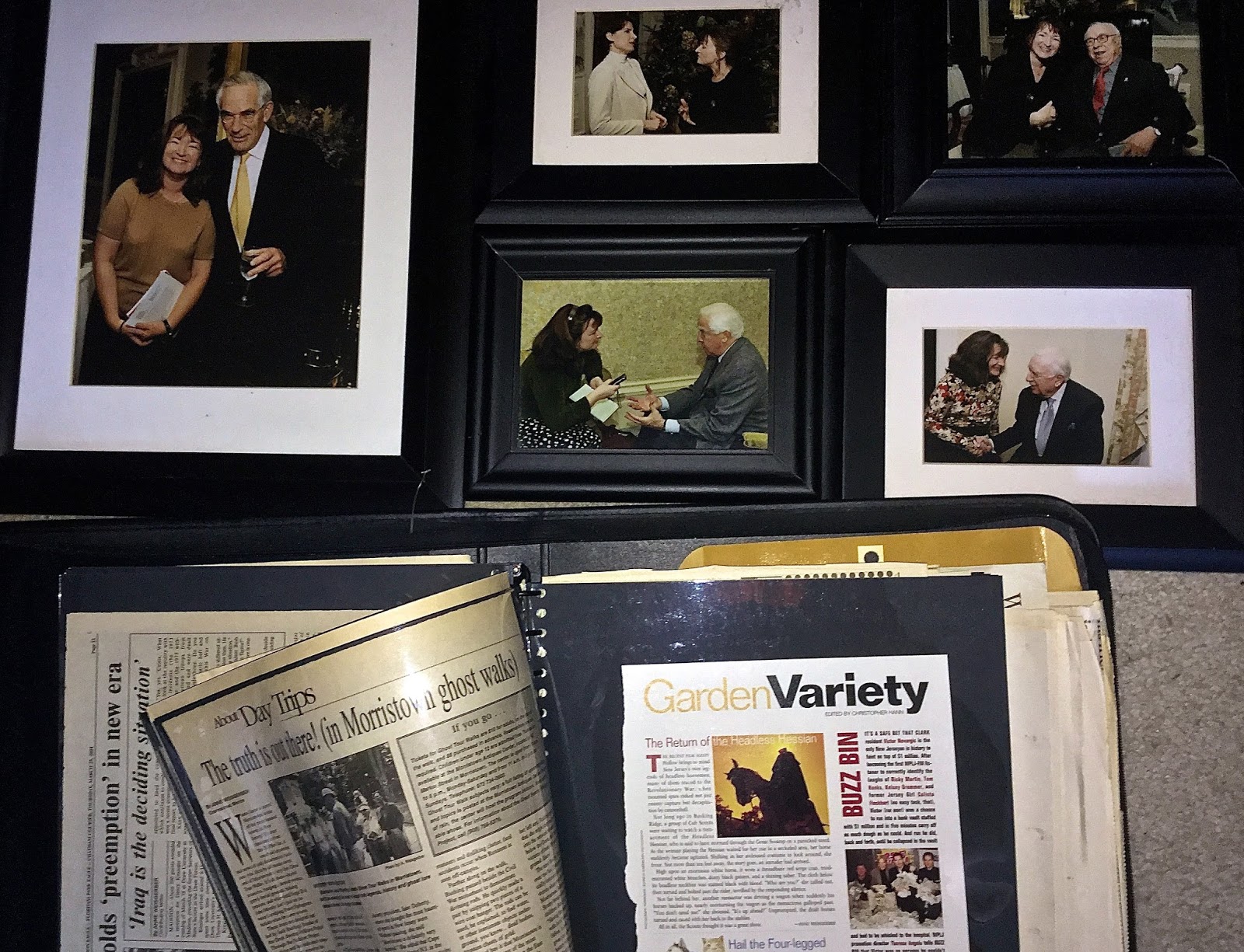
My employer offered severance money, so I bought a computer, a printer, and some file cabinets and started freelance writing.  The first feature I wrote won First Prize from the SPJ.  As I look back, I’ve always had a career that touched upon writing.  We have three bright, creative sons.  I gave up work for a few years to be home with the babies.  I continued freelancing, then helped run Ghost Tours in a nearby town.  I’ve interviewed Kissinger.  I won awards. That segued to being a public school teacher, where rereading classics brought me full circle to the path from which I’d strayed. 

Fifteen years later, I turned 50.  For me, this is my imaginary Annie Proulx line.  She did not start writing till later in life, but she did start writing after 50.  I too am coming to the craft later, and I am not rising from nothing.  The stories are pouring out.  My first publication was nominated for Best Small Fiction.  I’m 45K words into my first novel, and have finally discovered, after fretting about it all these years, that the love of my life, the English language, has waited for me, and blushes for me, and welcomes me with open arms to some kingdom I was sworn existed when I was very small.  I am the king of some rainy country, it seems, where stories pour all day and night.  I’m home.

_____________________________________
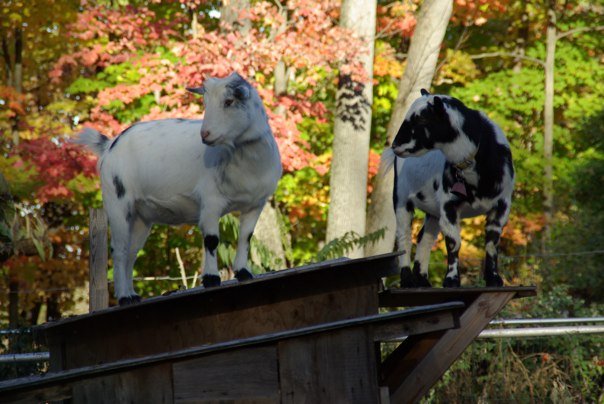
Look for Anne Elizabeth Weisgerber’s stories in New SouthTahoma Literary Review, The Journal of Compressed Creative Arts, Vignette ReviewRevolution John, andJellyfish Review. She is a freelance fiction editor, and her chapbook reviews appear in Change Seven Magazine; she reads fiction for Pithead Chapel.  She’s studied with Randall Brown, Kathy Fish, and Nancy Stohlman, and loves her writing squads: #fishtankwriters and #storytalk. When not teaching, she’s working on a novel that spans five generations, or looking out the kitchen window at her fascinating goats, Snapdragon and Socrates. Follow her @AEWeisgerber, or visit anneweisgerber.com

JOURNEY TO PLANET WRITE: Up, Up, and Awaaay

by Susan Tepper

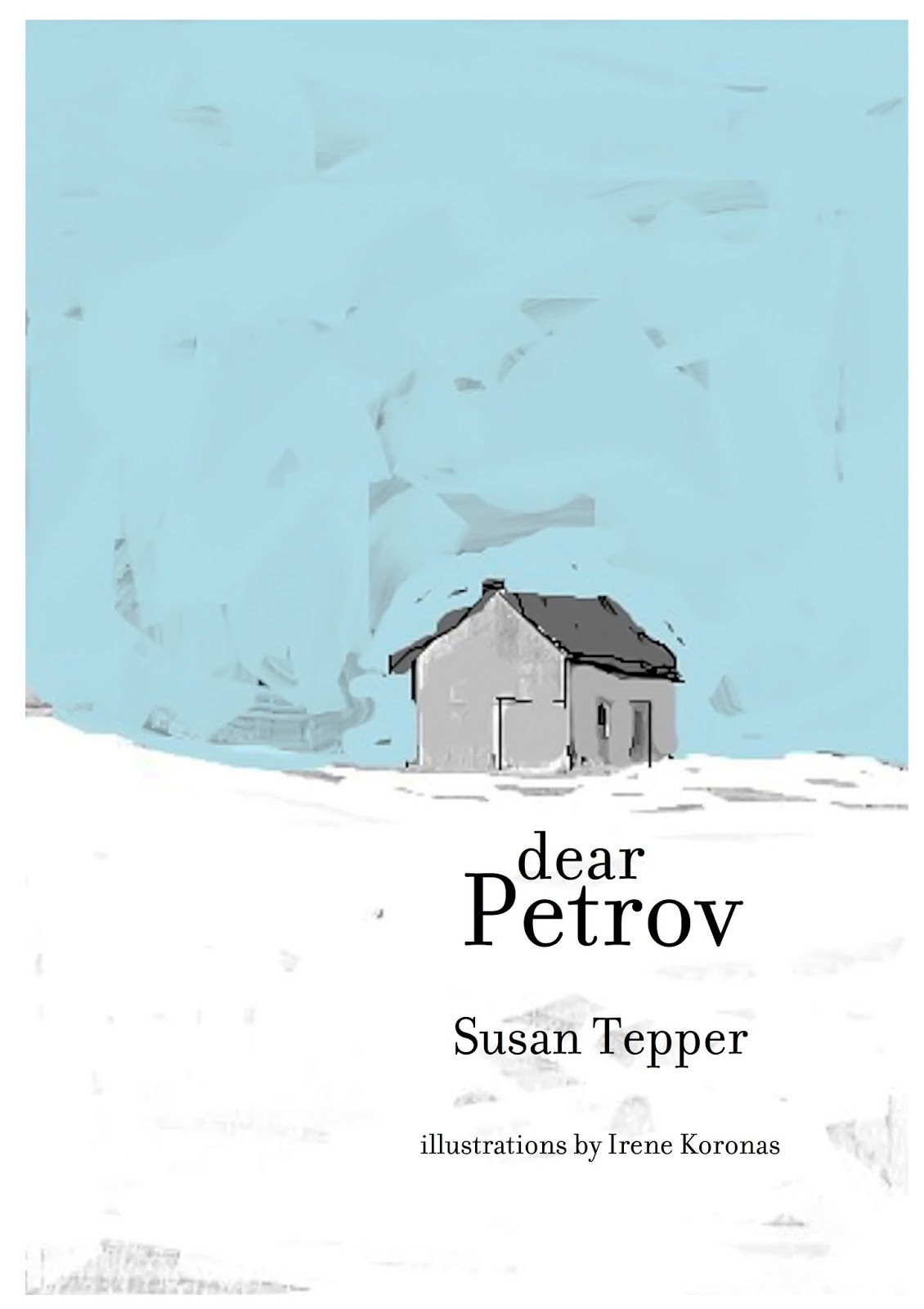
Due from Pure Slush Books in February

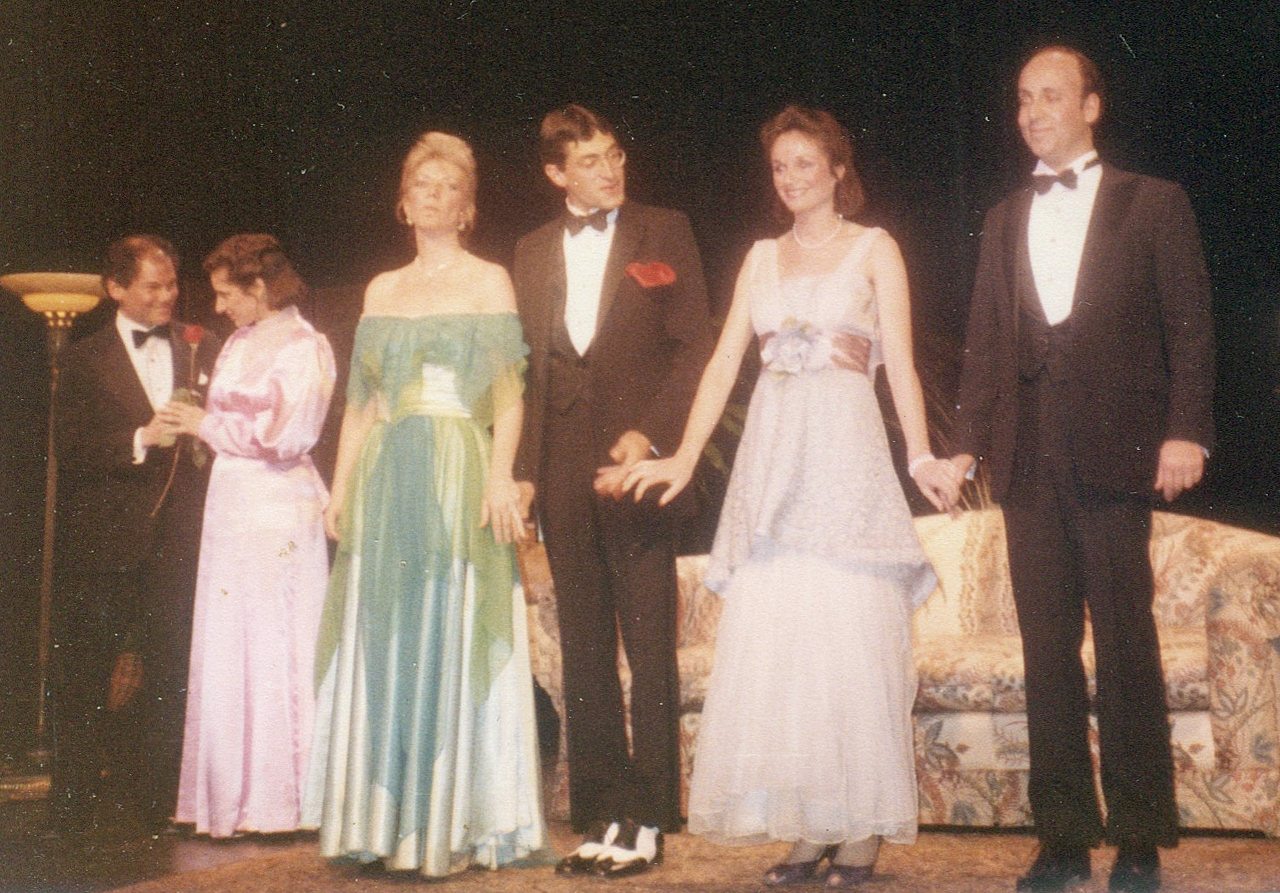
It was never my intention to become a writer.  From a really early age I wanted to be an actress.  At seventeen I went to NYC for drama classes.  They were held in the Carnegie Hall annex building and they were incredible.  This was a method acting school founded by the famous Erwin Piscator.  Marlon Brando had studied there, and other luminaries.  At lunch break our little group of wannabee actors would eat together in some dive coffee shop, then stroll over to Lincoln Center to the film library.  It was bliss.  The school also had a repertory company, and my first role ever was in Kafka’s Warden of the Tomb.  I played the princess.  It was a tiny role, but I was overjoyed.  People came to the rep theatre, watched the plays, applauded!  For a girl raised on Long Island when it was still fairly rural, well, this was just over the top.


From there I went on to study with every good acting teacher I could find in the city. 
Actors always work their craft.  The idea behind it being that you have to keep ‘your instrument’ tuned up at all times.  Your instrument is your body, your mind, your inner life, and your outer self. That meant movement classes in yoga and dance, voice lessons.  Suppose a breakout part is offered and you’ve been hanging out at the beach smoking and drinking.  You wouldn’t be ready to take on the part of, say, Maggie the cat in Cat On a Hot Tin Roof.  So the serious actors study in between roles.  I ran all over auditioning.  Long lines of actors.  I didn’t get many parts but I tried really hard. 

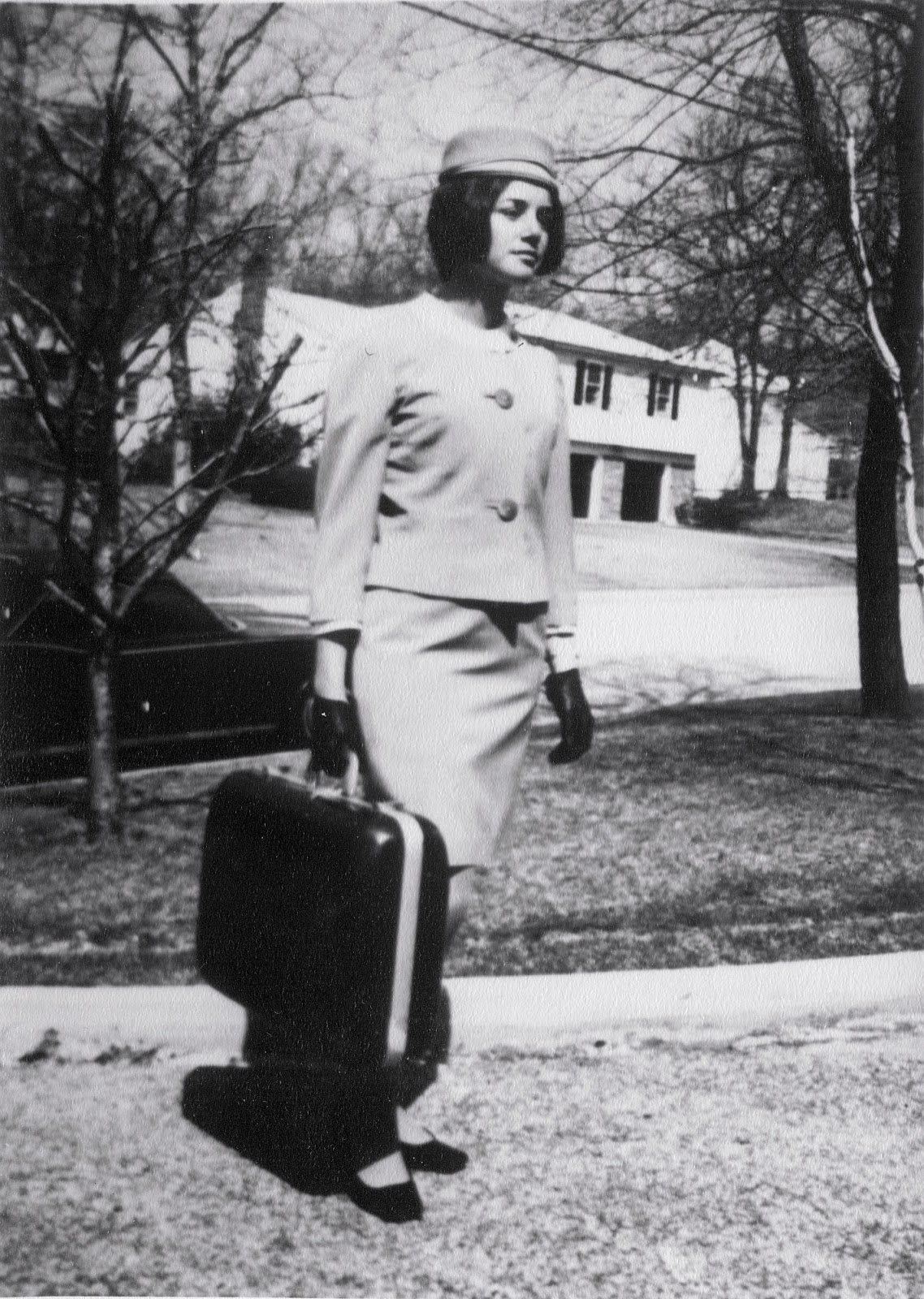
I was also dirt poor.  That meant finding a day job.  I worked as a receptionist for a big corporation.  People were different back then.  The secretaries covered for me when I had an audition.  But it’s hard to be poor in NYC.  One day I saw a Stewardess ad in the Times.  I went to the interview and was hired by TWA.  It was a good time to take a break.  At nineteen and one half (the youngest they would hire you) I got in.  It opened up my life.

A typical flight pattern went like this: JFK to Paris.  Two day layover.  Paris to JFK.  Repeat.  A week off.  Repeat.  That was my month.  Or, London, Madrid, Lisbon, Athens, Rome, Milan, Vietnam.  All on TWA’s dime.  OMG.  The adventure of a lifetime.  The greatest learning experience imaginable.  When I had five years of it, I quit and returned to acting.  Now I was much more worldly and grounded.  More roles opened up.  I still had not a smidge of interest in writing.

Got married.  Started singing with bands, all kinds of music.  I loved it, though my first husband was less than thrilled.  We had a little house that I adored fixing up.  One day I thought about becoming an interior decorator.  So back to school, this time for design.  I completed the course and started working for Sloane’s.  It really wasn’t all that delightful.  The customers were wealthy and demanding and soon the whole thing started to wear me out.  During that time Cable TV was in its infancy.  A producer for a local cable show came into Sloanes.  After I decorated her living room, she offered me a show on interior design, provided I would produce it, star in it, and supply all the furniture each week.  I remember the warehouse guys loading each show into an open pick up, with me stuffed in with the couches and chairs.  I did about a dozen of those shows.  Then I left design forever.

Bitten with the travel bug again, I went to work at a tiny travel agency on the Jersey shore, a block from the ocean.  Oh, and I got divorced.

I took that job strictly for the free travel benefits.  Supplementing my income by singing with the bands (no husband to bug me)!  One blustery day, the door was flung open at the one room travel agency.  At first I thought I was being robbed, but it was two sales managers from an airline paying me a sales call.  After our lengthy chat, they offered me a job with Northwest Airlines in Philly.  Goodbye travel agency!  I still had no thoughts of being a writer.

Philly was terrific.  I got a sales territory (3 states) and lots of spare time because I mostly didn’t make the sales calls.  Instead I went on acting auditions and landed some meaty roles.  The airline thought I was doing such a stupendous job, they offered me a transfer to NYC.  Goodbye Philly. 

NYC with Northwest Airlines was even better.  My sales territory was the West Side.  I could visit the allotted 8 daily accounts all in one building.  That took up about 2 hours.  Then straight over to Actors Studio to study with Shelley Winters and sit in on the Wednesday ‘sessions’.  A miraculous experience.   Unfortunately, during the job with Northwest, there was a terrible plane crash in Detroit.  All we sales managers sent there to work as a rescue team.  I’ll never forget the time spent in Detroit with the families of the victims, and what we went through as a team to help the doctors and dentists identify the bodies.  There was only one survivor.  A little girl.

I had been dating a really great guy, and we married a year after the crash.  One day I sat down and wrote a very long story.  Just out of the blue.  I went to NYU, then New School, and studied writing.  I haven’t stopped writing since.  The last play I acted in was over a decade ago.  If someone asks me to sit in on a set, do some vocals, it’s always a thrill. There were a few more jobs but these are the highlights.  Now I’m a writer.

_____________________________________


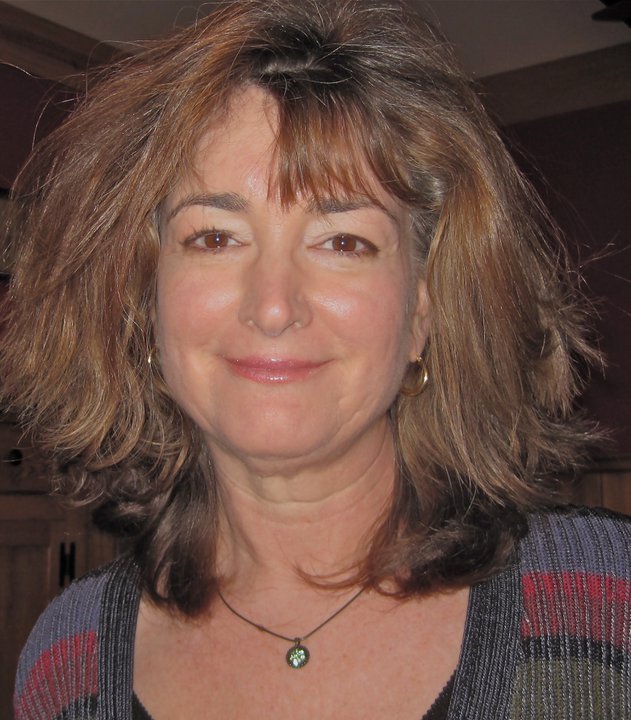
Susan Tepper is the author of five published books of fiction and a chapbook of poetry.  Her newest title dear Petrov from Pure Slush Books is a linked-flash collection set in 19thCentury Russia during a time of war to be released in early February 2016.  You can find a review of her new book at Change Seven. Tepper is an award winning writer with multiple Pushcart nominations, and one for the Pulitzer Prize in fiction.  She writes the column ‘Let’s Talk’ at Black Heart Magazine where she also conducts author/book interviews.  FIZZ her reading series at KGB Bar, NYC, is ongoing these past eight years. Also from Susan Tepper, The Merrill Diaries (Pure Slush Books, 2013).


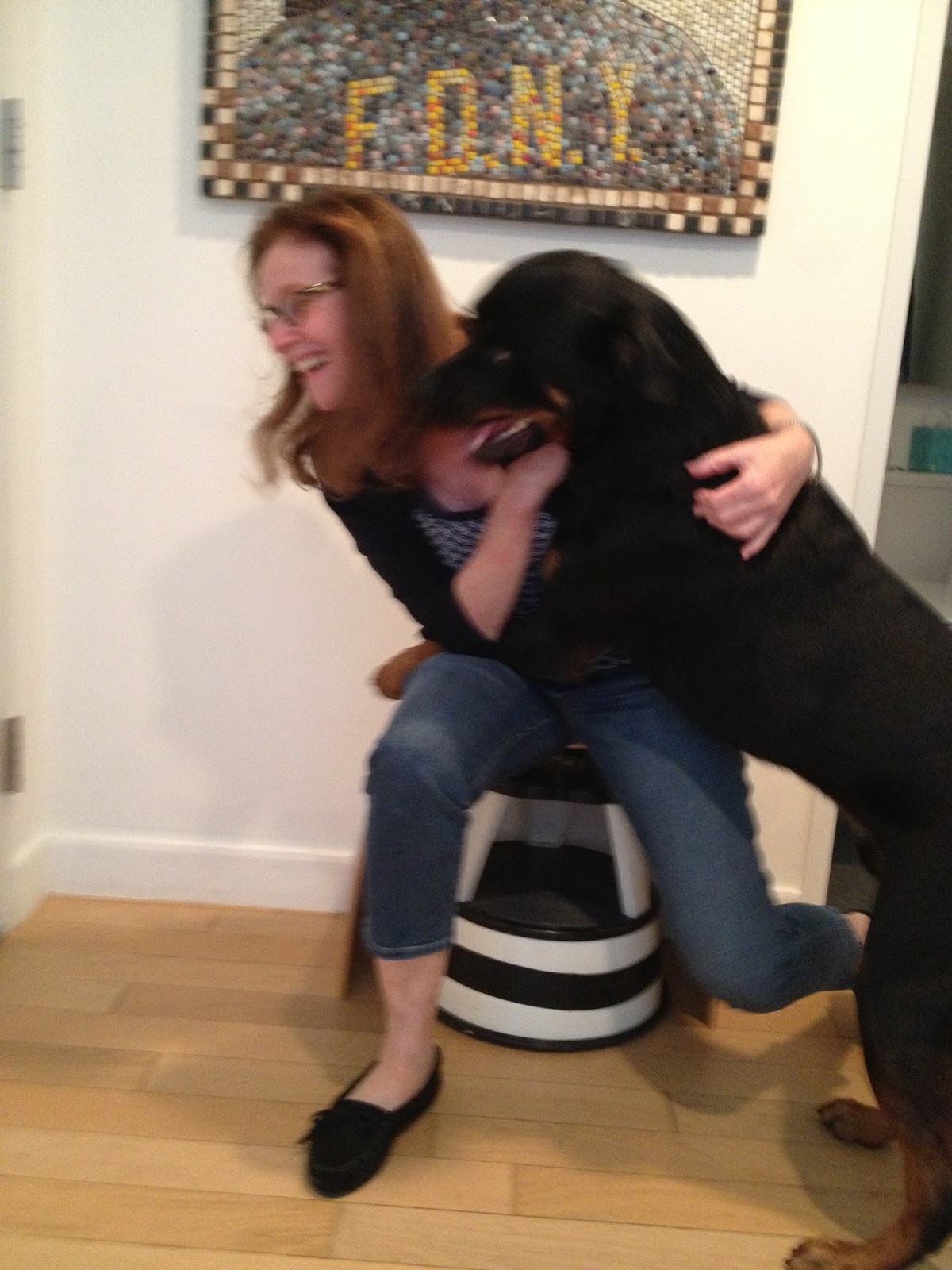
Shown with her dog, Otis.

JOURNEY TO PLANET WRITE: For My Own Sake, I Create!

by Matt PotterIt would come as no surprise to those who know me and/or have worked with me (in any capacity, but in this venue, as a writer/editor/publisher) … but I am an intensely creative person. Not creating makes me sick.

For a few years, in my thirties, I turned my back on being creative for creativity’s sake and focussed on my paid job. I was a site manager in the community services sector, and managed three programmes aimed at keeping older people in their homes. Two programmes provided care in the home, and the third was a therapy service, providing podiatry, physiotherapy, nutrition education, and gentle exercise programs.

I had a staff of 50 and a budget of about $1.5 million and I loved the leadership part of the job, taking programmes in new directions, winning people over to new ways of thinking and doing and being. (I was lucky in that the 4 staff who reported to me directly were great managers … I was a great leader, and they were great managers, so basically, it worked well.)

And I thought my job was worthwhile.

But ultimately, I realised that my job was to support other staff inventing and developing and guiding new initiatives … not the actual doing of those things. (Which can be very creative.)

And not being creative was actually making me, mentally, quite ill (aka I was, ultimately, very depressed).

So I left that job, took a pay cut and started a much more creative job, in sexual health. I was involved in local and national safe sex campaigns, working in communications and writing text for leaflets and brochures and resources and websites and designing flyers and posters and print ads and the problem was it was too creative! I wanted to be more creative and get back to writing and creative stuff for me but who wants to go home and do that when you do that in your day job five days a week?!

So what I’m saying is, there is always a tension in my life about being creative. I can’t NOT make things … to NOT make things makes me ill. But I also want to make things that are worthwhile and I want to do so when I feel like doing it, not because I have to. And I admit to giving a value to most things. I’m the kind of person who says, “That’s really a job?” and “You’re happy earning money doing that?” and “How fulfilling can that be?”

(I feel the same way about certain genres of literature … I can’t take them seriously.)

I also have a need to be funny, to make people laugh, which I think is seriously undervalued in western culture. (My humour also makes people think too.)
Growing up, my mother often seemed to be in a bad mood. But I think it was about her finding fulfilment in life, and I share that with her: there’s a constant question, is this worthwhile? Am I fulfilled by this?

Making my mother laugh also broke the tension. It was also something I realised, at a very young age, that I was good at.

So much of my writing is funny.

Sometimes writing and editing and publishing can be fulfilling for me, and sometimes, I think it’s a waste of my time.

I love it, but I also like to keep a distance from it. It doesn’t just define me.
You know those people whose idea of heaven is being able to take themselves away and spend their time writing? Not me. Full-time writer? No. Never. (It’s too limiting!)

I like to cook (in a big way, not a coming-home-from-work-and-cooking way) and if I ever ventured into clothes design, it would have to be women’s summer frocks and probably kids’ clothes. (This is a serious option for me, in a small scale fun and boutique way.) Walking into a fabric shop is breath-taking for me … the bolts and bolts of fabric present endless possibilities. I was a film and TV student once, making short films (my writing is quite cinematic) and I loved editing as well as storyboarding.

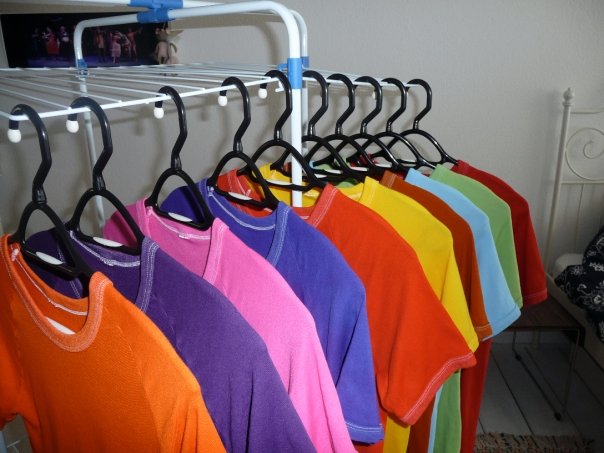
I’ve lost count of the items of clothing I’ve dyed. It would be hundreds and hundreds. (Ask to see the devilled ham t-shirt I dyed!) I love colour and I love creating welcoming environments, whether through design or through attitude or through being a version of me.

I love projects! I love the beginning, the middle and the end, and then I like to see the reaction.

That’s what writing is for me. I started “writing” when I was twelve, and while clearly I have got better at it, it’s still the same: think, do, finish, get the reaction. And hopefully, others think it’s worthwhile, and I do too.

___________________________________


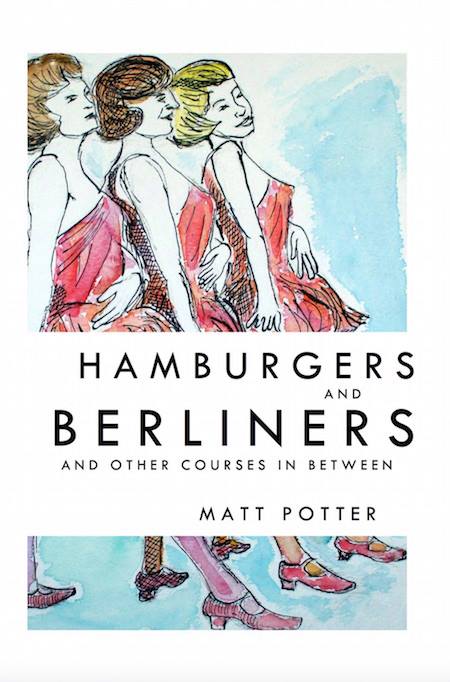
Matt Potter has travelled widely, read a lot, and plans to do more of both in the future. He lives in Adelaide, Australia, and is the founding editor and publisher of Pure Slush and Pure Slush BooksMatt’s latest book is a travel memoir, Hamburgers and Berliners and other courses in between (Cervena Barva Press), also available through Amazon.com and Small Press Distribution.
(Photo at left by Paul Beckman)

JOURNEY TO PLANET WRITE: From Film to Flash and Points In Between

by Jayne Martin
Starting in 1977, and for nearly 30 years thereafter, I worked as a writer of two-hour movies for television. “Two hours” is a misnomer as the actual screen time of the movie itself is, in fact, only 93 minutes. A writer has a lot to pack into a very small package and it is the discipline required to do so that has aided me in my transition to flash.
The script is structured in seven acts to accommodate six commercial breaks. Each act averages about 13 pages, more for Act One (15 to 18), less for Act Seven (8 to 9), and must end on an escalating dramatic moment to bring the audience back after the commercials. The end of Act Three needs to be a whopper because that’s your one-hour break; the time an audience is most likely to change the channel. The end of Act Six is the big reveal; i.e. we know who “did it,” and in Act Seven you wrap things up and get the hell out of Dodge. Sounds like an algebra equation, doesn’t it? But here’s where the tie-in to flash comes, at least for me.
Within each act of a TV movie can be any number of scenes, but few run longer than three pages, with most a page to a page-and-a-half. Tiny self-contained stories, they are the building blocks of the movie and, just as in flash, each must address character development, pacing, a dramatic arc, and a resolution that leaves the viewer yearning for more.
I wrote my last TV-movie in 2004. With the increase of reality shows nudging out the genre there were more writers vying for fewer jobs and, frankly, I was a bit fried by then. Between 2004 and 2009, I wrote nothing, nada, zip. Having never written anything but scripts, I was at a loss as to what to do next. Then I fell and broke my neck. Lucky me! Something to write about! And so my blog, injaynesworld-where nothing is sacred, was born.
Fast forward. After a couple of years of dipping my digital quill into the writing of prose, mostly in the form of humor essays, I came across a website called “Five Sentence Fiction.” A one-word prompt was posted each week and you had only five sentences to complete your story. This was long before I had ever heard the term “flash fiction.” My first attempt was in response to the prompt “shirt.” That became my story “Gone,” which would turn out to also become my first published piece when it was accepted by Boston Literary Magazine several years later for their fall 2014 issue.
By then I had written maybe 40 of these tiny tales and realized why I had such an affinity for them. Many of the same disciplines I learned from writing TV movie scenes also apply to flash:
  • Enter the story at the latest possible moment
  • Use action (either internal or external) to move the story forward
  • Cut any extraneous bullshit
  • Leave them wanting more

This is a fairly simplistic list, but the correlation for me could not have been clearer.
Today I write primarily micro-flash. Rarely will you read a story of mine that is over 300 words, with most well below the 200-word mark. The writing of flash fiction seeks to create its own fully-realized world within the confines of limited space and, for me, the tinier I can make that space, the happier I am.
Poster Boy

A shiny, new tricycle on the sidewalk, abandoned.
A single blue sneaker just inches from the curb.
From the house, a mother calls: “Tommy, supper!”
__________________________________
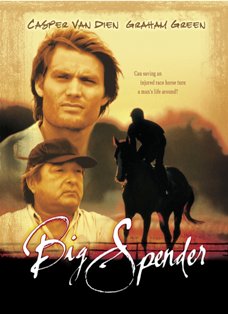
Jayne Martin’s work has appeared or is forthcoming in Boston Literary Magazine, Pure Slush, Midwestern Gothic, Blink Ink, Literary Orphans and Hippocampus Magazine. Her book of humor essays, Suitable forGiving: A Collection of Wit with a Side of Wry, is available on Amazon and Barnes & Noble.  Previously a writer of movies-for-television, her credits include Big Spender, for Animal Planet and A Child Too Many for Lifetime. She lives in a rural valley near Santa Barbara, California, where she indulges her passion for horses and fine wines, and can be found on the web at http://injaynesworld.blogspot.com.
Purchase Big Spender written by Jayne Martin at Amazon