

 Writing fiction isn’t easy. Short stories, novels, plays, or screenplays all call for a three-dimensional, high-definition, multi-layered effort on the part of the writer. The endeavor lands us in a matrix as illusive as anything Keanu Reeves stumbled through. Words shift and dissolve, meanings change, the whole becomes lost in its parts. Therefore, diving into the complex world of a story often leaves writers confused and frustrated.
Understanding the elements of craft is only one part of navigating the terrain. Learning how to mesh the elements of craft together, the actual “process” of writing, is the larger challenge. My goal is to suggest a route through the writing matrix. To do this, we need to use visualization.
 Begin with a published book, any book, the rectangular shape of it when closed, its spine, its back and front covers, the thickness of its pages. Now think of yourself opening that book to chapter one, laying it flat on a table in front of you. Stand up and look down at it. You see words lined up on the right-hand page. Sentences and paragraphs, subject+verb+ prepositional phrase for one sentence, something else for the next. It doesn’t seem that complicated. In the physical world the page is a flat, two-dimensional object, but this impression is deceiving. The creation of those words, sentences, and paragraphs is anything but two-dimensional. It is the process of “layering” tasks onto the same concept in order to shape it into one cohesive piece of work. Here’s a step-by-step look at process via our imaginary book.
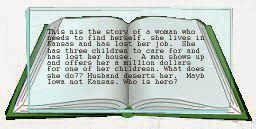
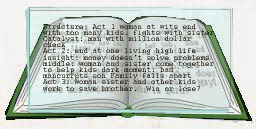
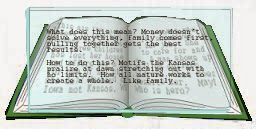 7. These thematic purposes, big and small, need to be “joined” to glass one. You look for key words. If your content and structure are about love, you look for places to set up images of love, symbols of love, expressions of love. Maybe instead of a piece of dialogue, you decide to put in a gesture, a finger running down a cheek. All this goes into the pane of glass three: anything that clarifies, intensifies, distills the language. Through this process, pane three fuses to the first two and again, you have a single piece of glass.
We often only think of writing in its final published form, a thick rectangular book with three pages or a hundred pages of clean text written by accomplished writers. We shake our heads and groan and mumble, “I don’t even know where to start” leading to “I’m going to fail.”
We want to give up because we don’t understand that writing is a process, and understanding the matrix of writing: the who, what, where, when, why, and how of content, the organization of structure, the writer’s own feelings (theme) that emerge from the text, and the time and effort of revision and proof-reading. Seeing each of these as a separate step (or a pane of glass) in a process, makes it easy to understand that good results require time, attention, and practice and none of it is easy.

 . Coaches are to basketball as writers are to stories. Hopefully the names of past players will ring a welcome bell, and the analogy will work for you today. Here’s the piece:


 SPOTTED & SOUGHT / Sunday, January 3


 Gay Degani